


Key Takeaways:
Aviation software works best when it includes features like flight scheduling, crew management, maintenance tracking, route planning, and safety compliance tools, since these build a strong foundation for smooth, reliable daily airline operations.
The right features improve flight safety, cut delays, and keep maintenance predictable, giving airlines accuracy, control, and real-time visibility.
Advanced technologies like AI, predictive maintenance, weather intelligence, and digital twins help airlines act early instead of reacting to risks.
Continuous monitoring, timely alerts, and compliance tracking keep aircraft safe and flight conditions well within regulatory standards.
Custom-built aviation software gives airlines better control, tighter integration, and flexibility to scale as operations grow over time.
Airlines today run on data, speed, and precision. Every flight, crew shift, and maintenance check depends on systems that keep information accurate and available in real time. This is where the right aviation software features make all the difference.
For businesses building aviation platforms, choosing the right features shapes safety, cost control, and daily reliability. A well-built system reduces delays, keeps crews compliant, and gives ground teams clear visibility into every operation.
The global aviation software market is expanding fast, pushing airlines and startups toward smarter digital tools. Knowing which top aviation software features to prioritize helps you build something that scales and performs under pressure.
In this guide, we cover the core and advanced features every aviation software should include, so you can plan a system built for real-world airline operations.

Why Aviation Software Needs the Right Features?
Before adding features to your aviation software, it helps to know why they matter. The right aviation software features make daily operations safer, faster, and easier to manage.
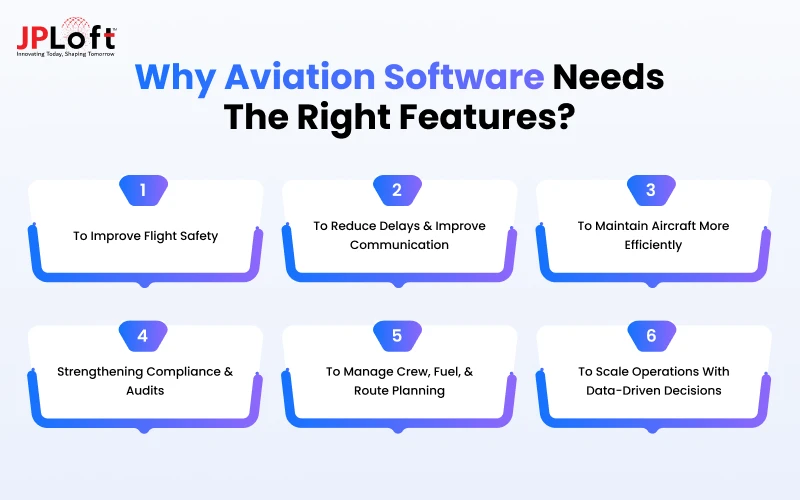
Here are the top reasons to choose them carefully.
1. To Improve Flight Safety
Aviation relies heavily on accuracy. Strong app features help teams catch issues early, follow regulations, and react quickly to risks. When software supports safety at every step, operations stay predictable.
2. To Reduce Delays & Improve Communication
Delays happen when teams lack the right information at the right time. Clear communication tools connect air traffic control, ground staff, technicians, and pilots, keeping schedules and decisions moving instantly.
3. To Maintain Aircraft More Efficiently
One of the largest cost centers is maintenance. Features like maintenance logs, reminders, and parts tracking help teams plan work ahead and avoid sudden breakdowns.
4. Strengthening Compliance & Audits
Aviation rules change often. Proper compliance features ensure every activity is recorded, documented, and audit-ready, keeping the organization safe from penalties.
5. To Manage Crew, Fuel, & Route Planning
Crew duty hours and certifications need constant tracking to avoid fatigue and overbooking. Smart fuel and route planning tools also help airlines cut costs and save time.
6. To Scale Operations With Data-Driven Decisions
As airlines grow, so does their data. The right aviation software features help teams handle more flights and passengers, using analytics to plan ahead and solve issues early.
10+ Core Aviation Software Features to Include
Every airline needs a strong base to run daily operations smoothly. These core aviation software features cover scheduling, safety, maintenance, and communication, giving teams the tools to work with accuracy and full operational control.
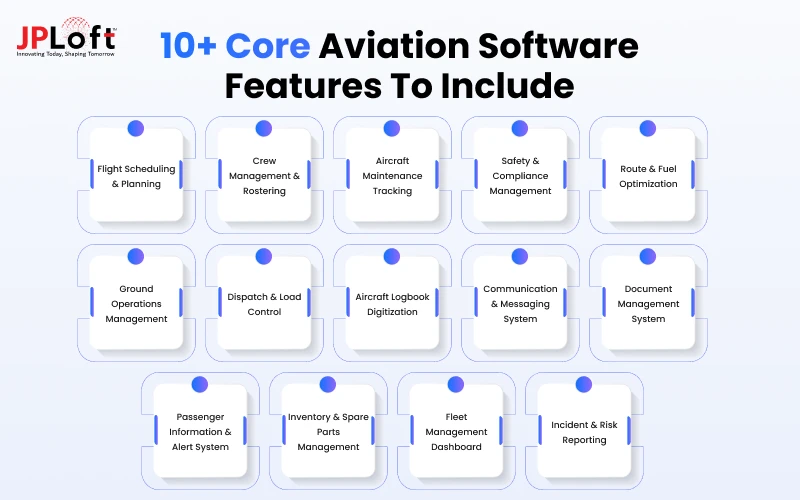
Let’s check out the list of features to include when you build aviation software.
1. Flight Scheduling & Planning
Flight scheduling and planning keep every departure and arrival organized. It assigns aircraft, sets routes, and avoids clashes between flights, keeping teams aligned with accurate, shared schedules across departments.
This is one of the most useful aviation software features, since good scheduling reduces last-minute changes and helps flights run closer to their planned times, day after day.
2. Crew Management & Rostering
Crew management handles duty hours, certifications, and shift planning in one place. It assigns the right staff to the right flights while tracking rest periods and compliance requirements automatically.
This reduces fatigue risks and last-minute reshuffling. With clear rostering tools, airlines keep crews flight-ready and avoid the scheduling conflicts that often disrupt daily operations and passenger trust.
3. Aircraft Maintenance Tracking
Maintenance tracking records inspections, repairs, and upcoming checks for every aircraft. It sends early alerts before issues become serious, helping teams plan work instead of reacting to breakdowns.
This feature can add up the complete cost to build an aviation software; however, it will help you to track the timeline of maintenance. Cleaner tracking reduces downtime and keeps fleets running with fewer unexpected surprises.
4. Safety & Compliance Management
Aviation follows strict global and regional rules. Compliance management records every procedure, stores audit documents, and flags gaps before they turn into violations or safety concerns for airlines.
This is one of the essential features of aviation software, since it builds trust with regulators and passengers while removing the stress of manual, paper-based audit preparation.
5. Route & Fuel Optimization
Route and fuel optimization studies weather, traffic, and distance to suggest smarter flight paths. It lowers fuel burn while helping flights avoid delays caused by poor routing decisions.
This supports strong cost control across operations. Smarter routes mean fewer surprises, lower expenses, and better on-time performance across every scheduled flight throughout the year.
6. Ground Operations Management
Ground operations management organizes baggage handling, turnarounds, cleaning, and catering. It keeps every ground task time-bound so aircraft spend less idle time between landing and the next departure.
Smooth ground workflows directly support on-time performance. When ground teams work from synced data, delays caused by miscommunication or missed handoffs become far less common overall.
7. Dispatch & Load Control
Dispatch and load control manages weight distribution, cargo balance, and payload limits before takeoff. Accurate calculations keep the aircraft stable and prevent performance issues during flight operations.
This ranks among the top aviation software features for safety-focused teams. Strong load control tools catch errors early, protecting both the aircraft and everyone on board.
8. Aircraft Logbook Digitization
Digital logbooks replace paper records with automated entries. Pilots and technicians can log flight hours, defects, and maintenance notes instantly, without delays caused by manual paperwork or lost forms.
This cuts down on human error significantly. Digitized records also speed up data access, helping maintenance and compliance teams find accurate information whenever they need it most.
9. Communication & Messaging System
Aviation depends on constant contact between the cockpit, ATC, ground handlers, and technicians. A unified messaging system keeps every message organized and visible to the right people instantly.
This removes confusion during busy operations and helps teams respond faster when schedules or conditions change suddenly, keeping every department aligned in real time.
10. Document Management System
Airlines manage large volumes of manuals, certificates, and policy documents. A centralized document system keeps everything version-controlled, so teams always work from the latest approved files available.
This avoids the risk of outdated paperwork causing compliance issues. Organized document storage also saves time during audits, when quick access to accurate records matters most.
11. Passenger Information & Alert System
This feature manages passenger details and sends timely alerts for check-in, boarding, delays, and gate changes. It keeps travelers informed without requiring extra effort from ground staff.
This directly shapes passenger experience and satisfaction. Clear, timely updates reduce complaints and help airlines build stronger trust with travelers across every stage of their journey.
12. Inventory & Spare Parts Management
Aircraft parts, tools, and consumables require constant tracking. This feature monitors stock levels, forecasts future needs, and flags shortages before they cause maintenance delays or grounded aircraft.
Reliable inventory management protects tight maintenance schedules. Teams avoid last-minute part searches, keeping repair timelines predictable and reducing the operational costs tied to missing components.
13. Fleet Management Dashboard
A fleet dashboard displays aircraft status, availability, and maintenance stages in one clear view. It helps management plan schedules and allocate resources without switching between separate systems.
It comes under the basic aviation software feature, useful in managing fleet operations successfully. Connecting with the top fleet management software company can help you bring success in fleet operations.
14. Incident & Risk Reporting
Incident reporting lets crew and staff flag hazards, irregularities, or safety concerns quickly. Centralized reporting means issues get documented and reviewed instead of going unnoticed or unresolved.
This supports proactive risk management across operations. Reviewing this data regularly helps airlines identify patterns early and prevent recurring safety issues before they escalate further.
Advanced Features to Add in an Aviation Software
For developing an aviation software or to create an airline reservation system, it is essential to know the advanced features that you can add to the aviation software.
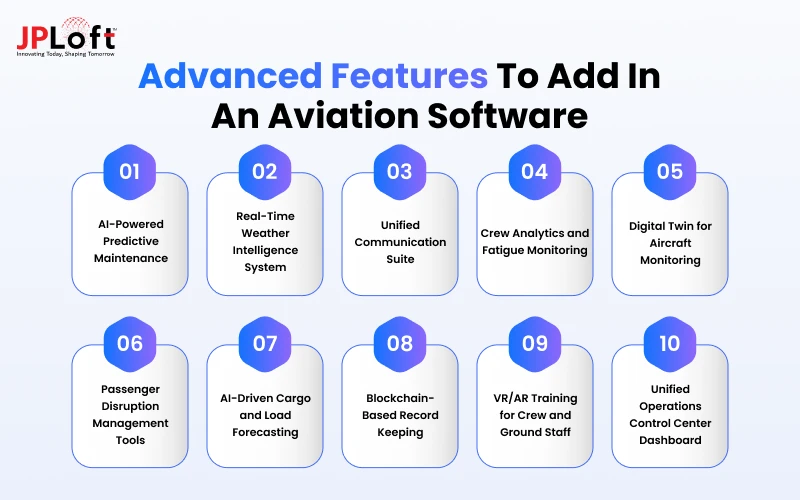
Let’s discuss the different types of advanced features below:
1. AI-Powered Predictive Maintenance
AI studies flying hours, engine patterns, and sensor data to predict issues before they turn serious. This helps maintenance teams act early and reduce unplanned downtime.
Aircraft stay healthier with fewer emergency repairs. Airlines gain more control over maintenance schedules instead of reacting to sudden technical failures during operations.
2. Real-Time Weather Intelligence System
This system pulls live weather data, turbulence alerts, and storm patterns, issuing early warnings to pilots and operations teams so they can adjust routes ahead of time.
It improves flight safety and reduces weather-related delays. Crews and ground staff stay connected in real time, making faster decisions when conditions change unexpectedly.
3. Unified Communication Suite
Instead of fragmented channels, teams communicate through one secure system connecting ATC, ground operations, and the cockpit, keeping every department informed during changes or disruptions.
This is one of the practical advanced aviation software features for coordination. Partnering with a custom software development company can help build this reliably.
4. Crew Analytics and Fatigue Monitoring
This tool studies duty hours, rest time, and workload patterns to flag fatigue risks early, helping planners assign the right crew to each flight without overbooking.
It strengthens compliance and protects safety standards. Control panels can track crew working hours accurately, supporting smoother scheduling decisions across daily airline operations.
5. Digital Twin for Aircraft Monitoring
A digital twin creates a real-time virtual model of the aircraft, mirroring its actual performance and condition throughout every flight and maintenance cycle.
This helps teams track performance and detect issues early. Virtual monitoring supports safer maintenance planning, reducing the chances of unexpected mechanical problems mid-flight.
6. Passenger Disruption Management Tools
These tools predict delays, gate changes, and service issues before they worsen, giving operations teams time to plan ahead and respond before passengers are affected.
Automated rebooking and clear updates ease disrupted journeys. Passengers stay informed at every step, which improves satisfaction even when travel plans change suddenly.
7. AI-Driven Cargo and Load Forecasting
The software forecasts space availability, weight distribution, and cargo demand, helping teams plan loads accurately before every flight departs from the gate.
This keeps the aircraft balanced for safe takeoff. Better forecasting reduces last-minute load adjustments, saving time for ground crews and dispatch teams alike.
8. Blockchain-Based Record Keeping
Maintenance logs, compliance documents, and operational records are stored in tamper-proof blocks, making data harder to alter and easier to verify during audits.
For strong implementation, blockchain in aviation software helps improve transparency, security, and trust across every recorded transaction.
9. VR/AR Training for Crew and Ground Staff
Airlines increasingly use VR and AR to train cabin crew, ground staff, and terminal teams, replacing traditional methods with interactive, hands-on simulation experiences.
This builds practical skills faster and improves service quality. Immersive training also reduces onboarding time, helping new staff perform confidently in real situations sooner.
10. Unified Operations Control Center Dashboard
This dashboard gives managers a real-time view of fleet status, schedules, crew, weather, and ground operations, all visible from a single, centralized screen.
It works like a digital command center. Faster visibility supports quicker decisions, keeping every department tightly coordinated during both routine and disrupted operations.
Why Choose JPLoft to Develop Aviation Software?
When you’re building aviation systems that control flights, crews, and safety, the team behind the software becomes just as important as the features inside it.
You need a partner that understands how aviation works on the ground and in the air, and can turn that understanding into dependable technology.
This is where JPLoft stands out as a trusted aviation software development company. Our approach focuses on building tools that support real aviation workflows, reduce manual effort, and keep operations stable even during peak pressure.
JPLoft designs software that strengthens communication, improves maintenance visibility, and helps teams make faster decisions with clear data.
We also provide long-term support so the system grows smoothly as your operations expand. With the right development partner, aviation software becomes more than a platform; it becomes a reliable engine that keeps your entire operation moving with confidence.

Conclusion
Choosing the right aviation software features is essential for building safe, reliable, and efficient airline operations. Core tools such as flight scheduling, crew management, and more create a strong operational foundation.
However, advanced features can further improve decision-making and reduce unexpected issues. With the right mix of core and advanced features, airlines can reduce delays, improve decision-making, and strengthen passenger experience.
The right software also improves communication, keeps teams connected, and provides better visibility across daily operations. As airline needs continue to grow, scalable software can support new workflows and changing requirements.
With thoughtful feature selection and the right development approach, aviation software can help airlines improve safety, control costs, reduce delays, and manage operations with greater confidence.
FAQs
These features ensure safe flights, fewer delays, better maintenance, and smoother communication across all teams. They help airlines operate with accuracy and real-time visibility.
Key features include flight scheduling, crew management, maintenance tracking, route planning, communication tools, and safety compliance. These build the foundation of smooth daily operations.
AI predictive maintenance, weather intelligence, automated fuel planning, digital twins, and cybersecurity tools help airlines work smarter and prevent risks before they grow.
It monitors aircraft status, tracks maintenance, sends alerts, and supports compliance with aviation rules. This helps teams catch problems early and maintain safer flight conditions.
Custom software matches an airline’s exact needs, integrates with internal systems, and scales with future growth. It offers better control, long-term efficiency, and a stronger competitive edge.

Yashwant Sharma is the CTO of JPLoft, with 18+ years of experience in software engineering, solution architecture, and digital innovation. His expertise spans scalable application development, AI-powered systems, RAG solutions, cross-platform development, software maintenance, and emerging mobility technologies such as EV and EV-charging platforms. He works across complex technical environments to help businesses build secure, maintainable, and high-performing digital products for industries including education, fitness, aviation, and healthcare.





Share this blog