


Key Takeaways
Aviation software monetization generates revenue by pricing solutions around real operational value such as fuel savings, compliance accuracy, and reduced downtime.
Common monetization models include subscriptions, feature-based pricing, licenses, outcome-based fees, marketplaces, and data monetization to support scalable growth.
Modular and feature-based pricing lowers adoption barriers while enabling natural upsells as operational needs expand over time.
Performance-linked and data-driven pricing builds trust by tying software costs directly to measurable outcomes and ROI.
Marketplace and API-driven models unlock ecosystem revenue by connecting airlines with third-party services and integrations.
Partnering with JPLoft helps aviation businesses design scalable monetization strategies that balance revenue growth, compliance, and long-term platform stability.
There are many ways through which aviation software makes money, such as subscription models, perpetual licence fees, feature-based licensing models, and many more.
To sustain in this competitive aviation industry, one of the important parameters is profits and revenue. The global aviation market size can expand to USD 524.14 billion by 2030, which reflects a 7.8% CAGR.
Hence, if you want to contribute to this vast sector, earning revenue is one of the important parts to consider. Here, one of the questions that comes is “how does aviation software make money?”
Well, there are plenty of models to consider, such as subscription plans, perpetual license fees, data monetization, feature-based licensing, etc.
Let’s learn the complete list of aviation software monetization models in this guide.
An Overview of Aviation Software
The aviation software encompasses digital tools for airlines, airports, and MROs for managing everything from booking and crew scheduling to complicated planning, maintenance, air-traffic control, and real-time data for efficiency and cost reduction.
The key types of aviation software and related functions are flight operations, air traffic management, passenger experience, and airport operations.
The core benefits of aviation software are enhanced safety, data-driven decisions, increased efficiency, and regulatory compliance.
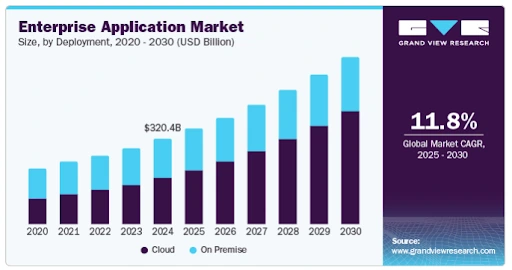
Let’s evaluate the market stats related to the aviation software below.
-
The global aviation software market size was estimated at USD 11.18 billion in 2024, and is further projected to reach USD 16.93 billion by 2030, that is further growing at a CAGR of 7.5% from 2025 to 2030.
-
By country, the US market is projected to reach USD 2,304.2 million by 2030 due to rising digitalization initiatives across the aviation sector.
-
However, the aviation MRO software market was estimated at USD 7.4 billion in 2024, which is expected to grow from USD 7.7 billion in 2025 to USD 11.6 billion in 2034, at a CAGR of 4.7%.
Well, with this growing market, are you ready to invest in aviation software development? If yes, then one of the important initiatives that you need to take is defining the business model.
Why?
Let’s check out the following section.
Why Monetize an Aviation Software?
You can monetize aviation software due to many reasons, such as operational efficiency, cost reduction, data monetization, and many others.
Let’s discuss them all below.
1. Revenue Generation
One of the important reasons to monetize your aviation software is revenue generation. It enables dynamic pricing, boosts sales, personalizes offers, and sells anonymized passenger data insights.
2. Increases Operational Efficiency
You should automate the aviation software, optimize the routes, and use predictive maintenance to prevent the costly situations of AOG (aircraft on ground). It helps to streamline processes, cuts costs, and creates new revenue streams.
3. Provides Competitive Advantage
If you implement the right monetization strategy for your software, it will provide you with competitive advantages by driving efficiency, enhancing customer experience, and optimizing revenue, ultimately making your business a profitable venture.
4. Boost Customer Satisfaction
Here, you should identify that with the help of effective aviation software monetization, you can include real-time updates, self-care options, as well as personalized experiences that further reduce passenger frustration and build loyalty.
5. Ensures Scalability
Aviation software models ensure scalability through utilizing a cloud-native base, modular design principles, and automated resource management for handling the increasing workloads in the market.
Now, let’s find out some of the crucial aviation software monetization models in the following section.

How Aviation Software Makes Money?
Many ways explain how aviation software makes money, such as SaaS, perpetual licenses, a pay-as-you-go model, and data services.
These monetizations will not only help you to cover the overall cost to make an aviation software but will also help you to position your brand well in the competitive market.
Let’s learn the complete aviation software models in this section.
[1] Subscription Plans
This is one of the prime aviation software monetization models that includes a monthly or yearly subscription plan.
These plans offer predictable revenue streams, boosting customer loyalty through diversified perks such as discounts, priority boarding, and more.
Subscription models even act as an important strategy to retain users in the long run and build a direct customer relationship.
Here is the list of the benefits to consider if you are planning to include a subscription model as one of the aviation software strategies.
-
Offers predictable recurring revenue
-
Continuous updates, support, and value delivery
-
Higher customer lifetime value
-
Promotes cash flow stability
[2] Perpetual License Fees
It is a one-time, upfront fee that grants operators and airlines full-time usage rights for the specific version of the system.
Here, the ongoing revenue is generated from annual maintenance, compliance updates, and technical updates to the software.
This is a significant aviation software money-making model that provides long-term access to the essential tools, like flight planning, maintenance management, or crew scheduling, that reduce vendor lock-in.
Along with this, large upfront payments for the software, such as planning and maintenance systems. Here is the list of the benefits to be followed.
-
Offers control and security for the aviation software
-
Better long-term cost economics for the stable operations
-
High client retention
-
Enable long-term total cost of ownership
[3] Feature-based Licensing Model
The feature-based licensing model works well in the aviation industry and offers a core system at a base price while charging separately for advanced modules, including crew optimization, compliance tracking analytics, or fuel management.
This will motivate you to go with the effective aviation software features.
Here, the airlines pay for what they use, often combining with the usage metrics like flights and users. Let's evaluate the benefits of the feature-based licensing model in the list below.
-
Clear value-to-cost alignment
-
Scales revenue with customer growth
-
Lower-entry barrier for buyers
-
Offers a tiered structure for the aviation software
[4] Outcome-based Pricing Model
This is one of the aviation software revenue models that primarily ties payments to the actual performance, such as engine hours or flight efficiency.
This strategy aligns the provider incentives with the airline's success by ensuring payments only for the operational results.
The outcome-based pricing model works well to boost the overall trust of the users.
This model enables long-term partnerships and focuses everyone on maximizing the aircraft uptime that shifts the model to more performance-based outcomes.
Let’s look forward to the following benefits.
-
It is a value-driven money-making strategy
-
This strategy offers risk sharing
-
It offers a pay-for-performance money-making strategy
-
Follows the algorithms and data-driven systems
[5] Third-party Integration and API Access Fees
Now, when it comes to the third-party integration as an aviation software money-making mode it is one of the significant strategies for earning recurring income.
This monetization model helps to fetch the details related to how many other apps are integrating or want to integrate aviation software systems, and then charging fees based on their requirements.
Here, the airlines rely on multiple systems, such as charging for the API systems or data sync with the ERP, payroll, and maintenance tools, which add up to steady revenue. Let’s evaluate the benefits of third-party integration fees for the aviation software.
-
API usage fees
-
Integration and connector charges
-
Certified partner access fees
-
Enhances real-time safety and regulatory compliance
[6] Module-Based Pricing Monetization Strategy
The module-based pricing as an aviation software monetization strategy helps the customer to purchase a core-based platform at an entry-level price.
This aviation software revenue model adds specific functional modules as separate paid add-ons that are based on the operational needs.
It is an aviation monetization model that allows airlines and operators to start with essential features at a lower cost.
They can gradually expand capabilities by adding modules and paying only for the functionality they actually use, instead of investing in an all-in-one package with unnecessary features.
Let’s check out the benefits below.
-
Natural revenue expansion through progressive upselling
-
Competitive differentiation and reduced prices comparison
-
Customization and flexibility without custom development cost
-
Maximizes revenue via customization
[7] Data Monetization
It is one of the additional or optional aviation software money-making strategies.
Data monetization has emerged as a premier, high-growth, and one of the transformative aviation software revenue models within the aviation software sector.
Here, you can earn a specific amount of money by selling the data to the companies who require it.
One of the important practices to follow here is to take permission from the users to monetize their data to the public. Let’s evaluate the benefits of data monetization below.
-
Creates a steady income channel
-
Offers decision-making
-
Provides a competitive advantage
-
Enhances customer experience
[8] Marketplace/ Commission Model
You need to build a two-sided marketplace connecting aviation service buyers and sellers, which helps to monetize through transaction commissions, listing fees, or lead generation charges.
A marketplace commission model in aviation software is a crucial monetization strategy where the platform acts as an intermediary, enabling transactions between the buyers and sellers.
It takes a percentage of the total transaction value as revenue upon completion. Let’s evaluate the benefits of the marketplace aviation monetization model.
-
Transaction-based commission
-
Vendor listing and visibility fees
-
Revenue from service matchmaking
-
Scalable ecosystem revenue
Now, after considering the aviation software monetization models, let’s discover the right tips to select the aviation software monetization strategies in the section below.
Tips to Select the Right Aviation Software Monetization Strategies
Whether you want to gain the user’s attention or desire to earn a great amount of revenue, learning how to select the right aviation software monetization strategies is crucial.
Hence, here is the list of tips to select the right aviation software monetization strategies.
1. Align Pricing with Operational Value
Start by identifying where your software delivers measurable value, such as reduced delays, better crew utilization, or compliance accuracy.
Monetization should reflect these outcomes, not just features. When pricing mirrors real operational impact, customers are more willing to pay and stay long-term.
2. Understand Your Target Users and Buyers
Different stakeholders interact with aviation software in different ways. Airlines, charter operators, and airport authorities have distinct priorities and budgets.
Tailor monetization models to match who makes purchasing decisions and how frequently they use the system. Connecting with the top software development services can help youtube understand the target users and buyers successfully.
3. Balance Predictability with Flexibility
Subscription models offer revenue stability, while usage-based pricing supports fluctuating demand.
Combining both can protect cash flow while giving customers pricing fairness. A balanced approach reduces churn and supports scalable growth.
4. Consider Compliance and Criticality
Aviation systems are mission-critical and regulated. Avoid monetization strategies that interrupt access or performance.
Pricing should never compromise safety, uptime, or compliance, as reliability is non-negotiable in aviation operations.
5. Plan for scalability from day one
Choose aviation monetization strategies that grow with customer operations. Per-user, access-based, or tiered models allow accounts to expand without friction.
Scalability ensures revenue increases as operational complexity rises. Hire software developers to plan your monetization models from day one.
6. Use Data to Refine Pricing Over Time
Monitor usage patterns, feature adoption, and customer outcomes. Data-driven insights help refine pricing, introduce new tiers, and improve value perception.
Continuous optimization keeps monetization aligned with evolving aviation needs.

Partner with JPLoft and Monetize Your Aviation Software
Aviation software has become a critical backbone for managing complex operations, improving coordination, and maintaining regulatory compliance across the aviation ecosystem.
As these platforms mature, businesses are increasingly looking beyond functionality and focusing on how software can also drive sustainable revenue without compromising performance or reliability.
This is where JPLoft steps in. As an experienced aviation software development company, JPLoft helps aviation businesses design and monetize intelligent software solutions tailored to real operational needs.
From selecting the right monetization model to building secure, scalable systems, we enable organizations to turn aviation software into a long-term revenue and efficiency driver while staying future-ready in a competitive market.
Conclusion
Aviation software monetization has evolved from simple licensing to sophisticated, multi-model strategies that align with operational needs and market dynamics.
Whether through subscription plans, outcome-based pricing, module configurations, or data monetization, the key is selecting models that deliver value while ensuring sustainable revenue growth.
By understanding your target users, aligning pricing with operational value, and planning for scalability, you can transform aviation software into a profitable, long-term business asset that drives both efficiency and competitive advantage.
FAQs
Key aviation software monetization models include subscription plans, perpetual license fees, feature-based pricing, outcome-based pricing, module-based pricing (customizable add-ons), and marketplace commissions.
Outcome-based pricing ties software costs to measurable results like fuel savings, reduced maintenance costs, or improved aircraft utilization. Providers charge 10-30% of documented savings or performance improvements, aligning vendor success with customer operational gains and justifying premium pricing through proven ROI.
Module-based pricing lowers entry barriers by allowing customers to purchase core platforms affordably, then add specific modules as needed. Benefits include natural revenue expansion through progressive upselling, customization without development costs, competitive differentiation, and paying only for required functionality.
Yes, hybrid approaches combining subscription-based with usage-based add-ons, outcome-based bonuses, or perpetual license options for enterprise clients maximize market coverage. Approximately 67% of B2B SaaS companies use multiple models to serve diverse customer segments and optimize revenue across different use cases.
Aviation software collects operational data (flight patterns, maintenance records, fuel consumption) that can be aggregated, anonymized, and sold to manufacturers, insurance providers, and analysts. Revenue comes from industry reports, benchmarking services, and API access to insights.

Yashwant Sharma is the CTO of JPLoft, with 18+ years of experience in software engineering, solution architecture, and digital innovation. His expertise spans scalable application development, AI-powered systems, RAG solutions, cross-platform development, software maintenance, and emerging mobility technologies such as EV and EV-charging platforms. He works across complex technical environments to help businesses build secure, maintainable, and high-performing digital products for industries including education, fitness, aviation, and healthcare.





Share this blog