


Key Takeaways
The cost of building agriculture software ranges from $10,000 to $120,000+, depending on features, design, and overall system complexity.
Key cost factors include features, UI/UX design, technology stack, integrations, platform choice, and development team expertise.
Hidden costs like hosting, APIs, maintenance, security, and marketing can increase the total budget if not planned early.
Starting with an MVP and prioritizing core features helps reduce cost and ensures faster, more efficient development.
Monetization strategies like subscriptions, freemium, and commissions help recover investment and support long-term business growth.
Choosing an experienced partner like JPLoft ensures efficient development, better planning, and scalable software solutions for long-term success.
Have you ever wondered how much does it cost to create agricultural software in today’s fast-growing agri-tech industry?
The answer is simple, yet it varies based on features, design, and complexity. On average, the cost to develop an agriculture software ranges between $10,000 and $120,000+.
This variation depends on whether you are building a basic farming tool, a mid-level solution with analytics, or an advanced platform powered by AI and IoT.
The rise of digital farming solutions has made agricultural software solutions a strong business opportunity in 2026. Farmers and agri-businesses are rapidly adopting smart technologies to improve productivity and decision-making.
In this agriculture software development cost guide, we will break down pricing, key factors, and hidden cost insights to help you plan better.
|
Software Type |
Features Included |
Estimated Cost |
|
Basic Software |
Login, crop tracking, alerts |
$10,000 – $30,000 |
|
Mid-Level Software |
GPS tracking, analytics, dashboards |
$30,000 – $70,000 |
|
Advanced Software |
AI insights, IoT, real-time data |
$70,000 – $120,000+ |
Key Factors That Affect Agriculture Software Development Cost
Several key factors influence the cost to develop an agriculture software in today’s digital farming space. Each decision related to features, design, and technology directly impacts the final budget.
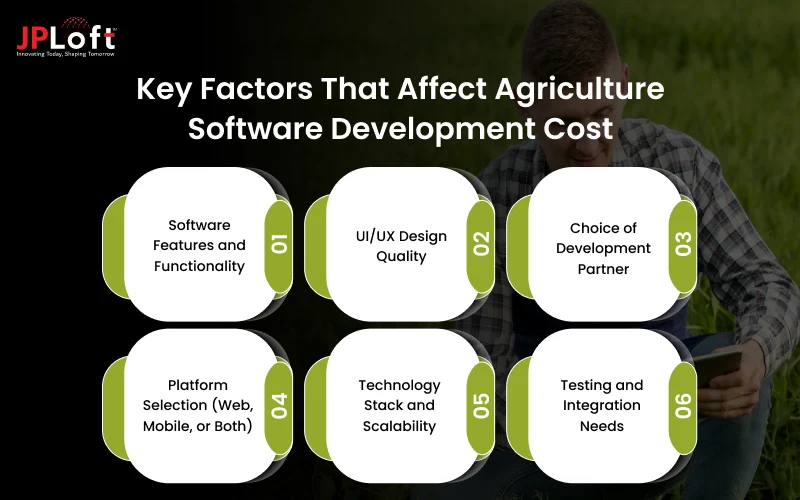
1. Software Features and Functionality
Features play the biggest role in deciding the overall cost. Basic tools like crop tracking, login, and alerts are more affordable to build.
As you add advanced capabilities like AI insights, weather forecasting, and automation, complexity increases. Including top custom software features also raises development effort due to higher technical requirements and integration needs.
Cost Impact: 30% to 50% of total development cost
2. UI/UX Design Quality
Design directly affects usability and user engagement. Simple layouts reduce cost, while custom interfaces require more effort and planning.
Professional UI/UX design services improve user experience and make the software easier to use. Better design quality increases development time slightly but supports long-term adoption.
Cost Impact: 10% to 20% of total development cost
3. Choice of Development Partner
The development team you choose has a strong impact on pricing and quality. Skilled developers build scalable and efficient systems.
Experience, expertise, and team structure influence cost and performance. A reliable team can also handle complex software development challenges, reducing risks during development.
Cost Impact: 25% to 40% variation based on team location and expertise
4. Platform Selection (Web, Mobile, or Both)
Choosing the right platform affects development cost and effort. A single platform solution is more affordable and quicker to launch.
Developing for multiple platforms increases time, testing, and resource requirements. This directly impacts the overall cost to make an agriculture software.
Cost Impact: 20% to 35% increase for multi-platform development
5. Technology Stack and Scalability
The app technology stack impacts the performance, flexibility, and future growth of the software. Simple technologies reduce initial cost and effort.
Scalable systems require higher investment but support expansion, real-time processing, and larger user bases, increasing overall development complexity.
Cost Impact: 15 to 20% increase, depending on architecture complexity
6. Testing and Integration Needs
Thorough app testing ensures smooth performance across devices and real farming conditions. Integration with APIs like weather, payments, and satellite data adds development effort.
More integrations increase time and cost, but they improve software reliability, accuracy, and overall user experience significantly.
The cost to build an agriculture software depends on several factors. A balanced approach to features, design, and technology helps control cost and ensures better performance.
Cost Impact: 15% to 25% of total development cost
Hidden Costs in Agriculture Software Development
While planning the budget, many focus only on development. However, hidden expenses increase the total investment. These costs often answer, 'What is the cost to develop an agriculture software? when viewed beyond initial development.
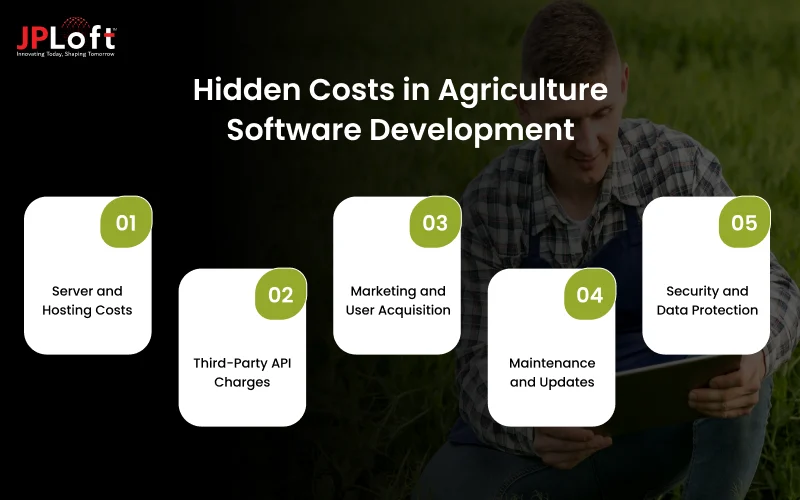
Below are the key hidden costs you should plan for:
A. Server and Hosting Costs
As your user base grows, server demand increases steadily. Cloud hosting, storage, and processing require ongoing investment.
Scalable infrastructure supports performance and reliability, but it also raises long-term expenses, increasing the overall cost to make an agriculture software significantly.
B. Third-Party API Charges
Agriculture software depends on APIs for weather updates, maps, payments, and notifications. These services improve functionality but follow usage-based pricing models.
Frequent API calls increase operational expenses, making integrations a major contributor to rising long-term development and maintenance costs.
C. Marketing and User Acquisition
Launching the software is only the first step toward growth. Marketing efforts like ads, promotions, and optimization require continuous spending.
Following top software development outsourcing trends can help reduce costs, but marketing still remains a key hidden expense for long-term success.
D. Maintenance and Updates
Post-launch support is essential to keep the software stable and functional. Regular updates, bug fixes, and performance improvements require continuous effort.
Investing in app maintenance services ensures smooth operation, but it also adds to ongoing development and operational costs.
E. Security and Data Protection
Protecting user and farm data is critical for trust and reliability. Regular updates, monitoring, and encryption improvements are required.
Strong mobile app security practices increase development effort, impacting the overall cost to build an agriculture software over time.
Ignoring these hidden costs can increase your overall budget beyond expectations. Proper planning helps manage expenses and ensures long-term success.
How to Reduce Agriculture Software Development Cost?
You can reduce the cost to make an agriculture software by making smart decisions early. The key is to focus on essential features, avoid unnecessary complexity, and plan for scalability from the beginning.
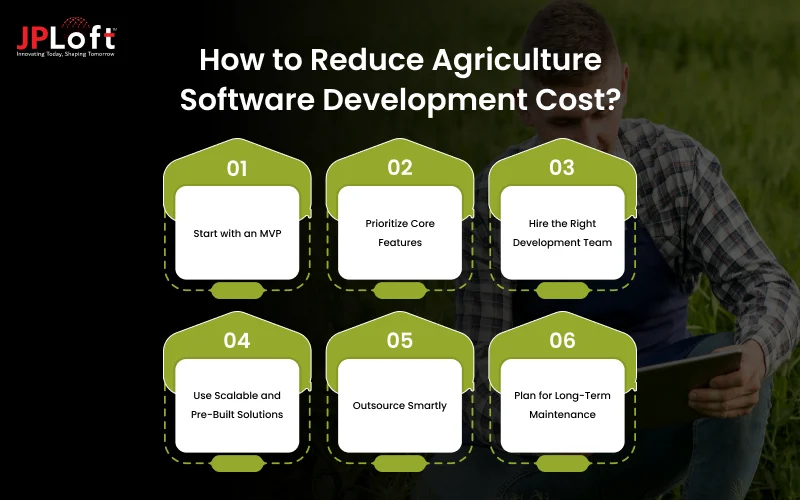
1. Start with an MVP
Start with a Minimum Viable Product that includes only essential features needed for launch. This approach reduces initial investment and speeds up development.
It also helps validate real user needs before adding advanced functionalities, avoiding unnecessary development costs early.
2. Prioritize Core Features
Focus on features that directly solve user problems instead of adding everything at once. Avoid complex modules in the early stage.
This approach helps control the cost to build an agriculture software while keeping development focused, efficient, and aligned with business goals.
3. Hire the Right Development Team
Choosing the right development team improves efficiency and reduces unnecessary software/agriculture app development cost. Skilled professionals guide better decisions and avoid costly mistakes.
When you hire dedicated developers, you gain focused expertise, better resource utilization, and improved control over the development process.
4. Use Scalable and Pre-Built Solutions
Using scalable technologies and pre-built components reduces development time and effort. It helps avoid building everything from scratch.
This approach improves flexibility and lowers technical complexity. Additionally, this makes it easier to manage the overall custom software development cost effectively over time.
5. Outsource Smartly
Outsourcing development tasks can reduce costs when done carefully. Choosing experienced teams ensures quality without overspending.
Businesses that hire software developers strategically can balance cost and performance while maintaining project timelines and deliverables within budget constraints.
6. Plan for Long-Term Maintenance
Planning for maintenance early helps avoid unexpected expenses after launch. Regular updates, monitoring, and improvements are necessary for smooth performance.
A clear strategy ensures long-term stability and prevents costly redevelopment. Also, this help businesses maintain efficiency without increasing overall development costs significantly.
A structured approach helps reduce the cost to create an agriculture software without affecting quality. Careful planning, feature prioritization, and smart hiring decisions ensure better cost control and long-term success.
Monetization Strategies for Agriculture Software
Building the software is only one part of success. A clear revenue strategy is essential to recover the cost to develop an agriculture software and ensure long-term growth.
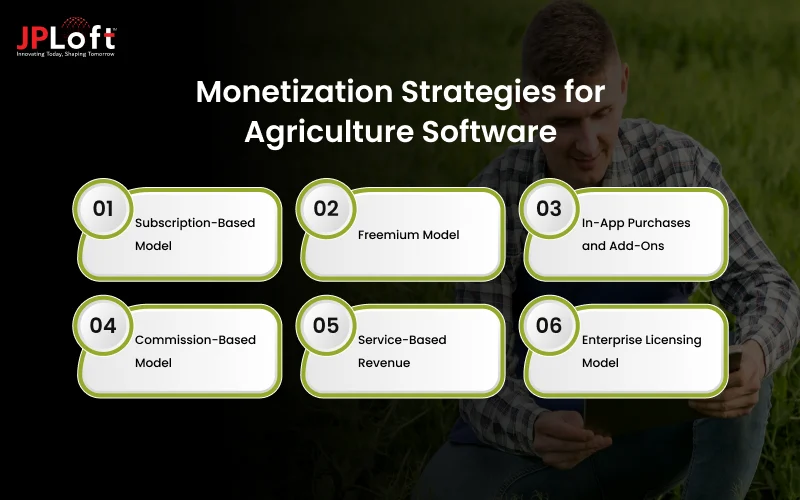
► Subscription-Based Model
A subscription model allows users to pay monthly or yearly for accessing features and updates. It provides predictable revenue and long-term customer retention.
This model works well for platforms offering analytics, insights, and continuous improvements to users over time.
► Freemium Model
The freemium model offers basic features for free while charging for advanced functionalities. It helps attract a larger user base quickly.
Many successful platforms use software monetization models like freemium to build trust and convert free users into paying customers.
► In-App Purchases and Add-Ons
This model allows users to purchase additional tools, reports, or premium features based on their needs.
It offers flexibility and increases revenue gradually. It also helps recover the cost to create an agriculture software without forcing users into fixed pricing plans.
► Commission-Based Model
In this model, you earn revenue by charging a small fee on transactions made through the platform. It works well when connecting farmers, suppliers, or buyers.
This approach creates consistent income and supports growth while increasing platform engagement effectively.
► Service-Based Revenue
Offering onboarding, consulting, and training services creates an additional income stream. Many users need help understanding complex systems.
Businesses exploring how to build agricultural software can combine services with the product to increase overall value and improve customer satisfaction.
► Enterprise Licensing Model
Enterprise licensing allows businesses to use your software for a fixed or recurring fee. Organizations often require tailored solutions for their operations.
Companies that develop a custom software for enterprises can charge premium pricing based on features and scalability.
Choosing the right monetization strategy helps generate revenue and sustain long-term growth. A balanced approach ensures better returns and supports continuous improvement without affecting user experience.
Why Choose JPLoft to Build Cost-Effective Agriculture Software?
Choosing the right partner plays a key role in managing your development budget. JPLoft stands out as a trusted agriculture software development company that focuses on cost efficiency without compromising quality.
The team carefully analyzes your requirements to avoid unnecessary features and reduce overall expenses. This ensures you invest only in what truly adds value to your software.
JPLoft follows a structured approach to optimize resources, timelines, and technology choices. This helps control development costs while maintaining performance and scalability. Transparent pricing and clear cost breakdowns also prevent unexpected budget overruns.
The team also focuses on building scalable systems that reduce long-term maintenance and upgrade costs. Efficient planning helps avoid expensive redevelopment in the future.
With a cost-focused strategy and industry expertise, JPLoft helps businesses build agriculture software within budget while ensuring strong performance and long-term value.
Conclusion
Understanding the agriculture software development cost helps businesses plan better and avoid unexpected expenses. The overall investment depends on features, design, technology, and long-term goals.
From basic tools to advanced platforms, the cost can vary widely. Careful planning, feature prioritization, and the right development approach can help control expenses effectively.
It is also important to consider hidden costs, maintenance, and scalability before starting development. These factors directly impact the total budget and long-term success of the software.
By following the right strategies and choosing a reliable partner, businesses can build efficient and scalable solutions. A clear understanding of the agriculture software development cost breakdown ensures smarter decisions and better returns over time.
FAQs
The cost usually ranges between $10,000 and $120,000+. It depends on features, design, and complexity. Basic solutions cost less, while advanced platforms with AI and integrations require higher investment and longer development time.
Key factors include features, design quality, technology stack, and development team. Advanced functionalities, custom interfaces, and scalable systems increase cost. Proper planning and prioritizing features can help manage expenses and avoid unnecessary spending during development.
Yes, hidden costs include server hosting, API usage, maintenance, and security updates. Marketing and user acquisition also require investment. Ignoring these factors can increase the overall budget and affect long-term performance and sustainability of the software.
You can reduce costs by starting with an MVP and focusing on core features. Choosing scalable technologies and experienced developers also helps. Proper planning and phased development reduce unnecessary expenses and ensure better resource utilization throughout the project lifecycle.
Common strategies include subscription plans, freemium models, and in-app purchases. Some businesses also use commissions or service-based revenue. Choosing the right model depends on target users and features, helping generate steady income and long-term business growth.

Rahul Sukhwal is the CEO and Founder of JPLoft, a visionary technologist with 18+ years at the forefront of emerging tech innovation and software engineering. He channels deep software engineering and AI expertise into building smarter, scalable solutions that shape how forward-thinking businesses worldwide harness the true power of AI.



Share this blog