


Key Takeaways:
Software development outsourcing helps enterprises address developer shortages and speed up software delivery without expanding in-house teams.
Key software outsourcing trends include AI and machine learning, cloud-native development, cybersecurity-first practices, remote-first teams, IoT, and PWA adoption, shaping modern software delivery.
AI and machine learning turn outsourced applications into intelligent platforms, enabling automation, insights, and personalization.
AI-ready, cloud-native architectures support long-term scalability and future growth as enterprise needs evolve.
Partnering with JPLoft enables faster scaling and reliable software delivery, backed by secure development practices and proven expertise.
The global software development outsourcing market is experiencing remarkable growth, projected to reach $940 billion by 2034, growing at a CAGR of 5.8%.
This exponential expansion reflects how businesses worldwide increasingly rely on external development teams to build, maintain, and innovate their software systems.
As organizations face persistent developer shortages, rising operational costs, and pressure to adopt emerging technologies like AI and cloud computing, outsourcing has evolved from a cost-cutting tactic into a strategic competitive advantage.
What are the top software development outsourcing trends?
The answer encompasses AI integration, cloud-native architectures, cybersecurity-first approaches, remote-first team models, and specialized expertise in emerging technologies that are reshaping how businesses approach software development.
This comprehensive guide explores the complete list of trends transforming the outsourcing landscape, helping you understand how these shifts impact your technology strategy and competitive positioning in 2026 and beyond.
Let’s begin together.
What is Software Development Outsourcing?
Software development outsourcing is all about hiring an external company or freelance developers to handle the software projects. It comprises designing, selection of tech stack, and maintenance.
Here, the businesses select the right outsourcing partner rather than using an in-house team. Basically, it involves contracting with third parties for diversified tasks like app development, testing, or full project management, which helps companies to focus on core businesses.
Now, another question that arises is “why outsource software development?” and is it effective for your business?
Let’s switch to the following section for the same.

Why Outsource Software Development?
Companies outsource the software development process for cost efficiency, access to specialized talent, and greater flexibility.
When you decide to develop a custom software, one of the questions is “whether you can build it in-house or outsource it?”
Well, with the points mentioned below, it can be a better idea to outsource the software development process. Let’s discuss them all.
1. Budget Optimization and Cost Effectiveness
When you outsource software development, it specifically reduces the operational cost to develop software and eliminates the expenses that are linked to hiring full-time employees, including salaries, benefits, office space, and training.
The complete global business process outsourcing market size was estimated at USD 302.62 billion in 2024, and is further projected to reach USD 525.23 billion by 2030, that is growing at a CAGR of 9.8% from 2025 to 2030.
Thus, it can be stated that outsourcing is helping businesses to hire skilled developers from diverse regions with ease.
2. Access to Global Talent
Through outsourcing, you can have access to a worldwide pool of skilled developers with diverse technical expertise that might not be available locally.
Along with this, the businesses can have a worldwide pool of skilled developers with diverse technical expertise that might not be available locally. You can hire a software developer with exactly the skills required to make your software lead the competition.
Furthermore, you can tap into specialists in emerging technologies like AI, blockchain, cloud computing, and more.
3. Faster Time-to-Market
Outsourcing is one of the crucial factors that helps the external development teams to accelerate project timelines via dedicated focus, established workflows, and the ability to work across multiple time zones.
Additionally, the outsourcing partners often have ready-to-deploy frameworks, reusable components, and streamlined processes. This speed advantage is crucial in competitive markets where being first can determine success or failure.
4. Focus on Core Business Activities
When you outsource the software development process, it will allow your internal team to concentrate on strategic business functions, customer relationships, rather than managing technical complexities.
Through delegating the responsibilities to the experts, you can focus on leadership opportunities for business growth, market expansion, and competitive positioning. This will
Now, as you are ready to outsource the software development process, let's learn what the latest trends are in the following section.
Top Software Development Outsourcing Trends
The diversified software development outsourcing trends are AI-driven outsourcing, the rise of nearshoring, cybersecurity, demand for full-stack teams, outsourcing of cloud, and many others.
Let’s check them all out, below.
Trend #1 AI and Machine Learning Integration
Artificial intelligence and machine learning are revolutionizing outsourced software development, with development teams increasingly incorporating AI-powered features into applications for predictive analytics, automation, and personalization.
With the help of an advanced AI development company, you can have specialized AI experts who know natural language processing, computer vision, and intelligent automation, which can be cost-prohibitive.
Companies outsourcing development projects expect AI capabilities as standard offerings rather than premium add-ons, making AI literacy essential for competitive outsourcing firms.
Trend #2: Cloud-Native Development and Microservices Architecture
The shift toward cloud-native application development has transformed outsourcing relationships, with teams building scalable, resilient applications designed specifically for cloud environments using containerization and microservices.
Outsourcing partners specializing in AWS, Azure, and Google Cloud development services help businesses leverage cloud benefits, including auto-scaling, global distribution, and pay-as-you-go pricing models.
Microservices architecture allows distributed teams to work independently on different application components, making outsourcing more efficient as teams can develop, test, and deploy services without dependencies.
Trend # 3: Cybersecurity-First Development Approach
With rising cyber threats and stringent data protection regulations, outsourcing firms are adopting security-first development methodologies where security considerations are integrated throughout the development lifecycle rather than added afterward.
DevSecOps practices embed security testing, vulnerability scanning, and compliance checks into CI/CD pipelines, ensuring every code commit meets security standards before deployment.
Outsourcing partners now provide specialized security expertise, including penetration testing, threat modeling, secure coding practices, and compliance with regulations like GDPR, HIPAA, and PCI DSS. They make use of AI in cybersecurity and effectively improve the security parameters.
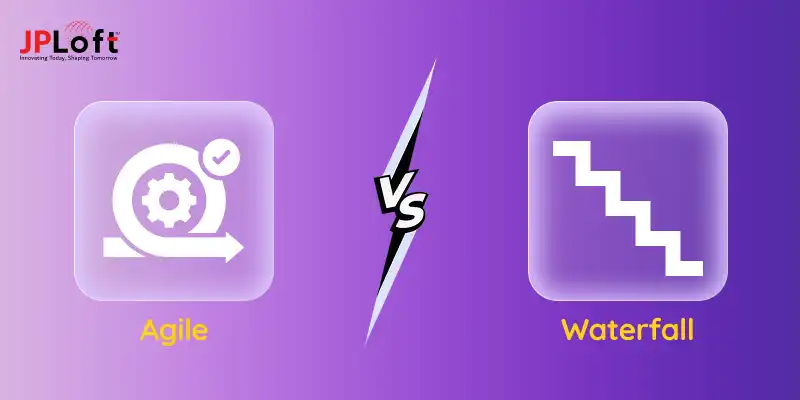
Trend #4. Agile and DevOps Adoption
Agile methodologies and DevOps practices have become standard expectations rather than competitive advantages in software development outsourcing partnerships.
Outsourcing teams employ iterative development sprints, continuous integration/continuous deployment (CI/CD) pipelines, and automated testing to deliver working software frequently and respond quickly to changing requirements.
These practices improve collaboration between distributed teams, reduce time-to-market, and enable faster feedback loops that ensure the final product aligns with business objectives.
Trend #5. Low-Code and No-Code Platform Development
Low-code and no-code platforms are transforming outsourcing dynamics by enabling faster application development with less manual coding, reducing costs, and accelerating delivery timelines.
Outsourcing partners leverage platforms like OutSystems, Mendix, and Microsoft Power Apps to build enterprise applications, internal tools, and MVPs rapidly while still providing customization when needed.
This trend democratizes development, allowing business analysts and citizen developers to participate in application creation while professional developers focus on complex integrations and custom features.
Trend #6. Remote-First and Distributed Development Teams
The pandemic permanently shifted software outsourcing toward remote-first models where distributed teams collaborate seamlessly across geographies using advanced communication and project management tools.
Companies now embrace fully remote outsourcing relationships, recognizing that talent quality matters more than physical location, opening access to global expertise previously limited by geographic constraints.
Remote collaboration tools, including Slack, Jira, GitHub, Zoom, and Miro, have matured to support effective distributed teamwork, code reviews, pair programming, and agile ceremonies. This trend reduces costs associated with physical office spaces
Trend #7: Blockchain and Web3 Development
Blockchain technology and Web3 applications represent a growing segment of outsourcing demand as businesses explore decentralized applications, smart contracts, NFT platforms, and cryptocurrency integrations.
Specialized outsourcing firms offer expertise in blockchain protocols like Ethereum, Solana, Polygon, and Hyperledger, helping businesses implement transparent, secure, and tamper-proof systems.
Web3 development includes building decentralized finance (DeFi) platforms, tokenization systems, DAOs (Decentralized Autonomous Organizations), and blockchain-based supply chain solutions.
Trend #8: Internet of Things (IoT) Development
IoT application development is increasingly outsourced as businesses seek to connect physical devices, collect sensor data, and build intelligent systems across manufacturing, healthcare, agriculture, and smart cities.
Outsourcing partners provide end-to-end IoT solutions, including hardware prototyping, firmware development, cloud backend systems, data analytics platforms, and mobile applications for device control and monitoring.
This trend supports digital transformation initiatives where physical assets become intelligent, connected, and data-generating components of business operations.
Trend #9: Progressive Web Applications (PWA)
Progressive Web Applications combine the best features of web and mobile applications, and outsourcing teams increasingly specialize in building PWAs that work offline, send push notifications, and install on home screens like native apps.
PWAs eliminate the need for separate iOS and Android development while providing app-like experiences through web browsers, significantly reducing development and maintenance costs.
Outsourcing firms leverage modern web technologies, including service workers, web app manifests, and responsive design to create fast, reliable, and engaging applications.
Trend #10. Quantum Computing Readiness
Forward-thinking outsourcing firms are beginning to offer quantum computing consultancy and quantum-ready application development as this technology approaches commercial viability.
While still emerging, quantum computing will revolutionize cryptography, optimization problems, drug discovery, and financial modeling, creating demand for developers who understand quantum algorithms and programming languages like Q# and Qiskit.
Outsourcing partners help businesses prepare for the quantum era by developing quantum-resistant cryptography, exploring quantum computing use cases, and building hybrid classical-quantum applications.
Trend #11. Edge Computing Integration
Edge computing, which processes data closer to where it's generated rather than in centralized cloud data centers, is becoming essential for applications requiring real-time processing and low latency.
Outsourcing teams specialize in building edge-enabled applications for autonomous vehicles, industrial automation, augmented reality, and smart infrastructure where milliseconds matter.
This trend complements cloud computing rather than replacing it, creating hybrid architectures that optimize performance, reduce bandwidth costs, and improve reliability.
Trend #12. Sustainable and Green Software Development
Environmental consciousness is influencing outsourcing decisions as businesses prioritize partners committed to energy-efficient coding practices, carbon-neutral infrastructure, and sustainable development processes.
Green software development focuses on writing efficient code that minimizes computational resources, choosing eco-friendly cloud providers powered by renewable energy, and optimizing applications to reduce energy consumption.
This software development outsourcing trend aligns with corporate ESG (Environmental, Social, Governance) goals and appeals to environmentally conscious consumers who evaluate companies based on their entire value chain sustainability.
Trend #13. Specialized Industry Verticals
Outsourcing firms are increasingly specializing in specific industries like healthcare, finance, logistics, or education, offering deep domain expertise alongside technical capabilities.
Industry-specialized partners understand regulatory requirements, compliance standards, user workflows, and business challenges unique to their verticals, delivering solutions that address real operational needs.
This specialization reduces project risks, accelerates development through reusable industry-specific components, and ensures applications meet sector-specific standards like HIPAA for healthcare or PCI DSS for payment processing.
Trend #14. Augmented Reality (AR) and Virtual Reality (VR) Development
AR and VR application development is increasingly outsourced as businesses explore immersive experiences for training, marketing, product visualization, virtual showrooms, and remote collaboration.
Specialized outsourcing teams bring expertise in Unity, Unreal Engine, ARKit, ARCore, and WebXR to create engaging three-dimensional experiences across headsets, smartphones, and web browsers. Working with an AR/VR app development company, you can excel in this advanced technology implementation process.
The complexity and specialized skill requirements of AR/VR development, including 3D modeling, spatial computing, gesture recognition, and performance optimization, make outsourcing attractive for companies experimenting with these technologies.
Trend #15. API-First and Headless Architecture
API-first development approaches, where applications are built as interconnected services communicating through well-documented APIs, are becoming standard in outsourcing projects. It is a significant software development outsourcing trend for your project.
Headless architecture decouples frontend presentation layers from backend business logic, enabling flexibility to serve multiple channels (web, mobile, IoT, voice assistants) from a single backend.
Outsourcing partners specializing in API development, GraphQL, RESTful services, and microservices help businesses build flexible, scalable systems that adapt as technology evolves.
Trend #16. Data Analytics and Business Intelligence Integration
Outsourced development projects increasingly include sophisticated data analytics capabilities, transforming applications from operational tools into strategic intelligence platforms.
It is a significant software development outsourcing trend, where development teams integrate analytics frameworks, data visualization libraries, machine learning models, and real-time dashboards that turn raw data into actionable business insights.
Outsourcing partners bring expertise in tools like Tableau, Power BI, Apache Spark, and custom analytics solutions that help businesses understand customer behavior, optimize operations, and make data-driven decisions. This trend reflects the recognition that modern applications must not only execute functions but also provide intelligence that guides business strategy.
Trend # 17. Automated Testing and Quality Assurance
Automated testing has evolved from a nice-to-have to an essential component of outsourced development, with teams implementing comprehensive test automation frameworks covering unit, integration, and end-to-end testing.
This is one of the important software development outsourcing trends for continuous testing integrated into CI/CD pipelines, ensuring every code change is automatically validated against functional requirements and security standards before deployment.
Outsourcing firms leverage testing tools like Selenium, Cypress, Jest, and specialized testing platforms to deliver high-quality software with fewer defects and faster release cycles. This trend reduces the cost of quality assurance, accelerates time-to-market, and provides confidence that outsourced code meets rigorous quality standards.
Trend #18. Outcome-Based and Value-Driven Contracts
The outsourcing industry is shifting from time-and-materials billing toward outcome-based contracts where payment is tied to achieving specific business results, product milestones, or performance metrics.
Value-driven engagement models align outsourcing partner incentives with client success, encouraging innovation, efficiency, and focus on business impact rather than billable hours. This trend will ensure a value-driven market and can enhance the overall outcome for your brand.
These contracts might include revenue-sharing arrangements, performance bonuses for exceeding targets, or penalties for missed deadlines, creating true partnerships where both parties share risks and rewards.
Trend #19. Multi-Vendor and Hybrid Outsourcing Models
Companies are increasingly adopting hybrid outsourcing strategies combining multiple vendors, in-house teams, and freelancers rather than relying on a single outsourcing partner for all development needs.
This multi-vendor software development outsourcing trend provides flexibility, reduces dependency risks, allows access to specialized expertise for different project components, and creates competitive pressure that can improve quality and pricing.
Successful hybrid models require strong governance, clear communication protocols, and integration strategies ensuring seamless collaboration across distributed teams.
Trend #20. Emphasis on User Experience (UX) and Design
Outsourcing relationships now commonly include dedicated UX designers, researchers, and design strategists working alongside developers to create intuitive, accessible, and visually appealing applications.
With the software development outsourcing trends, you can focus on user-centered design processes, including user research, prototyping, usability testing, and iterative refinement.
Outsourcing UI/UX design services enhances accessibility standards (WCAG), mobile-first design, and emerging interaction paradigms, ensuring applications delight users and drive engagement.

Why Choose JPLoft for Software Development Outsourcing?
Choosing the right partner for software development outsourcing is critical for long-term success. JPLoft brings a strong mix of technical expertise and business understanding.
Working with JPLoft, the best software development company, is one where you are committed to real outcomes and measurable progress.
Our company follows a proven outsourcing approach built on clear communication and disciplined execution. Clients across the US market rely on JPLoft because we deliver skilled developers who adapt quickly to project needs.
The team maintains high-quality standards and secure coding practices from the first day. Flexible engagement models make collaboration easy and efficient for enterprises of every size.
What this really means is simple. Users receive scalable platforms and dependable support after launch.
Conclusion
Software development outsourcing helps enterprises move faster and spend smarter. External teams reduce hiring delays and expand technical skills. Cloud-native tools improve security and performance for end users.
Agile and DevOps keep projects organized and predictable. Nearshoring and remote-first models open access to global experts. Businesses gain flexibility to scale up or down as needed. Modern platforms like PWA and IoT simplify operations for users.
AI and blockchain add intelligence and transparency to systems. The right process-focused software partner turns complex requirements into practical working software that users adopt easily.
FAQs
It is the process where an enterprise hires an external development partner to build software solutions. The outsourced team handles design, coding, testing, and maintenance so businesses can focus on strategy and growth.
AI integration, cloud-native architecture, cybersecurity focus, agile DevOps adoption, low-code platforms, remote-first teams, IoT expansion, PWA solutions, outcome-based contracts for enterprise users.
Healthcare, finance, logistics, education, and retail see high impact through specialized outsourced development teams.
Outsourcing reduces cost, improves efficiency, and allows users to access expert developers with proven processes. It helps companies scale technical teams quickly without investing in permanent infrastructure.

Rahul Sukhwal is the CEO and Founder of JPLoft, a visionary technologist with 18+ years at the forefront of emerging tech innovation and software engineering. He channels deep software engineering and AI expertise into building smarter, scalable solutions that shape how forward-thinking businesses worldwide harness the true power of AI.


Share this blog