


Key Takeaways:
Smart agriculture improves crop monitoring, resource management, and farm efficiency through automation and real-time data systems.
AI-powered tools help farmers predict weather risks, detect crop diseases early, and improve field planning accuracy over time.
Precision farming and smart irrigation systems reduce unnecessary fertilizer, pesticide, and water usage across agricultural operations worldwide today.
Drones, robotics, and IoT platforms are transforming traditional farming into faster, data-driven, and highly efficient operations for farmers.
Future agricultural growth will depend heavily on predictive analytics, climate resilience, automation, and connected digital farming ecosystems globally.
Partnering with JPLoft helps agribusinesses build scalable platforms for smart monitoring, automation, analytics, and connected farming operations.
Farmers today face rising food demand, changing weather conditions, and limited natural resources. Traditional farming methods often struggle to maintain stable productivity under these conditions.
Water shortages, soil damage, and labor challenges are also affecting farming operations across many regions worldwide.
This shift is driving the rapid adoption of agricultural technology in modern farming. According to IMARC Group, the global smart agriculture market could reach USD 38.7 billion by 2034.
Farms are increasingly adopting AI, IoT, and precision-based farming systems for better efficiency and productivity.
Smart sensors, drones, and automated irrigation systems now help farmers manage fields with greater accuracy and better resource control.
The growing role of technology in agriculture is supporting more sustainable and precision-based farming practices worldwide. This blog explores the latest farming innovations and how digital tools improve modern agricultural operations.
Major Technological Advancements Transforming Agriculture
Modern farming is changing quickly with the help of digital tools, automation, and data-driven systems.
These technologies are helping farmers improve productivity, reduce waste, and manage daily farming activities more efficiently.
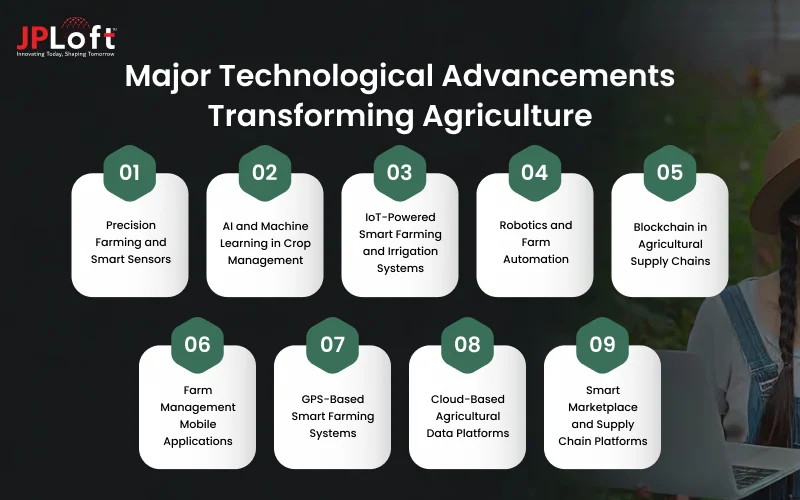
Below are the major technology advancements in agriculture that are transforming modern farming across different regions.
1. Precision Farming and Smart Sensors
Farmers now use smart sensors and digital tools to manage farms more effectively. These sensors track soil moisture, nutrient levels, and crop health in real time.
Farmers can easily find unhealthy areas and use fertilizers only where needed. This method helps reduce waste, lower farming costs, and improve crop quality.
The growing use of precision agriculture technology is also helping farmers make better field decisions while reducing extra chemical usage.
2. AI and Machine Learning in Crop Management
AI systems now help farmers simplify crop monitoring and field analysis through real-time data processing. Many agribusinesses also invest in AI development services for smarter and faster farm management.
These systems detect diseases, predict weather risks, and suggest better harvesting schedules using live farm analytics.
Machine learning tools analyze field patterns and reduce crop losses caused by delayed decisions. These technological advancements in agriculture improve farm planning with less manual effort.
3. IoT-Powered Smart Farming and Irrigation Systems
IoT systems are changing how farms manage daily operations. These platforms connect sensors, irrigation tools, livestock trackers, and farm machinery in one system.
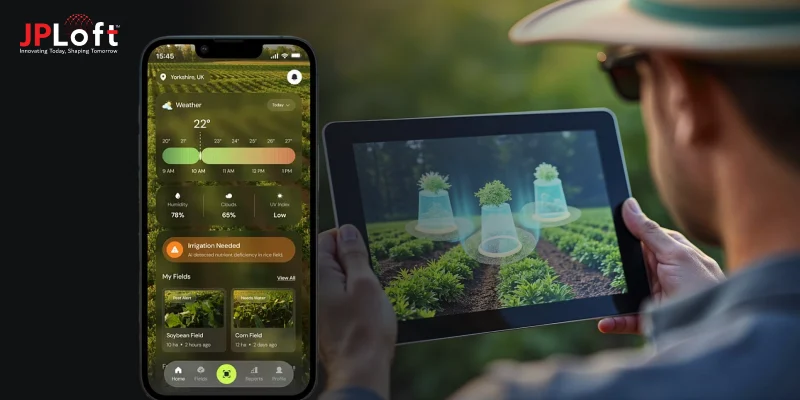
Farmers can monitor field conditions remotely through cloud-based platforms and mobile applications. Smart irrigation tools also help reduce water waste and improve resource management.
Many agribusinesses now prefer IoT app development services that combine crop monitoring, irrigation, and equipment tracking in one platform.
This new technology in agriculture and farming improves efficiency and reduces operational delays.
4. Robotics and Farm Automation
Automation is helping farms reduce manual work in daily farming activities. Robotic harvesters, autonomous tractors, and automated weed control systems now perform repetitive tasks with greater speed and accuracy.
These systems help farms maintain productivity during labor shortages and peak harvesting seasons. For many agribusinesses, factors like infrastructure upgrades and agriculture software development cost also influence the adoption of large-scale automation systems.
Automated farming equipment is an example of latest technology in agriculture that is improving efficiency and reducing delays in farm operations.
5. Blockchain in Agricultural Supply Chains
Blockchain technology creates secure digital records that improve transparency across agricultural supply chains. Farmers, suppliers, and retailers can track products from farm to final delivery without data manipulation risks.
Consumers also gain better visibility into food quality and sourcing details. Many enterprises collaborate with a reliable blockchain development company to create blockchain-enabled agricultural platforms for inventory and supply chain management.
These systems improve trust and better tracking throughout the distribution process.
6. Farm Management Mobile Applications
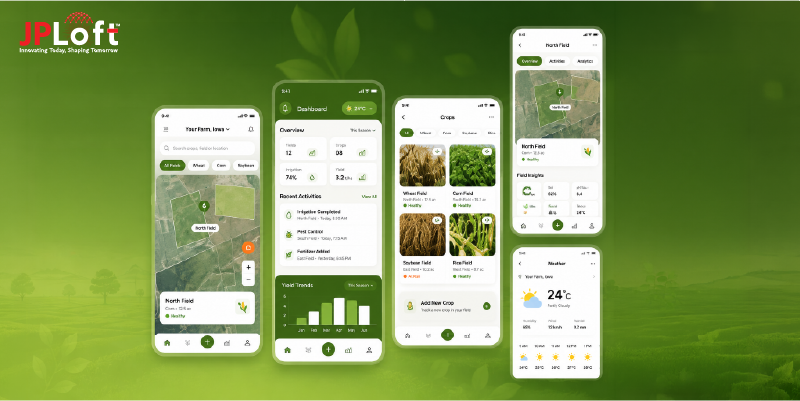
Mobile farming applications help farmers manage operations, monitor crops, and track resources from one platform. These applications simplify communication, reporting, and daily farm management for agricultural businesses.
Many companies now use cloud-connected and mobile-first farming platforms to improve operational efficiency. Businesses also use professional UI/UX design services to improve user experience and simplify farm management activities.
This innovation in agricultural technology helps farmers improve efficiency, manage operations faster, and make better decisions using real-time farm data.
7. GPS-Based Smart Farming Systems
Many farms now use GPS-based systems to improve field accuracy and operational planning activities. GPS-enabled equipment helps farmers manage planting, fertilization, and harvesting tasks more efficiently across large farming areas.
These systems reduce fuel usage, lower operational waste, and improve overall farm management processes. Smart agricultural technology like GPS tracking also supports better route planning and precision-focused farming activities.
Many agribusinesses now use GPS-enabled platforms for monitoring, resource management, and operational control across connected farming environments.
8. Cloud-Based Agricultural Data Platforms
Cloud-based systems help farmers store, access, and manage agricultural data from connected devices remotely. Farmers can track crop performance, weather updates, and machinery conditions from almost any location.
These digital platforms improve farm visibility and support faster decision-making through real-time data access and monitoring systems. Many agribusinesses also use cloud-based platforms to simplify reporting and daily farm management activities.
Modern cloud systems represent important technological advancements in agriculture focused on connected farming operations and improved agricultural data management.
9. Smart Marketplace and Supply Chain Platforms
Digital agricultural marketplaces connect farmers, suppliers, and buyers through centralized online platforms and management systems. These platforms help reduce delays in product distribution and improve agricultural supply chain visibility significantly.
Many agribusinesses now use connected systems for inventory tracking, logistics management, and direct farm product sales online. These digital platforms also improve communication between farmers, suppliers, and customers during distribution activities.
Smart systems improve operational transparency, strengthen product tracking, and support efficient agricultural supply chain management across modern farming operations.
Hence, these innovations clearly show what are the advanced technology in agriculture is and how they are transforming farming into a more efficient, data-driven, and sustainable system.
How Technology Is Transforming Modern Farming?
Farming is changing quickly with smart tools and digital systems. Businesses planning to build agricultural software should understand how these technologies work.
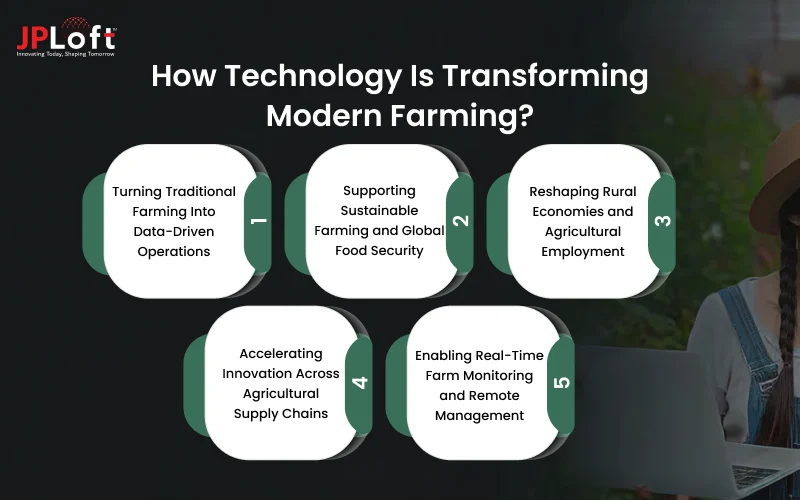
These solutions help farmers improve efficiency, reduce waste, and manage farming operations more effectively.
#1: Turning Traditional Farming Into Data-Driven Operations
The growing use of technology in agriculture is helping farmers make better decisions using real-time farm data. Sensors, AI systems, and farm software built by a software development company regularly track crop health, soil conditions, and machinery performance.
Farmers can respond faster to field issues and improve productivity through data-driven decisions.
#2: Supporting Sustainable Farming and Global Food Security
Modern farming technologies help reduce water waste, fuel usage, and unnecessary chemical application. Precision-based systems help farmers use resources only where crops actually need them.
Smart farming systems also improve crop production and support climate-resilient agricultural practices. These technologies strengthen food supply chains during changing environmental conditions.
#3: Reshaping Rural Economies and Agricultural Employment
Agri-tech startups are creating new jobs through digital farming services and smart equipment management. Farmers now need skilled workers for drone operations, farm analytics, and automated farming systems.
This shift is also driving innovation and the digital transformation in agriculture industry across rural farming communities.
#4: Accelerating Innovation Across Agricultural Supply Chains
Connected systems are improving transparency from farm production to final product delivery. Smart marketplaces and logistics platforms help reduce delays during transportation and storage activities.
Many businesses exploring how has technology changed agriculture now focus on faster deliveries and better product tracking.
#5: Enabling Real-Time Farm Monitoring and Remote Management
Cloud-based platforms help farmers monitor farm operations from any location using connected devices. Farmers can track weather conditions, machinery status, irrigation systems, and crop performance in real time.
These digital systems improve operational control and help farms respond faster to field challenges and changing conditions.
Key Benefits of Agricultural Technology for Farmers
Modern farming technologies are helping farmers improve productivity and reduce daily farming challenges.
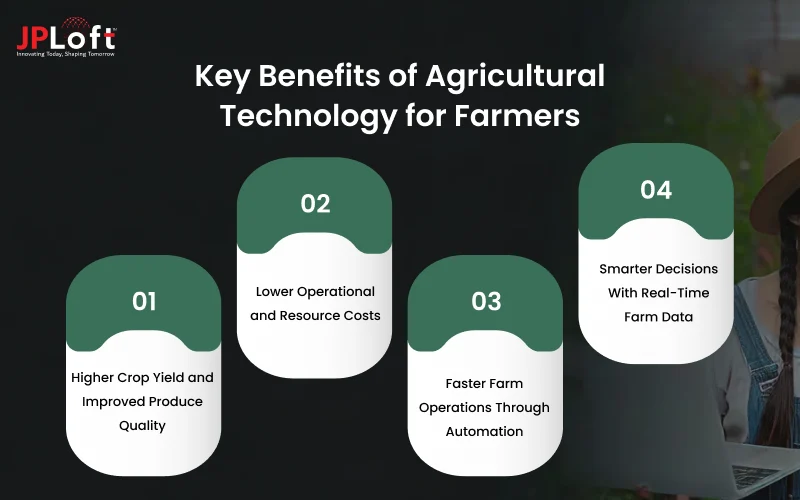
From automation to real-time monitoring tools, digital solutions are making farming faster, easier, and more cost-effective.
► Higher Crop Yield and Improved Produce Quality
Better field monitoring helps farmers identify crop problems before they become serious. Sensors and AI tools also improve nutrient management and reduce crop losses.
The growing use of precision agriculture technology is helping farmers grow healthier crops and maintain better crop quality.
► Lower Operational and Resource Costs
Farmers can reduce spending on fertilizers, pesticides, fuel, and labor by using smart farming methods. Automated irrigation and precision spraying systems also prevent unnecessary resource use.
Many farms using modern agricultural technology are improving efficiency while lowering daily farming costs.
► Faster Farm Operations Through Automation
Automation helps farmers complete repetitive tasks like harvesting, spraying, and soil preparation more quickly. Smart farming machines also improve workflow during busy farming seasons.
This digital transformation in agriculture helps farmers manage larger farming areas with fewer delays and less manual effort.
► Smarter Decisions With Real-Time Farm Data
The rapid growth of agricultural technology is helping farmers make faster and better decisions using live farm data. Weather updates, crop monitoring tools, and predictive analytics systems provide clear insights into field conditions.
These technology advancements in agriculture help farmers respond quickly to changing farming and weather situations.
The Future of Agri-Tech and Connected Farming
The future of farming will depend on intelligent systems, connected tools, and predictive technologies.
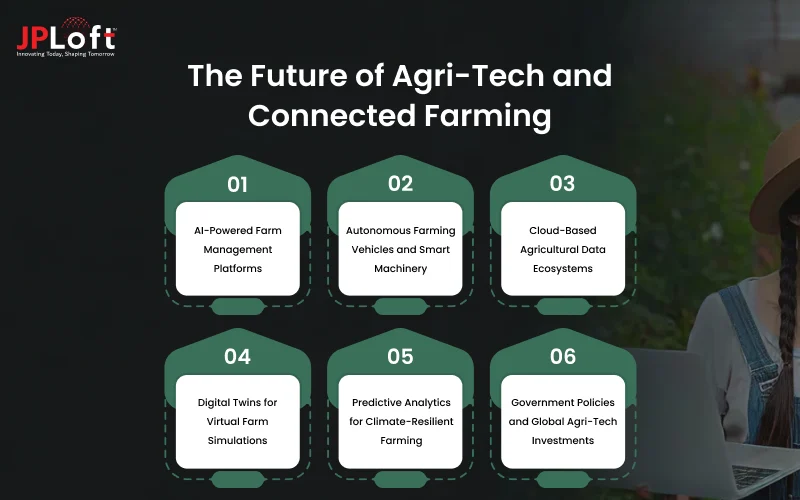
Farming operations are moving toward automated ecosystems that improve efficiency, sustainability, and long-term food security.
1. AI-Powered Farm Management Platforms
Future farming platforms will combine crop analysis, weather tracking, equipment monitoring, and forecasting in one system. The rise of agentic AI in software development is also shaping autonomous farming platforms and operational decisions.
These systems will help farmers reduce risks and improve planning through real-time farm insights.
2. Autonomous Farming Vehicles and Smart Machinery
Driverless tractors and self-operating harvesting systems are likely to become more common in large farming operations. These machines will handle repetitive farming tasks with little human effort.
Farms using advanced automation tools can improve productivity and reduce delays during critical farming activities.
3. Cloud-Based Agricultural Data Ecosystems
Modern farms are shifting toward cloud-based ecosystems for easier access to agricultural data from multiple devices. Farmers can monitor crop performance, machinery status, and field conditions from any location.
However, factors like scalability needs and custom software development costs can affect the implementation of connected farming platforms.
4. Digital Twins for Virtual Farm Simulations
Digital twin technology helps farmers to create virtual models of their farms. They can test crops, plan operations, and reduce risks before making changes in real fields.
Many agribusinesses also prefer to develop a custom software platform for better farm simulations to improve planning and reduce agricultural risks.
5. Predictive Analytics for Climate-Resilient Farming
Advanced analytics tools will help farms prepare for changing climate conditions through weather forecasting and risk prediction models. Farmers can identify possible crop threats earlier and take preventive actions more effectively.
Predictive systems will play a major role in climate-resilient farming and long-term agricultural stability.
6. Government Policies and Global Agri-Tech Investments
Governments and private organizations are investing more in smart farming initiatives and sustainable agricultural infrastructure. Funding programs are helping farms adopt digital technologies across developed and developing regions.
This growing investment is accelerating research, startup growth, and the expansion of smart agricultural technology worldwide.
How JPLoft Helps Build Smart Agriculture Solutions?
Modern farming businesses need digital systems that improve efficiency, monitoring, and operational control. JPLoft helps businesses build smart farming platforms for modern agricultural needs.
As an experienced agriculture software development company, JPLoft creates solutions tailored to different farming operations and business goals.
The company develops systems for crop monitoring, smart irrigation, livestock tracking, drone integration, and farm analytics. These solutions help businesses manage farming activities more efficiently.
JPLoft also builds scalable cloud-based platforms for real-time data tracking and connected farming operations. These systems improve productivity and reduce manual work and resource waste.
From AI-powered dashboards to automated farm management tools, the company focuses on practical and future-ready solutions.
JPLoft combines industry knowledge with modern technology to support digital farming growth and sustainable agricultural innovation.
Conclusion
Agriculture is becoming smarter with the help of modern technology. Farmers now use data, automation, and intelligent tools to improve daily farming activities. These solutions help reduce waste, manage crops better, and respond quickly to changing weather conditions.
Today, technological advancements in agriculture are improving farm productivity and supporting long-term sustainability. Farmers can now make faster decisions and manage resources more efficiently than before.
The farming industry is also moving toward more connected and automated systems. Technologies like predictive analytics and self-operating machines are changing the way food is produced across the world.
The future of agricultural technology will focus on building climate-ready, efficient, and resource-saving farming systems. Farmers and businesses that adopt these innovations early will be better prepared for future agricultural challenges.
FAQs
Technology is helping farmers work in a simpler and smarter way. It improves crop monitoring, automates daily tasks, and reduces waste. AI tools, smart sensors, and connected systems also help farmers make faster and better decisions on the farm.
Some of the latest tools include AI-based farm systems, drones, smart irrigation, robotic machines, and IoT devices. These technologies help farmers manage farms more easily and improve overall productivity and accuracy in farming work.
AI helps farmers analyze crop conditions, predict weather risks, and identify diseases earlier. These systems process farm data quickly and provide recommendations that improve planning, reduce losses, and support more efficient farming operations.
Smart agriculture helps farmers save time, reduce operational costs, and improve crop quality. Automated systems and real-time monitoring tools also help manage water, fertilizers, and field activities more efficiently throughout the farming cycle.
The future of agricultural technology will focus on automation, predictive analytics, connected farming systems, and climate-resilient solutions. Advanced technologies will help farms improve sustainability, strengthen food production, and manage agricultural operations more efficiently.

Rahul Sukhwal is the CEO and Founder of JPLoft, a visionary technologist with 18+ years at the forefront of emerging tech innovation and software engineering. He channels deep software engineering and AI expertise into building smarter, scalable solutions that shape how forward-thinking businesses worldwide harness the true power of AI.


Share this blog