


Key Takeaways:
The global agriculture app market exceeds $5.8 billion, making 2026 the right time to invest in agriculture apps.
Rising food demand, climate challenges, and smart farming are driving demand for innovative agricultural apps.
Top agriculture app ideas include marketplaces, logistics, livestock, workforce management, and expert consultation applications.
Successful agriculture app ideas solve real farm challenges, including crop management, logistics, and pest detection.
Success depends on aligning the target audience, monetization, and long-term demand before choosing the final app idea.
In recent years, farmers have rapidly adopted modern technologies, making agriculture more data-driven and automated. Rising food demand, unpredictable weather, and labor shortages are accelerating this shift.
Today, mobile agriculture apps help farmers collect real-time data and make informed decisions using smartphones, tablets, or laptops.
Thus, for startups and businesses, this creates a valuable opportunity to build smart agriculture apps that solve real farming challenges.
The farm management software market is projected to reach $5.8 billion by 2029, growing at a CAGR of 11.0%, highlighting the rising demand for digital farming solutions.
This market growth signals that 2026 is the right time to identify agriculture app ideas with strong commercial potential.
In this blog, we will explore the top innovative agriculture app ideas for startups and businesses in 2026 to access profitable opportunities.
Why Invest in Agriculture Apps in 2026?
Investing in smart agriculture applications in 2026 is no longer optional. It has become a necessity to improve productivity, reduce costs, and stay competitive.
If you are still thinking of investing in agriculture mobile apps, here are the top reasons to clear up any confusion.
A. Global Food Demand
Global food demand continues to increase as populations grow and agricultural land becomes more limited.
To meet the rising demand, businesses investing in the best agriculture app ideas can build digital solutions to improve farm planning, crop management, supply chain visibility, and resource utilization.
B. Climate Challenges
Unpredictable weather patterns are making farming more difficult every season. Therefore, investing in a climate-focused agriculture weather app idea provides real-time weather forecasts, soil insights, irrigation recommendations, and climate alerts.
This helps farmers plan irrigation, schedule harvesting, protect crops from extreme weather, and reduce unnecessary resource wastage.
C. Labor Shortages
In many rural regions, farmers still face a skilled labor shortage. Every day, an employee may be on leave or absent unexpectedly. This creates an opportunity for businesses to optimise unique mobile app ideas in the agriculture industry.
Agriculture apps simplify workforce management, automate repetitive tasks, and improve operational visibility, making them a valuable investment for businesses serving modern farms.
D. Rapid Growth of Smart Farming Technologies
The adoption of smart farming technologies, such as AI, IoT, cloud computing, satellite imagery, and predictive analytics, is transforming modern agriculture.
These technologies make agriculture apps more accurate, efficient, and valuable for farmers. From detecting pests or diseases with sensor devices to using machine learning to qualify crop health and predict harvest outcomes, these technologies help solve common farming challenges.
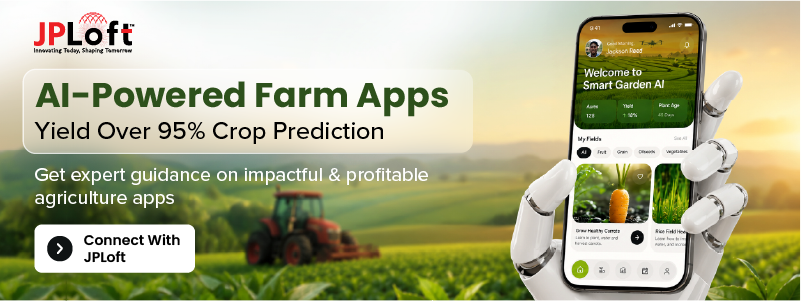
Top 10 Agriculture App Ideas for 2026
The agriculture industry faces several ongoing challenges. However, to solve these challenges, businesses are increasingly investing in agriculture mobile app ideas that improve productivity and operational efficiency.
While many common agriculture app ideas already exist, there is still significant room to build agriculture software that addresses evolving farming needs and creates long-term business value.
Here are the top agriculture mobile app ideas businesses should explore in 2026.
1. AI Crop Yield Prediction App
AI is revolutionizing the agriculture industry with smart agriculture AI app ideas. An AI crop yield prediction app uses machine learning, predictive analysis, IoT devices, and real-time data to help agritech businesses deliver real-time crop monitoring and yield forecasting solutions.
Features of the app:
-
It helps to check crop health using satellite images.
-
Displays field maps to easily detect infected areas.
-
Forecast crop growth and harvest outcomes.
-
Improves soil health and identifies soil type by images.
Why does it work?
An agritech business can make suitable farm planning and development decisions. These agriculture AI app ideas provide valuable insights on land use and yield estimates to make timely decisions on harvesting plans.
Who it works for:
-
Marginal farmers
-
Agritech startups
-
Commercial farmers
2. Farm-to-School Marketplace App
A farm-to-school marketplace app is one of the best community supported agriculture app ideas. It is a digital platform that connects farmers or agribusinesses directly with schools.
This allows school food service departments to purchase fresh produce without relying on middlemen or other intermediaries. Schools can browse available products, place orders, schedule deliveries, and manage procurement through a single platform.
Features of the app:
-
It helps to update stock levels and manage seasonal produce availability.
-
Allows easier order scheduling and deliveries to schools.
-
Improves customer satisfaction by ensuring fresh produce.
-
Simplified dashboard for managing products, orders, earnings, and customer requests.
Why does it work?
For businesses, it creates a scalable marketplace model that generates revenue through commissions or subscription plans.
Who it works for:
-
Agricultural commissions
-
Government agriculture programs
-
Educational procurement platforms
3. Plant Disease Identification App
Plant diseases are a major challenge, causing significant yield losses in agriculture. Therefore, investing in plant disease software is one of the best ideas for app in agriculture. It uses machine learning to analyze visual images through smart agricultural apps.
It helps detect early-stage diseases and recommends effective treatment solutions. However, businesses planning to launch this idea should hire dedicated developers to build a reliable platform.
Features of the app:
-
Maintains disease history for every yield.
-
Provides reliable and accurate treatment methods.
-
Access to pest life cycle and alerts with warnings.
-
Integrates image scanning in the existing farm system to reduce additional costs on pest diseases.
Why does it work?
Businesses can position this app as an AI-powered crop health platform for commercial farms. It helps generate better revenue opportunities, including subscriptions and AI usage credits.
Who it works for:
-
Agronomists and crop advisors
-
Agribusiness and farmers
-
Business software providers
4. Weather & Soil Monitoring App
Modern farming begins with understanding the environment. This agriculture weather app idea, combined with soil monitoring services, helps agritech businesses with real-time data reports on weather conditions and soil quality.
It provides accurate information via integrated IoT devices and advanced sensors. With access to this information, it helps to make informed decisions about irrigation, harvesting, and resource planning.
Features of the app:
-
Alerts to weather risks with notifications.
-
Pairs directly with in-ground sensors to detect soil quality.
-
Measures soil moisture for better irrigation planning.
-
Estimates the reduced water level from soil and crops to take timely actions.
Why does it work?
Weather forecast is the major challenge in farming. This app uses historical and real-time weather data to provide accurate climate forecasts for selected regions. The sensors can measure substances present in soil pH and moisture levels.
Who it works for:
-
Agriculture researchers
-
Landscapers
-
Gardeners
-
Enterprise agritech businesses
5. Pest Monitoring & Control App
The global AI-based pest management app is projected to reach $9,692.8 million by 2033 at a CAGR of 16.32%. This growth clearly reflects the need for pest control apps in the agriculture industry.
Pest outbreaks can spread rapidly across fields and lead to significant crop losses. These tools help to understand pest patterns, recommend pesticides, and take timely measures.
Features of the app:
-
Increase crop protection by identifying pests from high-resolution images.
-
It helps to analyse historical pest data and effective treatments.
-
Suggests appropriate pest control methods.
-
Sends real-time notifications about pest outbreaks.
Why does it work?
The growing need to reduce pesticide use is driving demand for this app. This application allows businesses to access quick solutions for pests that can destroy crop fields.
Who it works for:
-
Precision farming providers
-
Agricultural consultancy firms
-
Homeowners & DIY Pest Spotters
6. Livestock Management App
A livestock management app helps to track animal health, implement autonomous control, and monitor livestock. It manages digital records, vaccination schedules, feeding, breeding, and location tracking while reducing manual effort.
This improves livestock health, increases operational efficiency, and helps businesses make faster, data-driven decisions.
Features of the app:
-
Stores the digital records of all the animals.
-
Reminds agribusiness about vaccination and treatment, and sets health alerts.
-
The app helps to track livestock monitoring, revenue, and account balance.
-
Using a smart location-enabled system, it helps to track all livestock locations and updates.
Why does it work?
Livestock management apps improve operational efficiency. It helps to track the feed, vaccination, and medicine costs against each animal to calculate per-animal sales margins.
Who it works for:
-
Livestock management companies
-
Veterinarians and nutritionists
-
Daily farmers
7. Farm Workforce Management App
Agritech businesses often face challenges in managing seasonal workers, assigning daily tasks, and improving field productivity. Among the growing list of agriculture apps, a farm workforce management platform is one of the most effective solutions for improving workforce efficiency and daily operations.
It helps businesses manage employees' or contract workers' time breaks, duration, and location information, payroll management, and performance monitoring through a single dashboard.
Features of the app:
-
Reduces manual check-ins and maintains all farm worker digital records in the app.
-
Within the app, farmers get assigned work details and duties.
-
Records every employee's attendance through biometric check-ins.
-
Handles leave requests, payroll, schedules, and manages productivity through the single app.
Why does it work?
A farm workforce app allows businesses to manage worker demand and supply through farm-beneficial decisions by converting everyday field activities into results.
Who it works for:
-
Agritech companies
-
Enterprise farming businesses
-
Workforce management software providers
-
Agricultural cooperatives
8. Agricultural Logistics & Delivery App
As agricultural operations grow, manual spreadsheets become difficult to manage. An agriculture logistics app simplifies deliveries, routing, and shipment tracking. You can schedule the pickup of crops, seeds, livestock, and other farm equipment.
It also helps businesses improve supply chain visibility, reduce transportation costs, and deliver products on time, making logistics operations more efficient and scalable.
Features of the app:
-
It allows access to smart routing directions and reduces delays.
-
Enabling GPS tracking allows businesses to track delivery time and cargo status.
-
Simplifies organising delivery pickup points and final location updates.
-
Sends automatic shipment status updates to all the connected persons within the app.
Why does it work?
The agriculture logistics app allows businesses to maintain transparency between buyers and sellers. Companies often build such an app and sell it to distributors, wholesalers, and food companies while generating revenue from logistics commissions.
Who it works for:
-
Farmers and producers
-
Agricultural logistics companies
-
Agri supply chain businesses
9. Farm-to-Consumer Marketplace App
Earlier, agtech businesses were immensely dependent on middlemen to sell their produce to consumers in the marketplace. As a result, they often received a smaller share of the profits while middlemen captured most of the revenue.
Farm-to-consumer marketplace apps are one of the most popular community supported agriculture app ideas that help to sell produce directly to buyers, eliminating the need for middlemen, while ensuring customers get access to fresh, locally grown food items.
Features of the app:
-
Businesses can organise scattered fresh produce into organised categories.
-
Ensures timely delivery of farm food.
-
Builds trust in verified agtech businesses and improves customer base.
Why does it work?
By simplifying the supply chain, these food apps ensure fresh, farm-grown produce is delivered to buyers and reduce the unnecessary middleman interruption.
Who it works for:
-
Marketplace startups
-
Food delivery companies
-
Agtech businesses
-
Grocery technology platforms
-
Farm cooperatives
10. Agriculture Expert Consultation App
Agriculture expert consultation applications stand as one of the top agriculture app ideas. It helps to connect agtech firms with verified agronomists, veterinarians, and industry specialists.
They provide skilled guidance on crop management, pest and disease detection, and the latest agriculture government schemes through video or voice calls within the app.
Features of the app:
-
It digitizes advice, making it cost-effective and easily accessible in remote areas.
-
Increases updates about marketplace prices to help sell at a profitable price.
-
Access to live recording and sharing feedback to gain better advice from experts.
-
It helps to upload reports and crop images for better analysis.
Why does it work?
With the growing importance of digital advising services, such apps are gaining huge popularity. Businesses can generate profit through consultation fees and by using premium membership for advanced services, while planning the agriculture software development cost.
Who it works for:
-
Agronomists & Advisors
-
Agtech businesses
-
Commercial farmers
How to Choose the Right Agriculture App Idea for Your Business?
With so many best ideas for app in agriculture available, choosing the right one can be challenging. Here are the key factors to consider before making your decision.
► Target Market
Every agriculture app idea has a different user base. Therefore, understand whether your app will serve farmers, agtech businesses, distributors, or consumers before deploying code.
► Long-Term Demand
Evaluate the market demand for the application. A trusted agriculture app development company can help you evaluate competitor downloads, active users, and trending searches to assess demand for your app.
► UI/UX Design
The features must not revolve around the UI/UX design service. Think about the basic features, such as AI crop monitoring, weather forecasting, marketplace integration, and offline access, and then build your UI/UX around them.
► Monetization Strategy
Generating revenue should be the first goal of every app. Choose an app that supports strong mobile app monetization, such as subscription models that allow monthly or yearly earnings, along with in-app purchases, ads, and commissions.
Conclusion
Agriculture is rapidly evolving into a technology-driven industry, creating new opportunities for startups and businesses to invest in innovative agriculture app ideas.
A farming app provides easy access to modern farming, scalable business growth, and efficient workflow.
From AI-powered crop prediction and disease detection to smart marketplaces, logistics, and workforce management, agriculture apps are solving real farming challenges while improving productivity and operational efficiency.
These solutions help businesses improve customer retention, unlock new revenue opportunities, and build long-term competitive advantages.
However, choosing the best agriculture app ideas requires understanding market demand, business goals, and long-term scalability.
Whether you are planning your first agritech startup or expanding an existing business, investing in the right agriculture app can help you stay competitive in the evolving digital farming market.
FAQs
The cost to develop an agriculture app ranges from $10,000 to $300,000+. Primary factors influencing the app cost include: complex app features, UI/UX design, and overall system complexity.
A good agriculture app is user-friendly, easy to use, has a faster response time, cross-platform functionality, a clear text format, and offline capability.
The most popular and best agriculture mobile app ideas trending include agri-fintech, AI-driven farming, farm automation control, pest and disease identification, and livestock monitoring.
The best AI applications in agriculture include weather prediction, crop monitoring, predictive yield modeling, apps that allow users to upload a crop photo, and help detect rising pests and diseases.
There are many common agriculture app ideas available that are free to use, built on a freemium model. Their basic features, including crop monitoring, connecting to buyers, a calculator, and commodity details, are free to use. For advanced features, a subscription-based model is used.

Rahul Sukhwal is the CEO and Founder of JPLoft, a visionary technologist with 18+ years at the forefront of emerging tech innovation and software engineering. He channels deep software engineering and AI expertise into building smarter, scalable solutions that shape how forward-thinking businesses worldwide harness the true power of AI.



Share this blog