



Key Takeaways :
Starting a social media business offers low investment requirements, global audience access, flexible operations, and diverse revenue options.
The cost to start a social media business ranges between USD 50,000 and USD 150,000, depending on the type and goals.
Trends like AI content, social commerce, creator marketing, and analytics-driven strategies are reshaping social media businesses.
Common business challenges include competition, algorithm changes, privacy concerns, monetization difficulties, and user retention.
JPLoft helps start a social media business with advanced features, compliance support, security systems, and long-term assistance.
Social media has changed the way businesses connect with people. Today, popular platforms like Instagram, TikTok, and LinkedIn are not just for entertainment. They have become powerful business tools for brands, creators, and entrepreneurs.
From selling products and managing communities to offering marketing services, the opportunities are endless. If you want to turn your digital skills into a profitable venture, learning how to start a social media business is the perfect first step.
Starting a social media business does not always require huge investments or a large team. With the right strategy, niche, and content plan, you can build a strong online presence and attract loyal customers.
In this guide to start online social media business, you will learn the complete process of launching a successful business, key trends, estimated costs, challenges, and proven tips to grow in a highly competitive market.
What is a Social Media Business?
A social media business is a digital venture that uses its social platform to offer products, services, or online engagement solutions. These businesses operate to connect with audiences, build brand awareness, and generate revenue.
A social media business startup can take different forms. Some businesses sell products directly through social platforms, while others provide services such as content creation, influencer marketing, social media management, advertising, or community building.
Many startups and entrepreneurs also create niche-based social networking platforms for specific audiences and industries. The main goal of a social media business is to create strong online engagement and turn followers into loyal customers.
These businesses rely on content strategies, targeted campaigns, audience interaction, and analytics to grow their reach and improve conversions. With billions of active users worldwide, social media businesses have become one of the fastest-growing digital business models for modern entrepreneurs.
Recent Market Statistics for Social Media Businesses
Here are the recent market statistics before you plan for a social media agency startup:
-
According to Statista, the average daily use of social media worldwide is 141 minutes per person.
-
Facebook has almost 3.06 billion users monthly, as estimated in a report by Statista.
-
The social media market size reached up to USD 208.08 billion in 2025 and is expected to reach USD 389.36 billion in 2030 with a CAGR of 13.5%, according to TheBusinessResearchCompany.
-
Meta’s platforms hold the largest share of global social media traffic, with Facebook alone accounting for over 74% of visits, as estimated by GS StatCounter.
Why Starting A Social Media Business is a Smart Opportunity?
The social media industry continues to grow rapidly, creating endless opportunities for entrepreneurs and startups. Planning to work on how to start online social media business offers strong growth potential, low investment needs, and long-term digital success in today’s competitive market.
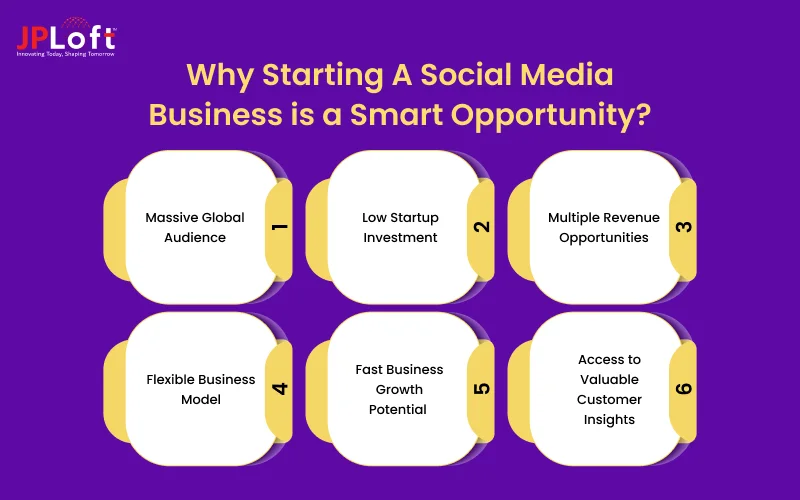
1. Massive Global Audience
Billions of people actively use social media platforms like Instagram and TikTok daily. Businesses can easily reach global audiences, increase visibility, and connect with potential customers without geographical limitations.
2. Low Startup Investment
A social media business startup requires minimal investment compared to traditional businesses. Entrepreneurs can start with basic tools, creative content, and marketing strategies without spending heavily on infrastructure or operations.
3. Multiple Revenue Opportunities
Developing a social media app allows generating income through advertising, subscriptions, influencer partnerships, affiliate marketing, sponsored content, and product sales. Diverse reveune options help businesses create stable and long-term revenue streams.
4. Flexible Business Model
Entrepreneurs can operate businesses remotely from anywhere, being the core reason for why start a social media business. Flexible work structures, scalable operations, and digital tools make it easier for growing businesses to manage content, campaigns, and customer communication.
5. Fast Business Growth Potential
Viral content and targeted marketing campaigns can rapidly increase audience reach and customer engagement. Social media agency startup often experience faster growth compared to many traditional industries and offline ventures.
6. Access to Valuable Customer Insights
Platforms provide analytics and audience data that help businesses understand customer behavior, preferences, and trends. These insights support smarter decisions, better marketing strategies, and improved customer experiences over time.

Process to Start a Social Media Business Successfully
A guide to start online social media business shares careful planning, legal preparation, and strong growth strategies. From choosing a niche to creating compliance policies, every step plays an important role in building a social media app in the UK.
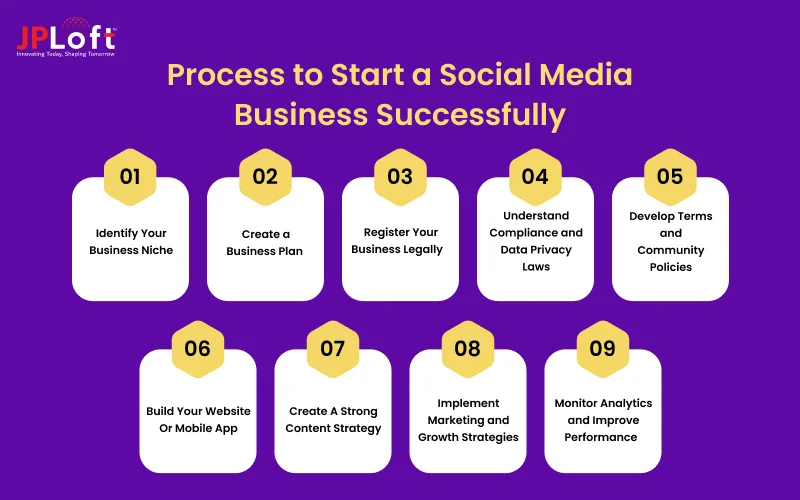
Here are the essential steps to create a social media platform in 2026:
Step 1. Identify Your Business Niche
The first step is selecting a niche that matches your expertise, business goals, and market demand. When you start a social media business, it can focus on fitness, fashion, travel, education, gaming, or business.
Choosing a clear niche helps target the right audience and creates a stronger brand identity. Conduct market research to understand customer pain points, competitor strategies, and trending content formats. A niche-focused approach increases your chances of building loyal users and long-term engagement.
Step 2. Create a Business Plan
A detailed social media business model plan helps define your goals, target audience, revenue model, and operational strategy. This plan should include estimated costs, marketing approaches, growth projections, and monetization methods.
You should also decide whether your social media app idea will operate as a service-based agency, creator platform, subscription community, or networking startup. A well-structured plan helps attract investors and provides direction for future business expansion.
Step 3. Register Your Business Legally
Legal registration is essential before launching your social media business. Choose the appropriate business structure, such as sole proprietorship, partnership, LLC, or private limited company, depending on your region and operational needs.
Register your business name, obtain tax identification numbers, and apply for required licenses. Trademarking your brand logo and business identity can also help protect your intellectual property from misuse or duplication.
Step 4. Understand Compliance and Data Privacy Laws
Social media businesses collect user information, making data protection and legal compliance extremely important. You must follow regional privacy laws such as GDPR, CCPA, and other local digital standards, depending on your target market.
Create clear privacy policies explaining how user data is collected, stored, and shared. Businesses should also include cookie policies, user consent systems, and secure payment processing methods to maintain legal compliance and customer trust.
Step 5. Develop Terms and Community Policies
Every social media business needs strong platform policies to control user behavior and reduce legal risks. Create detailed terms and conditions, community guidelines, copyright policies, and content moderation rules.
These policies help prevent spam, harassment, fake accounts, and copyright violations. Clear reporting and account suspension procedures are also important for maintaining a safe and trustworthy platform environment.
Step 6. Build Your Website Or Mobile App
The next step is developing a professional website or mobile application for your social media business model. Focus on creating a user-friendly social media app design, smooth navigation, fast loading speed, and mobile responsiveness.
Essential features may include user profiles, messaging, content sharing, live streaming, notifications, analytics dashboards, and payment gateways. Investing in scalable technology ensures your platform can support future growth and higher user traffic.
Step 7. Create A Strong Content Strategy
Content is the foundation of how to start online social media business. Develop a content strategy based on audience interests, platform goals, and brand voice. Businesses should create educational, entertaining, and engaging content formats consistently.
Short-form videos, live sessions, interactive posts, and creator collaborations are highly effective in improving visibility and audience engagement. A consistent posting schedule also helps maintain long-term user interest.
Step 8. Implement Marketing and Growth Strategies
Focusing on audience acquisition and brand promotion is one of the important steps to create a social media platform succesful. Use SEO, influencer marketing, paid advertising, referral programs, and email campaigns to attract users.
Businesses should also optimize content for discoverability across platforms like Instagram, LinkedIn, and YouTube. Multi-platform marketing improves reach and strengthens brand awareness faster.
Step 9. Monitor Analytics and Improve Performance
Tracking business performance is necessary for long-term growth. Use analytics tools to monitor engagement, user retention, audience behavior, and conversion rates. These insights help businesses improve marketing campaigns and content strategies.
Regular updates like AI features in social media apps and customer feedback implementation keep the platform competitive and user-focused. Businesses that continuously adapt to industry trends and customer expectations achieve sustainable growth in the evolving social media market.
Cost to Start a Social Media Business
Estimates of how much does it cost to start a social media business can range from USD 50,000 to USD 150,000+. A basic startup may require limited investment, while an advanced business with custom solutions, automation tools, and large-scale marketing campaigns can demand a higher budget.
The final cost of establishing a business also includes the cost to develop a social media app. Here is the cost breakdown depending on factors like business type, target audience, platform selection, features, team size, and marketing goals:
|
Development Component |
Estimated Cost |
|
Business Research & Planning |
$3,000 – $8,000 |
|
Brand Identity & Logo Design |
$2,000 – $6,000 |
|
Website and App Development |
$20,000 – $100,000+ |
|
Content Creation & Management Tools |
$3,000 – $10,000 |
|
Social Media Marketing Setup |
$5,000 – $12,000 |
|
Legal Registration & Compliance |
$2,000 – $7,000 |
|
Data Security & Privacy Setup |
$4,000 – $10,000 |
|
Team Hiring & Operations |
$10,000 – $30,000 |
|
Influencer & Advertising Campaigns |
$8,000 – $25,000 |
|
Maintenance & Technical Support |
$5,000 – $15,000+ |
Factors Affecting the Cost of Starting a Social Media Business
Here are the factors that affect how much does it cost to start a social media business:
-
Platform Complexity: Advanced features like live streaming, AI in social media, and messaging systems increase development expenses.
-
Technology Stack: Modern technologies and scalable infrastructure can impact overall development and maintenance costs.
-
Team Size: Hiring experienced developers, designers, marketers, and project managers raises the project budget.
-
Marketing Strategy: Paid advertising, influencer campaigns, and promotional activities significantly influence social media app development costs and overall growth.
-
Customization Requirements: Unique branding, custom dashboards, and personalized user experiences require additional investment.
Real-Life Examples of Successful Social Media Businesses
Many social media platforms have transformed the digital industry through innovation, user engagement, and scalable business models. These best social media apps inspire how to generate massive audiences, strong brand value, and long-term business growth worldwide:
1. Instagram
It became popular through visual content sharing, stories, and reels. It is widely used by influencers, brands, creators, and businesses for marketing, customer engagement, and product promotions.
2. Facebook
One of the world’s largest social networking platforms, Facebook connects billions of users globally. It offers features like messaging, groups, marketplace, live streaming, and targeted advertising for businesses.
3. TikTok
TikTok transformed social media with short-form video content and AI-powered recommendations. Its social media app feature provides a content model that helps creators and businesses gain rapid audience reach and strong engagement worldwide.
4. LinkedIn
LinkedIn, like social media business startup, focuses on professional networking, recruitment, and B2B marketing. Businesses and professionals use the platform for hiring, personal branding, industry networking, and sharing professional content.
5. Snapchat
Snapchat gained popularity with disappearing messages, AR/VR in social media apps, and short video stories. This platform attracts younger audiences and provides innovative advertising opportunities for brands and creators.
6. YouTube
YouTube is the leading video-sharing platform where creators and businesses publish educational, entertainment, and promotional content. It generates revenue through ads, memberships, and sponsored collaborations.
Latest Social Media Business Trends in 2026
Steps to start a social media business continue to evolve with changing user behavior, advanced technologies, and new monetization models. Understanding the latest social media app development trends helps you stay competitive, improve growth, and achieve success in 2026:
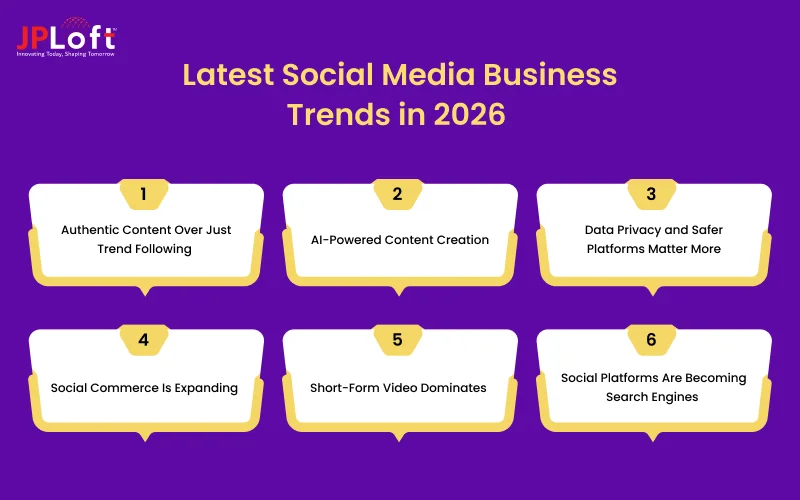
A. Authentic Content Over Just Trend Following
Users now prefer raw, relatable, and behind-the-scenes content instead of highly polished advertisements. Brands focusing on real storytelling and human connection are achieving stronger engagement and customer trust in 2026.
B. AI-Powered Content Creation
Businesses are using AI tools for captions, video editing, personalized recommendations, and automated customer engagement. Start a social media business with AI-driven workflows to help brands create content faster while improving audience targeting and campaign performance.
C. Data Privacy and Safer Platforms Matter More
Governments and users are demanding stronger data privacy and safer online experiences. Businesses must now comply with stricter regulations and build with transparent practices to maintain customer confidence.
D. Social Commerce Is Expanding
Social media platforms are becoming complete shopping destinations. Features like in-app checkout, live shopping, and AI product recommendations are making online purchasing faster and more convenient for users.
E. Short-Form Video Dominates
Platforms like TikTok and YouTube Shorts continue to lead user engagement. Businesses are also investing in generative AI in social media for creating entertaining and educational video content for higher reach and conversions.
F. Social Platforms Are Becoming Search Engines
Users increasingly search for products, reviews, tutorials, and recommendations directly on social platforms. Businesses now optimize captions, hashtags, and video content for social search visibility and discoverability.
Common Challenges in Starting a Social Media Business
The process of how to start a social media business offers huge opportunities with several business challenges. Knowing these social media app challenges in advance helps you create better strategies, improve user experiences, and build a strong, sustainable presence in the competitive digital market:
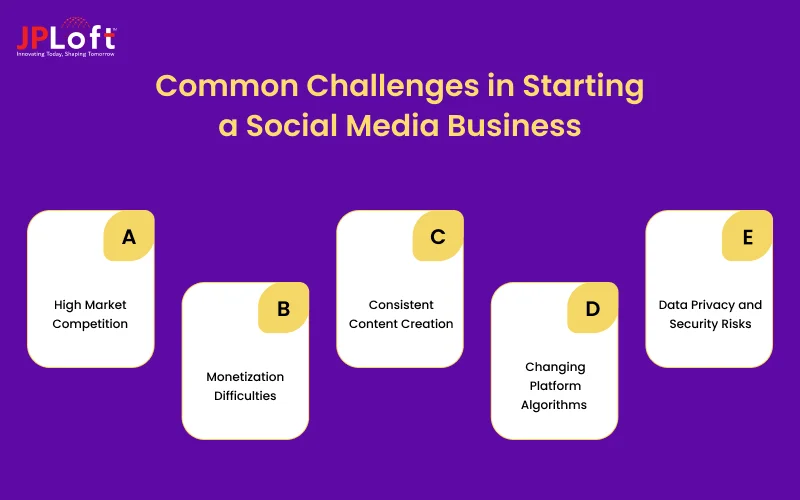
[1] High Market Competition
Thousands of businesses and creators compete for audience attention daily, making it difficult for new social media businesses to gain visibility and customer engagement.
Solution: Focus on niche audiences, create unique content, and maintain consistent branding to effectively stand out from competitors.
[2] Monetization Difficulties
Many businesses struggle to generate stable revenue during the early stages due to limited followers, low engagement, and ineffective social media app monetization strategies online.
Solution: Combine advertising, subscriptions, affiliate marketing, and sponsored collaborations to create multiple income streams for long-term business sustainability.
[3] Consistent Content Creation
Producing fresh, engaging, and high-quality content regularly becomes challenging for businesses trying to maintain audience interest and platform activity over time consistently.
Solution: Create content calendars, automate posting schedules, and repurpose existing content to maintain consistent audience engagement across platforms efficiently.
[4] Changing Platform Algorithms
Frequent algorithm updates on social media platforms can reduce organic reach, affecting audience visibility, engagement rates, and overall business growth strategies significantly.
Solution: Diversify marketing channels, focus on quality engagement, and adapt content strategies according to platform algorithm changes regularly.
[5] Data Privacy and Security Risks
Social media businesses handle sensitive user information, increasing risks related to data breaches, cyberattacks, and privacy regulation compliance issues globally today.
Solution: Implement strong social media app security measures, encrypted systems, and regular compliance checks to protect user data and platform integrity effectively.
Why Choose JPLoft to Start a Successful Social Media Business?
Launching a successful social media business requires more than just technology. It demands the right strategy, market understanding, branding approach, and long-term business planning.
And JPLoft helps you build strong digital foundations that support sustainable growth in the competitive social media industry.
JPLoft, a specialized social media app development company, works closely with startups, creators, and enterprises to identify profitable opportunities, define business goals, and create effective strategies tailored to their audiences.
Our team understands the importance of user trust, compliance, and scalable business operations. By combining industry insights, innovative solutions, and customer-focused strategies, JPLoft helps businesses improve visibility, strengthen brand identity, and increase customer engagement.
If you are planning to launch a creator community, content-sharing platform, influencer marketplace, or niche social network, JPLoft provides the expertise to turn your idea into a profitable and future-ready venture.
Conclusion
A guide to start online social media business offers massive opportunities for entrepreneurs planning to build a strong digital presence. With growing demand for online communities, creator-driven platforms, and social commerce, you can achieve long-term success through the right strategy and innovation.
However, success requires more than just launching a platform. Businesses must focus on legal compliance, user privacy, engaging content, scalable technology, and effective marketing strategies to stay competitive in the fast-changing digital market.
From knowing why start a social media business to implementing right audience engagement strategies, every step plays a crucial role in business growth. Popular platforms like Instagram have already proven the potential of this industry.
With proper planning, creativity, and continuous improvement, entrepreneurs can successfully build profitable and future-ready social media businesses in today’s digital economy.
FAQs
To start a successful social media business in 2026, choose a profitable niche, create a business plan, develop, follow legal compliance requirements, and implement strong marketing strategies. Consistent content creation, audience engagement, and analytics tracking also help achieve long-term business growth successfully.
Starting a social media business is profitable because businesses and creators increasingly depend on digital engagement, advertising, and online communities. Multiple revenue streams like subscriptions, sponsored content, influencer marketing, and social commerce help you generate steady income while reaching global audiences with minimal operational costs.
The cost to establish a social media business generally ranges between USD 50,000 and USD 150,000+. The cost range depends on platform complexity, development requirements, marketing strategies, technology stack, and business goals. Advanced features like AI recommendations, live streaming, and analytics systems can significantly increase overall development and maintenance expenses.
Major social media business trends in 2026 include AI-powered content creation, short-form videos, creator-led marketing, social commerce, private communities, and data-driven personalization. Businesses are also focusing on platform security, authentic content strategies, and multi-platform engagement to improve customer experiences and long-term audience retention.
Common challenges include high market competition, changing platform algorithms, user retention issues, data privacy concerns, monetization difficulties, and maintaining consistent content quality. Businesses must also manage customer trust, legal compliance, and platform security while adapting quickly to evolving digital trends and audience expectations.

Conor has more than 10 years of experience in software development, app creation, solution engineering, and UX/UI design. With an impressive track record of high retention and growth working with Fortune 500 companies, he brings the technical depth and strategic perspective needed to help businesses build impactful, user-focused digital solutions.




Share this blog