



Key Takeaways:
A successful equine app combines horse profiles, health tracking, and scheduling tools to keep everything organized and easily accessible in one place.
To create a successful equestrian app, start with thorough market research, work on UI/UX design, develop your app, test it, and then launch the final version.
Investing in such an app can lead to better health monitoring, improved efficiency, and stronger communication between owners, trainers, and vets.
Modern apps stand out by using AI, IoT, GPS, and cloud technology to deliver smarter insights and a more connected user experience.
With the right approach, you can monetize through subscriptions, services, or marketplaces, while overcoming challenges through smart planning and scalable development.
The equine industry is rapidly going digital. And mobile apps are leading this transformation in a big way.
From horse care and training to health tracking, equine apps are changing how owners, trainers, and riders manage everyday tasks.
They’re making everything faster, smarter, and more connected.
As we move into 2026, learning how to build an equine app opens up exciting opportunities for startups and businesses.
It’s your chance to tap into a growing, tech-driven community. This equine app development guide walks you through everything step by step.
From research and design to tech stack, development, testing, and launch, it’s all covered.
You’ll also explore key challenges, smart solutions, and best practices. So you can create an app that’s reliable, user-friendly, and built for modern equine needs.
Let’s get started.
Equine App Market and Related Statistics
Here we have listed recent market statistics of the equine software industry:
-
WiseGuyReports estimated that the horse software market is projected to maintain a Compound Annual Growth Rate (CAGR) of about 5.9%, potentially reaching USD 1.5 billion by 2035.
-
In research by Market Report Analytics, the largest regional markets are North America and Europe, attributed to high horse ownership rates and technology adoption in the equestrian sectors.
-
The North American market of equine management and health software alone is estimated at around USD 100 million annually, as estimated by Market Report Analytics.
When you create a mobile app, understanding the benefits and how it supports users sets the stage for a deeper look at its functionality.
Overview of Equine App
An equine app is a digital solution built to simplify horse management. It also improves communication between owners, trainers, riders, and veterinarians.
From health tracking and feeding schedules to performance records and event planning, all in a single app.
With an equine app, managing stable activities becomes much easier. Users can monitor horse health and stay organized without relying on paperwork or spreadsheets.
These apps serve different areas of the equine industry. Some focus on training and performance, while others are designed for daily horse care and management.
When you develop an equine app, it doesn’t just save time. It helps improve horse health, streamline daily tasks, and make better decisions with ease.
How an Equine App Works?
The equine app works based on a simple system that connects all horse care activities in one place. It collects data, manages schedules, and keeps everyone updated in real time.
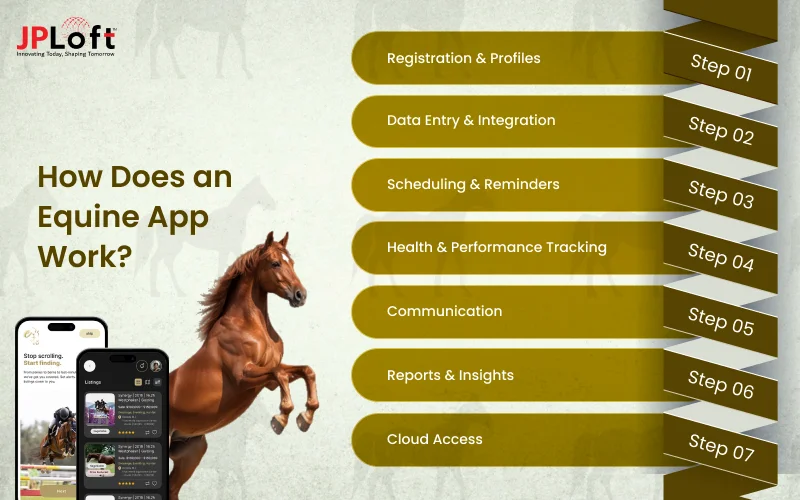
This makes horse management more organized, efficient, and easy to handle from anywhere.
Step 1: Registration & Profiles: Users sign up and create profiles for themselves and their horses, storing key details like health, breed, and training routines.
Step 2: Data Entry & Integration: Data can be added manually or synced through smart devices to track real-time stats like movement and performance.
Step 3: Scheduling & Reminders: The app sends alerts for feeding, training, and vet visits so nothing important is missed.
Step 4: Health & Performance Tracking: Users monitor medical records and performance insights to keep horses in top condition.
Step 5: Communication: Owners, trainers, and vets can connect instantly for better coordination and updates.
Step 6: Reports & Insights: Smart reports help users understand trends and make better decisions.
Step 7: Cloud Access: All data is stored securely and can be accessed anytime, anywhere.
In simple terms, an equine app works like a smart assistant that keeps horse care organized, connected, and stress-free.
Why Create an Equine App?
Investing in how to develop an equine app offers several benefits for both users and businesses in the horse industry. It helps simplify management, improve communication, and provide better care for horses.
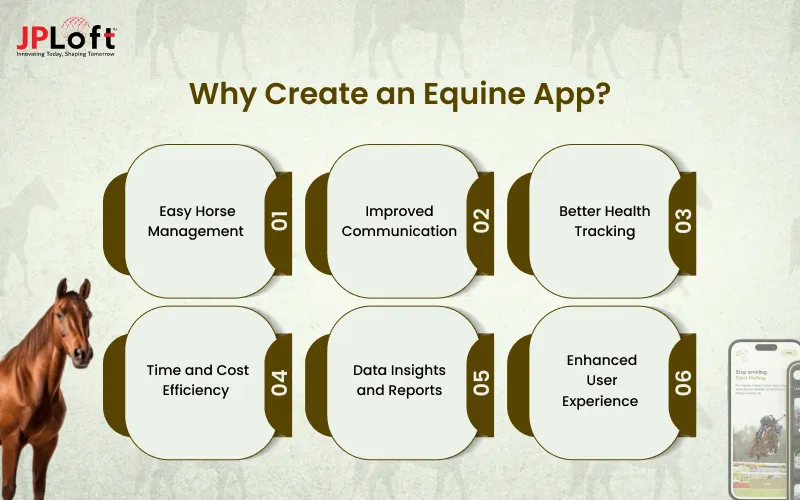
Here we have listed the main benefits of investing in how to create an equine app:
1. Easy Horse Management
An equine app keeps all horse-related information in one organized system. It helps owners and trainers manage feeding, training, and medical records with ease.
This reduces confusion and ensures smooth daily horse care.
2. Improved Communication
It enables real-time communication between owners, trainers, riders, and veterinarians. Everyone stays updated with instant messages and shared information.
This improves coordination and avoids miscommunication.
3. Better Health Tracking
The app records vet visits, medications, and vaccination details in one place. Users can easily monitor health patterns and detect issues early.
This ensures better care and long-term horse well-being.
4. Time and Cost Efficiency
Automation reduces manual tasks and saves valuable time for users. It also minimizes errors that could lead to unnecessary costs.
This allows users to focus more on horse care.

Features to Include in an Equine App
An equine app should include a mix of practical and smart features that make horse management easy, organized, and efficient.
These features should help owners, trainers, and veterinarians handle daily care, monitor health, and improve communication.
Below is a detailed table highlighting the core features every equine app should include:
|
Components |
Features |
Description |
|
User Management |
Profile creation, user roles, and login authentication |
Allows owners, trainers, and vets to create secure profiles and manage access based on their roles. |
|
Horse Profiles |
Detailed horse information, photo uploads, medical, and training records |
Stores all essential details like breed, age, vaccination history, and performance data for each horse. |
|
Health Management |
Vet logs, vaccination tracking, and medication reminders |
Helps track medical history, schedule checkups, and ensure timely treatments. |
|
Training and Performance Tracking |
Session logging, performance analytics, progress charts |
Records daily training sessions and displays performance metrics for better evaluation. |
|
Feeding and Care Schedules |
Feeding times, diet plans, care routines |
Organizes feeding plans, supplement intake, and grooming schedules to maintain horse health. |
|
Stable Management |
Stall assignments, inventory tracking, task lists |
Helps manage stable operations efficiently, track feed supplies, and assign caretaker duties. |
|
Event and Competition Management |
Event scheduling, registration, and result updates |
Allows users to plan, register, and manage equine events or competitions directly from the app. |
|
Communication Hub |
Messaging, notifications, shared updates |
Enables real-time communication between owners, trainers, and veterinarians for smooth coordination. |
|
IoT and GPS Integration |
Smart device connectivity, location tracking |
Connects to sensors or wearables for live data on horse movement, heart rate, and location. |
|
Analytics Dashboard |
Reports, performance insights, data visualization |
Displays key metrics and patterns to help users make informed care and training decisions. |
|
Cloud and Data Storage |
Secure data backup, multi-device access |
Ensures all information is safely stored and accessible from any device with internet connectivity. |
|
Monetization Tools |
Subscription plans, in-app purchases, and ads |
Provides options for generating revenue through premium features, service bookings, or partnerships. |
After knowing the key features that shape a helpful equine app, the next step is to learn how to bring these features together and build a complete app in 2026.
How to Create an Equine App in 2026?
The equine app development process requires careful planning and a well-structured approach.
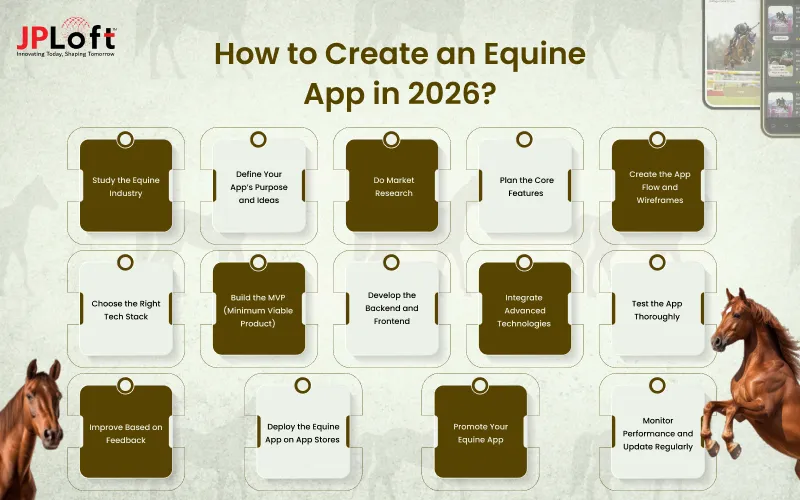
Let’s go through the key steps to help you build and launch a high-performing, scalable, and sustainable app.
Step 1: Market Research (Discovery)
Before coding, you must understand the daily life of horse owners, trainers, and vets. The goal is to find out exactly where they struggle, whether it’s tracking medical records or managing stable schedules.
-
Identify Gaps: Look at existing apps and see what features they are missing.
-
Define Users: Decide if your app is for professional racing stables or casual hobby riders.
-
Prioritize Needs: Focus on solving real problems, like missed vaccinations or disorganized training logs.
Step 2: Simple & Clean Design (UI/UX)
In a stable, users are often in a hurry, outdoors, or even wearing gloves. Your design must be clean and functional so it can be used easily in a real-world environment.
-
The 3-Tap Rule: Users should be able to complete any main task (like logging a feed) in just three taps.
-
High Visibility: Use colors and fonts that stay readable even in bright sunlight.
-
Large Buttons: Make navigation easy so riders don't struggle to tap small icons while on the move.
Step 3: Choosing the Tech Stack
To build an equestrian app that works smoothly on both Android and iOS, you can use cross-platform frameworks like Flutter or React Native.
Choosing the right tech stack of an equine app ensures faster development, better performance, and a seamless user experience across devices.
-
AI & IoT: Add features like smart sensors that monitor a horse’s heart rate or movement.
-
Instant Alerts: Use AI to send notifications if the app detects a change in the horse’s health patterns.
-
Cloud Security: Store all medical records and training data safely in the cloud so it’s never lost.
Step 4: The App Development Phase
This is where the vision turns into a working reality. Development is split into the frontend (what the user sees) and the backend (where the data is managed), ensuring they communicate perfectly.
-
Horse Passport System: Develop a central database for horse profiles, medical history, and ownership documents.
-
Smart Logic Integration: Build the scheduling engines that automatically trigger reminders for feeding, training, and vet visits.
-
Real-time Sync: Ensure that if a trainer updates a log in the barn, the owner sees it instantly on their device via cloud synchronization.
Step 5: Launch and App Store Optimization (ASO)
The final stage of how to make an equine app is getting it into the hands of users. You need to make sure people can find your app when they search for it.
-
ASO Strategy: Use keywords like "horse care" and "stable management" in your app title and description.
-
Beta Launch: Start in one region or community to gather reviews and build trust.
-
Regular Updates: Keep the app fresh by adding new features and fixing bugs every few weeks.
So, this is how you can successfully turn your equine app idea into a solution. Let’s get to know some technologies that can add five stars rating to your app.
Use of Advanced Technologies To Build an Equine App
Building an equine app in the current tech-driven market involves using advanced technologies that enhance accuracy, speed, and user experience.
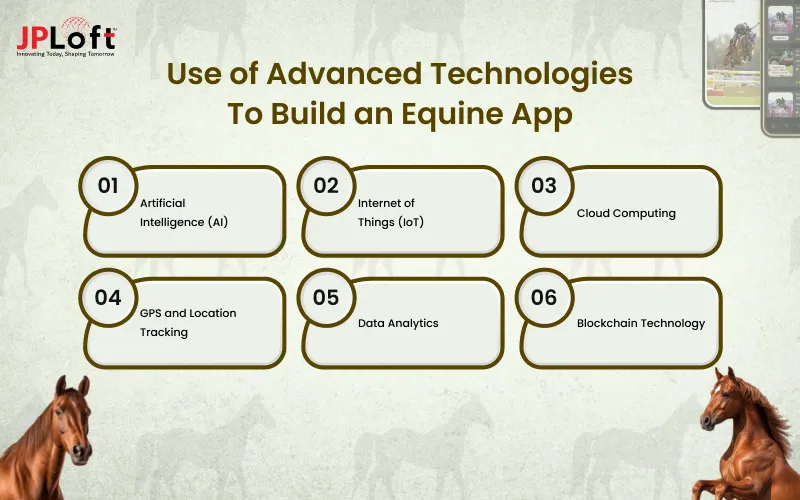
Let’s explore the advanced technologies so you can stay updated with the future trends of equine apps:
1. Artificial Intelligence (AI)
AI in equine helps analyze data from horse activities, health records, and performance logs to offer personalized suggestions.
For example, it can predict training outcomes, detect early signs of illness, and recommend diet adjustments based on a horse’s condition.
2. Internet of Things (IoT)
IoT-enabled wearables such as smart halters, sensors, or trackers collect real-time data like heart rate, temperature, and movement patterns.
This data syncs with the app, allowing users to monitor a horse’s health and activity anytime. It enhances safety by instantly alerting users if abnormal patterns or distress signals are detected.
3. Cloud Computing
Cloud storage ensures all data, from health records to training schedules, is safely stored and accessible from multiple devices.
It also enables smooth data sharing between owners, trainers, and veterinarians. This reduces data loss and supports real-time collaboration across different user roles.
4. GPS and Location Tracking
Make an equine app with built-in GPS that helps track horse movement during rides, events, or transportation.
It’s especially useful for monitoring endurance training or ensuring safety in outdoor environments.
GPS tracking also helps manage large farms or stables by providing precise horse locations at any moment.
5. Data Analytics
Advanced analytics tools process large volumes of horse-related data to generate meaningful insights.
These insights help improve performance, detect behavioral changes, and make informed management decisions.
With predictive analytics, users can identify future trends and take preventive actions before problems arise.
6. Blockchain Technology
Blockchain can be used to securely store ownership details, medical history, and competition results, ensuring data transparency and preventing tampering.
It builds trust within the equine community by maintaining an unchangeable record of every transaction and health update.
You can connect with the leading blockchain development company to ensure that your app is up to date with the latest trends in technology.
What's the Cost to Develop an Equine App?
The estimated equine app development cost ranges between USD 20,000 and USD 80,000+, varying according to the complexity, features, and design chosen.
The investment in the development of the equine app can become an exciting opportunity for anyone involved in the horse industry.
Here's a detailed breakdown of the app development cost, including major components, descriptions, and estimated price ranges:
|
App Type |
Features Included |
Estimated Cost |
|
Basic Equine App |
Horse profiles, scheduling, basic tracking, simple UI |
$20,000 – $35,000 |
|
Mid-Level Equine App |
Health tracking, reminders, communication tools, cloud sync |
$35,000 – $60,000 |
|
Advanced Equine App |
AI analytics, IoT integration, GPS tracking, real-time data, and an advanced dashboard |
$60,000 – $80,000+ |
How to Monetize an Equine App?
Here are the most common mobile app monetization strategies used by the equine app to generate revenue:
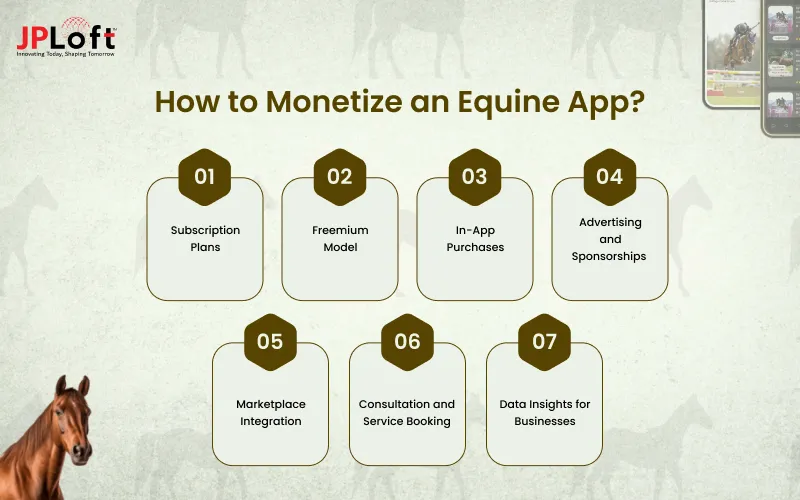
1. Subscription Plans
Offer monthly or yearly tiers that unlock premium value, such as unlimited horse profiles, advanced analytics, and cloud backups.
This model provides your business with steady, recurring income while giving power users consistent access to high-level management tools.
2. Freemium Model
Give away core features for free to build a massive user base quickly.
Then, charge for specialized tools like performance tracking or event management.
This lowers the entry barrier and converts casual riders into paying customers as their needs grow.
3. In-App Purchases
Provide "pay-as-you-go" options for specific needs.
Users can purchase one-off digital products like specialized training programs, feed calculators, or expert-led care guides, allowing them to customize their experience without a full subscription.
4. Advertising and Sponsorships
Partner with trusted equine brands, feed suppliers, and equipment manufacturers to display targeted ads.
Sponsored content or "Product of the Month" features connect your users with relevant supplies while generating significant secondary revenue.
5. Marketplace Integration
Transform the app into a trading hub for horses, tack, and accessories.
By charging a listing fee or transaction commission, you create a profitable, community-driven marketplace that keeps users returning to the app.
6. Consultation and Service Booking
Earn a commission on every appointment booked through your platform.
By connecting users directly with vets, nutritionists, and trainers, you provide a valuable service to the community while taking a cut of the professional networking fee.
7. Data Insights for Businesses
Sell anonymized, high-level data reports to equine manufacturers.
Your app’s usage trends can help brands understand which products are in demand, making your platform a strategic asset for industry-wide market research.
Challenges in Building an Equine App
When you create an equine app, it involves several challenges because it must balance modern technology with the unique needs of the horse owners, trainers, and veterinarians.
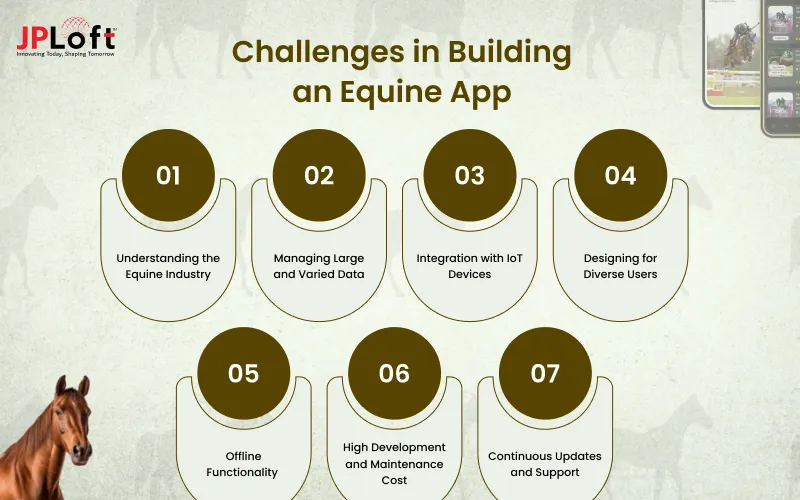
Here are some equine app challenges that you should be aware of along with tips to solve them:
Challenge 1: Understanding the Equine Industry
Many times, businesses lack in-depth knowledge of horse management, training routines, and stable operations, leading to features that don’t match real-world needs or user expectations. This gap often results in limited usability and reduced adoption.
Solution: Collaborate with equine experts during the development phase to ensure the app meets industry expectations.
Challenge 2: Managing Large and Varied Data
Equine apps process huge amounts of data, from medical histories to performance metrics, which can become confusing to manage and slow down performance. Poorly structured data may also cause errors or security risks.
Solution: Use cloud-based databases with structured storage and encryption to manage and protect all information efficiently.
Challenge 3: Integration with IoT Devices
Syncing wearable devices like fitness trackers or smart halters with the app can be technically demanding, as data must be accurate and updated in real time. Delays or mismatched readings can reduce trust among users.
Solution: Develop APIs and test integrations with popular IoT tools to ensure accurate and real-time data transfer.
Challenge 4: Designing for Diverse Users
Equine apps are used by owners, trainers, riders, and veterinarians, all with different goals and levels of technical knowledge. A complex interface may discourage frequent use.
Solution: Create a simple, customizable interface that adapts to different user roles and experience levels.
Challenge 5: Offline Functionality
Many stables and training areas lack stable internet connectivity, which limits app access during important tasks. Without offline features, users may find the app unreliable.
Solution: Include offline access and automatic syncing once the connection is restored.

How JPLoft Can Help You Launch A Successful Equine App?
Launching your app successfully requires the right strategy, experience, and execution. With 15+ years of experience, 1100+ apps delivered, and a 98% client retention rate, JPLoft is a top equine app development company.
A Glimpse into Our Equine App Portfolio:
Elite Equine Solutions
Challenge: Disconnected marketplaces and social platforms made it hard for users to discover and trust listings.
Solution: We developed a mobile-first platform with advanced search, verified reviews, real-time alerts, and seamless listing management.
Impact: 62% increase in listing-driven inquiries, 4.1x boost in buyer-seller matches, and 35% higher deal completion rate.
Conclusion
Launching an equine app in 2026 is a strategic move to digitize horse management and bridge the gap between tradition and technology.
By focusing on a "user-first" approach, you can create a reliable partner for owners, trainers, and stable managers that simplifies complex daily routines.
Success in this niche depends on clear planning, high-performance tech like AI and IoT, and a commitment to regular updates that keep the platform stable.
When you follow a professional equine app development guide, prioritizing trust, data security, and seamless communication, your platform becomes more than just a tool; it becomes a community staple.
With a solid foundation, your equestrian app will not only improve horse care today but also scale effortlessly to meet the future demands of the global equine world.
FAQs
To create an equine app, start by researching user needs, planning core features, and designing simple screens. Choose a strong tech stack, build an MVP, add tools for horse care and tracking, test with real users, and launch with regular updates.
The development time depends on features and complexity. A simple app may take two to three months, while advanced apps with sensors or analytics may take six months or more. Proper planning helps speed up the timeline.
Not always. You can begin with basic features and add advanced tools later. Start with simple horse profiles, schedules, and reminders. Technologies like AI, GPS, and IoT can be added as the app grows and user needs increase.
Yes, many equine apps include offline access so users can view or update details in remote areas. Once the device reconnects to the internet, the app syncs everything. This ensures important data is never lost during outdoor activities.
Cost depends on design quality, number of features, platform selection, and the type of technology used. Adding advanced tools like real-time tracking or analytics raises the price. Ongoing maintenance and updates also influence the total budget.

Kris Jacobs brings 20+ years of experience solving complex digital product challenges through strategic thinking and user-centric design. With deep exposure to on-demand services, entertainment, travel, and interactive platforms, she collaborates across teams to shape scalable, engaging solutions that align business goals with intuitive user experiences across evolving digital landscapes.





Share this blog