


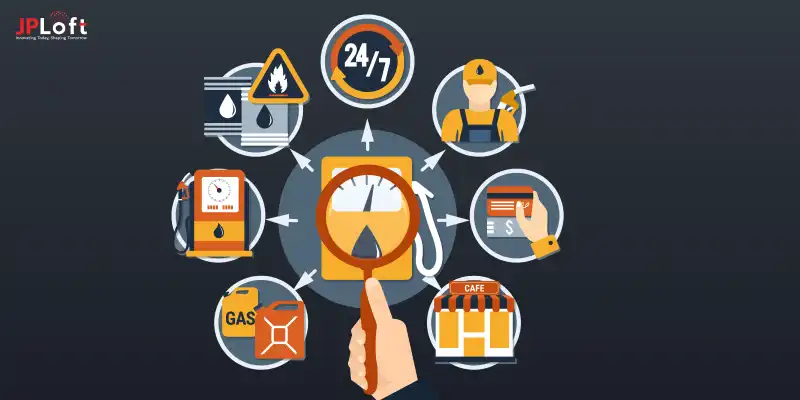
Key Takeaways:
A fuel management system helps businesses monitor, control, and record fuel usage across fleets, equipment, or storage tanks.
A basic fuel management system development process involves understanding the business model, planning architecture, designing, hardware integration, and more.
Industries such as logistics, construction, mining, agriculture, and public transportation widely use the fuel management solutions.
The cost to develop a fuel management system typically ranges from $25,000 to $150,000+, depending on features and system complexity.
Modern fuel management platforms use technologies such as IoT sensors, GPS tracking, AI analytics, and cloud systems to enable accurate fuel monitoring.
Fuel is one of the biggest expenses for any transport business or petrol pump. Yet, every month, a surprising amount of fuel gets wasted or even stolen without anyone noticing.
This silent loss affects profits and creates unnecessary headaches.
That’s why a good fuel management system has become essential today. It helps businesses track every drop of fuel in real time, stop theft, reduce wastage, and make smarter decisions.
In this blog, we will walk you through the fuel management system development guide that helps you make better decisions and bring peace of mind to your daily operations.
Let’s explore how it works and why you need it now.
What is a Fuel Management System?
A fuel management system is an integrated hardware–software solution designed to monitor, control, and analyze fuel consumption across vehicles, heavy equipment, and fuel storage infrastructure.
It is widely used in fleet management environments where accurate fuel tracking is critical for operational efficiency and cost control.
Technically, a fuel management system operates by integrating several components, such as:
-
Fuel level sensors installed in vehicle tanks or storage tanks
-
GPS tracking devices for vehicle location and trip correlation
-
Fuel dispensing units or smart fuel pumps
-
IoT communication modules for real-time data transmission
-
Centralized fuel management software or cloud dashboard
The system processes this data and presents it through an analytical dashboard, enabling fleet managers to monitor fuel activities in real time.
Advanced systems may also include data analytics, automated alerts, historical reporting, and integration with fleet telematics platforms.
How Does a Fuel Management System Work?
A fuel management system for fleet operations collects fuel data from vehicles, storage tanks, or fuel stations and sends it to a central software platform.
In most cases, the working process of a fuel management system software follows a few simple steps:
-
Sensors are installed in fuel tanks or pumps to measure fuel levels and detect changes.
-
The sensors or IoT devices send fuel data to the system software through GPS.
-
The system records fuel refills, fuel consumption, and fuel levels in real time.
-
Managers can view fuel usage, vehicle activity, and fuel reports in a centralized dashboard.
The automated fuel management system sends alerts for abnormal fuel drops and generates detailed reports to support better decision-making.
Key Features of a Fuel Management System
A modern fuel management solution does more than just record fuel usage. It helps businesses track fuel activity, control fuel expenses, and improve operational efficiency.
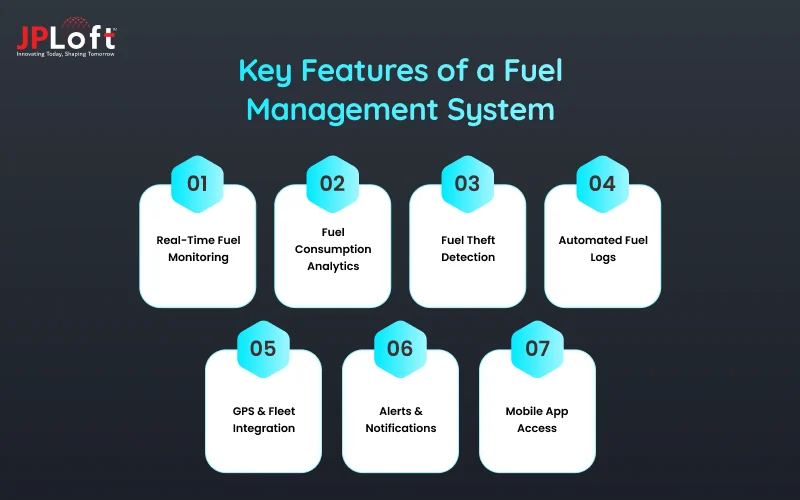
Below are some important top software features that businesses typically expect when planning to create a fuel management system:
1. Real-Time Fuel Monitoring
This feature lets businesses track fuel levels in vehicles and tanks continuously. Sensors send live data to the system, so managers can see the exact fuel status anytime and respond quickly to any unusual changes.
2. Fuel Consumption Analytics
It shows exactly how much fuel each vehicle or machine is using. The system analyzes patterns and highlights inefficient vehicles, helping businesses plan better and reduce wastage.
3. Fuel Theft Detection
Fuel theft is a big issue in fleets. The system detects sudden drops or irregular usage and instantly alerts managers so they can take action immediately.
4. Automated Fuel Logs
No more manual entries or errors. The system automatically records every fuel transaction, keeping all data accurate and up-to-date without any extra effort.
5. GPS & Fleet Integration
The system connects with GPS tracking, allowing you to see both vehicle location and fuel consumption together. This helps understand how routes and driving habits affect fuel usage.
6. Alerts & Notifications
You get instant alerts for low fuel, sudden drops, or abnormal consumption. These notifications help prevent problems before they become serious.
7. Mobile App Access
A mobile app lets managers check fuel levels, view reports, and monitor the fleet from anywhere, anytime. This makes fuel management much more convenient and flexible.
Industries that Use Fuel Management Systems
Many industries depend heavily on fuel to keep vehicles, equipment, and machinery running every day. When fuel usage is not tracked properly, companies often face higher costs, fuel waste, and operational delays.
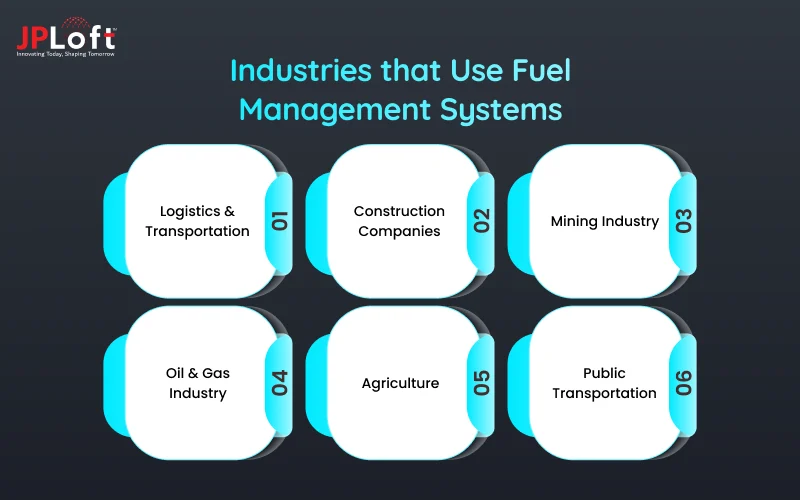
Below are some industries where these systems are widely used:
#1: Logistics & Transportation
Logistics companies rely on a fuel management system to track fleet consumption, monitor refueling, and optimize routes for better efficiency across multiple locations.
#2: Construction Companies
A fuel tank management system helps construction firms monitor fuel usage in heavy machinery and avoid delays caused by unexpected fuel shortages.
#3: Mining Industry
An automated fuel management system enables mining companies to track fuel usage in remote locations and maintain control over storage and distribution.
#4: Oil & Gas Industry
A fuel inventory management system helps track fuel levels, manage distribution, and maintain accurate records for operations and compliance.
#5: Agriculture
A fuel management system for trucks and farm equipment helps farmers monitor usage and plan fuel supply efficiently during seasonal activities.
#6: Public Transportation
A fleet and fuel management system development helps operators track fuel consumption and ensure smooth, uninterrupted daily transport services.
Types of Fuel Management Systems
Businesses use different types of fuel monitoring systems depending on how they store, distribute, or track fuel in their daily operations. Some companies manage fuel at storage facilities, while others focus on monitoring fuel usage across fleets.
Choosing the right system helps businesses control fuel expenses. For instance, companies with their own depots often choose to build a fuel management system with an 'On-Site' focus to monitor private pumps and unauthorized dispensing
Type 1: Automated Fuel Management Systems
An automated fuel management system records fuel transactions without manual input. Sensors and connected pumps automatically capture fuel data whenever refueling occurs.
How it helps businesses: It eliminates manual record-keeping, reduces errors, and helps businesses obtain accurate fuel usage data.
Type 2: Fuel Inventory Management Systems
A fuel inventory management system focuses on tracking fuel stock levels in storage tanks or fuel depots. The system monitors how much fuel is available and how it moves across locations.
How it helps businesses: It helps companies avoid fuel shortages, plan fuel purchases better, and maintain clear records of fuel storage and distribution.
Type 3: On-Site fuel management systems
An on-site fuel management system is used when businesses store fuel at their own facility or depot. The system tracks fuel dispensed to vehicles, machines, or equipment.
How it helps businesses: This helps companies control fuel distribution, prevent unauthorized refueling, and keep accurate records of how much fuel each vehicle or machine receives.
Type 4: Cloud-Based fuel management systems
A cloud-based fuel management system software stores fuel data on remote servers that can be accessed through web dashboards or mobile applications.
How it helps businesses: It allows managers to monitor fuel operations remotely, track fuel usage across multiple locations, and make faster decisions based on real-time fuel data.
Fuel Management System Development Process
To develop a fuel management system (FMS), you need a strategic convergence of IoT hardware integration, cloud computing, and advanced data analytics.
The goal is to transform physical fuel consumption into actionable business intelligence.
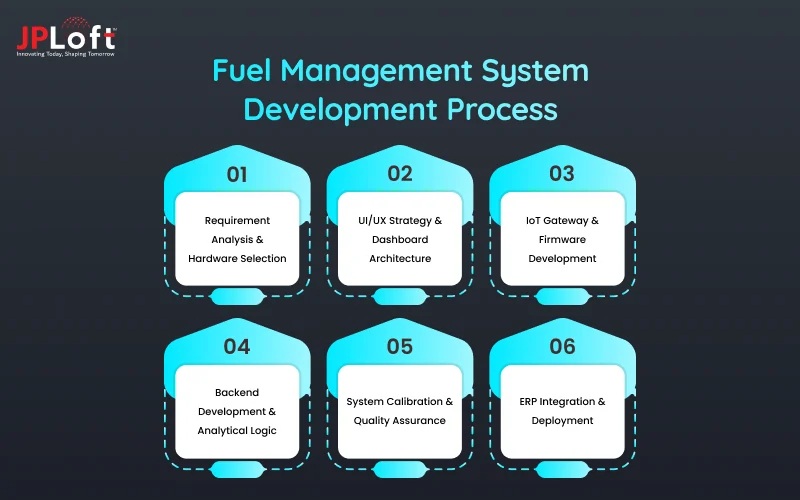
Let’s get to know the whole process:
1. Requirement Analysis & Hardware Selection
The foundational phase involves auditing the operational environment to determine the necessary sensor precision and connectivity protocols.
-
Sensor Strategy: Selection of high-accuracy hardware, such as ultrasonic level sensors or capacitive fuel probes, based on the specific assets involved—whether heavy machinery, stationary bulk tanks, or long-haul fleets.
-
Connectivity Framework: Establishing the data transmission backbone (cellular, satellite, or Wi-Fi) to ensure consistent telemetry even in geographically isolated areas like mines or offshore rigs.
2. UI/UX Strategy & Dashboard Architecture
The interface is designed to simplify complex data and present it in a clear, easy-to-understand way. Instead of going through large datasets manually, the system highlights important issues or unusual patterns automatically.
This approach is especially useful in fuel app development, where quick decisions and real-time insights can improve operations and efficiency.
-
Key Components: Real-time consumption heat maps, automated refueling logs, and instant notification centers for critical alerts such as unauthorized fuel drainage or sub-optimal engine performance.
3. IoT Gateway & Firmware Development
This stage to develop a fuel management system involves building the middleware that enables communication between the hardware and the cloud.
-
Protocol Optimization: Utilizing lightweight messaging protocols like MQTT to minimize data overhead while ensuring high reliability.
-
Edge Processing: Developing local logic to buffer data during network outages, ensuring zero data loss during transit through "Store and Forward" capabilities.
4. Backend Development & Analytical Logic
The system's core is engineered to handle massive data throughput and perform complex calculations in milliseconds.
-
Algorithmic Processing: Developing logic to calculate the "Burn Rate" and "Fuel Economy Index" by correlating fuel levels with engine RPM and GPS speed.
-
Security Protocols: Implementing end-to-end encryption and multi-factor authentication to protect sensitive operational and financial data.
5. System Calibration & Quality Assurance
Rigorous testing is conducted to account for environmental variables that could affect sensor accuracy.
-
Environmental Buffering: Software-level calibration to filter out "slosh" or fuel expansion/contraction due to temperature fluctuations, maintaining a data accuracy threshold of 99%+.
-
Scalability Testing: Simulating high-concurrency environments to ensure the platform maintains performance as the fleet or infrastructure expands.
6. ERP Integration & Deployment
The final phase of the fuel management software development process focuses on embedding the FMS into the broader corporate ecosystem.
A trusted fuel management software development company like JPLoft helps connect it smoothly with your existing systems for better efficiency and easier operations.
-
API Ecosystem: Seamlessly connecting fuel data with existing ERP, accounting, or maintenance software to automate fuel tax reporting and procurement cycles.
-
Operational Transition: Deploying the solution across the infrastructure, followed by iterative updates based on real-world performance metrics to maximize the return on investment.
How Much Does it Cost to Develop a Fuel Management System?
The cost to develop a fuel management system ranges from $25,000 to $150,000+, depending on system complexity, hardware integration, and the number of features included.
A simple platform with fuel tracking and reporting usually costs less, while systems with IoT sensors, analytics dashboards, and fleet integrations require a higher investment..
Other factors, such as cloud infrastructure, hardware, and third-party integrations, also affect the final fuel software development cost. Businesses usually start with essential features and then expand the system as their fleet operations grow.
Let us present the development cost in a table:
|
System Type |
Estimated Cost |
Features Included |
|
Basic System |
$25,000 – $40,000 |
Basic fuel tracking, simple dashboard, fuel usage reports, and limited fleet monitoring |
|
Mid-Level System |
$40,000 – $80,000 |
Real-time fuel tracking, GPS integration, analytics dashboard, alerts, mobile access |
|
Advanced / Enterprise System |
$80,000 – $150,000+ |
IoT sensor integration, multi-location monitoring, advanced analytics, automation, third-party integrations, scalable cloud infrastructure |
Future Trends in Fuel Management Systems
Fuel management technology is evolving as businesses look for better ways to control fuel costs and improve operational efficiency.
New technologies are helping companies monitor fuel usage more accurately and automate many parts of fuel operations.
Below are some trends that are shaping the future of fuel management solutions:
Trend 1: AI-Based Fuel Analytics
Artificial intelligence is starting to play a bigger role in fuel management system software. AI in fuel delivery can analyze large volumes of fuel data collected from vehicles, sensors, and fuel stations.
Instead of just showing basic reports, the system can identify patterns in fuel consumption and highlight unusual activity. Businesses can then make better decisions about route planning, fleet operations, and fuel budgeting.
Trend 2: IoT-Based Smart Fuel Monitoring
The Internet of Things is making automated fuel management systems more accurate and responsive. IoT devices such as fuel sensors and GPS trackers continuously collect data from vehicles and storage tanks.
With IoT in fuel delivery, businesses can track fuel levels, refueling activity, and fuel consumption across their entire fleet. This improves visibility and allows managers to respond quickly when unusual fuel usage or operational issues appear.
Trend 3: Predictive Maintenance for Fleet Vehicles
Fuel management platforms are also being connected with vehicle health monitoring systems. By analyzing fuel usage patterns and vehicle data, the system can predict when a vehicle may require maintenance.
For example, sudden changes in fuel efficiency may indicate engine problems or mechanical wear. When the system detects these patterns early, businesses can schedule maintenance before the issue becomes serious.
Trend 4: Blockchain for Fuel Transaction Transparency
Some companies are exploring blockchain technology to make fuel transactions more transparent and secure. Blockchain creates a shared digital record where every fuel transaction is stored in a tamper-resistant system.
Blockchain in fuel delivery can help organizations maintain accurate fuel purchase records and reduce the chances of fraud or data manipulation. For companies managing fuel across multiple locations, blockchain can also improve trust and accountability in fuel supply operations.

Conclusion
Fuel management is a critical part of operations for businesses that rely on fleets, heavy equipment, or large fuel storage systems.
When fuel usage is tracked manually, companies often face issues such as fuel loss, inaccurate records, and poor visibility into daily fuel consumption.
This is why many organizations are moving toward modern fuel management systems that provide real-time monitoring and better control over fuel operations.
A well-designed fleet fuel management system helps businesses track fuel usage, detect unusual activity, manage fuel inventory, and generate clear reports for decision-making.
With technologies like IoT sensors, AI-based analytics, and cloud platforms, companies can manage fuel operations more efficiently and reduce unnecessary costs.
However, building a reliable system requires the right technical approach and development expertise. Hence, businesses can create scalable platforms that support long-term fleet efficiency and smarter fuel management strategies.
FAQs
A fuel control system is a technology solution that helps businesses track, monitor, and control fuel usage across vehicles, equipment, or storage tanks. It collects fuel data through sensors and software to provide accurate reports and insights.
A fleet fuel management system helps companies monitor fuel consumption, detect unusual fuel usage, and track refueling activity. This improves operational visibility and helps businesses reduce fuel waste and control fuel expenses.
Fuel management systems are widely used in industries such as logistics and transportation, construction, mining, oil and gas, agriculture, and public transportation, where vehicles and heavy equipment consume large amounts of fuel.
The cost to develop a fuel management system typically ranges between $25,000 and $150,000+, depending on features, hardware integration, system complexity, and the number of vehicles or fuel storage units the system needs to support.
Modern fuel control systems often use technologies such as IoT fuel sensors, GPS tracking, AI-based analytics, cloud platforms, and mobile applications to monitor fuel usage, automate reporting, and improve fleet efficiency.

Savannah is a passionate tech enthusiast with a sharp understanding of client needs across diverse digital domains. With expertise spanning financial platforms, on-demand solutions, and emerging technologies, she brings a unique blend of analytical insight and interpersonal skills, helping businesses decode complexities and make informed decisions in today's rapidly evolving digital world.



Share this blog