


Key Takeaways:
Cost Overview: The cost to develop an app like Skrill typically ranges from £15,000 to £120,000+ ($20,000 to $150,000+), depending on app complexity, compliance needs, and scalability goals.
Skrill App Insight: Skrill’s success comes from solving real user problems like instant transfers, multi-currency wallets, and secure payments, not just basic transactions.
Cost Factors: Development location, hiring model, tech stack, security standards, and third-party integrations play the biggest role in shaping overall development costs.
Cost Optimization: Starting with an MVP, using proven APIs, and planning compliance early are the most effective ways to control development expenses.
Development Partner: Working with an experienced eWallet app development company like JPLoft helps balance cost, compliance, and scalability while building a future-ready digital wallet.
Thinking about the cost to develop an app like Skrill in the United Kingdom usually starts with one simple question: Is it worth building a secure, scalable eWallet right now?
One short answer, yes, it is. Here’s the thing. Digital payments are no longer optional. Users expect instant transfers, multi-currency support, strong security, and a smooth mobile experience.
Skrill set that bar high, and if you’re planning something similar, you’re already aiming at a serious opportunity.
This is where the question comes: “What is the cost to develop an app like Skrill?”
The price to develop a custom ewallet app like Skrill can go from £15,000 to £120,000+ ($20,000 to $150,000+), and it also depends on compliance, security layers, third-party integrations, and building trust from day one.
If you want to enter the fintech space with confidence, understanding the cost early helps you plan features smartly, avoid rework, and build an app that scales without breaking later.
Overview of Skrill App
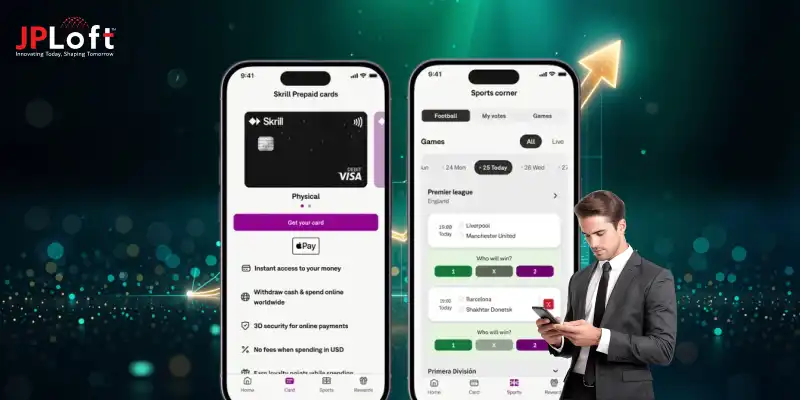
Skrill is a digital wallet and online payment platform that lets you store money, send and receive payments, and make online transactions without sharing your bank or card details every time.
At its core, Skrill is built for speed and flexibility. You can use it to transfer money internationally, hold multiple currencies in one account, pay merchants online, or move funds between your bank and wallet with ease.
Skrill began its journey in 2001 in the United Kingdom under the name Moneybookers, launching as a digital wallet service. By 2007, it had grown into one of Europe’s top three e-payment providers and was acquired by Investcorp in March of that year, marking a major milestone in its expansion.
If you want to create an eWallet app like this, you need to think beyond basic transfers. You’re solving real problems for users, like managing multiple currencies, sending money instantly, and paying online without sharing card details every time.
From a business angle, this kind of app opens doors to transaction fees, premium accounts, and partnerships. From a user angle, it delivers convenience and confidence. That balance is why Skrill-style apps continue to grow in demand across the UK market.

How Much Does it Cost to Develop an eWallet App like Skrill?
The price for developing an app similar to Skrill can range from £15,000 to £120,000+ ($20,000 to $150,000+) depending on complexity, features, and platform choices.
-
A basic version with essential features like user registration, wallet management, and peer-to-peer transfers costs between £15,000-£30,000 ($20,000-$40,000).
-
A mid-range app incorporating advanced features such as multi-currency support, card integration, and enhanced security measures ranges from £30,000-£60,000 ($40,000-$80,000).
-
Enterprise-level solutions with comprehensive features, including cryptocurrency support, investment options, merchant solutions, AI-powered fraud detection, and global compliance, can exceed £60,000-£120,000+ ($80,000-$150,000+).
Here is a detailed cost to develop an e-wallet app similar to Skrill:
|
Component |
Basic Version |
Mid-Range |
Enterprise Level |
Timeline |
|
UI/UX Design |
£6,000 - £12,000 ($8,000 - $15,000) |
£12,000 - £19,000 ($15,000 - $25,000) |
£19,000 - £30,000 ($25,000 - $40,000) |
3-6 weeks |
|
Frontend Development |
£4,000 - £8,000 ($5,000 - $10,000) |
£8,000 - £15,000 ($10,000 - $20,000) |
£15,000 - £23,000 ($20,000 - $30,000) |
6-10 weeks |
|
Backend Development |
£6,000 - £12,000 ($8,000 - $15,000) |
£12,000 - £23,000 ($15,000 - $30,000) |
£23,000 - £38,000 ($30,000 - $50,000) |
8-12 weeks |
|
Payment Gateway Integration |
£3,000 - £6,000 ($4,000 - $8,000) |
£6,000 - £11,000 ($8,000 - $15,000) |
£11,000 - £19,000 ($15,000 - $25,000) |
2-4 weeks |
|
Security & Compliance |
£4,000 - £8,000 ($5,000 - $10,000) |
£8,000 - £15,000 ($10,000 - $20,000) |
£15,000 - £23,000 ($20,000 - $30,000) |
4-8 weeks |
|
Testing & QA |
£3,000 - £6,000 ($4,000 - $8,000) |
£6,000 - £11,000 ($8,000 - $15,000) |
£11,000 - £19,000 ($15,000 - $25,000) |
3-6 weeks |
|
Total Estimated Cost |
£15,000 - £30,000 ($20,000 - $40,000) |
£30,000 - £60,000 ($40,000 - $80,000) |
£60,000 - £120,000+ ($80,000 - $150,000+) |
4-12 months |
Note: This is just an estimate; the cost can be different, as per what you shared with them, the design, project complexity, and more. So, it is suggested to hire dedicated developers from a good company to develop your app.
Factors Influencing the Cost to Develop an App like Skrill
If you’re wondering about the cost to build an eWallet app like Skrill in the United Kingdom, it’s important to know that the final price depends on multiple factors.
Elements such as app design, feature set, project complexity, security requirements, and compliance standards all play a major role in shaping the overall cost.
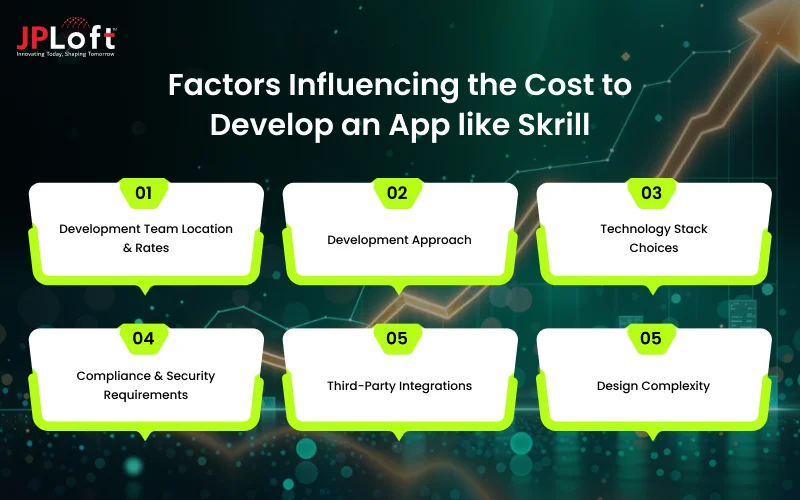
After focusing heavily on dating apps, it’s time to shift attention and understand the key factors that directly impact costs:
1. Development Team Location & Rates
The development team’s location and hourly rates have a direct impact on the overall Skrill app development cost.
Such as, mobile app development company in UK typically charges higher rates due to local market standards, compliance expertise, and fintech regulations.
Meanwhile, offshore or hybrid teams can reduce costs without compromising quality, especially when managed effectively.
Choosing the right development location helps balance budget, speed, and long-term scalability.
Recommended Regions for Cost-Quality Balance:
-
Eastern Europe (Poland, Ukraine, Romania): High quality at moderate costs
-
India: Most affordable with a large talent pool, quality varies
-
Latin America: Good timezone overlap with US/UK markets
-
UK/US: Premium quality, but the highest costs.
2. Development Approach
The way you build your team plays a major role in cost, speed, and final product quality.
Some businesses hire dedicated developers for full control and long-term ownership, while others prefer flexible engagement models that scale with demand.
You can hire through an in-house team for deep product focus, partner with an agency for end-to-end delivery, work with freelancers for short-term needs, or mix models to stay cost-efficient.
-
In-House Team: Hiring full-time developers typically costs £45,000–£90,000 ($60,000–$120,000) per developer each year, plus benefits, tools, and infrastructure. This model fits long-term products that need regular updates and full internal control.
-
Outsourcing Agency: Agencies work on a fixed scope and usually charge £30–£150 per hour (£40–$200), with project management included. This approach works well for one-time builds or clearly defined Skrill-style app projects.
-
Freelancers: Freelancers charge around £19–£75 per hour ($25–$100), making them budget-friendly. The trade-off is higher coordination effort and the need for strong internal project management.
-
Hybrid Model: A hybrid setup keeps a core in-house team while outsourcing specialists for payments, security, or compliance. It offers a practical balance between cost efficiency and development control.
-
Staff Augmentation Services: This model lets you hire dedicated developers on demand to extend your existing team without long-term hiring commitments.
3. Technology Stack Choices
The ewallet app tech stack you choose determines app speed, security, and scalability.
Advanced technologies, APIs, and cloud infrastructure can raise the Skrill clone app development cost, but they ensure long-term stability, smoother transactions, and easier feature expansion.
-
Frontend: React Native (£23,000-£45,000 / $30,000-$60,000), Flutter (£19,000-£38,000 / $25,000-$50,000), Native iOS+Android (£45,000-£90,000 / $60,000-$120,000)
-
Backend: Node.js (£15,000-£30,000 / $20,000-$40,000), Python/Django (£19,000-£38,000 / $25,000-$50,000), Java/Spring (£23,000-£45,000 / $30,000-$60,000)
-
Database: PostgreSQL (open-source, hosting costs only), MongoDB (flexible for fintech), AWS RDS (£75-£750/month / $100-$1,000/month)
-
Cloud Infrastructure: AWS (most comprehensive), Google Cloud (AI/ML advantages), Microsoft Azure (enterprise integration)
4. Compliance & Security Requirements
Strict KYC, AML, GDPR, and PCI-DSS standards are core to eWallet app compliance and directly influence the cost to make an app like Skrill.
Implementing advanced encryption, fraud prevention tools, and ongoing security audits increases development effort but is crucial for user trust.
-
PCI-DSS Certification: £7,500-£23,000 ($10,000-$30,000) - Mandatory for card payment processing.
-
GDPR Compliance: £4,500-£15,000 ($6,000-$20,000) - Required for EU user data protection.
-
PSD2 Implementation: £6,000-£19,000 ($8,000-$25,000) - European Payment Services Directive.
-
KYC/AML Solutions: £3,000-£11,000 ($4,000-$15,000) - Identity verification and anti-money laundering.
-
Security Audits: £3,000-£11,000 ($4,000-$15,000) annually - Penetration testing and vulnerability assessment.
-
ISO 27001 Certification: £11,000-£30,000 ($15,000-$40,000) - Information security management standard.
5. Third-Party Integrations
Third-party integrations significantly influence the cost to develop an app like Skrill, as eWallets rely on multiple external services to function smoothly.
Payment gateways, KYC/AML verification tools, fraud detection systems, currency exchange APIs, and banking partners all add layers of complexity.
The more integrations your app requires and the stricter the compliance, the higher the development effort, testing time, and ongoing app maintenance costs.
-
Payment Gateways (Stripe, PayPal, Adyen): £2,300-£8,000 ($3,000-$10,000) integration + 2.9% + £0.23 ($0.30) per transaction
-
Banking APIs (Plaid, TrueLayer, Yodlee): £3,000-£11,000 ($4,000-$15,000) + monthly fees
-
Identity Verification (Onfido, Jumio, Trulioo): £1,500-£6,000 ($2,000-$8,000) + per-verification costs
-
SMS/Email Services (Twilio, SendGrid): £750-£2,300 ($1,000-$3,000) setup + usage-based pricing
-
Currency Conversion APIs (XE, Fixer.io): £500-£2,300 ($500-$3,000) annually
-
Cryptocurrency Exchanges (Coinbase, Binance API): £3,000-£8,000 ($4,000-$10,000) integration
6. Design Complexity
The more intuitive and visually refined your app is, the higher the cost to build an app like Skrill becomes.
eWallet users expect seamless navigation, quick transactions, and a premium UI that builds instant trust.
Custom animations, wireframes, advanced UX flows, and multi-device responsiveness all add to design effort and cost to build an e-wallet app like Skrill.
They also directly impact user retention and app credibility in the competitive fintech market.
-
Basic UI/UX Design: Standard templates with minimal customization - £6,000-£12,000 ($8,000-$15,000)
-
Custom Design: Unique brand identity with custom animations - £12,000-£23,000 ($15,000-$30,000)
-
Premium Experience: Advanced micro-interactions, 3D elements, personalization - £23,000-£45,000 ($30,000-$60,000)
So, these are some of the top factors that affect the overall cost to clone the Skirll app. Now, let’s get to know how to reduce this cost.
Tips to Reduce the Skrill-like App Development Cost
Building a feature-rich wallet doesn’t have to drain your budget if you plan smartly.
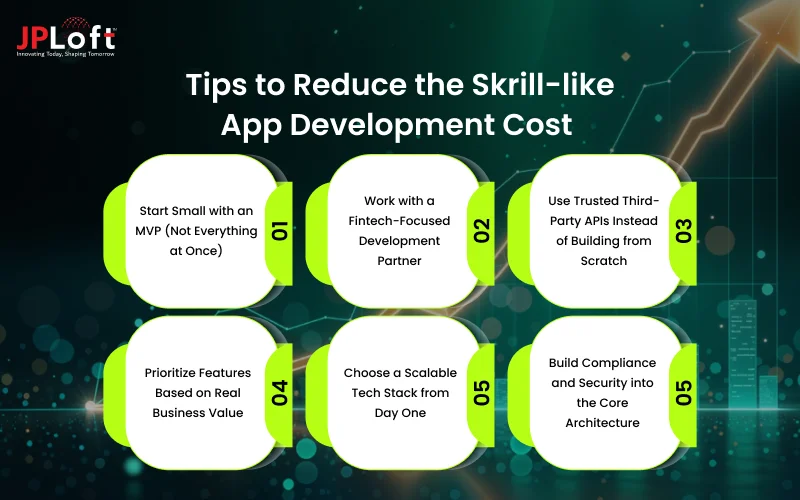
To reduce the cost to create a digital wallet like Skrill, start with an MVP, prioritize essential features, reuse proven APIs, and choose a scalable tech stack.You should hire app developers to avoid costly rework and compliance mistakes:
Tip 1: Start Small with an MVP (Not Everything at Once)
If you try to build everything on day one, your budget will feel the pressure fast.
Starting with an MVP helps you control the cost to develop an app like Skrill by focusing only on what your users actually need: secure payments, wallet balance, and basic transfers.
You can always add advanced features later, once you validate demand and revenue.
Tip 2: Work with a Fintech-Focused Development Partner
The team you choose directly impacts the Skrill app development cost.
When you work with developers who already understand digital wallets, compliance, and payment systems, you avoid expensive trial-and-error.
Experienced teams reuse proven frameworks, follow regulations correctly, and help you move faster, saving you both time and long-term development costs.
Tip 3: Use Trusted Third-Party APIs Instead of Building from Scratch
You don’t need to reinvent the wheel to succeed.
Using ready-made APIs for KYC, payments, fraud detection, and currency exchange can dramatically reduce the cost to build an app like Skrill.
These tools are already tested, secure, and scalable, meaning fewer bugs, faster development, and lower overall cost related to mobile app maintenance services for you down the road.
Tip 4: Prioritize Features Based on Real Business Value
It’s easy to get excited and add too many features early.
But that’s also how costs spiral. By prioritizing features that directly support your users and revenue goals, you can manage the cost to make an app like Skrill more effectively.
Focus on essentials first, then roll out premium or advanced ewallet app features once your app gains traction.
Tip 5: Choose a Scalable Tech Stack from Day One
Cutting corners on your app tech stack might seem cheaper now, but it usually increases costs later.
A well-planned, scalable architecture keeps the cost to develop an app like Skrill under control as your user base grows.
You’ll avoid expensive rebuilds, handle higher traffic smoothly, and add new features without disrupting the entire system.
Tip 6: Build Compliance and Security into the Core Architecture
If compliance is treated as an afterthought, it can seriously inflate your budget later.
Planning KYC, AML, GDPR, and security requirements early helps stabilize the Skrill app development cost.
When compliance is baked into the foundation, audits become easier, approvals are faster, and users trust your wallet, making your product stronger and more market-ready.
So, these are some of the top ways you can reduce your overall cost. Now, let’s explore how you can generate revenue from an app like Skrill.
How Apps Like Skrill Can Make You Money?
Here’s the thing: Apps like Skrill are not built just for transactions; they’re built around smart eWallet app monetization models.
Once users trust your wallet for payments and transfers, monetization becomes a natural next step.
A well-planned revenue model helps you recover development costs faster and scale profitably in the fintech market.
Common Monetization Models for Skrill-Like Apps:
-
Transaction Fees: Charge a small percentage or flat fee on peer-to-peer transfers, international payments, or merchant transactions.
-
Currency Conversion Margins: Earn from exchange rate markups on multi-currency wallets and cross-border transfers.
-
Premium Accounts: Offer paid plans with higher limits, faster transfers, or reduced fees.
-
Merchant Service Fees: Generate revenue by providing payment processing services to online businesses and merchants.
-
Card Issuance Fees: Earn from virtual or physical prepaid cards linked to the wallet.
-
Value-Added Services: Monetize features like crypto transactions, investment tools, or advanced security options.
When combined smartly, these models turn a Skrill-like app into a steady, scalable revenue engine.
How JPLoft Can Help You Develop an App like Skrill?
Here’s the thing. Building a wallet like Skrill is not just about features. It’s about getting compliance, security, and scalability right from day one. That’s where JPLoft comes in.
As an experienced e-wallet app development company, JPLoft helps you plan, design, and build secure digital wallets tailored for the UK market.
The team works closely with you to define the right feature set, select a scalable tech stack, and integrate trusted payment, KYC, and banking APIs.
This approach keeps the cost to create an app like Skrill transparent and controlled, without compromising quality.
From MVP to enterprise-grade wallet, JPLoft focuses on long-term growth, regulatory readiness, and a smooth user experience that builds trust fast.
Conclusion
As you plan to make a digital wallet like Skrill available in the UK, the first thing to consider is how much money you are going to spend on your app.
Developing a Lean MVP version of your app will enable you to get your app out into the market much sooner, but a complete digital wallet will require significantly more investment in security, compliance, and scalability.
So it is vital that you properly plan in advance and not rush through the planning process. Aligning your features, compliance, and technical decisions early in the planning process will help keep your costs evenly distributed and scalable as you develop your digital wallet.
This allows the citizens to take full advantage of a high-quality digital wallet experience.
FAQs
The cost usually ranges from £15,000 to £120,000+, depending on features, security, compliance, and platform complexity.
It can take somewhere between 3 months to 6+ months. This cost can increase or decrease as per your changing demands and preferences.
Advanced security, KYC/AML compliance, multi-currency support, third-party integrations, and custom UI significantly raise costs.
Yes. Starting with an MVP, using trusted APIs, and choosing a scalable tech stack helps control development expenses.
Yes. With transaction fees, premium accounts, and partnerships, Skrill-style apps offer strong long-term revenue potential.

Savannah is a passionate tech enthusiast with a sharp understanding of client needs across diverse digital domains. With expertise spanning financial platforms, on-demand solutions, and emerging technologies, she brings a unique blend of analytical insight and interpersonal skills, helping businesses decode complexities and make informed decisions in today's rapidly evolving digital world.




Share this blog