


Key Takeaways:
The price to develop an app like EzFill depends on features, platform, complexity, and the location of your development team.
A basic MVP to launch an app like EzFill takes somewhere around 2-6+ months, while a fully featured EzFill-like app with advanced functions can increase.
Essential features of an app include real-time GPS tracking, user registration, push notifications, and many more.
For startups, cross-platform development using Flutter or React Native can ideally cut the cost by 30%-40%.
You can earn through delivery fees, subscriptions, freemium upgrades, and in-app advertising, as well as many more.
Do you want to invest in a fuel delivery application like EzFill?
In current times, on-demand services are on the trend, and fuel delivery is no longer a luxury; it has become a mainstream necessity for both businesses and busy individuals.
Apps like EzFill have quickly become popular in the fuel delivery market, making businesses curious about the cost of developing a similar platform.
On average, the Ezfill clone app development cost can range from $20,000 to $130,000. It depends on the features you want to implement, the location of your development team, and other factors.
We have written this blog to provide you with the best information on the cost of building a fuel delivery app like Ezfill. It can make a huge difference in your outlook and equip you with the best knowledge.
Let’s get into it:
Overview of the EzFill App
Before we tell you how much it will cost to build an app like EzFill, let us first describe what EzFill is and why such applications are becoming so popular.
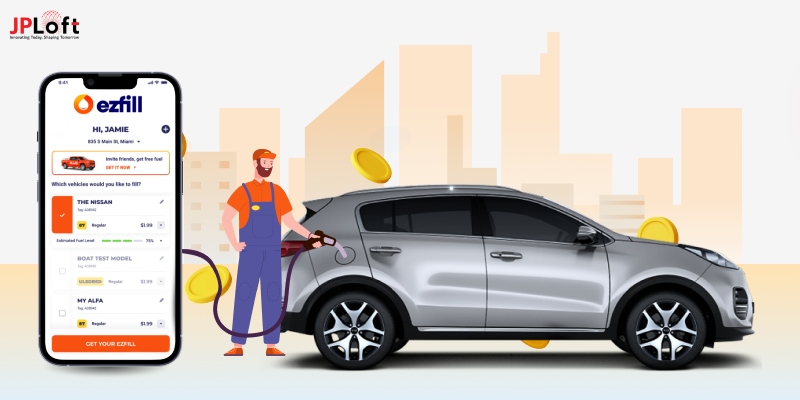
EzFill is an innovative fuel delivery app that lets customers order fuel right to their doorstep using an easy-to-use mobile application.
Founded in 2016 as a local mobile fueling service, EzFill entered a major growth phase after its 2021 public listing and strategic 2025 expansion into broader energy solutions.
This works much like any other on-demand service, providing users the ability to make available fuel deliveries to their cars, trucks, or fleets at times and places convenient for them.
This, therefore, saves customers from going to a gas station, meaning a lot of time is saved, especially in busy cities.
And, the good thing is it is available on iOS.
Factors Affecting the Cost to Build an App Like EzFill
As we have shared, there are several factors that affect the cost to develop a fuel delivery app like EzFill.
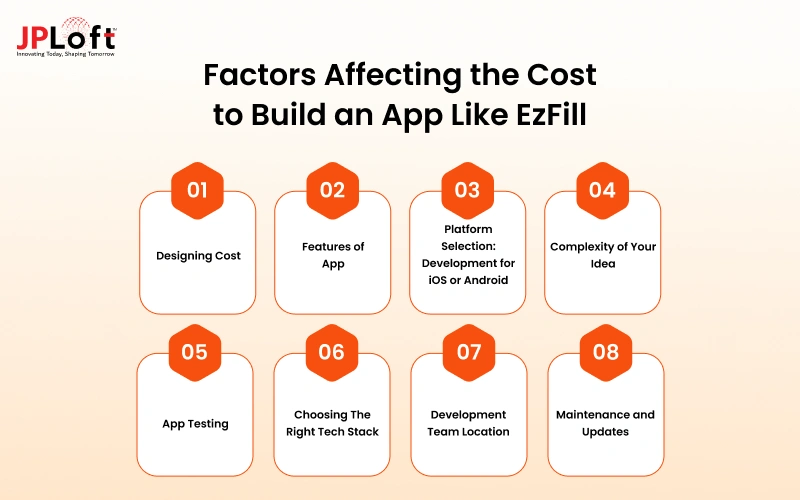
It is time to know about those factors. Let’s get to know them:
Factor 1: Designing Cost
The most prominent, affecting overall cost, is the design of your fuel delivery application.
It is highly necessary to provide a great user experience as well as an intuitive user interface for retention and satisfaction from users and customers.
If you go for a simple yet functional design, the cost can be low. But, if you are going for the interactive version, then the overall cost to make an app like Ezfill increases.
Your design needs to be simple, yet functional, easy to navigate, and have clear calls to action.
|
Design Approach |
Design Characteristics |
Cost Impact |
|
Functional & Clean UI |
Simple layouts, easy navigation, standard user flow |
Lower |
|
Interactive User Experience |
Custom animations, advanced UI elements, engaging interactions |
Mid-Level |
|
Premium Customer-Focused Design |
Personalized dashboards, seamless workflows, branded experiences |
Higher |
Factor 2: Features of App
What your fuel delivery app will cost depends on the features and functionality.
The more complex the functionalities are, the higher the price goes. If the app is easy to use and simple, then the cost will be less.
Some basic yet important features include user registration, ratings and reviews, push notifications, and more.
|
Feature Scope |
Included Functionalities |
Development Cost Impact |
|
Core Features |
Fuel ordering, login/signup, payments, order history |
Lower |
|
Medium Features |
GPS tracking, push notifications, delivery scheduling |
Moderate |
|
Advanced Features |
AI analytics, fleet management, real-time monitoring, automation |
High |
Factor 3: Platform Selection: Development for iOS or Android
This is a very important consideration when you want to develop a fuel delivery app like EzFill.
You will have to choose between developing it for both iOS and Android, since developing for both platforms, commonly referred to as a cross-platform app, will cost more due to extra coding, testing, and deployment work.
|
Platform Choice |
Development Overview |
Cost Impact |
|
Optimized for Apple devices with streamlined testing and smoother performance |
Low Cost |
|
|
Requires testing across multiple devices, screen sizes, and OS versions |
Moderate Cost |
|
|
Cross-Platform Development |
Uses frameworks like Flutter or React Native for both platforms together |
High Cost |
Factor 4: Complexity of Your Idea
The general complexity of your app idea determines the cost it will generally take to build.
A basic app idea that includes minimum features like registration of users, scheduling, and payment integrations will be relatively less expensive to develop.
However, with a highly complicated app idea with great features that include real-time tracking of fuel usage, AI-powered route optimization, advanced analytics, and multi-user accounts.
|
Complexity Level |
Key Features Included |
Estimated Cost (USD) |
|
Basic (MVP) |
User Registration, Simple Scheduling, Standard Payment Gateway, Basic Order History. |
Low |
|
Standard |
Real-time GPS Tracking, Multi-payment support, Driver Dashboard, Push Notifications, In-app Chat. |
Moderate |
|
Advanced / Enterprise |
AI Route Optimization, IoT Fuel Metering, Advanced Analytics, B2B Fleet Management, Multi-user/Role Accounts. |
High |
Factor 5: App Testing
Testing is a significant part before getting your fuel app approved on the App Store or Play Store.
It guarantees that your EzFill-like app does not contain bugs and crashes but operates the way it was designed to do.
Testing would also affect the cost to create an app like EzFill, depending on how complex the app is and what kind of platforms there are.
As an example, if you were developing an app like EzFill that would be tested for both iOS and Android, with each environment being tested separately, then the fee for testing will be more expensive.
|
Testing Category |
Core Objectives |
Impact on Development Cost |
|
Functional QA |
Validates registration, fuel selection, ordering, and checkout functionality |
Low |
|
Cross-Platform Verification |
Ensures smooth UI/UX performance across iOS and Android devices |
High |
|
Security & Regulatory Audit |
Verifies data encryption and compliance with fuel safety standards |
Medium |
|
Performance & Load Testing |
Tests server stability during high traffic and peak demand periods |
High |
|
IoT & Hardware Integration |
Checks synchronization between the app and tanker meters or sensors |
Medium |
Factor 6: Choosing The Right Tech Stack
The cost to build an app like EzFill will largely be determined by the choice of tech stack that you will opt for for your fuel delivery app.
Basically, the term ‘app tech stack' refers to the combination of programming languages, frameworks, databases, and the tools you'll use to construct your app.
For instance, cross-platform development with technology stacks such as React Native or Flutter will be cheaper than native development using Swift for iOS and Java/Kotlin for Android.
This could therefore make the latter more expensive but still may lead to the creation of a better-optimized & more-performing app.
|
Tech Strategy |
Recommended Stack |
Performance Level |
Estimated Cost Impact |
|
Cross-Platform |
Flutter / React Native |
High (85-90% Native feel) |
Budget-Friendly (Save ~30%) |
|
Native Development |
Swift (iOS) & Kotlin (Android) |
Peak (Superior Performance) |
Premium (High Cost) |
|
Backend & DB |
Node.js, Python (Django), MongoDB |
High Scalability |
Standard |
|
Advanced Layer |
Blockchain (Solana/Ethereum) |
Ultimate Transparency |
Expensive (Add 20-25%) |
Factor 7: Development Team Location
The location of your development team plays a huge part in how much does it cost to develop an app like EzFill.
For example, hiring an app development company in Chicago or Texas can increase the overall cost, while choosing development teams from India or the Philippines may provide more cost-effective solutions.
However, your priority should be hiring a development partner that delivers quality without exceeding your budget.
Here is how location plays a significant role in price:
|
Region |
Cost Impact |
|
North America (USA/Canada) |
High |
|
Western Europe (UK/Germany) |
High |
|
Eastern Europe (Poland/Ukraine) |
Moderate |
|
South Asia (Vietnam/Philippines) |
Low |
Factor 8: Maintenance and Updates
Once you have launched your fuel delivery app, keep some budget for maintenance and updates.
A cost that scores continuously so your app remains running and maintains the latest versions of the operating system, and other bug fixes and new feature enhancements.
The major role of fuel delivery app maintenance is updating the app regularly to enhance functionality, eliminating bugs, and enhancing features.
Also, in this, you can include the cost of hosting and server running to operate the app's back-end.
Timely making the application free of vulnerabilities and making sure the app is secure is a cost factor you should consider.
|
Maintenance Pillar |
Core Responsibility |
Cost Impact |
|
Infrastructure & Hosting |
Managing high-speed cloud servers (AWS/Azure) to handle real-time delivery data. |
High |
|
Technical Support & Bug Fixes |
Monitoring and resolving software glitches or crashes reported by customers and drivers. |
High |
|
Security & Compliance |
Updating encryption protocols and ensuring the app meets hazardous material safety regulations. |
Medium |
|
Platform & API Updates |
Keeping the app compatible with new iOS/Android versions and paid GPS/Map APIs. |
Medium |
Well, it’s enough about cost to make an app like EzFill. Let’s talk about monetization strategies that will make your investment worthwhile.
Monetization Strategies for Your EzFill App
While considering monetizing a fuel delivery app like EzFill, one needs to have strategies to bring in an uninterrupted stream of revenue.
When assessing the cost to make an app like EzFill, it is important to understand how you will generate income to repay your investment and grow your business.
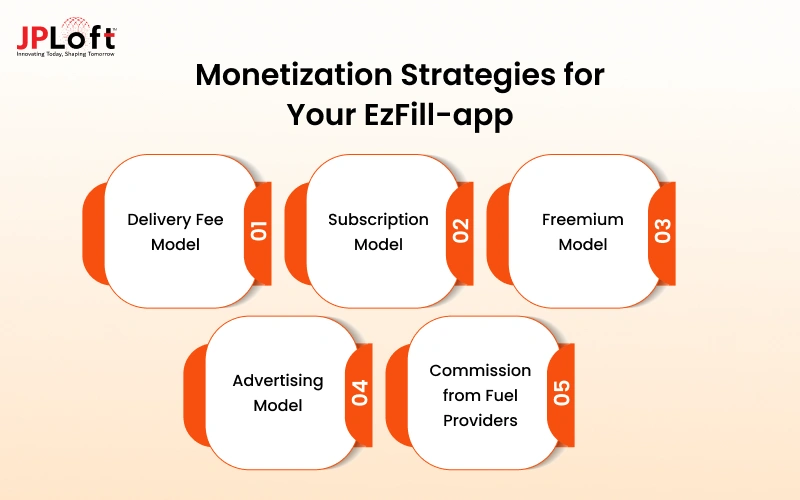
Here are some effective monetization strategies of a fuel app that will help you make money:
-
Delivery Fee Model: This is the most straightforward revenue stream, where you charge a fixed or distance-based fee for every delivery. By adjusting prices based on miles traveled, delivery time, or fuel quantity, you ensure every transaction generates stable and predictable income.
-
Subscription Model: Best suited for high-consumption users and fleet owners, this model offers discounted prices or priority access for a monthly or yearly fee. It brings in predictable recurring revenue and significantly improves customer retention and loyalty.
-
Freemium Model: You provide core services for free while charging to unlock premium features such as faster delivery times, advanced scheduling, or enhanced real-time tracking. This approach helps build a large user base that can be converted into paying customers over time.
-
Advertising Model: By displaying third-party adverts from local businesses or fuel providers, you can generate passive income based on impressions or clicks. This works effectively once your app reaches a high volume of traffic without disrupting the user experience.
-
Commission from Fuel Providers: Through strategic partnerships, you earn a percentage-based commission from fuel suppliers or gas stations for every sale referred through your platform. This creates a steady long-term revenue stream without directly charging the end-user.

How JPLoft Can Help You Build a Fuel Delivery App Like EzFill?
The on-demand fuel delivery market continues to grow. Therefore, there is no better time to invest in a fuel delivery app like EzFill than now.
However, developing a successful fuel delivery app is not a piece of cake.
It needs quite a lot of thinking through, a capable development team, and an experienced partner who should understand your vision and bring it to life.
Custom fuel delivery apps such as EzFill are what we specialize in at JPLoft.
We are a top fuel app development company with the most experience, so we can help you design and develop a scalable app based on your business needs.
Let’s collaborate to translate your fuel delivery app ideas into profitable realities.
Conclusion
To put it simply, to create an app like EzFill that delivers fuel, a number of key factors would help determine costs: those being design costs, features, choice of platform, complexity, tech stack, testing, and maintenance.
While the cost to start can be low to high, building a quality fuel delivery app will yield great returns, especially in a growing market.
So, if you are investing and want to enter this highly competitive fuel delivery app market, it's time to take action.
Work with experts and create an application that will really make a difference in user needs, stand out in the marketplace, and make a solid ROI.
FAQs
An EzFill-like app development cost could range from $20,000 to $130,000 depending on complexity, features, and the location of the development team. Basic apps with basic functions will cost on the more minimal side, whereas more complex functions, like AI-optimized routes or cross-platform support, will add to the overall cost.
Some of the key features, a fuel delivery app should have are real-time tracking, secure payment gateways, user profiles, delivery scheduling, and GPS navigation. Additional features such as in-app chat, push notifications, and driver management can be added to make the user experience good and the app functional.
A fuel delivery app like EzFill takes 2 to 6+ months, depending on the planning, design, development, testing, and launching of the app. More complex features,, coupled with a multi-platform development approach spanning iOS and Android, would take more time.
Post-launch maintenance is where you're paying for updates, bug fixes, security patches, and hosting of the servers. Annual maintenance can cost anywhere in the range of $5,000 to $30,000 depending on the scale of the app and the number of updates happening.
You can monetize it through an EzFill-type application with strategies such as delivery fees, subscription models, commission from fuel providers, in-app advertisements, and premium features. There can also be dynamic pricing at peak demand to enjoy the added revenue.
The cost may differ quite much depending on where your development team is located. In general, a North American team will consume $100-$250 per hour, and most Eastern Europe teams charge between $30-$70 per hour. The lowest price for developers from Asia, sometimes it's even between $20-$50 per hour, but communication speed might also be affected.
The biggest challenges that the system is likely to face include scalability, managing real-time logistics, realizing the integration of secure payment gateways, and ensuring safety for users. Other factors that may go further to complicate the development include how one deals with third-party fuel suppliers, as well as the need to relate to local regulations and insurance requirements.

Savannah Bustos is a technology professional with experience across financial platforms, mobility solutions, and on-demand digital products. Her areas of expertise include FinTech, digital banking, eWallets, lending, BNPL, stock trading, fuel delivery, and taxi-booking platforms. She combines a strong understanding of business requirements with practical technology insight, helping companies evaluate challenges, define product needs, and make informed decisions about scalable digital solutions.


Share this blog