


Key Takeaways:
Milk delivery app cost depends on features, platform, and backend complexity, making early planning essential for accurate budgeting.
Starting with an MVP helps reduce initial investment while validating your idea in the market before scaling further.
Subscription management and delivery logistics are the most important cost-driving features in a milk delivery app.
Hidden costs like maintenance, hosting, and third-party services can significantly impact long-term expenses if not planned early.
Choosing the right monetization strategy ensures steady revenue and helps recover development costs faster over time.
Partnering with an experienced team like JPLoft ensures smooth development, better cost control, and scalable app performance.
Building a milk delivery app today needs clear planning and a realistic budget. Many businesses first try to understand the milk delivery development cost before moving ahead. The cost is not fixed and depends on features, design, and overall app complexity.
So, how much does it cost to create a milk delivery app? On average, the cost ranges between $5,000 and $60,000+. A basic app with simple ordering and subscription features may cost $5,000–$20,000.
A mid-level app with better design and smooth user experience can range from $20,000–$40,000.
Advanced apps with automation, real-time tracking, and scalability can go beyond $40,000–$60,000+.
This milk delivery app development cost guide will help you understand what drives these costs and how to plan your budget in a practical way.
.webp)
Key Factors Affecting the Cost of Milk Delivery App Development
The milk delivery app cost depends on multiple real-world factors, not just features. Milk delivery apps work on daily schedules, recurring orders, and route-based logistics. This makes them different from standard apps.
While you already know, what is the cost to develop a milk delivery app? It is necessary to understand the factors that influence the overall cost.
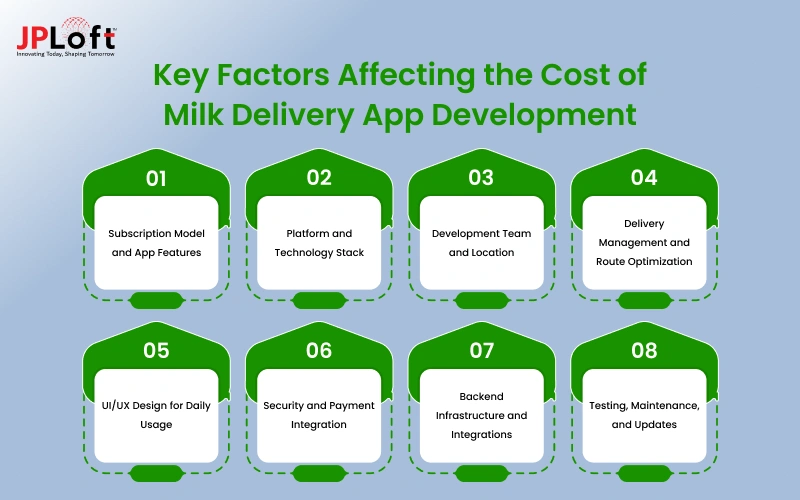
The following are the key factors that directly impact the cost, performance, and scalability of a milk delivery app.
1. Subscription Model and App Features
The subscription system is the core of any milk delivery app. Users expect daily, alternate-day, or custom delivery options. This directly affects the cost to develop a milk delivery app.
Advanced app features like pause, resume, and product switching increase complexity. These require strong backend logic and increase development time.
|
Feature Type |
Cost Impact |
Why It Affects Cost |
|
Basic Product Ordering |
Low |
Simple flow with limited logic |
|
Daily/Recurring Subscriptions |
Medium |
Requires a scheduling system |
|
Pause/Resume Delivery |
Medium – High |
Needs dynamic control logic |
|
Multi-Product Subscription |
High |
Complex subscription handling |
|
Smart Notifications & Reminders |
Medium |
Requires automation setup |
|
Admin Control Panel |
Medium – High |
Needed for full management |
2. Platform and Technology Stack
Choosing the right platform affects the cost to build a milk delivery app. You can go with Android, iOS, or both. Each option changes the development effort.
When you build a mobile app, selecting the right tech stack also impacts scalability and performance. Cross-platform frameworks can help reduce cost.
|
Platform Choice |
Cost Impact |
Description |
|
Android |
Medium |
Wider reach, more testing |
|
iOS |
Medium – High |
Better monetization potential |
|
Cross-Platform |
Medium |
Faster development with shared code |
3. Development Team and Location
The cost of hiring developers varies based on location and expertise. This directly impacts your overall budget.
For example, the cost to hire mobile app developer in USA is usually higher compared to other regions. Choosing the right team helps balance cost and quality.
|
Region |
Cost Impact |
Why It Affects Cost |
|
USA |
Very High |
Premium talent and higher hourly rates |
|
Western Europe |
High |
Strong expertise with moderate cost |
|
Eastern Europe |
Medium |
Balanced cost and quality |
|
Asia |
Low |
Cost-effective with skilled developers |
4. Delivery Management and Route Optimization
Milk delivery apps depend heavily on logistics. Managing daily delivery routes increases complexity. This is a major part of the milk delivery app development cost breakdown.
The on-demand app development cost rises when real-time delivery tracking and route optimization are added. These features require APIs and backend processing.
|
Delivery Feature |
Cost Impact |
Why It Affects Cost |
|
Fixed Route Delivery |
Low – Medium |
Pre-defined delivery paths |
|
Dynamic Route Optimization |
High |
Requires smart algorithms |
|
Real-Time Delivery Tracking |
High |
Uses GPS and live APIs |
|
Delivery Slot Management |
Medium |
Needs scheduling system |
|
Driver Management Panel |
Medium – High |
Tracks delivery agents |
5. UI/UX Design for Daily Usage
Milk delivery apps are used daily. Users expect quick and simple navigation. On the other hand, a poor design can lead to drop-offs.
Therefore, investing in professional UI/UX design services improves usability and retention. However, custom design and testing increase overall cost.
|
Design Factor |
Cost Impact |
Why It Affects Cost |
|
Basic UI Layout |
Low |
Simple screens and flows |
|
Custom UX Design |
Medium – High |
Better user engagement |
|
One-Tap Ordering Flow |
Medium |
Needs UX optimization |
|
Personalized Dashboard |
High |
Requires dynamic UI logic |
|
Micro-interactions |
High |
Improves experience but adds effort |
6. Security and Payment Integration
Milk delivery apps handle recurring payments and sensitive user data. This makes mobile app security essential.
Secure payment systems and data protection increase development effort. However, they are important for user trust and compliance.
|
Security Feature |
Cost Impact |
Why It Affects Cost |
|
Basic Login System |
Low |
Standard authentication |
|
Secure Payment Gateway |
Medium |
Needed for transactions |
|
Data Encryption |
High |
Protects user data |
|
Subscription Billing Security |
High |
Prevents payment errors |
|
Fraud Detection |
High |
Advanced security layer |
7. Backend Infrastructure and Integrations
A strong backend is required to manage subscriptions, deliveries, and payments. This is where most logic runs.
Working with an experienced mobile app development company helps build scalable backend systems. However, integrations and cloud setup increase costs.
|
Backend Component |
Cost Impact |
Why It Affects Cost |
|
Subscription Engine |
Medium |
Handles recurring logic |
|
Payment Integration |
Medium |
Enables transactions |
|
Notification System |
Medium |
Sends alerts and updates |
|
Cloud Hosting |
High |
Supports scalability |
|
Third-party APIs |
High |
Adds external functionality |
8. Testing, Maintenance, and Updates
Testing, maintenance, and updates are essential to ensure a milk delivery app runs reliably without disruptions.
Continuous testing prevents errors, while regular updates and monitoring keep performance smooth, secure, and efficient. This makes app maintenance services an ongoing but necessary investment.
|
Element |
Description |
Cost Impact |
|
Functional Testing |
Checks all features |
Medium |
|
Performance Testing |
Ensures scalability |
High |
|
Security Testing |
Protects user data |
High |
|
App Updates |
Adds improvements |
Medium |
|
Ongoing Maintenance |
Fixes bugs and issues |
Medium – High |
Understanding these factors helps you estimate the cost of developing a milk delivery app more accurately. It also allows you to plan your investment based on real business needs.
Hidden Costs Involved in Building a Milk Delivery App
Most businesses focus only on the cost to build a mobile app. However, the real milk delivery app cost includes several hidden expenses after launch. These costs can impact your budget if not planned early.
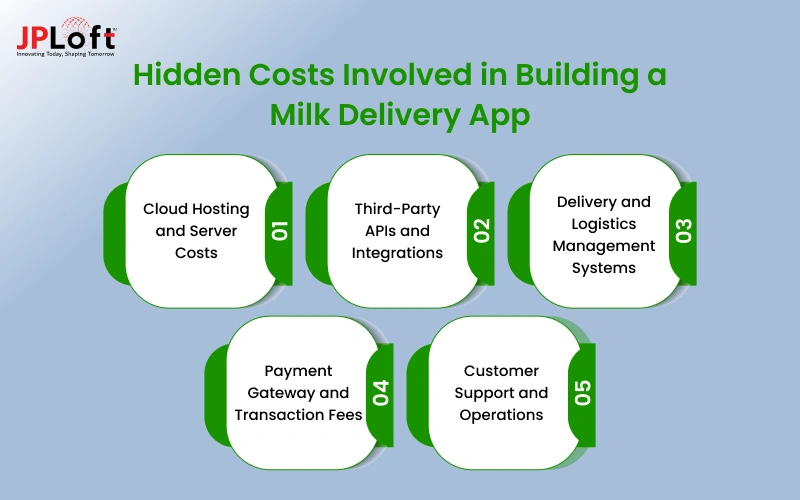
Here are the most important hidden costs involved in building and running a milk delivery app.
1. Cloud Hosting and Server Costs
Milk delivery apps rely on backend systems for subscriptions and delivery tracking. Hosting costs depend on traffic and usage. These expenses usually range from $100 to $1,000 per month, increasing as your user base and daily orders grow.
2. Third-Party APIs and Integrations
APIs power payments, notifications, and tracking features. These services often charge based on usage. Costs can start from $50 per month and go beyond $500 monthly as your app scales and handles more transactions.
3. Delivery and Logistics Management Systems
Managing daily deliveries requires route planning and driver tracking systems. These tools add to development and operational costs. Expenses can range between $2,000 and $10,000+, depending on the level of automation and logistics complexity required.
4. Payment Gateway and Transaction Fees
Recurring payments are common in milk delivery apps. Payment gateways charge per transaction. Fees usually range from 2% to 3% per transaction, along with setup costs between $100 and $500, depending on the provider.
5. Customer Support and Operations
Handling daily orders requires strong customer support. Users often need help with subscriptions or deliveries. Hiring support teams or using tools can cost between $500 and $3,000 per month based on service scale.
Planning these hidden costs early helps you manage the overall cost to build a milk delivery app effectively. It also ensures smoother operations and avoids unexpected financial pressure as your app grows.
How to Reduce Milk Delivery App Development Cost?
Reducing development cost is possible with the right strategy and planning. You do not need to compromise on quality to save money. Smart decisions can help you control the cost while building a reliable milk delivery app.
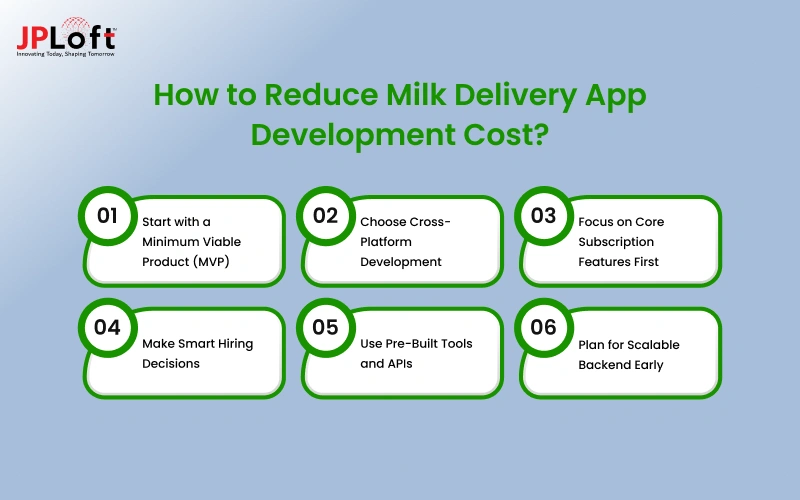
Here are practical ways to reduce your overall development expenses without affecting performance.
#1: Start with a Minimum Viable Product (MVP)
Begin with a minimum viable product that includes only core features like ordering, subscriptions, and delivery scheduling. Avoid adding advanced features early.
This approach helps validate your idea faster and reduces the initial cost to make a milk delivery app significantly.
#2: Choose Cross-Platform Development
Cross-platform development allows you to build one app for both Android and iOS. This reduces development time and testing efforts.
It also lowers the cost to create a milk delivery app by avoiding separate codebases and minimizing long-term mobile app maintenance costs effectively.
#3: Focus on Core Subscription Features First
Milk delivery apps rely on subscriptions and recurring orders. Focus on building a strong subscription system first. Core milk delivery app features like pause, resume, and scheduling should be prioritized.
Avoid unnecessary features initially, as they increase complexity and raise overall development costs without immediate business value.
#4: Make Smart Hiring Decisions
Hiring the right team plays a big role in cost control. Instead of expensive local hiring, you can hire dedicated developers from cost-effective regions.
This helps maintain quality while reducing overall development expenses without increasing your budget unnecessarily.
#5: Use Pre-Built Tools and APIs
Using ready-made tools for payments, notifications, and analytics can save time and cost. These tools reduce the need for custom development.
You can also hire software developers who have experience integrating such tools quickly, which helps speed up development and lower expenses.
#6: Plan for Scalable Backend Early
A scalable backend helps you handle growing users without major changes later. Planning this early avoids expensive rework.
It ensures smooth operations as your app grows and prevents sudden spikes in cost that often come from poor long-term technical planning decisions.
Reducing development cost is about making smarter choices, not cutting quality. A focused approach helps you build a strong milk delivery app while staying within your budget and achieving long-term success.
Monetization Strategies for Milk Delivery App
Building the app is only the first step. To recover the cost to make a milk delivery app, you need clear revenue streams. A well-planned approach helps you earn consistently and grow your business over time.
Here are the most effective mobile app monetization strategies used in milk delivery apps today.
1. Subscription-Based Model
The subscription model is the most common revenue source. Users pay weekly or monthly for regular deliveries.
It ensures a steady income and predictable demand. This model also improves retention, as customers rely on the app for daily milk needs.
2. Delivery Charges and Convenience Fees
Charging a small delivery or convenience fee per order adds extra revenue. This works well for flexible or instant deliveries.
Even small charges can generate significant income over time, especially when your app handles a high volume of daily orders.
3. Product Markup and Pricing Strategy
You can earn by adding a margin to milk and dairy products. Partnering with local vendors helps control pricing.
A smart pricing strategy ensures profits without affecting demand. It also helps you recover the cost to create a milk delivery app gradually.
4. In-App Promotions and Featured Listings
Local dairies and brands can pay to promote their products. Featured listings increase product visibility inside the app.
This creates an additional revenue stream. It works best when your platform has a growing user base and consistent daily engagement.
5. Add-On Product Sales
Milk delivery apps can sell related items like bread, eggs, and groceries. This increases average order value. Users prefer ordering daily essentials together.
Expanding product categories helps generate more revenue without increasing customer acquisition costs significantly over time.
6. Referral and Loyalty Programs
Referral programs encourage users to invite others. Loyalty rewards increase repeat purchases. These strategies improve user retention and organic growth.
While they may seem like an expense, they help increase long-term revenue and strengthen your customer base effectively.
7. Data-Driven Offers and Upselling
Using customer data helps suggest relevant products and personalized offers that match user preferences. These recommendations improve conversion rates and encourage higher spending. Also, they enhance the overall user experience and make the app feel more tailored and convenient.
Choosing the right monetization strategy helps you recover development costs faster. It also builds a sustainable revenue model that supports long-term growth and improves profitability over time.
.webp)
Why Choose JPLoft for Your Milk Delivery App Development Journey?
Finding the right partner can define your app’s success. JPLoft is a trusted milk delivery app development company with strong experience in building scalable delivery solutions. The team understands the unique needs of subscription-based and daily delivery apps.
JPLoft focuses on building systems that handle recurring orders, delivery scheduling, and route management smoothly. The team ensures your app works reliably even with high daily usage. This helps you deliver a consistent experience to your customers.
The team also prioritizes simple design and easy navigation. This makes daily ordering quick and hassle-free for users. A strong focus on performance ensures your app runs smoothly across devices.
JPLoft follows a practical approach to development. This helps you control milk delivery app development cost breakdown without affecting quality. The team uses proven methods to avoid unnecessary complexity.
From planning to launch and ongoing support, everything is handled with care. This ensures your milk delivery app grows smoothly over time.
Conclusion
Building a milk delivery app requires careful planning, clear goals, and a realistic budget. Understanding the milk delivery development cost helps you make better decisions at every stage.
From features to backend systems, each factor plays a role in overall expenses. Planning early helps avoid unnecessary costs and delays.
A well-structured approach ensures you invest only where it matters most. It also helps you build a scalable and reliable app for daily use.
This milk delivery app development cost guide gives you a clear direction to plan your budget wisely.
With the right strategy and execution, you can launch a successful app that delivers value to both users and your business.
Focus on user needs and keep improving based on feedback. This ensures long-term growth and steady returns over time
FAQs
The cost usually depends on features, design, and complexity. On average, it ranges between $5,000 and $60,000+. A basic app costs around $5,000–$20,000, while advanced apps with automation and tracking can exceed $40,000–$60,000+.
Key features include subscription management, daily scheduling, order tracking, and secure payments. These features ensure smooth operations and a better user experience. Adding only essential features at the start helps control cost and simplifies the development process.
The development timeline depends on app complexity and features. A basic app may take a few weeks, while advanced apps can take several months. Proper planning and clear requirements help reduce delays and ensure faster delivery.
Costs increase with advanced features, real-time tracking, complex backend systems, and custom design. Platform choice and developer expertise also affect pricing. Understanding these factors helps you make better decisions and manage your budget efficiently.
You can reduce costs by starting with an MVP, using cross-platform development, and focusing on essential features. Choosing the right development team and using pre-built tools also helps lower expenses without affecting the app’s quality and performance.

Rahul Sukhwal is the CEO and Founder of JPLoft, a visionary technologist with 18+ years at the forefront of emerging tech innovation and software engineering. He channels deep software engineering and AI expertise into building smarter, scalable solutions that shape how forward-thinking businesses worldwide harness the true power of AI.


Share this blog