


Key Takeaways
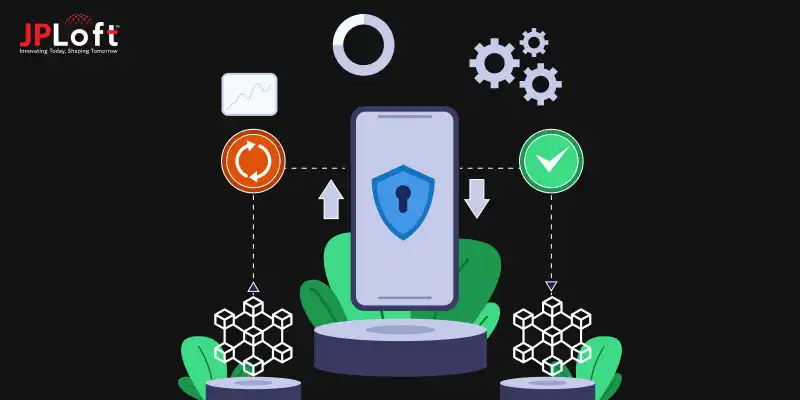
Blockchain in mobile app maintenance ensures tamper-proof maintenance logs, protecting apps from unauthorized changes and cyber threats during updates.
Every maintenance activity is permanently recorded, allowing teams to track updates, fixes, and changes with full visibility and audit readiness.
Decentralized monitoring and smart contracts streamline maintenance, automate routine tasks, predict issues, and reduce downtime.
Blockchain enables scalable maintenance, keeping apps efficient during growth and frequent updates.
Reduced errors, faster issue resolution, and reliable updates lower operational costs while enhancing user experience and app lifespan.
JPLoft provides blockchain-powered maintenance for secure, transparent, and scalable app support, ensuring high performance and future-ready apps.
Mobile apps today demand constant updates, strong security, and uninterrupted performance, but traditional maintenance methods often struggle to keep up.
This is where blockchain in mobile app maintenance is reshaping the way apps are monitored, updated, and secured.
By introducing decentralized systems and immutable records, blockchain brings a new level of trust and transparency to ongoing app support.
From securing update histories to preventing data tampering, blockchain technology in mobile apps helps businesses maintain performance while reducing operational risks.
As apps grow more complex and user expectations rise, blockchain-driven maintenance is emerging as a smart, future-ready approach for building reliable, secure, and high-performing mobile applications.
In this blog, we highlight why blockchain matters in modern mobile app maintenance.
Understanding Blockchain Technology for Mobile Apps
Blockchain technology is transforming how modern mobile applications are built, managed, and maintained.
At its core, blockchain is a decentralized digital ledger that securely records data across multiple nodes, ensuring transparency, accuracy, and immutability.
When applied to blockchain mobile app maintenance, this technology helps teams track updates, log issues, and manage changes without relying on a single centralized system.
Every modification made to an app, whether a bug fix, performance update, or security patch, is recorded permanently, reducing the risk of errors or unauthorized changes.
By enabling secure data sharing, automated processes, and tamper-proof records, blockchain ensures smoother maintenance workflows while supporting scalable and high-performing mobile applications.
Why Blockchain in Mobile Maintenance Matters?
Modern mobile apps operate in a fast-changing digital environment where security threats, frequent updates, and performance issues are constant challenges.
Relying solely on traditional maintenance models often leads to inefficiencies, higher costs, and limited visibility.
This is why businesses are increasingly turning to blockchain-driven solutions to strengthen their maintenance strategies.
-
Stronger security and data protection: Using blockchain in mobile app maintenance ensures that maintenance records, updates, and logs remain tamper-proof, reducing the risk of data breaches and unauthorized changes.
-
Enhanced support with modern infrastructure: When combined with cloud-based mobile app maintenance, blockchain enables real-time access to maintenance data, faster issue resolution, and improved system reliability.
-
Greater transparency and accountability: With blockchain for app maintenance, every update and fix is recorded on an immutable ledger, making it easier for teams to track changes and maintain accountability throughout the app lifecycle.
-
Reliable and scalable maintenance approach: Blockchain-based app maintenance removes dependency on a single system, enabling decentralized monitoring and smoother maintenance workflows for growing mobile applications.
-
Long-term cost efficiency: By reducing errors, downtime, and rework, regular app maintenance saves money, helping businesses avoid expensive fixes and extend the lifespan of their mobile apps.
Overall, blockchain introduces a smarter, more secure way to manage mobile app maintenance.
By improving transparency, reducing operational risks, and optimizing costs, it empowers businesses to maintain high-performing apps while staying prepared for future growth and evolving user expectations.
Role of Blockchain in Mobile App Maintenance
Blockchain is no longer limited to financial systems; it has become a powerful technology shaping how mobile applications are maintained, secured, and scaled.
Nowadays, blockchain in app maintenance introduces a decentralized, transparent, and tamper-proof approach that addresses many limitations of traditional maintenance models.
Below, we explore its role in detail through key areas where blockchain delivers real impact:
1. Strengthening Security in Mobile App Maintenance
Security is one of the biggest concerns during mobile app maintenance, especially when apps undergo frequent updates and handle sensitive user data.
Blockchain introduces a decentralized ledger system that records every maintenance activity, such as updates, patches, and configuration changes, in a secure and immutable way.
This makes it extremely difficult for malicious actors to alter records or introduce unauthorized changes.
By using blockchain in app maintenance, security, businesses gain complete visibility into maintenance actions while reducing dependency on centralized systems that are often vulnerable to attacks.
This approach enhances mobile app security by ensuring that all maintenance-related data remains protected, verifiable, and resistant to tampering.
2. Ensuring Data Integrity and Transparency
During ongoing maintenance, maintaining accurate records is essential for performance tracking and compliance.
Blockchain creates a permanent and transparent log of all activities, ensuring blockchain data integrity throughout the app’s lifecycle. Once recorded, data cannot be altered, providing a reliable source of truth.
This visibility helps teams track changes, simplify audits, and resolve issues faster.
To fully leverage these benefits, businesses should hire app developers experienced in implementing secure, blockchain-based tracking systems for efficient and transparent app maintenance.
3. Improving App Support and Maintenance Operations
Effective maintenance goes beyond fixing bugs; it involves continuous monitoring, support, and optimization.
Blockchain in app maintenance streamlines these processes by enabling decentralized monitoring systems that operate without relying on a single control point.
This significantly improves blockchain app support and maintenance, making it easier to identify issues early and respond quickly.
Smart contracts can further automate maintenance tasks, such as triggering alerts when performance thresholds are breached or scheduling updates automatically.
This reduces manual intervention, speeds up response times, and ensures consistency in maintenance workflows.
With automation and transparency working together, teams can focus on improving app quality rather than managing operational complexities.
4. Enhancing Protection with Advanced Security Solutions
Modern mobile apps face increasingly sophisticated cyber threats, making traditional security measures insufficient.
Blockchain introduces advanced cryptographic techniques that protect maintenance data and system access.
These blockchain-based security solutions help prevent unauthorized access, data leaks, and manipulation during routine maintenance activities while also strengthening security audits in app maintenance through transparent and verifiable records.
By decentralizing authentication and access control, blockchain reduces the risk of single-point failures.
Maintenance teams can securely verify identities, validate updates, and ensure that only authorized personnel can make changes.
5. Supporting Scalability and Long-Term Growth
As mobile apps grow, maintenance demands increase significantly.
Handling millions of users, frequent updates, and expanding features requires a system that can scale without performance bottlenecks.
Blockchain for scalable mobile apps offers a decentralized framework that distributes maintenance operations across multiple nodes, ensuring consistent performance even as demand rises.
This scalability explains how blockchain helps mobile app maintenance teams manage growing workloads while reducing downtime.
6. Delivering Business Value Through Efficient Maintenance
Beyond technical advantages, blockchain delivers measurable business value.
Reduced downtime, faster issue resolution, and improved security directly translate into cost savings and better user experiences.
These operational improvements highlight the broader benefits of blockchain in mobile apps, including increased trust, better compliance, and enhanced performance.
When implemented strategically, blockchain-driven maintenance reduces rework, minimizes errors, and extends the lifespan of mobile applications.
7. Enabling Secure and Controlled App Updates
Frequent updates are a core part of app maintenance, but they often introduce risks if not managed properly.
Blockchain enables secure validation of update packages before deployment, ensuring that only verified and approved updates reach end users.
This minimizes the chances of corrupted files, unauthorized modifications, or faulty releases entering the system.
With a transparent update trail, teams can easily trace update history, making rollbacks and troubleshooting faster and more reliable.
To implement such secure update workflows effectively, many businesses choose to hire dedicated developers who have the expertise to manage blockchain-enabled update processes while maintaining performance and security standards.
8. Reducing Downtime Through Predictive Maintenance
Unexpected downtime can severely impact user experience and business revenue. Blockchain-powered maintenance systems support real-time monitoring and historical analysis of app behavior.
By maintaining accurate, tamper-proof logs, teams can identify recurring issues, predict failures, and take preventive action before problems escalate.
This proactive maintenance approach helps ensure uninterrupted performance and smoother user journeys across app versions.
9. Improving Compliance and Audit Readiness
Regulatory compliance is becoming increasingly important for mobile apps, especially those handling sensitive user data. Blockchain simplifies compliance by maintaining immutable maintenance records that can be easily verified during audits.
Every maintenance activity, whether it’s a security patch, performance fix, or configuration change, is permanently documented.
This level of traceability helps businesses demonstrate compliance, reduce legal risks, and build trust with users and stakeholders.
10. Supporting Collaboration Across Distributed Teams
Modern app maintenance often involves multiple teams working across different locations and time zones.
Blockchain provides a shared, trusted system where all stakeholders can access the same maintenance records without conflicts or inconsistencies.
This improves collaboration between developers, QA teams, and operations staff by ensuring everyone works with accurate, up-to-date information.
For businesses working with a mobile app development company in USA or across global delivery models, blockchain-enabled maintenance helps bridge communication gaps and maintain alignment across distributed teams.
Overall, blockchain enables smarter, more secure, and transparent mobile app maintenance. It helps businesses reduce risks, improve reliability, and prepare their apps for long-term growth in a fast-evolving digital landscape.
Blockchain vs Traditional Mobile App Maintenance
As mobile applications grow more complex, businesses are re-evaluating how they manage ongoing maintenance. Traditional maintenance models rely heavily on centralized systems, which can limit transparency, scalability, and security.
In contrast, blockchain introduces a decentralized and tamper-proof approach that fundamentally changes how maintenance activities are tracked and managed.
This comparison clearly highlights the differences and shows why many organizations are shifting toward blockchain-enabled solutions.
Below is a clear comparison to understand blockchain vs traditional app maintenance in real-world scenarios:
|
Aspect |
Traditional Mobile App Maintenance |
Blockchain-Based Mobile App Maintenance |
|
Data Security |
Centralized systems are more vulnerable to breaches and unauthorized changes |
Strong cryptography helps in preventing data tampering with blockchain |
|
Transparency |
Limited visibility into update logs and maintenance records |
Complete blockchain transparency in apps with immutable records |
|
Data Integrity |
Maintenance logs can be altered or lost |
Tamper-proof, permanent maintenance history |
|
Downtime Management |
Reactive issue resolution |
Proactive monitoring and faster rollback |
|
Scalability |
Performance issues as app usage grows |
Decentralized structure supports long-term scalability |
|
Audit & Compliance |
Manual audits with higher effort |
Automated, verifiable audit trails |
|
Trust & Accountability |
Depends on internal controls |
Shared trust across all stakeholders |
From a business perspective, adopting blockchain-powered maintenance often requires expert implementation.
This is where professional blockchain development services play a crucial role in designing secure architectures, integrating blockchain with existing systems, and ensuring smooth long-term maintenance.
Real World Cases of Blockchain in Mobile App Maintenance
Blockchain adoption in mobile ecosystems is no longer experimental; several globally recognized apps and platforms are already leveraging blockchain concepts to improve security, transparency, and long-term maintenance.
These real-world examples highlight how blockchain-driven maintenance helps popular apps stay reliable, scalable, and industry-leading.
1. Spotify
Spotify has explored blockchain-based solutions to improve transparency around content rights and data management.
From a maintenance perspective, blockchain helps track system-level changes and data flows, ensuring updates related to content handling remain secure and auditable.
This approach supports smoother updates and long-term stability for a platform serving millions of users worldwide, while also setting a strong benchmark for the best Spotify alternatives looking to adopt secure and transparent maintenance practices.
2. Coinbase
As one of the most popular crypto apps globally, Coinbase relies heavily on blockchain-backed systems to maintain app security and operational transparency.
Maintenance updates, security patches, and transaction logs are closely monitored through decentralized records, reducing downtime and ensuring trust.
This maintenance model allows Coinbase to handle frequent updates while maintaining performance under high user loads.
3. MetaMask
MetaMask, a widely used Web3 wallet app, uses blockchain-native infrastructure to manage app updates, permissions, and transaction integrity.
Smart contracts and immutable logs help track changes during maintenance, enabling faster troubleshooting and secure feature rollouts. This self-verifying approach keeps the app reliable even as the Web3 ecosystem evolves rapidly.
4. Microsoft Azure
Microsoft has integrated blockchain capabilities within its Azure ecosystem to support enterprise and mobile applications.
For maintenance, blockchain-based logs help track configuration changes, updates, and compliance-related activities.
This ensures transparency and consistency across large-scale apps maintained by distributed teams.
5. Adobe
Adobe has incorporated blockchain-backed verification to track content ownership and changes across its platforms.
In mobile apps, this approach supports maintenance by maintaining clear records of data handling and feature updates.
Blockchain-backed tracking improves trust, simplifies audits, and ensures system integrity during frequent updates.
These real-world examples demonstrate how leading apps use blockchain to strengthen mobile app maintenance.
By improving transparency, reducing security risks, and enabling scalable operations, blockchain helps popular platforms maintain dominance while delivering reliable, future-ready user experiences.
Why Choose JPLoft for Mobile App Maintenance?
Businesses today demand mobile apps that are not only innovative but also secure and reliable. At JPLoft, we specialize in mobile app maintenance services that help businesses keep their applications secure, high-performing, and future-ready throughout their lifecycle.
Leveraging modern technologies, including blockchain, our team ensures your apps maintain transparency, integrity, and reliability during every update and maintenance cycle.
JPLoft helps enhance security, manage updates seamlessly, and streamline ongoing app support with solutions tailored to your business goals, keeping your app secure, efficient, and future-ready.
Our experts combine technical expertise with strategic insights to ensure apps not only meet today’s demands but also scale effortlessly for tomorrow.
By partnering with JPLoft, businesses can confidently adopt advanced technologies, reduce operational risks, and deliver seamless experiences to their users.
Final Wrap-Up
Blockchain in mobile app maintenance is transforming the way businesses approach app updates, security, and overall performance.
Traditional maintenance models often struggle to provide transparency, prevent data tampering, or ensure consistent reliability, especially as apps grow more complex and user expectations rise.
By leveraging blockchain’s decentralized, immutable, and transparent framework, organizations can maintain accurate update logs, enhance system security, and streamline maintenance workflows with minimal risk.
The adoption of blockchain-driven maintenance not only improves operational efficiency but also ensures long-term app stability, faster issue resolution, and reduced downtime. Businesses can proactively monitor app performance, track changes securely, and maintain trust with their users.
FAQs
Companies can adopt blockchain through expert development services that integrate decentralized monitoring, smart contracts, and secure update management.
Blockchain in app maintenance refers to using decentralized and immutable ledger technology to manage app updates, logs, and security, ensuring transparency and reliability.
Blockchain prevents unauthorized access, tampering, and data breaches by maintaining encrypted, tamper-proof records of all maintenance activities.
Yes, by providing real-time monitoring and immutable logs, blockchain enables proactive maintenance, reducing downtime and ensuring smoother app performance.
Blockchain works best for apps requiring high security, transparency, and data integrity, such as finance, healthcare, and enterprise apps.

Yashwant Sharma is the CTO of JPLoft, with 18+ years of experience in software engineering, solution architecture, and digital innovation. His expertise spans scalable application development, AI-powered systems, RAG solutions, cross-platform development, software maintenance, and emerging mobility technologies such as EV and EV-charging platforms. He works across complex technical environments to help businesses build secure, maintainable, and high-performing digital products for industries including education, fitness, aviation, and healthcare.


Share this blog