



Key Takeaways:
AIoT, edge computing, and 5G are leading IoT trends shaping modern business operations in 2026.
IoT helps businesses improve automation, reduce operational costs, and deliver better customer experiences across industries.
Industries like healthcare, retail, logistics, and manufacturing are gaining major benefits from smart IoT solutions.
Strong IoT security systems are important to protect connected devices, business networks, and customer data from cyber threats.
JPLoft helps businesses build scalable and secure IoT solutions that support long-term digital growth and innovation.
Businesses are investing heavily in smart technologies to improve operations, reduce costs, and deliver better customer experiences. The global IoT market is expected to cross $1 trillion by the end of 2026, while connected IoT devices may reach 38.7 billion by 2030.
From smart factories to connected healthcare systems, IoT is helping companies make faster and smarter decisions. In 2026, IoT market trends will focus more on automation, real-time data, AI integration, and secure connected networks.
These technologies are creating new opportunities for businesses, startups, and investors worldwide. Companies that adopt modern IoT solutions early can improve productivity and stay ahead of market competition.
At the same time, investors are showing strong interest in IoT-driven business models with long-term growth potential. Understanding the latest IoT trends is now important for every business planning future digital expansion.
This blog explores the top IoT trends shaping connected technology and how they can create value for modern businesses in 2026.
10+ Latest IoT Trends to Consider For Modern Solutions
Understanding the current trends in IoT helps businesses improve operations, customer experiences, and digital growth. Companies that follow modern IoT innovations can build smarter, faster, and more connected business solutions.
Let's discuss more in the points below.
1. AIoT (Artificial Intelligence of Things)
AIoT is one of the latest IoT trends that combines AI with IoT devices to make systems smarter and faster. Businesses use AIoT to collect data, track operations, and improve daily tasks. It also helps reduce manual work and saves time.
Many industries use AIoT in smart factories, healthcare devices, customer support systems, and retail stores. As a result, this helps improve business performance and customer experiences.
2. Edge Computing in IoT
Edge computing processes data near connected devices rather than on cloud servers. This helps businesses get faster results and better system performance. It also reduces delays and improves real-time decision-making.
Companies use edge computing in smart factories, remote monitoring systems, and connected vehicles. It also helps lower internet usage costs and improves data security for connected business operations.
3. Industrial IoT (IIoT) Expansion
Industrial IoT is one of the greatest trends in IoT that helps industries improve operations with connected devices and automation. Businesses use IIoT to track machines, reduce downtime, and improve productivity.
Smart sensors help detect issues before equipment fails. IIoT also improves supply chain management and inventory tracking. Many companies now use real-time monitoring systems to save costs and increase operational efficiency.
4. Digital Twins Technology
Digital twins are virtual copies of real devices, systems, or machines. Businesses use them to test performance, monitor operations, and predict problems before they happen. This helps reduce risks and improve planning.
Several industries use digital twins to improve efficiency, reduce maintenance costs, and make better business decisions through real-time, connected data, making it one of the best future trends in IoT technology.
5. 5G-Powered IoT Networks
5G technology helps IoT devices connect faster and work better in real time. Businesses use 5G networks for smart factories, connected healthcare systems, and smart city projects.
Faster internet speeds and lower delays help companies process data quickly and improve operations. 5G also supports a large number of connected devices, making IoT systems more reliable, scalable, and efficient for growing business needs.
6. IoT Cybersecurity Advancements
As more devices connect online, IoT security becomes more important for businesses. Companies must protect data, systems, and connected devices from cyber threats.
Businesses now use stronger security measures such as device authentication, encrypted communication, and regular software updates. Better IoT security helps reduce risks and keep business operations running safely without unexpected system failures.
7. Smart Cities & Urban IoT Infrastructure
Smart cities use IoT technology to improve traffic control, public safety, and city services. Connected systems help manage energy use, waste collection, and transportation more efficiently.
Governments and businesses are investing in smart city projects to improve daily life and reduce operational costs. IoT also helps cities respond faster to emergencies and manage resources better for growing urban populations.
8. Wearable IoT Devices
Wearable IoT devices help people track health, fitness, and daily activities in real time, making it a recent trend in IoT. Businesses use wearable app development services for healthcare, fitness, and remote monitoring services.
Smart health trackers help users monitor heart rate, sleep, and physical activity. Healthcare providers also use wearable devices to track patients’ health remotely and provide faster care when needed.
9. Sustainable & Green IoT
Green IoT solutions help businesses reduce energy use and support environmental goals. Smart devices and connected sensors help companies track energy consumption and reduce waste.
Businesses use smart grids and automated systems to improve resource management and lower operational costs. Sustainable IoT also helps companies reduce carbon emissions and build eco-friendly operations for long-term business growth.
10. Blockchain & IoT Integration
Blockchain and IoT work together to improve data security and device management. Businesses use blockchain development services to protect connected systems from unauthorized access and data changes.
This technology also improves transparency and trust between connected devices. Several industries use blockchain-based IoT systems to improve secure communication, data tracking, and operational efficiency across business networks.
11. Voice-Enabled IoT Ecosystems
Voice-enabled IoT systems let users control smart devices using voice commands. Smart homes, offices, and healthcare systems use voice assistants for faster and easier device control.
Companies also use voice-enabled systems for customer support and workflow management. This helps improve productivity, convenience, and user engagement across connected business environments.
12. TinyML & Smart IoT Devices
TinyML is one of the greatest future trends in IoT technology that allows small IoT devices to run machine learning without powerful hardware. Businesses use TinyML for faster data processing and real-time decision-making.
TinyML supports smart sensors, wearable devices, and industrial monitoring systems. This technology helps businesses improve performance, reduce costs, and build smarter connected solutions for future growth.
Emerging IoT Use Cases Across Industries
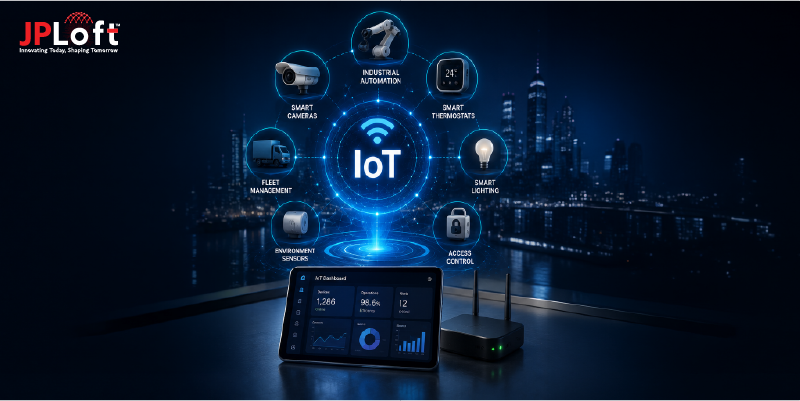
The IoT development trends are helping businesses improve operations, reduce costs, and deliver better customer experiences across many industries. Connected devices and smart systems are changing how companies manage daily tasks, track data, and make faster decisions.
From healthcare to education, businesses choose to build an IoT app for smarter, safer, and more efficient digital environments. Companies across industries are now using IoT technologies to improve productivity, automation, and long-term business growth.
#1: IoT in Ewallet
IoT is improving digital payment systems through smart and connected wallet solutions. Businesses use IoT in eWallet systems for contactless payments, secure transactions, and faster payment processing across online and offline platforms.
Connected payment devices also help businesses improve customer convenience and transaction security. Financial companies use IoT technologies to track payment activities, reduce fraud risks, and deliver seamless digital payment experiences for users.
#2: IoT in Fuel Delivery
IoT is helping fuel delivery businesses improve tracking, scheduling, and delivery management. Connected systems allow companies to monitor fuel levels, vehicle locations, and delivery operations in real time for better efficiency.
Businesses also use IoT in fuel delivery to improve route planning and reduce delivery delays. Smart sensors and connected devices help fuel delivery companies improve safety, lower operational costs, and provide faster services to customers.
#3: IoT in Aviation
IoT in aviation is helping airlines improve aircraft monitoring, passenger safety, and operational efficiency. Connected sensors help track aircraft performance, fuel usage, and maintenance needs in real time.
Airlines also use IoT systems for baggage tracking, passenger services, and airport management. Smart aviation technologies help reduce delays, improve safety standards, and support better travel experiences for passengers worldwide.
#4: IoT in Handyman Apps
IoT is improving handyman services through smart scheduling, real-time tracking, and connected service management systems. Businesses use connected devices to manage service requests, monitor technician locations, and improve customer communication.
IoT in handyman apps also helps businesses track tools, equipment, and service performance more efficiently. Companies use these technologies to reduce delays, improve operational management, and deliver better customer experiences in handyman services.
#5: IoT in Smart Homes
Smart homes use IoT devices to improve comfort, convenience, and energy management. Connected devices allow users to control lighting, security systems, and home appliances from mobile devices.
Businesses choose to develop smart home apps to improve automation and reduce energy usage. IoT also helps homeowners improve security and manage connected systems more efficiently every day.
How Businesses Can Prepare for IoT Trends?
Businesses must prepare for the trends of IoT to improve efficiency, stay competitive, and support future growth. A strong IoT strategy helps companies manage connected systems, protect data, and deliver better digital services.
1. Build a Scalable IoT Infrastructure
Businesses should build IoT systems that can grow with future business needs. Scalable infrastructure helps manage more devices, users, and connected services without affecting performance.
2. Invest in IoT Security
Although strong security increases IoT app development cost, it helps protect connected devices, business data, and customer information from cyber threats. Businesses should use secure networks, device authentication, and regular system updates.
3. Focus on Data Governance
IoT systems collect large amounts of business and customer data every day. Proper data governance helps businesses manage data securely, improve compliance, and support better decision-making.
4. Choose the Right IoT Development Partner
An experienced app development company in Dubai, Saudi Arabia, or any other can help businesses build secure, scalable, and reliable IoT solutions. The right team can also support faster deployment and long-term business growth.
How JPLoft Can Help You Align With IoT Industry Trends?
Businesses need smart and future-ready IoT solutions to stay competitive in today’s fast-changing digital market. JPLoft helps companies build connected systems that improve automation, efficiency, and customer experiences across industries.
Our team understands the latest IoT trends and develops scalable solutions based on your business goals and operational needs. We offer custom IoT development services for healthcare, retail, logistics, manufacturing, smart homes, and many other industries.
From connected apps to real-time monitoring systems, we help businesses create secure and reliable IoT platforms. Our experts focus on performance, security, and seamless device integration to deliver long-term business value.
Whether you want to improve operations, reduce costs, or launch a smart connected product, JPLoft can help you build modern IoT solutions that support future business growth.
Conclusion
The Internet of Things is changing how businesses work, connect, and grow in today’s digital world. From AIoT to smart cities, the future trends in IoT are helping companies improve efficiency, security, and customer experiences.
Businesses across healthcare, retail, logistics, education, and many other industries are using IoT solutions to automate operations and make faster decisions.
As connected technologies continue to grow, companies must stay updated with the top trends in IoT and business opportunities. Building secure and scalable IoT systems can help businesses reduce costs and improve long-term performance.
Businesses that invest in modern IoT solutions today will be better prepared for future market changes and customer demands. Choosing the right technology strategy and development partner also plays an important role in successful IoT adoption.
With the right approach, IoT can help businesses create smarter operations, improve growth, and stay competitive in the evolving digital market.
FAQs
The current IoT trends in 2026 include AIoT, edge computing, 5G connectivity, digital twins, smart cities, wearable devices, sustainable IoT solutions, and stronger cybersecurity systems for connected devices.
The future of IoT looks strong as businesses continue adopting smart technologies for automation, real-time monitoring, connected services, and data-driven decision-making across industries worldwide.
Industries benefiting most from IoT include healthcare, retail, logistics, manufacturing, agriculture, banking, education, and smart home services. Hence, IoT helps these industries improve efficiency, automation, operational management, and more.
AI improves IoT systems by analyzing data, automating tasks, predicting outcomes, and supporting faster decisions. Businesses use AI-powered IoT systems to improve efficiency, reduce manual work, and optimize operations.
Major IoT security challenges include data breaches, weak device protection, unauthorized access, network attacks, and poor software updates. However, businesses need strong security systems to protect connected devices and sensitive information.

Rahul Sukhwal is the CEO and Founder of JPLoft, with 18+ years of experience in software engineering, emerging technologies, and digital product development. His expertise spans artificial intelligence, including AI agents, generative AI, LLMs, chatbots, computer vision, and machine learning, as well as blockchain, IoT, AR/VR, mobile, web, and enterprise software. He focuses on applying these technologies to real business challenges across industries such as healthcare, education, mobility, finance, real estate, and on-demand services.



Share this blog