


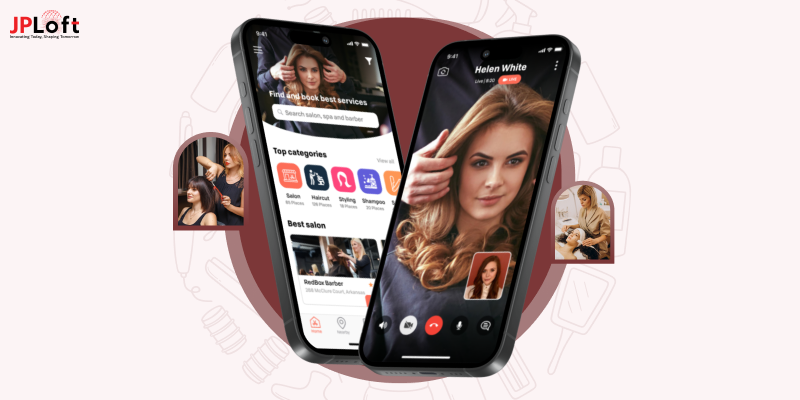
Key Takeaways:
The salon software market is projected to reach $1.29 billion by 2030, creating a stronger investment opportunity in digital salons.
Customers expect online appointment booking, secure payments, personalized offers, and a seamless salon app experience.
Salon app development challenges include real-time booking, third-party integrations, data security, and staff scheduling.
Following best practices, the right technology stack, improving user retention, and real salon workflow testing help solve beauty salon app challenges.
Connect with JPLoft to build secure, scalable, and feature-rich applications tailored to business operational needs and future growth.
The salon industry has been facing tremendous growth over the past few years. The salon software market is projected to reach $1.29 billion by 2030 at a CAGR of 8.90%.
But what is the reason behind this jump? It's simple: people want instant appointment booking, secure digital payments, and personalized offers. Salon apps make these experiences possible and create a strong impact on businesses to invest in smart salon applications.
However, things like creating a smooth user experience and managing real-time appointments are easier said than done.
Businesses face lots of challenges while developing a salon app, and ignoring these can lead to booking errors, poor user experiences, and higher development costs.
In this guide, we will explore the major salon app development challenges, practical solutions, and best practices for businesses to build a high-performing salon app.
Key Challenges in Salon App Development
Building a salon app requires more than just integrating features. Businesses must also look for key challenges in developing a salon app to not just create a friction-free app, but an application that ensures user engagement and long-term growth.
In this section, find several challenges businesses face in building a salon app.
Challenge 1: Smooth User Experience
A smooth user experience is one of the core factors in salon app success. Users are increasingly choosing the best salon apps for seamless booking, easy salon services, and simple payment navigation.
However, if the interface is confusing, difficult to navigate, or takes too long to load, users are likely to abandon the app. Meeting these expectations while delivering a fast, intuitive, and consistent experience is one of the biggest challenges in salon app development.
Solutions:
-
Keep the user interface simple and easy to explore a wide range of salon services by taking help from a UI/UX design service provider.
-
Conduct usability testing to ensure the app design works smoothly.
-
Keep the user flow short; customers must be able to book appointments within 1-2 pages, and not scroll through multiple pages.
Challenge 2: Third-Party Service Integration
A successful salon app runs smoothly by using different third-party integrations for customer management, booking schedules, and payment gateways. However, this includes several challenges.
Every third-party integration comes with its own APIs and security standards. If one service fails or becomes incompatible after an update, it can affect the entire booking experience.
For instance, if the payment API fails, customers may leave the app without booking an appointment.
Solutions:
-
Use APIs that are updated according to the latest policies and have access to wide functionality.
-
Choose centralized APIs that continue to support app features even after updates.
-
Regularly monitor integrations and update them when providers release new versions.
Challenge 3: Data Security
The salon app includes several sensitive pieces of information about users, including personal details, payment transactions, and service history. As the app grows and more features are added, protecting this information becomes increasingly difficult.
Ensuring proper mobile app security is necessary; otherwise, it increases the risk of cyberattacks, misuse of information, and unauthorized transactions. If the app lacks quality data security and protection, it can damage customer trust and negatively affect the business reputation.
Solutions:
-
Encrypt sensitive information through SSL encryption, and even better, use a 2-factor authentication system within the app.
-
Follow legal compliance requirements and privacy laws such as GDPR and CCPA within the app.
-
Regular software updates and compliance checks further strengthen data protection.
Challenge 4: Multi-Platform Compatibility
This is one of the smart accessibility features that helps to improve user retention. Customers now expect salon apps to work across multiple platforms. However, maintaining consistent performance across multiple platforms is one of the challenges in beauty salon app development.
Different operating systems of iOS and Android devices, screen sizes, and device specifications make it difficult for businesses to provide a seamless user experience across every device.
Solutions:
-
Choose the right salon app tech stack, such as cross-platform backend infrastructure, to support iOS and Android device compatibility.
-
Use third-party logins, such as Google, social media, or email IDs, for smooth working across platforms.
-
Check that the device is working smoothly on the operating system and different screens.
Challenge 5: Real-Time Booking Scheduling
Salon employees often manage the front desk, customer check-ins, phone calls, and appointment scheduling at the same time. During busy hours, updating appointment slots, handling last-minute cancellations, and confirming bookings manually becomes difficult.
Delayed updates can lead to double bookings, missed appointments, longer waiting times, and an inconsistent customer experience. Managing last-minute bookings, schedule changes, and real-time booking confirmation are common development challenges in a beauty salon app.
Solutions:
-
Integrate a real-time booking system that instantly updates appointment availability across customer and staff calendars.
-
Enable automated booking confirmations, reminders, and rescheduling notifications through SMS, email, or push notifications.
-
Add a centralized scheduling dashboard to manage cancellations, schedule changes, and waitlists without manual effort.
Challenge 6: Inventory Management Issues
Inventory management is one of the biggest challenges while developing a salon app. As the salon business grows, products such as shampoos, hair spa, and hair accessories need regular maintenance to avoid overstocking and wastage.
Many salon businesses still track inventory manually or use separate software that does not connect with their booking system. As a result, stock levels are not updated after every service or product sale.
Solutions:
-
Integrate an inventory management module that automatically updates stock after every product sale.
-
Set low-stock alerts and automated reorder notifications to prevent product shortages.
-
Connect inventory with appointment scheduling and sales reports to accurately forecast product demand and reduce wastage.
Challenge 7: Ineffective Customer Relationship Management
Ineffective customer relationship management is one of the common beauty salon app challenges. When a salon struggles to manage user information and preferences, it raises questions about an unorganized approach.
Without proper system management, salon staff may miss appointment history, preferred services, or special customer requests. It leads to a poor user experience and reduces repeat bookings.
Solutions:
-
A CRM (Customer Relationship Management) system solves challenges by storing important customer information in one place.
-
It keeps records of previous appointments, services used, favorite stylists, and personal preferences.
-
It can also send automatic appointment reminders, birthday wishes, and special offers.
Challenge 8: Higher Development Cost
The mobile app development cost often increases due to changing business requirements, unnecessary features, complex integrations, and poor project planning.
Many businesses also overlook long-term expenses such as maintenance, cloud hosting, security updates, and third-party subscriptions.
For startups and salon businesses, managing these costs becomes a major challenge. Expanding the platform scope without proper planning can delay the launch and exceed the allocated budget.
Solutions:
-
Start with an MVP that includes only essential features.
-
Choose a scalable architecture to avoid expensive redevelopment.
-
Partnering with an experienced on-demand app development company helps to define the right features and control development costs.
Challenge 9: Lack of Advanced Technology Integration
Integrating advanced technologies such as AI recommendations, AR/VR, and automation into a salon app is one of the major development challenges.
These technologies must work with existing features such as appointment booking, payment processing, CRM, and inventory management without affecting app performance.
However, businesses face lots of challenges, as without proper planning and strategy, updating the app with advanced technologies can increase the complexity, development time, and cost to build a salon app.
Solutions:
-
Enable AR/VR technology for users to get live product testing and previews.
-
Allow an AI chatbot on your app; it helps to attend to customer queries 24/7 and improve their satisfaction level.
-
An AI app development service provider helps to integrate AI-powered features and machine learning to automate client management, push real-time notifications, and personalize customer experience.
Challenge 10: Managing Staff Schedules in Real-Time
Staff handling plays an important role in improving the profitability of salon businesses. It also helps users to check their preferred stylist availability and book them. However, the easier it sounds, the more challenging it becomes.
As bookings grow, managing staff becomes hectic. Continuous leave requests, shift changes, extended services, and overlapping bookings create scheduling conflicts. Managing real-time staff availability is one of the challenges faced in building salon app.
Solutions:
-
Using an integrated dashboard helps to manage staff scheduling. It allows the employee to update their duties and leave requests, and accordingly the admin can schedule an appointment for a particular client.
-
Enable calendar synchronization so scheduled changes instantly reflect across the customer app and admin panel.
-
Allow automated notifications to both staff and customers about appointment booking at a particular time, to avoid confusion and manage a smooth workflow.
Challenge 11: Ensuring Secure Payments
Customers now expect a secure online payment facility in salon apps while booking a service. However, if businesses are unable to integrate a successful payment API, customers are more likely to get frustrated and leave the app without booking a service.
This mainly happens when users are making a payment and at the same time face an interrupted message: “Oops, your payment has been paused”. Integrating a reliable payment gateway is one of the challenges in salon app development.
Solutions:
-
Allow multiple payment methods, such as debit and credit cards, e-wallets, by integrating reliable payment processors with Stripe, PayPal, or Square.
-
To secure your payments, use encryption in the app to avoid fraud issues.
-
Regular salon app maintenance also helps keep payment gateways updated and improves security.
Challenge 12: Keeping Customers Engaged & Encouraging Repeat Bookings
Keeping existing customers engaged and encouraging them to book again requires continuous salon app improvements.
Most businesses fail to optimize the app with updated features and personalization options. This creates lots of challenges while creating a Salon App.
Personalization has created a vast impact on encouraging repeat customers. Users like it when their choices are prioritised. Failing to do so can reduce repeat bookings, lower customer retention, and affect long-term business growth.
Solutions:
-
Customer retention can be improved through 24/7 online booking by directly integrating a “Book” button in Instagram or Google Business Profile.
-
Launch reward programs to maintain excitement and engagement in the salon app. It includes birthday rewards, referral bonuses, special discounts, or VIP member perks.
-
Upgrade your app with membership programs, such as silver, gold, or VIP, to convert occasional users into repeat customers.
Best Practices to Overcome Key Challenges in Developing a Salon App
There are several challenges in salon apps, and it becomes almost impossible to ignore any of them when planning to build a salon app.
However, with the right strategy, technology, and planning structure, you can find quick solutions to these emerging challenges. Here are some best practices to overcome the common salon app challenges and ensure a high-quality application.
1. Streamlined Appointment Booking
A streamlined appointment booking system is one of the best ways to overcome challenges in beauty Salon App development. Salon app features such as online booking, real-time appointment availability, automated reminders, and easy rescheduling help simplify the booking process.
For salon owners, this helps track bookings systematically, allowing staff to focus on quality services instead of managing manual appointments.
2. Scalable Backend Infrastructure
To save your business from higher cost pitfalls, using a scalable backend infrastructure is an effective practice. It helps your salon app handle growing user traffic without affecting platform performance.
Cloud providers such as AWS, Google Cloud, and Microsoft Azure help to maintain app performance during peak booking hours.
3. Improving User Retention
Improving user experience plays a crucial role in the salon industry. Poor app performance, such as delayed updates, payment issues, booking errors, and complex salon app design, will directly impact customer engagement and reduce repeat bookings.
Improve user interaction by integrating advanced features, such as chatbots, AR/VR, and gamification. Personalize the app by understanding customers’ past services and preferred salon professionals.
4. Choose a Reliable Tech Stack
To create a smart application, this is one of the effective factors to consider when choosing a reliable tech stack. It helps to provide data-driven insights on product or employee performance. Further, advanced technology helps to improve security and mitigate common threats.
Hire mobile app developers who can help you choose a modern technology stack that supports cross-platform development, third-party integrations, and advanced features.
5. Test With Real Salon Workflows
Now comes the final mobile app testing. To identify real-world issues and better suggestions, conduct testing with real salon workflows. Collect feedback from different business owners and salon investors to update the app with changes.
Moreover, partnering with a custom mobile app company in the UK helps you understand where your app is lacking in terms of other competitive salon platforms.
How Can JPLoft Help Build a Scalable Salon App?
Overcoming salon app development challenges requires the right technology, proper planning, and expert guidance.
JPLoft offers experienced salon app development services that help businesses overcome challenges and transform their ideas into a quality-driven salon platform.
From intuitive UI/UX design and real-time appointment scheduling to secure payment integration, our team connects with clients at every stage of development.
We believe a successful salon app is not just based on rigorous testing and features alone; it needs unique capabilities that strengthen your brand identity.
That is why our professional team uses modern technology to integrate advanced technologies like AI, automation, and AR/VR with exciting salon app features. Not only does it deliver personalized experiences and streamline operations, but it also supports long-term growth.
Whether you're launching your first salon app or upgrading an existing platform, JPLoft delivers reliable ongoing support and future-ready solutions that help your business stay competitive.
Conclusion
Building a salon app is no longer just about offering online appointment booking. Today's customers expect a fast, secure, and personalized experience that makes every interaction simple and convenient.
To manage operational efficiency and improve customer retention, businesses must overcome salon app development challenges. It includes real-time scheduling, data security, payment integration, staff management, and scalability.
With the right development strategy, modern technologies, and a clear understanding of business needs, these obstacles can be managed effectively.
Start by choosing essential features, focus on user experience, and plan for future growth to build a salon app that performs well as your business expands.
As the beauty industry continues to embrace digital transformation, investing in a scalable and customer-focused salon app can strengthen your competitive position and overcome development challenges in a beauty salon app.
FAQs
Challenges while building a salon app include integrating reliable third-party APIs, online appointment booking, testing with real salon workflows, building a scalable back-end architecture to manage peak booking hours, and cross-platform capability.
The salon app contains private information, such as user profile, address, and payment details. Without proper security compliance, such data can lead to fraudulent activities, cyberattacks, or misuse.
A salon app contains several important features, including automated email reminders to customers, a seamless online booking experience, detailed client profiles, and access to a wide category of salon services.
To improve customer retention, salon apps must integrate personalized salon bookings, reviews, discounts, and in-app rewards for purchases, easy navigation to share reviews, and smooth customer service.
Salon apps are commonly built using technologies like Flutter or React Native, Swift, Kotlin, Node.js, and cloud platforms to build a successful salon app.

Rahul Sukhwal is the CEO and Founder of JPLoft, a visionary technologist with 18+ years at the forefront of emerging tech innovation and software engineering. He channels deep software engineering and AI expertise into building smarter, scalable solutions that shape how forward-thinking businesses worldwide harness the true power of AI.



Share this blog