


Key Takeaways:
Building a salon app helps businesses improve customer experience, streamline bookings, and increase revenue in a competitive digital market.
Understanding user needs and selecting the right features plays a key role in creating a successful and scalable salon app.
Following a structured development process ensures better planning, smooth execution, and fewer errors during salon app development.
The cost to build an app for salon depends on features, design complexity, and technology, typically ranging between $10,000 and $80,000 or more.
A clear monetization strategy helps salon apps generate consistent revenue through subscriptions, commissions, and in-app promotions effectively.
Partnering with experts like JPLoft ensures quality, faster delivery, and reliable support for building a future-ready salon app solution.
Running a salon today is no longer just about great service. It is about speed, ease, and digital access. Many customers now expect to book appointments through apps instead of calling.
According to a report, the global beauty and personal care market is projected to reach $1,042.3 billion by 2034. This steady growth clearly shows how fast the industry is expanding.
This shift creates both pressure and opportunity for salon owners. To stay competitive, you need to build a salon app that meets modern user expectations.
This salon app development guide will help you understand features, costs, development steps, and trends shaping the future.
From planning to execution, it covers everything needed to create a scalable and user-friendly salon app for long-term success.
What is a Salon App?
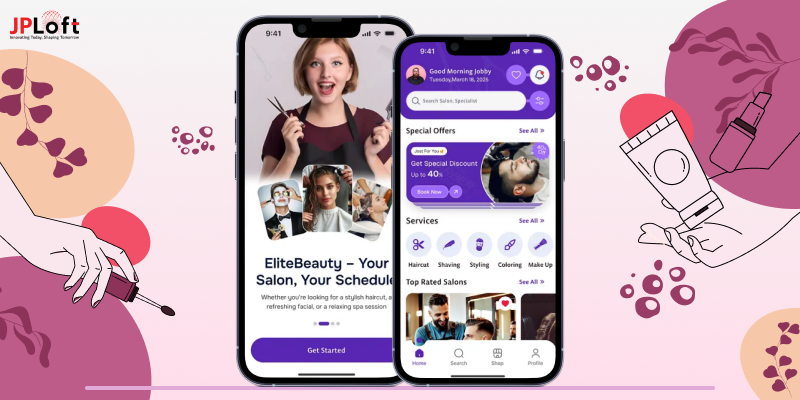
A salon app is a mobile platform that allows users to book beauty and grooming services online. It connects customers with salons for seamless appointment scheduling, service selection, and secure payments.
For businesses, a salon app simplifies operations by helping manage bookings, staff schedules, and customer data in one centralized system. This improves efficiency while enhancing the overall customer experience.
Market Statistics of the Salon App
Here are the latest statistics showing the rapid growth of salon apps, driven by increasing online bookings, changing customer preferences, and rising demand for digital solutions.
-
According to a digital transformation report, 82% of salons now use online booking systems to manage appointments and reduce no-shows.
-
Around 76% of clients prefer booking salon services online rather than by telephone, showing a strong shift toward digital-first customer behavior
-
The salon booking software market is projected to grow from $671.41 million in 2026 to $1204.1 million by 2035, driven by automation demand and mobile-first solutions.
If you explore the best salon apps, you will notice how these platforms simplify bookings and improve customer satisfaction.
Popular Types of Salon Apps
Salon apps come in different types based on their purpose, target users, and business model. The most common types include
-
Salon Booking Apps: These apps allow users to schedule appointments, choose services, and select time slots. They focus on convenience and help reduce waiting time.
-
On-Demand Salon Apps: These apps provide at-home beauty services where professionals visit customers. They are ideal for users who prefer comfort and flexible scheduling.
-
Marketplace Apps: These platforms list multiple salons and professionals in one place. Users can compare prices, services, and reviews before making a booking.
-
Salon Management Apps: These apps are designed for business owners to manage appointments, staff, payments, and customer data efficiently.
If you are exploring how to start a salon business, choosing the right app type is a crucial first step.
How Does a Salon App Work?
A salon app lets users search, book, and manage services from discovering salons to payment and reviews. Here is the simple and seamless workflow of a salon app.
-
Users download the app and create an account
-
They browse nearby salons, services, and pricing
-
Users check reviews and ratings before selecting a service
-
They choose a preferred date and time slot
-
The app confirms booking and enables secure payment
-
Users receive reminders and real-time updates
-
After the service, users can rate and review the experience
Benefits of Investing in A Salon App
Investing in a salon app is not just about going digital. It is about building a scalable business model. It helps salons grow faster, improve efficiency, and stay competitive in a changing market.
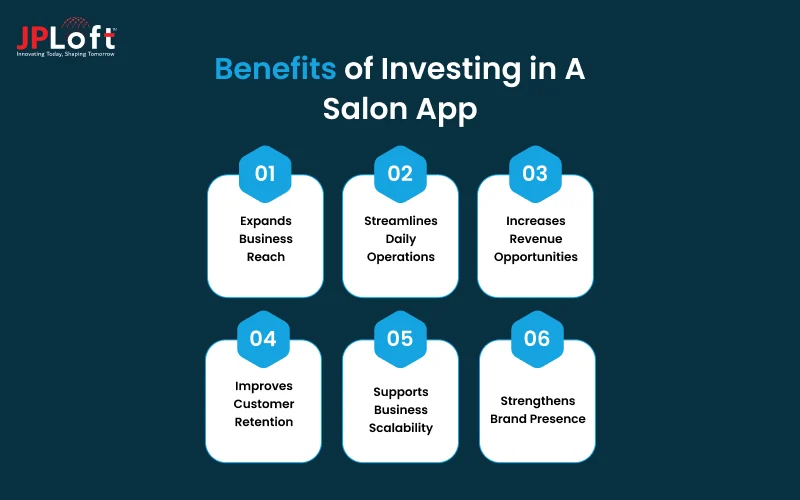
If you are still unsure why your business needs a salon app, these benefits will give you a clear picture.
1. Expands Business Reach
A salon app helps you reach more customers beyond your physical location. It allows users to discover your services online and book instantly, increasing visibility and attracting new clients consistently.
2. Streamlines Daily Operations
Managing appointments, staff, and payments becomes easier with automation. When you build an app for salon, it reduces manual work and improves overall efficiency in daily business operations.
3. Increases Revenue Opportunities
A salon app opens multiple income streams like subscriptions, promotions, and upselling services. It also supports creative salon app ideas that help you attract more users and boost profits.
4. Improves Customer Retention
With features like reminders, offers, and loyalty programs, apps keep users engaged. Businesses that develop an app for hair salon services can build stronger relationships and encourage repeat bookings.
5. Supports Business Scalability
A digital platform allows you to expand services without major physical investment. If you are exploring how to make an app for your salon, it can help you grow and scale your business easily.
6. Strengthens Brand Presence
A salon app builds a strong digital identity and improves brand trust. It helps your business stand out in a competitive market while offering a seamless and modern customer experience.
Key Features of A Salon App
If you are exploring how to create a hair salon app, features are not only the most important part. Infact, they define how users interact with your platform and how smoothly everything works.
To create beauty salon mobile app solutions that users actually enjoy, you need simple, useful, and fast features. The right set of features improve bookings, engagement, and retention.
The table below highlights the must-have features your salon app should include:
|
Feature |
Description |
|
User Registration & Profiles |
Quick sign-up via email or social login, with user profiles that store preferences, booking history, and personal details. |
|
Service Listings & Details |
Displays services with clear descriptions, pricing, and duration to help users choose easily without confusion. |
|
Search & Filters |
Helps users find salons based on location, services, ratings, and price range for faster decision-making. |
|
Appointment Booking |
Allows users to select time slots and book instantly, reducing waiting time and avoiding scheduling conflicts. |
|
In-App Chat |
Enables direct communication between users and salons for quick query resolution and better engagement. |
|
Secure Payments |
Supports multiple payment methods with safe and smooth transactions for a hassle-free booking experience. |
|
Ratings & Reviews |
Let's users share feedback and ratings, helping others make informed decisions and building trust. |
|
Push Notifications |
Sends reminders, offers, and updates to keep users engaged and reduce missed appointments. |
|
Loyalty Programs |
Offers rewards, discounts, and referrals to encourage repeat bookings and improve customer retention. |
|
Admin Dashboard |
Helps salon owners manage bookings, staff, payments, and performance from a single platform. |
Apps that succeed focus on simplicity and user comfort. If you explore the best salon app features, you will notice they are always easy to use and highly practical.
Step-By-Step Process To Build A Salon App
If you are exploring how to make an app for your salon, this section will guide you clearly through the process.
Building a salon app requires clear planning, the right features, and a structured approach. Following a step-by-step process helps you avoid mistakes and build a scalable product.
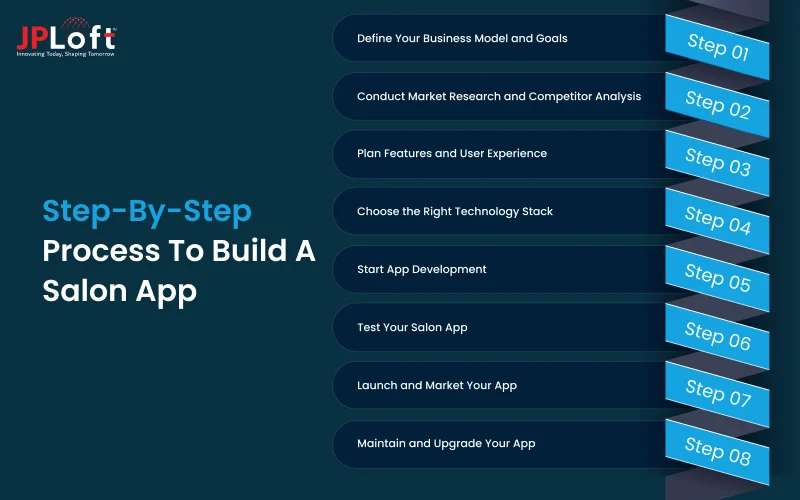
Now, let’s move on in this salon app development guide and understand the development process step by step.
Step 1: Define Your Business Model and Goals
Start by understanding your target audience, services, and revenue model. Clear goals help you build an app for salon that meets user needs and delivers consistent business growth.
►Identify Target Audience
Define your ideal users, their needs, and preferences. This helps you create app for hair salon solutions that offer personalized services and better user engagement.
►Choose App Type
Decide whether you want booking, marketplace, or on-demand services. This decision impacts features, development complexity, and how users will interact with your salon app platform.
►Set Revenue Model
Choose how your app will earn revenue, such as commissions, subscriptions, or ads. A clear model ensures long-term profitability and supports business scalability.
Step 2: Conduct Market Research and Competitor Analysis
Study market trends and analyze competitors before development. This step helps you understand user expectations and plan better strategies when you develop an app for hair salon services.
►Analyze Competitor Apps
Research apps like Booksy to understand features, design, and user experience that attract and retain customers effectively in the salon industry.
►Identify Market Gaps
Find missing features or user pain points in existing apps. Addressing these gaps helps you build a unique app that stands out in the competitive market.
►Validate Your Idea
Test your concept with potential users through surveys or feedback. This ensures your idea is practical and aligns with real user needs before development begins.
Step 3: Plan Features and User Experience
Define core features and create a simple user flow. This step answers questions like how to create a hair salon app that delivers smooth navigation and better engagement.
►List Core Features
Identify essential features like booking, payments, and notifications. These features form the foundation of your salon app and improve overall user experience.
►Focus on UI/UX Design
A clean and simple design improves usability. Following a strong salon app design approach ensures users can navigate the app easily without confusion or delays.
►Create Wireframes
Design basic layouts to visualize the app structure. The app wireframes help you plan screens and interactions before starting actual development work.
Step 4: Choose the Right Technology Stack
Selecting the right tools and technologies is important for performance and scalability. It helps you decide how to develop a hair salon app that runs smoothly across platforms.
►Select Platform
Choose between Android, iOS, or both. Your decision should depend on your target audience and budget for development.
►Backend Development
Build a strong backend to manage data, users, and bookings. It ensures your app runs efficiently and handles multiple users without performance issues.
►Hire Development Team
Work with experts or hire mobile app developers who understand your requirements. A skilled team ensures faster development and better quality results.
Step 5: Start App Development
Begin coding and development based on your plan. This is where your idea turns into a real product while you learn how to build a hair salon app effectively.
►Frontend Development
Create user-facing screens with smooth navigation. A good frontend ensures users enjoy using the app and find it easy to complete actions.
►Backend Integration
Connect the frontend with the backend systems for data flow. This ensures bookings, payments, and user data work together seamlessly.
►Third-Party Integrations
Add tools like payment gateways and notifications. These integrations enhance functionality and improve the overall user experience.
Step 6: Test Your Salon App
App testing ensures your product works correctly without errors. It helps you fix bugs and improve performance before launch, making your app reliable for users.
►Functional Testing
Check all features to ensure they work as expected. This step ensures users can book services and complete actions without issues.
►Performance Testing
Test app speed and responsiveness under different conditions. This ensures your app handles high traffic without slowing down or crashing.
►Security Testing:
Ensure user data and payments are protected. Following a proper salon app testing process helps build trust and avoid security risks.
Step 7: Launch and Market Your App
Once testing is complete, launch your app on app stores. This step focuses on reaching users and promoting your app after understanding how to build a hair salon app effectively.
►App Store Optimization
Optimize app title, description, and visuals. This improves visibility and helps users discover your app easily.
►Marketing Strategy
Use social media and ads to promote your app. This increases downloads and attracts more users to your platform.
►Gather User Feedback
Collect reviews and feedback after launch. This helps you improve features and fix issues based on real user experiences.
Step 8: Maintain and Upgrade Your App
Regular updates keep your app relevant and functional. In addition, maintenance ensures long-term success and answers how to create an app for a salon that grows with user needs.
►Fix Bugs and Issues
Resolve technical problems quickly to maintain performance. Regular fixes not only improve user satisfaction but also prevent negative experiences.
►Add New Features
Introduce new features based on user demand. This keeps your app competitive and aligned with market trends.
►Ensure Long-Term Support
Follow a proper salon app maintenance strategy to keep your app updated, secure, and optimized for future growth.
Tech Stack to Develop a Salon App
Choosing the right technology is important for performance and scalability. A strong app tech stack ensures a smooth user experience and secure data handling.
When you plan to develop on demand salon app solutions, selecting the right tools helps your platform run faster and handle more users efficiently. It also supports future upgrades and feature expansion.
|
Layer |
Technology |
Description |
|
Frontend |
React Native, Flutter, Swift |
Builds fast, responsive apps for Android and iOS users |
|
Backend |
Node.js, Django, Laravel |
Handles server logic, APIs, and user request processing efficiently |
|
Database |
MongoDB, MySQL, PostgreSQL |
Stores user data, bookings, and transactions securely |
|
Cloud & Storage |
AWS, Google Cloud, Azure |
Ensures scalability, storage, and high app availability |
|
APIs & Integrations |
Payment APIs, Maps APIs |
Enables payments, location tracking, and third-party integrations |
|
Security |
SSL, OAuth, Data Encryption |
Protects user data and ensures secure transactions |
|
Notifications |
Firebase, Twilio |
Sends real-time alerts, reminders, and booking updates |
A well-chosen salon app tech stack helps your app stay reliable and future-ready while improving speed, security, and overall user satisfaction.
How Much Does it Cost to Develop a Salon App?
The cost to build a salon app usually ranges from $10,000 to $80,000+, depending on features, design, and complexity. Also, it can vary based on business goals.
A basic app costs around $10,000 to $25,000. It includes simple booking, service listings, and payment features. This option works well for startups testing the market.
A mid-level app ranges between $25,000 and $50,000. It includes advanced booking, notifications, and a better design for improved user experience and engagement.
An advanced app can cost $50,000 to $80,000+. It includes AI features, real-time tracking, and a scalable architecture for large businesses. This increases the overall mobile app development cost.
Several factors influence the overall cost to build an app for salon:
-
Features and app complexity
-
UI/UX design quality
-
Technology stack selection
-
Third-party integrations
-
Development team location
Now, let’s discuss the cost breakdown with the table below:
|
Component |
Estimated Cost |
|
UI/UX Design |
$1,000 – $7,000 |
|
Frontend Development |
$2,000 – $18,000 |
|
Backend Development |
$3,000 – $25,000 |
|
API Integrations |
$2,000 – $8,000 |
|
Testing & QA |
$1,000 – $8,000 |
|
Maintenance |
$1,000 – $4,000/year |
To optimize cost and ensure quality, many businesses prefer to hire dedicated developers with proven experience in building scalable salon app solutions.
Challenges in Building a Salon App
If you are exploring how to develop a hair salon app, you may face several hurdles. These challenges in salon app development can affect performance, user experience, and long-term growth if not handled properly.
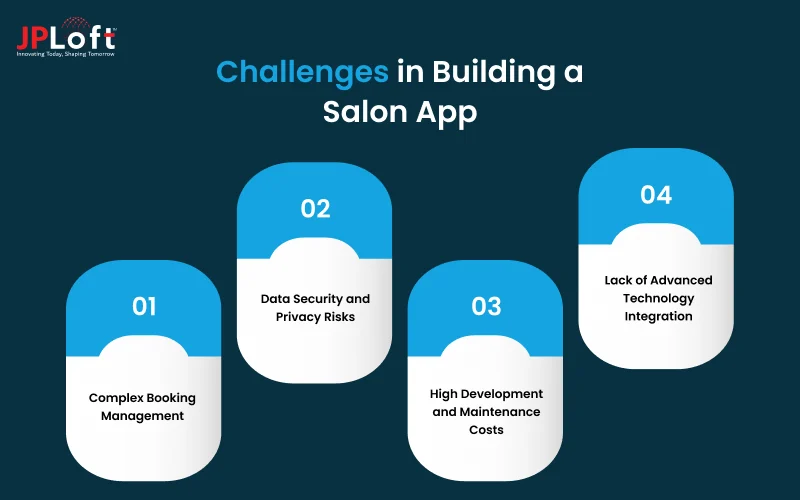
Here are the key salon app development challenges and their practical solutions:
Challenge 1: Complex Booking Management
Managing real-time bookings with multiple users and staff can be difficult. Overlapping schedules, cancellations, and delays may create confusion and reduce user trust in your salon app platform.
Solution: Use automated scheduling systems with real-time updates and smart calendar sync. This reduces booking conflicts, improves accuracy, and ensures a smooth experience for both users and salon staff.
Challenge 2: Data Security and Privacy Risks
Salon apps handle sensitive personal data and payment details. Any security gap can lead to data breaches, loss of trust, and potential legal complications for your business operations.
Solution: Use strong encryption, secure APIs, and regular audits to protect user data. Understanding how to secure a salon app helps ensure safe transactions and builds long-term user trust.
Challenge 3: High Development and Maintenance Costs
Budget overruns can delay your project and affect quality. This often happens due to unclear scope, changing requirements, or gaps in communication with your mobile app development company.
Solution: Plan your budget early and define clear project requirements. Break development into phases to control spending and ensure steady progress without compromising quality or long-term scalability.
Challenge 4: Lack of Advanced Technology Integration
Many apps fail to stand out due to limited innovation. Without smart features, it becomes harder to compete and meet evolving customer expectations in a fast-growing digital market.
Solution: Add AI-based features like smart suggestions and chat support. You can also hire AI developers to build advanced solutions that improve personalization and user engagement effectively.
Future Trends in Developing a Salon App
Technology is changing how salon apps serve users and businesses. Additionally, new innovations are making apps smarter, faster, and easier to use.
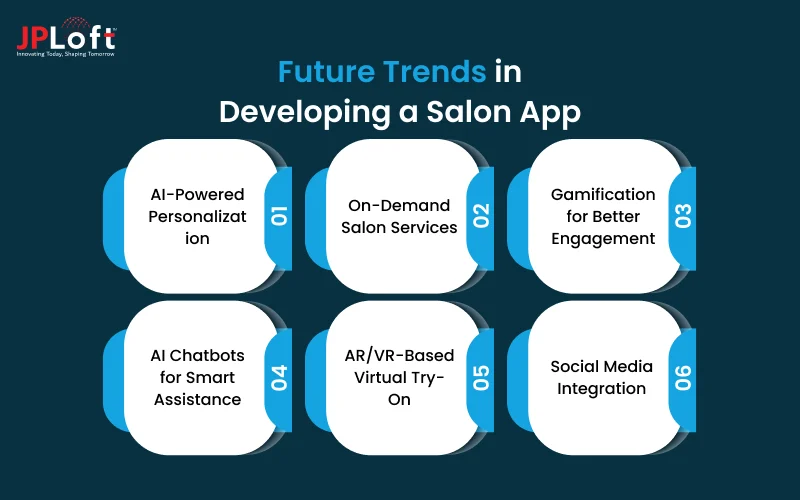
Here are the key trends shaping the future of salon apps:
1. AI-Powered Personalization
Modern apps are becoming smarter with the use of artificial intelligence. They now deliver more personalized experiences to users.
-
Suggests services based on user preferences
-
Tracks booking history and behavior
-
Recommends stylists and offers
-
Improves engagement and retention
This trend helps businesses create beauty salon mobile app solutions that feel more personal and user-friendly. It is one of the most impactful top salon app trends today.
2. On-Demand Salon Services
Users now prefer flexible services at home instead of visiting salons. This shift is growing quickly across urban and busy lifestyles.
-
Book services at home with ease
-
Flexible scheduling options
-
Real-time tracking of professionals
-
Better comfort and convenience
Many businesses now develop on demand salon app platforms to meet this demand and expand their service reach beyond physical locations.
3. Gamification for Better Engagement
Apps increasingly use reward-based gamification systems to boost user interaction, retention, and overall engagement in modern salon app experiences today.
-
Loyalty points for repeat bookings
-
Referral rewards for users
-
Discounts through challenges
-
Engaging user experience
The use of gamification in salon apps helps improve engagement and encourages users to return more often, building long-term relationships with customers.
4. AI Chatbots for Smart Assistance
AI chatbots are transforming how users interact with salon apps. They provide instant support and improve overall user experience.
-
Handles booking queries instantly
-
Provides 24/7 customer support
-
Suggests services based on needs
-
Reduces manual effort
The growing role of AI in salon apps makes these chatbots more accurate and helpful. Many businesses now create app for hair salon platforms with smart assistance.
5. AR/VR-Based Virtual Try-On
AR and VR technologies are improving how users explore services before booking. They enhance decision-making and user confidence.
-
Try hairstyles or makeup virtually
-
Visualize results before booking
-
Improves user satisfaction
-
Reduces service uncertainty
This trend helps businesses offer interactive experiences and stand out with advanced digital features in their salon apps.
6. Social Media Integration
Social media integration helps salons connect with users and promote services directly through apps. It improves engagement and brand visibility.
-
Share services on social platforms
-
Enable social login for users
-
Promote offers through social channels
-
Boost customer engagement
This feature helps businesses grow faster by connecting their app with wider audiences and building stronger online presence.
How Salon Apps Makes Money?
Understanding how salon apps make money helps you plan a strong revenue strategy from the start. It also gives clarity on choosing the right model based on your business goals.
Here are the most common ways salon apps generate revenue using proven mobile app monetization methods:
A. Commission-Based Model
Salon apps earn a commission on every booking made through the platform. This model ensures steady revenue while helping businesses scale as more users book services regularly.
B. Subscription Plans
Apps offer monthly or yearly subscription plans to salons for premium features. This creates recurring income and helps businesses access advanced tools for better management and customer engagement.
C. In-App Advertising
Salon apps allow brands and professionals to promote services through ads. This method helps generate extra revenue while giving businesses visibility to reach targeted users within the platform.
D. Featured Listings and Promotions
Salons pay to appear at the top of search results or highlighted sections. This boosts their visibility and bookings, while the app earns revenue through paid promotions and premium placements.

Why Choose JPLoft to Develop a Salon App?
Building a successful salon app needs more than just coding. It requires the right strategy, design, and technology partner. JPLoft is a trusted salon app development company that helps businesses turn ideas into scalable digital products.
Whether you want to build a salon app or upgrade an existing platform, our team focuses on performance, usability, and long-term growth. We design apps that are simple to use and built for real customer needs.
JPLoft works with modern technologies like React Native, Flutter, Node.js, and cloud platforms to deliver fast and secure applications. Our developers ensure smooth performance, strong security, and easy scalability as your user base grows.
From planning to launch and ongoing support, we handle everything with clarity and speed. If you plan to build an app for salon services, JPLoft offers the expertise to make it successful and future-ready.
Conclusion
Building a salon app is a smart move for businesses that want to grow in a digital market. It helps improve customer experience, streamline operations, and increase revenue opportunities.
If you plan to build a salon app, following the right process and choosing the right features is important. A well-planned approach ensures better performance and long-term success.
Many businesses now build an app for salon services to meet changing customer expectations and stay competitive. With the right strategy, tools, and development support, you can create a reliable and scalable solution.
In the end, success depends on understanding user needs and delivering a smooth, simple, and engaging app experience.
FAQs
The development time usually ranges from 2 to 6+ months. It depends on features, design complexity, and platform choice. A basic app takes less time, while advanced apps require more development and testing efforts.
A salon app should include booking, service listings, payments, notifications, and reviews. These features improve user experience and help businesses manage operations efficiently while increasing customer engagement and retention.
The cost typically ranges between $10,000 and $80,000 or more. It depends on app complexity, features, design quality, and development team. Advanced apps with custom features and integrations usually cost higher.
Yes, many apps support on-demand services where professionals visit customers. This feature allows flexible scheduling, improves convenience, and helps businesses expand their services beyond physical salon locations.
You can start by defining your goals and target users. Then plan features, choose the right tech stack, develop the app, test it properly, and launch with ongoing updates.

Rahul Sukhwal is the CEO and Founder of JPLoft, a visionary technologist with 18+ years at the forefront of emerging tech innovation and software engineering. He channels deep software engineering and AI expertise into building smarter, scalable solutions that shape how forward-thinking businesses worldwide harness the true power of AI.



Share this blog