


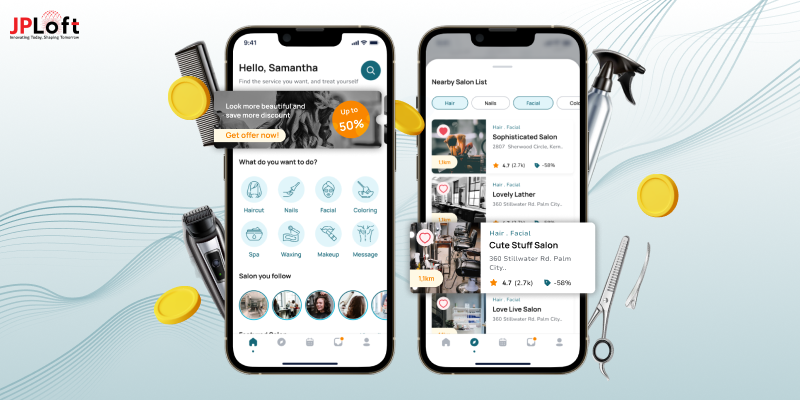
Key Takeaways:
The cost of developing a salon app typically ranges between $10,000 and $80,000+, depending on features, scalability, and business requirements.
Advanced features like AI scheduling, loyalty programs, and multi-salon management significantly increase the overall cost of developing a salon app.
Cross-platform development and MVP strategies help businesses reduce development costs while launching salon apps faster and more efficiently.
Hidden expenses like cloud hosting, testing, maintenance, and third-party integrations impact long-term salon app operational costs significantly.
Successful salon apps generate revenue through subscriptions, booking commissions, premium listings, beauty product sales, and loyalty programs.
Partnering with JPLoft helps businesses build scalable salon apps with optimized features, controlled budgets, and long-term business growth strategies.
Salon businesses now rely heavily on mobile apps to manage bookings, payments, customer engagement, and loyalty programs. However, many startups and salon owners struggle to estimate the actual investment required. Unclear budgeting often delays planning and business decisions.
The truth is that the cost to create a salon app depends on features, app complexity, platform choice, and development location. A basic salon booking app may cost around $10,000, while an advanced AI-powered platform can exceed $80,000.
If you are wondering how much does it cost to develop a salon app, this guide covers everything in simple terms. From app types to hidden expenses, you will understand where the budget goes and how to control development costs without affecting app quality.
Cost To Build Different Types of Salon Apps
The overall salon app development cost depends on the type of salon app you plan to build.
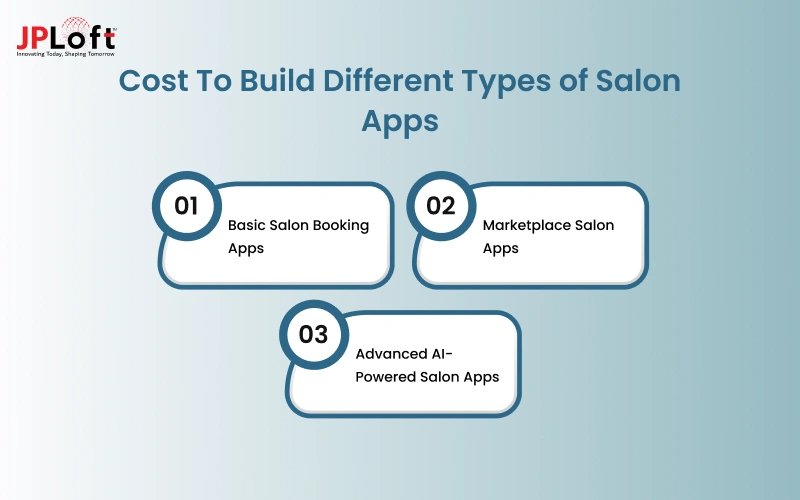
Simple apps require a smaller budget, while advanced platforms need higher investment because of complex features and backend systems.
1. Basic Salon Booking Apps
Basic salon apps include appointment scheduling, customer registration, notifications, and online payments. These apps suit startups and small salon businesses.
The average cost to develop a salon app with basic features ranges from $10,000 to $20,000.
The creation of an app like Booksy usually starts with simple booking-focused features before scaling further.
2. Marketplace Salon Apps
Marketplace salon apps connect multiple salons and customers through one platform. These apps include vendor management, payments, and advanced search features.
The estimated budget ranges between $25,000 and $45,000. Businesses learning how to develop an app like Styleseat often invest more in scalability and backend infrastructure.
3. Advanced AI-Powered Salon Apps
Advanced salon apps include AI recommendations, automation, analytics, loyalty systems, and inventory management tools for large salon businesses.
Development costs may exceed $80,000. Businesses exploring how to build an app like Mangomint usually require enterprise-level planning and advanced automation systems.
Overall, the final salon app development cost breakdown depends on features, integrations, and long-term scalability goals.
Key Factors That Affect the Cost of Building a Salon App
Several business and technical factors influence the overall salon app budget.
A simple booking app requires less investment, while advanced salon platforms need larger development budgets. Features, design quality, technology choices, and scalability planning all affect the final pricing.
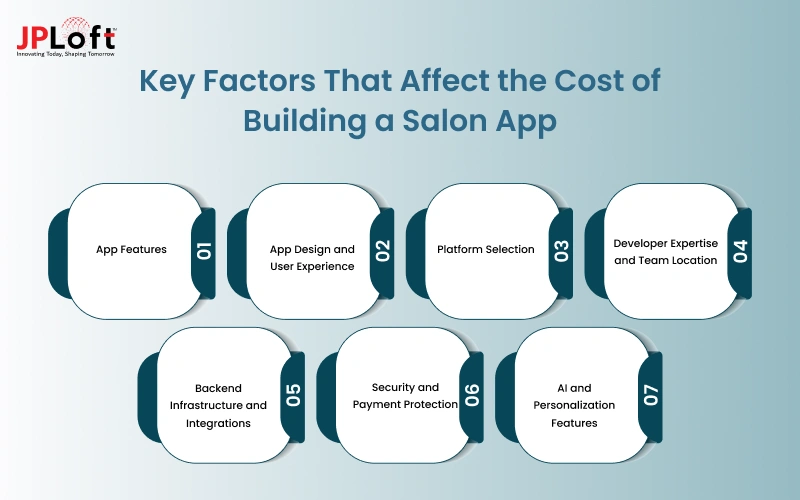
Here are the major factors that impact development costs.
Factor 1: App Features
The feature set is one of the biggest cost drivers. Basic salon apps only include appointment booking and payments. Advanced apps offer loyalty programs, AI suggestions, customer analytics, and membership systems.
Businesses exploring the best salon app features usually invest more in customer engagement and automation tools. The more features you add, the higher the development effort becomes.
|
Scope |
What It Includes |
Cost Impact |
|
Basic Features |
Booking, login, notifications |
Low |
|
Customer Features |
Reviews, loyalty rewards, coupons |
Medium |
|
Business Management |
Staff tracking, inventory, analytics |
High |
|
Advanced Automation |
AI recommendations and smart scheduling |
Very High |
Factor 2: App Design and User Experience
Design quality directly affects customer satisfaction and booking conversions. A clean interface helps users book services faster and improves app retention.
Professional UI/UX design services increase the budget because custom designs require detailed user flows, branding, and testing.
|
Scope |
What It Includes |
Cost Impact |
|
Standard UI Design |
Basic screens and layouts |
Low |
|
Custom Branding |
Personalized salon app visuals |
Medium |
|
Interactive Experience |
Smooth animations and transitions |
High |
|
Premium User Experience |
Personalized and immersive design |
Very High |
Factor 3: Platform Selection
The platform you choose changes the overall investment of a salon app. Building only for Android is more affordable than developing separate apps for Android and iOS.
Cross-platform development can reduce costs, but complex salon apps often require additional optimization for performance and security.
|
Scope |
What It Includes |
Cost Impact |
|
Single Platform App |
Android or iOS only |
Low |
|
Cross-Platform Development |
Shared codebase for both platforms |
Medium |
|
Native App Development |
Separate Android and iOS apps |
High |
|
Multi-Device Optimization |
Tablets and multiple screen sizes |
Very High |
Factor 4: Developer Expertise and Team Location
Developers' experience level also affects salon app pricing. Teams with beauty industry experience often deliver better app performance, scalability, and smoother user experiences.
At the same time, the cost to hire a mobile app developer in the USA is much higher than development rates in Asian countries. Experienced teams may cost more initially, but they often reduce long-term maintenance expenses.
|
Scope |
What It Includes |
Cost Impact |
|
Freelance Developers |
Small salon app projects |
Low |
|
Mid-Level Team |
Creation of standard salon app |
Medium |
|
Experienced Specialists |
Backend and cloud experts |
High |
|
Enterprise Development Team |
Large-scale salon platforms |
Very High |
Factor 5: Backend Infrastructure and Integrations
Salon apps rely on backend systems for bookings, payments, notifications, and customer data management. Strong infrastructure becomes essential when handling thousands of users daily.
Choosing the right salon app tech stack plays a major role in selecting cloud services, frameworks, and APIs. Third-party integrations also increase development time, customization requirements, and overall testing efforts.
|
Scope |
What It Includes |
Cost Impact |
|
Basic Backend Setup |
Booking and customer data storage |
Medium |
|
API Integrations |
Payment gateways and notifications |
Medium to High |
|
Cloud Infrastructure |
Scalable hosting and databases |
High |
|
Advanced Integrations |
AI and automation systems |
Very High |
Factor 6: Security and Payment Protection
Salon apps process customer profiles and online transactions. Security systems are necessary to protect payment details and user information.
Businesses focusing on how to secure a salon app usually invest in encrypted payments, secure APIs, and advanced authentication systems. These features increase the cost to build a salon app, but they improve customer trust and platform reliability.
|
Scope |
What It Includes |
Cost Impact |
|
Basic Security |
User login protection |
Medium |
|
Secure Payments |
Encrypted transactions |
Medium to High |
|
Data Protection Systems |
Cloud backups and security layers |
High |
|
Enterprise-Level Security |
Compliance and advanced protection |
Very High |
Factor 7: AI and Personalization Features
Modern salon businesses now use AI in salon apps for smart recommendations, automated scheduling, and customer behavior tracking. These advanced features improve user engagement and salon operations.
Businesses investing in AI-powered features usually require machine learning models, analytics systems, and automation tools. This increases the overall cost to develop a beauty salon app because AI features require additional development and testing.
|
Scope |
What It Includes |
Cost Impact |
|
Basic Automation |
Appointment reminders |
Medium |
|
Personalized Suggestions |
AI-based service recommendations |
High |
|
Customer Analytics |
User behavior tracking |
High |
|
Advanced AI Systems |
Intelligent salon automation |
Very High |
Hidden Costs in Developing a Salon App
Many businesses only estimate the initial design and development budget. However, the real cost to make a salon app often increases after the app moves closer to launch. Several hidden expenses appear during testing, scaling, feature updates, and long-term platform support.
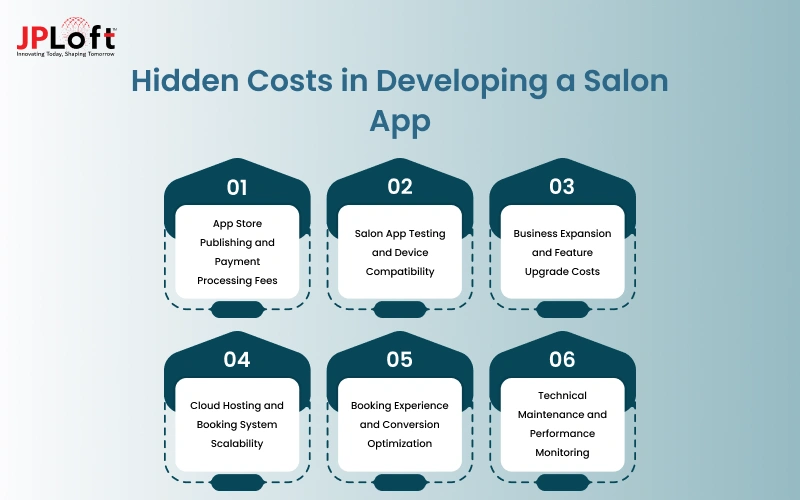
Understanding these hidden costs helps salon businesses plan budgets more accurately and avoid unexpected spending later.
1. App Store Publishing and Payment Processing Fees
Launching a salon app on the App Store and Google Play requires developer accounts and platform compliance. Payment gateways also charge transaction fees for every salon booking and online payment.
These recurring expenses may look small initially, but they become part of the long-term salon app development cost breakdown.
2. Salon App Testing and Device Compatibility
Salon apps must work smoothly during bookings, cancellations, and payment processing. Even minor bugs can affect customer trust and appointment completion rates.
Proper salon app testing requires multiple testing cycles across Android, iOS, tablets, and different screen sizes. This increases quality assurance and debugging expenses before launch.
3. Business Expansion and Feature Upgrade Costs
Salon businesses regularly introduce loyalty programs, festive offers, membership plans, referral systems, and new beauty services. These business upgrades require continuous app improvements after launch.
Professional app maintenance services help businesses add these new features without affecting booking performance or user experience.
4. Cloud Hosting and Booking System Scalability
As customer traffic grows, salon apps require stronger cloud infrastructure and scalable databases. Real-time appointment syncing and stylist availability management also increase backend usage.
These recurring infrastructure expenses become a major part of the long-term mobile app maintenance cost for growing salon businesses.
5. Booking Experience and Conversion Optimization
Customers expect quick bookings, smooth service selection, and fast checkout experiences inside salon apps. Slow booking flows often increase appointment drop-offs.
Businesses regularly optimize booking journeys, stylist selection, and checkout processes to improve customer conversions. These frontend improvements increase long-term development effort and operational expenses over time.
6. Technical Maintenance and Performance Monitoring
After launch, salon apps require continuous monitoring to maintain performance and stability. Businesses must regularly fix bugs, update APIs, and maintain compatibility with new operating systems.
Regular salon app maintenance helps prevent crashes, booking failures, and performance issues that can affect customer experience over time.
How to Reduce the Cost to Build a Salon App?
Reducing the cost of developing a salon app becomes easier with smart planning and feature prioritization.
Many startups overspend by adding unnecessary features early, while a focused development strategy helps control costs without affecting app quality or user experience.
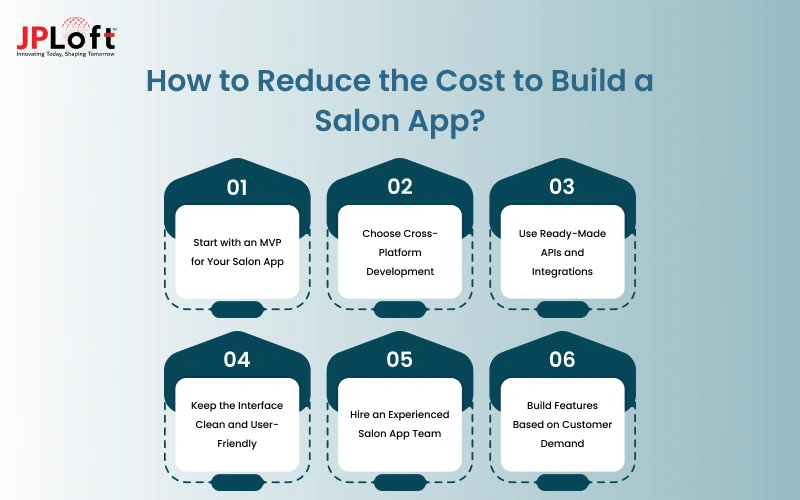
Here are practical ways to manage expenses effectively while building a scalable salon app.
#1: Start with an MVP for Your Salon App
Begin with essential features like appointment booking, salon profiles, payments, and notifications. Businesses learning how to create a salon app often start with an MVP to test customer demand before investing in advanced functionality.
This approach reduces initial development effort and speeds up market launch.
#2: Choose Cross-Platform Development
Cross-platform frameworks like Flutter and React Native allow businesses to launch Android and iOS apps using one codebase. This reduces development time and maintenance expenses significantly.
Many startups compare the overall mobile app development cost before choosing between native and cross-platform development.
#3: Use Ready-Made APIs and Integrations
Building payment systems, notifications, and maps from scratch increases development complexity. Using trusted third-party APIs reduces backend development effort and shortens launch timelines.
This strategy also helps businesses manage growing on-demand app development cost more efficiently.
#4: Keep the Interface Clean and User-Friendly
A simple layout improves customer experience while keeping development costs under control. Businesses often choose a practical salon app design to avoid heavy animations and complex visuals that increase frontend development time unnecessarily.
Simple booking flows also improve appointment completion rates and reduce user confusion.
#5: Hire an Experienced Salon App Team
Choosing an experienced development team reduces technical mistakes and costly rework later. Businesses often evaluate how much does it cost to hire app developers before selecting a development partner.
Experienced teams understand salon booking systems, customer expectations, and scalability requirements more effectively.
#6: Build Features Based on Customer Demand
Many startups fail because they invest heavily in features customers rarely use. Understanding user behavior helps businesses prioritize features that improve retention and bookings.
Researching why salon app startups fail can help businesses avoid unnecessary development expenses and make smarter product decisions.
If you are wondering how much does it cost to build a salon app, strategic planning and controlled feature development can significantly reduce long-term investment.
How Salon Apps Make Money?
Salon apps use multiple revenue streams beyond bookings to improve profitability. A strong monetization model helps businesses recover the cost to create a salon app over time.
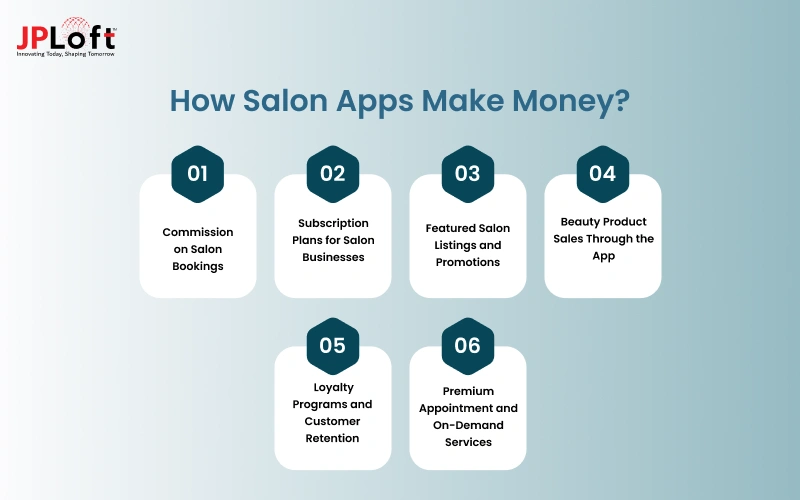
Understanding how salon apps make money also supports smarter investment and long-term growth planning.
1. Commission on Salon Bookings
Many salon apps charge a commission for every successful appointment booked through the platform. This model is common in multi-salon marketplaces and on-demand beauty apps.
The platform also earns a fixed percentage from salons or beauty professionals after each completed service.
Revenue Source: Booking commissions from salons and service providers.
2. Subscription Plans for Salon Businesses
Salon apps often offer subscription packages with advanced features like analytics, marketing tools, customer management, and staff scheduling.
Businesses exploring why their business needs a salon app usually prefer subscription models because they generate predictable monthly revenue.
Revenue Source: Monthly or yearly subscription fees.
3. Featured Salon Listings and Promotions
Salon businesses pay for premium visibility inside the app. Featured listings help salons appear at the top of search results and attract more bookings.
This strategy works especially well in competitive local markets with multiple salon businesses.
Revenue Source: Paid salon promotions and featured placements.
4. Beauty Product Sales Through the App
Many salon apps also sell beauty and skincare products directly to customers. Users often purchase recommended products while booking salon services.
In fact, combining salon services with beauty product commerce is one of the best salon app ideas for generating higher revenue.
Revenue Source: Product sales and transaction margins.
5. Loyalty Programs and Customer Retention
Modern salon apps use rewards, referral bonuses, and membership programs to increase repeat bookings. These strategies improve customer retention and long-term revenue.
Many platforms now use gamification in salon apps to encourage repeat engagement and increase customer activity.
Revenue Source: Higher repeat bookings and customer lifetime value.
6. Premium Appointment and On-Demand Services
Some salon apps charge additional fees for priority bookings, home salon services, or preferred stylist appointments. Customers pay more for convenience and faster scheduling.
Therefore, including premium booking options is the right approach for businesses learning how to create a salon appointment booking app. These features also help improve monetization opportunities.
Revenue Source: Premium booking charges and convenience fees.
A strong revenue strategy is an important part of any guide to salon app development cost because monetization directly impacts long-term business sustainability and return on investment.
.webp)
How Can JPLoft Help You Develop a Salon App Within Budget?
Building a salon app requires the right balance between features, scalability, and development budget. As a trusted salon app development company, JPLoft helps businesses build cost-effective salon apps without compromising quality or user experience.
Our team focuses on smart feature planning, scalable architecture, and efficient development processes to control the overall salon app budget.
Instead of adding unnecessary features, we prioritize tools that improve bookings, customer retention, and business management.
Whether you need a simple booking platform or an advanced salon marketplace, we create tailored solutions based on your business goals.
We also help businesses reduce the cost of making a salon app by using cross-platform technologies, optimized backend systems, and scalable cloud infrastructure.
From strategy to launch, JPLoft ensures your salon app investment delivers long-term business value.
Conclusion
The final salon app development cost depends on several important factors, including app features, platform choice, design quality, integrations, and long-term scalability.
A simple salon booking app requires a smaller investment, while advanced platforms with AI, automation, and multi-salon management need a larger budget.
Businesses that plan features carefully and focus on customer needs often reduce unnecessary development expenses.
If you are still wondering how much does it cost to create a salon app, the answer depends on your business goals and app complexity. Most salon apps typically range between $10,000 and $80,000 or more based on customization needs.
A well-planned salon app not only improves customer experience but also creates long-term business growth opportunities.
FAQs
The cost usually ranges between $10,000 and $80,000 or more. The final budget depends on app features, platform selection, design complexity, integrations, and scalability requirements for the salon business.
Advanced features like AI recommendations, multi-salon management, loyalty programs, real-time booking, and on-demand beauty services increase development costs significantly. These features require stronger backend systems, additional testing, and more development hours.
A basic salon booking app may take around 2 to 4 months to develop. Advanced salon marketplace apps with custom features and integrations can require 6 months or more, depending on project complexity.
Yes, cross-platform development helps reduce development and maintenance expenses. Frameworks like Flutter and React Native allow businesses to build Android and iOS apps using one shared codebase, reducing overall project timelines and costs.
Salon apps need regular updates for security, booking performance, payment systems, and operating system compatibility. Continuous maintenance also helps businesses add new features, improve customer experience, and keep the platform stable as user traffic grows.

Priyanka Sukhwal is the Managing Director and Business Head of JPLoft, a results-driven leader with 10+ years of experience steering technology ventures and business growth. Her strategic acumen and deep understanding of digital markets and on-demand solutions have consistently translated into innovations that help businesses scale, evolve, and lead in competitive landscapes.



Share this blog