


The EV charging app market is expected to cross USD 255,218.5 Million by 2033, with a CAGR of 40.5%. Such a massive industry growth projection reflects why the entrepreneurs need to invest in EV charging apps.
But simply stepping into the industry blindfolded is not the right decision to make. You need to do thorough planning to identify opportunities as well as potential mistakes in EV charging app development.
Being aware of these challenges or mistakes can help you plan for a safe and scalable EV charging solution. In this blog, we will discuss the common mistakes in EV charging app development, as well as the best practices to overcome these mistakes.
EV Charging App Market Overview
Understanding “what mistakes to avoid in an EV charging app?’ is further important considering the market growth potential. Let’s focus on the key industry statistics that justify such industry growth and scalability.
-
The global EV charging infrastructure market continues to accelerate, and is projected to grow 25–27% annually over the next decade.
-
For the U.S. market specifically, the EV charging infrastructure market value stands at USD 6.41 billion in 2025 and is expected to reach USD 24.1 billion by 2030 at a 30% CAGR.
-
Growth in fast-charging is particularly notable. In Q2 2025, 63% of newly deployed DC fast chargers (DCFC) in the U.S. had a capacity of 250 kW or more.
-
It is projected that by 2030, the total number of charging points is expected to reach 35 million, reflecting a strong growth in the EV charging infrastructure.
These statistics reflect the potential expansion that has been planned or is expected to take place in the EV charging space. Hence, to ensure your app stays ahead of these trends, it is important to take note of the common EV charging app mistakes and plan to eliminate them.
Common Mistakes To Avoid When Developing an EV Charging App
An EV charging app must work smoothly from the moment a user opens the app to the moment they drive away after charging. Many apps look complete at first, but break down because of hidden technical gaps or common mistakes when building an EV charging app.
These gaps affect trust, daily use, and the travelling experience of the users. Hence, understanding these mistakes helps developers build an app that delivers a better experience.
Mistake 1: Not Showing Live Charger Status
One of the most common reasons why EV charging apps fail is outdated charger information. Many EV charging apps do not show the real-time status of a charger because they skip proper hardware communication or rely on slow data refresh.
EV chargers use protocols like OCPP to share live updates on availability, faults, and power levels. When the app does not read or process this data correctly, drivers reach chargers that are busy or offline.
Mistake 2: Poor Charging Session Flow
An EV charging session is not just plug-n-play, but it involves steps like authentication, charger handshake, session start, power delivery, and billing. But failing to address these challenges smoothly is among the key mistakes to avoid when developing an EV charging app.
This usually happens when the backend is not optimized, or the app is not tested with different charger types, firmware versions, and connector standards. A stable session flow requires proper session tracking, hardware communication, and server reliability.
Mistake 3: Not Focusing On Payment Setup
EV charging payments need to be safe and secure, and should offer a comprehensive experience to the users rather than just providing them with payment options.
Developers often make mistakes when building an EV charging app, which includes skipping secure tokenization, wallet systems, and fast payment gateways. Some apps also fail to support session-based billing, per-minute pricing, or dynamic pricing, which many U.S. charging networks use.
Mistake 4: Unclear Maps and Route Planning
Another mistake developers make in EV charging apps is using low-quality map integrations or outdated location data to save on the cost of developing an EV charging app. These maps are important as they guide the users to the charger.
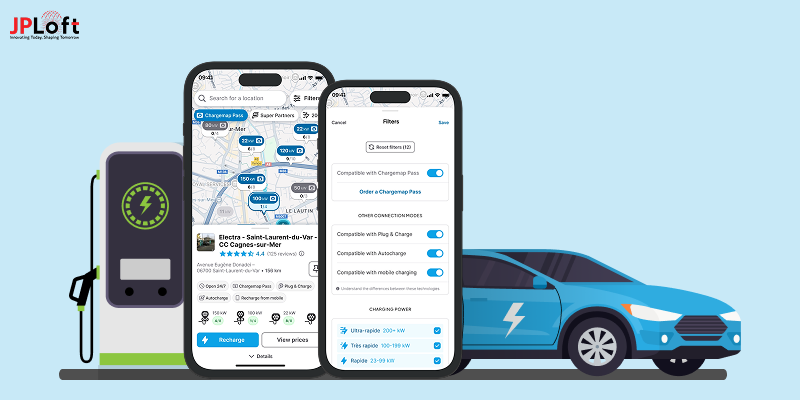
Along with unclear maps, missing features like charger filters, connector type filters, or real-time traffic details make route planning more challenging. Such weak map SDK setups or poor handling of GPS data further result in technical challenges and barriers to app scalability.
Mistake 5: Ignoring Smart Charging Features
Among the mistakes to avoid when building an EV charging app is skipping the integration of smart charging features. These features help users plan for the charging schedule and can save on charging costs.
But despite such, most modern-day charging apps ignore features like scheduling, peak-hour alerts, or home-energy sync. Without smart charging, the app feels basic and less helpful for long-term use.
Mistake 6: Not Supporting Different Chargers and Networks
Not every EV charging station or EV supports a common or standard charger type. Also, with the charger variation, the charging speed and the overall charging system vary, which includes diverse networks, hardware brands, and connector types.
Hence, ignoring OCPP, OCPI, or other interoperability standards limits where the app can function. An EV app should be able to connect with Level 2, DC fast chargers, and network partners. Ignoring this is among the key mistakes developers make in EV charging apps.
Mistake 7: No Clear Monetization Approach
Most EV charging app offers a free trial or other discount options to users when they first join the app. But it should be for a limited time, and the app should have a proper approach that defines how to monetize the app.
Such is important to plan for revenue from the app, which can further support the app's scalability, maintenance, and further upgrades. Hence, ignoring these approaches can impact the long-term scalability and growth of the EV charging app.
Mistake 8: Weak Security Measures
A user only adopts an EV charging app when they feel the platform is safe to use and will protect their data from any unauthorized access. EV apps handle sensitive data like payments, locations, and saved cards. When developers skip encryption, secure login, or fraud checks, the app becomes unsafe.
Some apps also fail to protect communication between the app and the charger, which exposes session details. Strong security builds trust and protects the app from threats.
Mistake 9: No Support in Low Network Areas
Along with the mentioned EV app development mistakes, developers often fail to pay attention to the low-signal areas. They plan for the app to work seamlessly in cities or areas with a proper network. But drivers often travel through low-signal regions.
Apps that depend only on live internet stop working when coverage drops. Failing to add offline maps features, as well as a backend that supports cached charger details and saved routes, impacts the app’s usability
Mistake 10: Ignoring Fleet User Needs
If you are listing down “what mistakes to avoid in an EV charging app,” then skipping the fleet owner requirement is a key mistake to consider.
But designing an app for the fleet operators is not just as for regular users. They expect dashboards, multi-user access, session history, and billing control. Apps that skip these requirements lose a major business audience, especially as more target audiences are shifting to electric fleets.
Mistake 11: Incompetent Testing
As mentioned, EV chargers and infrastructure vary in power levels, firmware, connectors, and behavior. Following this, the developers plan for multi-charger support, but an electric vehicle app development mistake they make is testing for only one type of charger or one location; issues will appear later.
Such a mistake results in improper functioning of the app in a real-time scenario, where they face issues due to weather changes, low network/signal, different charger types, or any other difference.
Mistake 12: Overlooking Future Trends
The EV industry is moving toward Plug and Charge, bidirectional charging, AI-based recommendations, and home energy sync. Hence, a key mistake that is being made by the developers is overlooking these trends.
Apps that do not plan for these features fall behind quickly. Including support for standards like ISO 15118 and flexible APIs helps the app stay future-ready.
Best Practices To Overcome EV Charging App Mistakes
So till now, you must have understood the key mistakes to avoid when creating an EV charging app. These mistakes are not only for the developers, but also the entrepreneurs need to be aware of to have a reliable and scalable EV charging app.
Building a reliable EV charging app requires the right mix of user-focused features and strong technical planning. Such ensures that the app becomes smoother, safer, and more dependable in real-world charging conditions.
1. Ensure Real-Time Data Sync
Build an EV charging app that stays connected with the charger through stable protocols like OCPP 1.6 or OCPP 2.0.1. Such a real-time connection ensures that the app gets live updates about charger status, faults, connector power, and session events.
Real-time data refresh and a responsive backend help display correct information, avoid outdated charger details, and hence overcome the EV charging app mistakes.
2. Stabilize Charging Sessions
A strong session flow depends on proper authentication, handshake, and session tracking. Developers should test with different charger brands, firmware versions, and connector types to confirm compatibility.
Building an EV charging app with a reliable backend with clear API handling reduces session drops and improves the charging experience.
3. Strengthen Payments
As identified, another reason why EV charging apps fail is the lack of payment infrastructure. Hence, it is recommended to invest in secure tokenization, PCI-compliant gateways, and encrypted processing.
The app should support various pricing models such as per kWh billing, per minute billing, and dynamic pricing. A clear payment flow reduces errors and builds trust during checkout.
4. Upgrade Navigation Tools
In the development phase of an EV charging app, it is recommended that you implement high-quality map SDKs, strong GPS handling, and accurate charger coordinates.
Also, at this stage, a convenient approach is to connect with filters for connector type, charging speed, and network, and add APIs that can get real-time traffic data and cleaner routing logic.
Such approaches ensure better planning for mistakes to avoid when developing an EV charging app and have a secure and scalable app.
5. Implement Smart Charging Features
A common reason why EV charging apps fail is due to their inability to align with the current industry trends.
A key trend to focus on is smart charging features. Such a feature integration allows the app to support scheduled charging, off-peak reminders, and home-energy sync.
Further, integration with standards like ISO 15118 prepares the app for Plug and Charge and bi-directional charging as they grow in adoption.
6. Diverse Charger Support
The scalability and adaptability of an EV charging app depend on its compatibility with diverse charging modules.
The app should work across Level 1, Level 2, and DC fast chargers. Supporting OCPP and OCPI ensures smooth communication with different networks and hardware brands.
This expands coverage and helps users charge anywhere without facing compatibility issues, and helps developers overcome EV app development mistakes.
7. Plan for Scalability
Building an EV charging app is not a short-term goal or a limited audience, but being stuck to such a limited time goal is one of the mistakes developers make in EV charging apps.
The EV charging app needs to be scalable and use cloud infrastructure, load balancing, and real-time monitoring. Such a solid backend developed from the initial stage prevents app slowdowns when user numbers grow or new charging stations are added.
Also, the fast APIs and efficient caching help the app perform well during peak usage. Looking for reliable app maintenance services can further help keep an eye on such requirements.
8. Increase Security
Mobile app security is not an option for the EV charging app, but an EV app needs to protect both app data and charger communication.
Hence, to overcome the common mistakes when building an EV charging app, developers need to focus on strong encryption, secure login, and fraud detection tools.
Protecting session data and payment information reduces risks and builds confidence among users.
9. Build Fleet-Friendly Tools
To ensure the safety and scalability of an EV charging app, it is important to ensure that the app aligns with diverse users’ expectations and needs. Hence, to expand such scalability, the EV charging app should have fleet management features.
Fleet operators need a dashboard, usage insights, group billing, and multi-driver access. Adding these tools expands the user base and supports commercial EV adoption. You can hire mobile app developers to integrate these features.
10. Prepare For Future Trends
Being stuck to the current trends and requirements is another mistake to avoid when creating an EV charging app. Rather than that, focus on the long-term app scalability.
Focus on the current as well as the future trends of EV Charging apps, and while doing so, don’t skip the app testing. Testing should cover different charger types, weather changes, network strengths, and firmware versions.
Real-time scenario mobile app testing ensures the app performs reliably across regions and avoids failures that appear only after launch.
Industry Examples Of What Real EV Charging Apps Got Wrong?
Real-world failures in the EV charging space make one thing clear. For the best EV charging apps, a good UI is not enough. The wrong technical and business decisions at the development level can shut down the app forever.
Here are a few industry examples that show what mistakes to avoid in an EV charging app when you build your own platform.
Case Study 1: Enel X Way – When a Closed Ecosystem Backfires
In late 2024, Enel X Way announced it was shutting down its North American EV charging business. Overnight, the JuiceBox app and cloud backend that powered thousands of home and commercial chargers stopped working.
What went wrong?
-
The key mistake in the EV charging app development process was that the entire experience depended on one proprietary backend and one mobile app.
-
Commercial sites lost access control, billing, and energy management once the cloud was turned off.
The hidden “mistakes” behind the shutdown:
-
Heavy reliance on a closed stack with no fallback to another CSMS or roaming partner.
-
No clear end-of-life plan for users or site hosts.
-
Poor communication and very short notice, which created huge backlash in user communities and among installers.
Key takeaways from Enel X Way EV app development mistakes:
-
Design around open standards (OCPP, OCPI) so you can switch backends if needed.
-
Make sure essential features (start/stop, billing, access control) have at least one non-app fallback: RFID, payment terminal, or web portal.
-
Plan a deprecation and migration path from day one, even if you never need it.
Case Study 2: Volta – “Free Charging” Without a Real Monetization Engine
Volta built a highly visible US charging network where many Level 2 sessions were free, funded by large digital ad screens at the stations. The app helped drivers find and use those chargers.
In 2025, after being acquired by an oil major, Volta’s network started being shut down and dismantled in multiple states.
What went wrong?
-
The core model relied heavily on ad revenue from digital signage.
-
As hardware, installation, and maintenance costs climbed, the economics stopped making sense at scale.
-
Once the parent company refocused on faster, higher-margin charging sites, the Volta footprint was no longer strategic.
The mistakes:
-
The mistakes in EV charging app development were the lack of diversified revenue. Hence, the ads and brand partnerships alone couldn’t carry the network.
-
Limited focus on EV driver–centric features like smart routing, pricing transparency, and loyalty that could have supported premium tiers.
Key takeaways for your app:
-
Plan for monetization logic early, from paid sessions, subscriptions, fleet contracts, parking bundles, to energy management services, or all of the above.
-
Avoid building your entire product story around “free charging” unless the math is bulletproof.
Case Study 3: Shell Sky – Misaligned Product Strategy
Shell provided a white-label platform (Shell Sky) and app-led experience for third-party sites in North America: apartments, workplaces, hotels, etc. In 2024–2025, Shell decided to exit that part of the market and switch off Shell Sky for those external networks.
What went wrong?
-
Property owners and operators depended on Shell’s software for billing, access control, and reporting.
-
When the platform was decommissioned, they had to migrate to a new CSMS and often a new app experience for drivers.
The mistakes from a product perspective:
-
White-label strategy without long-term clarity, hence the software offering was not truly core to the parent’s roadmap.
-
The app had a limited focus on end-user continuity. The drivers had to re-download apps, re-register, or change behavior.
Key takeaways for your app:
-
If your platform will serve third-party hosts, the product strategy has to be long-term and clearly funded.
-
Ensure your mobile app design and backend are simple so you can plug into other roaming networks and payment providers.
How JPLoft Can Help Overcome Challenges?
JPLoft helps businesses build EV charging apps that work smoothly in real situations and stay ready for future growth. The team focuses on strong technical planning, clear user experience, and reliable communication between the app and charging hardware.
By working with OCPP-supported chargers and real-time data systems, JPLoft makes sure the app shows the correct charger status and handles sessions without delays.
At JPLoft, an experienced EV charging app development company, we focus on every potential mistake that may arise during the development process. From ensuring charger compatibility to payment setup and route planning, our developers ensure every feature is tested in real-life conditions.
Also, the team at JPLoft keeps a constant eye on the emerging EV charging app trends to ensure that the app stays relevant in the current as well as the future scenario. By using flexible APIs and modern standards, JPLoft prepares the app for future EV features and long-term success.
Conclusion
Building an EV charging app requires more than basic features. It demands careful planning, strong technical work, and a clear understanding of how users charge their vehicles in daily life.
When developers avoid common mistakes when building an EV charging app and follow the right best practices, the app becomes smoother, safer, and more reliable. This creates a better charging experience and builds trust with every user.
Further, with the expansion of the EV industry, users expect apps that respond quickly, show accurate information, and stay ready for new features. EV charging apps that focus on quality from the initial development phase stand out and deliver long-term value.
With the right development approach and the support of an experienced team like JPLoft, creating a stable and future-ready EV charging app becomes a much simpler and more successful journey.
FAQs
The common issues include the absence of a live charger status, interrupted session flow, payment security gaps, and complicated navigation. These are not just common development mistakes, but can significantly impact the user experience and your app's scalability.
The practical ways to overcome the mistakes in EV charging app development include using flexible APIs, modern standards, and planning a scalable backend. These aspects support upcoming EV technologies without major changes.
Smart charging is one of the essential features of the EV charging app that helps user plan their charging schedule, save on costs, and manage energy better. These features make the app more helpful in daily use, and hence, implementing it can help overcome key mistakes.
Supporting open standards like OCPP and OCPI helps the app connect with Level 1, Level 2, and fast chargers. This gives users more options and reduces compatibility problems.
You can improve accuracy by using standards like OCPP, keeping data in sync, and testing the app with different chargers and networks. This helps the app show correct information at all times.

Meet Yashwant, the CTO of JPLoft. With 18+ years of industry experience, he brings deep technical expertise and visionary leadership to complex digital challenges. From scalable software architectures to emerging technology implementations, Yashwant drives innovation that empowers businesses across diverse industries to build future-ready, secure, and high-performing digital solutions.


Share this blog