



Key Takeaways:
The cost to develop a job portal app ranges from $10,000 to $150,000+, depending on the app complexity.
A successful platform must include essential and advanced features to improve user experience and hiring efficiency.
The time to build a job portal app typically ranges from 3 to 6+ months based on complexity.
Choosing the right tech stack ensures better performance, scalability, and long-term success.
- Partnering with experts like JPLoft helps you build a reliable and scalable job portal app efficiently.
Hiring is changing fast, and businesses that adapt early gain a clear edge. The global online recruitment technology market is projected to grow from USD 17.48 billion in 2026 to USD 46.07 billion by 2034, at a CAGR of 12.90%.
This rapid growth highlights the rising demand for digital hiring solutions. Companies are investing in job portal apps to streamline recruitment, reach wider talent pools, and reduce hiring time.
For investors, this space offers strong scalability and long-term returns. If you plan to enter this market, having the right strategy is key to standing out from the competition.
This job portal app development guide will help you understand the process, key features, and business opportunities to build a successful platform.
What is a Job Portal Application?
A job portal app is an online platform that connects employers with job seekers. Businesses use it to post job openings, while candidates use it to search and apply for jobs.
It simplifies the hiring process by bringing both sides together in one place. Many companies create a job portal app to speed up recruitment and reach a wider audience.
How a Job Portal App Works?
The workflow of a job portal app is simple and structured, allowing job seekers and recruiters to interact smoothly on a single platform.
For Job Seekers:
-
Sign up and create a profile
-
Upload resume and add skills
-
Search jobs using filters
-
Apply for suitable jobs
-
Track application status
For Recruiters:
-
Register and create company profile
-
Post job openings
-
Review candidate applications
-
Shortlist and contact candidates
-
Schedule interviews and hire
This simple process helps businesses and users save time while also giving a clear idea of how to make a job portal app efficiently.
Types of Job Portal Apps to Consider
Different types of job portal apps serve different hiring needs, so understanding how to create a job portal app based on your business goals is important.
|
Type of Job Portal App |
Description |
Best For |
|
General Job Portals |
These platforms list jobs across multiple industries and roles. They attract a large audience and offer high visibility for employers. |
Businesses targeting a wide user base |
|
Niche/Job-Specific Platforms |
These apps focus on a specific industry, skill, or job category, like healthcare or IT. They provide more targeted hiring results. |
Companies hiring for specialized roles |
|
Freelance & Remote Job Apps |
These platforms connect freelancers with short-term or remote work opportunities. They support flexible hiring and access to global talent. |
Startups and businesses need a flexible workforce |
Key Features to Include in a Job Portal Application
To build a successful platform, you must understand how to develop a job portal app with the right mix of user, recruiter, admin, and advanced features.
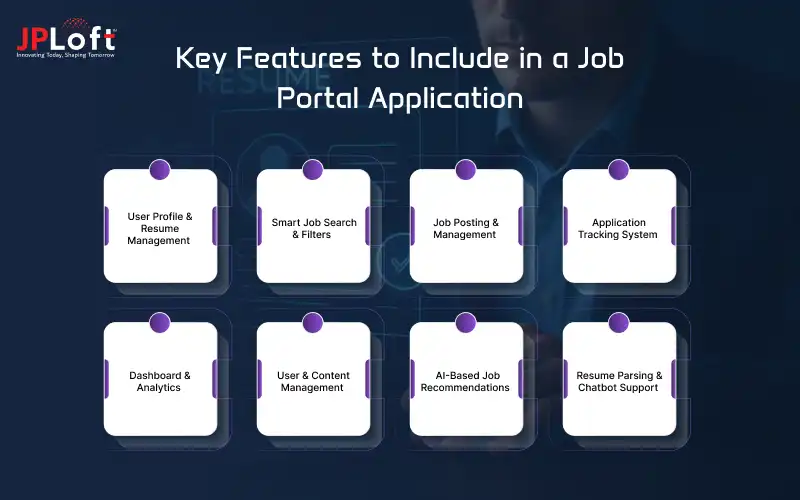
Below are the top app features to consider when choosing a job portal platform.
1. User Profile & Resume Management
Users can create profiles, upload resumes, and showcase skills. This helps recruiters quickly review candidate details and match them with job roles.
2. Smart Job Search & Filters
Advanced search options allow users to find jobs based on location, skills, experience, and salary. This improves user satisfaction and engagement.
3. Job Posting & Management
Recruiters can post job openings, edit listings, and manage applications. This feature helps businesses streamline the hiring process.
4. Application Tracking System
This feature allows recruiters to track applications, shortlist candidates, and manage the hiring pipeline efficiently.
5. Dashboard & Analytics
Admins get a centralized dashboard to monitor platform activity, user growth, and job performance. It helps in making better business decisions.
6. User & Content Management
Admins can manage users, job posts, and content. This ensures platform quality and prevents spam or misuse.
7. AI-Based Job Recommendations
The system suggests relevant jobs to users based on their profile and behavior. This improves matching accuracy and user retention.
8. Resume Parsing & Chatbot Support
Resume parsing extracts key details automatically, while AI chatbots assist users with instant responses. These features enhance efficiency and user experience.
Complete Job Portal App Development Process
A clear and structured approach helps businesses plan and build a scalable app efficiently while reducing risks and development delays.
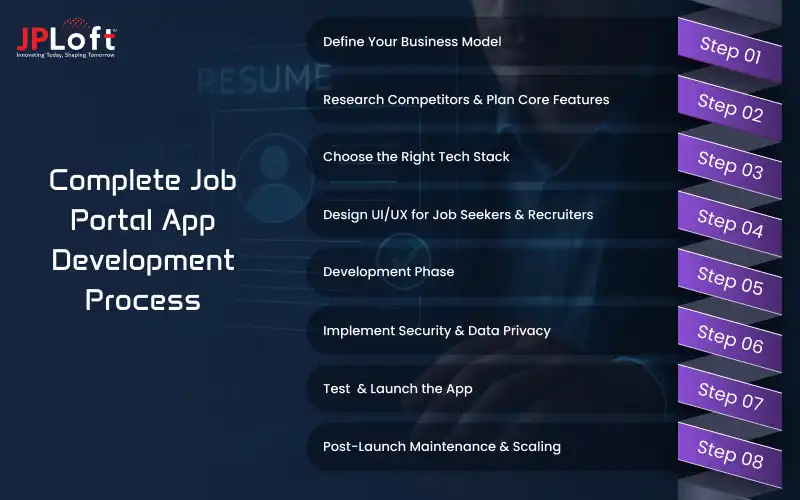
Below are the development steps for a job portal platform.
Step 1: Define Your Business Model
Start by identifying your target audience and revenue strategy to build a strong foundation for your platform.
-
Identify Target Audience: Define whether you serve job seekers, recruiters, or niche industries to align features and services with their specific hiring needs and expectations clearly.
-
Choose A Monetization Model: Select between freemium, subscription, or pay-per-post models to ensure steady revenue while offering value-driven services to both recruiters and candidates effectively.
Step 2: Research Competitors & Plan Core Features
Do proper market research to analyze existing platforms and define features that make your app competitive.
-
Analyze Top Job Portals: Study platforms like LinkedIn or Indeed to understand their strengths, user flow, and features that drive engagement and successful hiring outcomes consistently.
-
List Must-Have Vs. Advanced Features: Separate essential features from advanced ones to prioritize development, control costs, and ensure a smooth user experience from the initial launch stage.
Step 3: Choose the Right Tech Stack
Select the right tech stack that supports performance, scalability, and future growth of your application when you plan to make a job portal app successfully.
-
Frontend, Backend, Database, & Cloud: Choose reliable technologies for each layer to ensure fast performance, secure data handling, and seamless user experience across devices and platforms.
-
Native vs. Cross-Platform Development: Decide between native and frameworks like React Native or Flutter based on budget, performance needs, and desired reach across multiple operating systems.
Step 4: Design UI/UX for Job Seekers & Recruiters
Create a simple and engaging app design that supports smooth navigation for all users.
-
User Journey Mapping: Map how job seekers and recruiters interact with the app to remove friction and improve usability at every step of the hiring process.
-
Wireframing & Prototyping: Build app wireframes and prototypes to visualize layouts, test ideas early, and ensure the final design effectively meets user expectations and business goals.
Step 5: Development Phase
Begin building the application by turning design and plans into a functional product as you develop a job portal app step by step.
-
Set Up The Development Environment: Configure tools, frameworks, and environments to ensure smooth collaboration, version control, and efficient development workflow across the entire project lifecycle.
-
Server-Side Logic & Database: Implement backend logic, APIs, and database structure to securely and efficiently manage user data, job listings, and interactions across the platform.
-
Third-Party Integrations: Integrate services such as payment gateways, email notifications, and analytics tools to enhance functionality, improve overall user experience, and operational efficiency.
Step 6: Implement Security & Data Privacy
Ensure user data is protected and the platform meets required app security standards when you create a job app for real users.
-
Data Encryption & Compliance: Apply encryption methods and follow regulations like GDPR to protect sensitive user data and maintain trust while handling personal and professional information securely.
-
Secure Login (2FA): Implement two-factor authentication to add an extra layer of security, reducing the risk of unauthorized access and protecting both user and recruiter accounts.
Step 7: Test & Launch the App
Test the application to ensure it performs well under different conditions and scenarios.
-
Functional, Performance, & Security Testing: Conduct app testing to identify bugs, improve speed, and ensure the platform handles user data securely without crashes or performance issues.
-
App Store / Play Store Submission: Publish the mobile app on the Play Store or submit it to the App Store by following the guidelines to reach a wider audience and ensure smooth installation and accessibility.
Step 8: Post-Launch Maintenance & Scaling
Continuously improve and scale your app based on performance and user feedback using trusted app maintenance services.
-
Monitor Performance: Track app performance, uptime, and user behavior to identify issues early and maintain a smooth and reliable experience for all users.
-
Gather Feedback & Updates: Regularly collect user feedback and release updates to improve features, fix issues, and keep the platform aligned with evolving market needs and expectations.
Breakdown of Cost to Develop a Job Portal App
The cost to build a job portal app usually ranges from $10,000 to $150,000+, depending on features, design, and complexity.
The cost to create a mobile app varies based on functionality, where basic apps cost less and advanced platforms require higher investment. Understanding cost factors helps businesses plan better and avoid unexpected expenses.
|
App Complexity |
Estimated Cost Range |
Description |
|
Basic App |
$10,000 – $25,000 |
Includes core features like user profiles, job search, and job posting with simple UI and limited scalability. |
|
Medium App |
$25,000 – $75,000 |
Offers advanced filters, dashboards, notifications, and better UI/UX with moderate scalability and integrations. |
|
Advanced App |
$75,000 – $150,000+ |
Includes AI features, analytics, real-time updates, and high scalability with strong security and custom integrations. |
Challenges in Building a Job Portal App & Its Solutions
When planning how to develop a job portal app, you must address challenges that can impact user experience, platform trust, and overall performance.
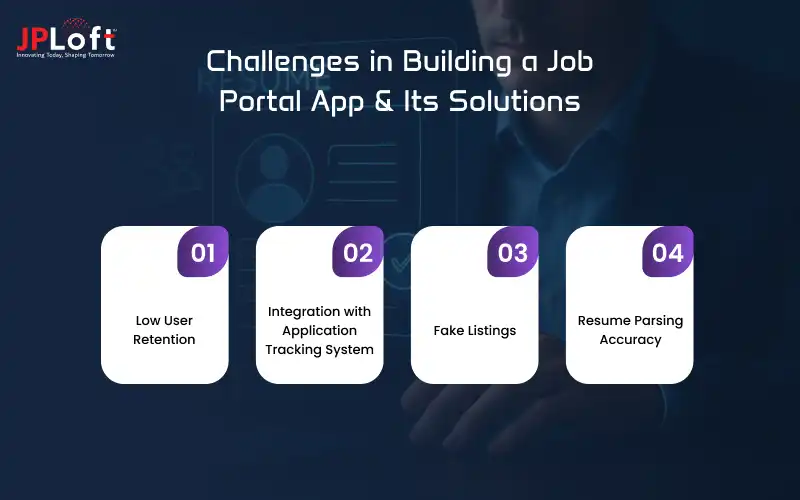
Addressing these app development challenges early helps ensure long-term success and scalability.
Challenge 1: Low User Retention
Many users leave the platform if they do not find relevant jobs or face a poor experience. Lack of engagement features and personalization often leads to reduced retention rates.
Solution: Hire dedicated developers to improve user engagement with personalized recommendations, notifications, and smooth UI.
Challenge 2: Integration with Application Tracking System
Integrating with external ATS platforms can be complex due to compatibility and data synchronization issues. This can slow down recruitment workflows.
Solution: Use standardized APIs and ensure proper backend architecture to enable smooth integration with third-party systems and improve hiring efficiency.
Challenge 3: Fake Listings
Fake or spam job postings reduce platform credibility and can harm user trust. This issue can lead to fewer active users and lower engagement.
Solution: Working with a reliable software development company can help implement strict verification processes, AI-based moderation, and reporting systems.
Challenge 4: Resume Parsing Accuracy
Incorrect parsing of resumes can lead to poor job matching and missed opportunities for candidates. This affects both recruiters and job seekers.
Solution: Use AI and NLP-based parsing tools to extract accurate data from resumes and improve matching results for better hiring outcomes.
Why Choose JPLoft to Build a Job Portal App?
Choosing the right development partner is key to turning your idea into a successful platform. JPLoft stands out as a trusted job portal app development company for businesses looking for an app with high performance and scalability.
With 15+ years of experience in developing an app, the team understands the complete job portal app development process and delivers solutions tailored to your business needs.
JPLoft focuses on creating user-friendly designs, strong backend systems, and advanced features like AI-based recommendations and secure integrations. Their agile approach ensures faster development, transparent communication, and timely delivery.
Whether you want to create a job portal app for a niche market or a large audience, they provide end-to-end support from planning to post-launch maintenance.
By combining technical expertise with business understanding, JPLoft helps you develop a job portal app that is reliable, scalable, and ready for future growth.
Final Words
The opportunity to build a job app in 2026 is stronger than ever, but success depends on how well you plan and execute. From choosing the right business model to selecting features and understanding how to build a job portal app, each decision directly impacts your platform’s growth.
This complete guide to develop a job portal app has shown how businesses can move from idea to execution with clarity. By focusing on user needs, advanced features, and a scalable approach, you can create a platform that stands out in a competitive market.
If you aim to build job portal apps that attract users and drive revenue, the key lies in combining smart strategy with the right technology. A well-built platform not only solves hiring challenges but also creates long-term business value.
FAQs
The cost to make a job portal app ranges from $10,000 to $150,000+, depending on features, design complexity, and development approach. Advanced apps with AI features cost more.
Key features include user profiles, job search filters, job posting, application tracking, an admin dashboard, and advanced tools like AI recommendations and resume parsing for better matching.
It usually takes 3 to 6+ months to make a job portal app. The timeline depends on app complexity, features, and development team expertise.
A strong tech stack includes React or Flutter for frontend, Node.js or Python for backend, and cloud platforms like AWS for scalability and performance.
Job portal apps earn through job posting fees, subscriptions, featured listings, advertisements, and premium services offered to recruiters and job seekers.

Rahul Sukhwal is the CEO and Founder of JPLoft, a visionary technologist with 18+ years at the forefront of emerging tech innovation and software engineering. He channels deep software engineering and AI expertise into building smarter, scalable solutions that shape how forward-thinking businesses worldwide harness the true power of AI.


Share this blog