


Key Takeaways:
A Zillow-like app simplifies property buying, selling, and renting through one easy-to-use digital platform.
Features such as property search, virtual tours, maps, and agent communication improve the overall user experience.
Choosing the right technology, security measures, and scalable architecture supports long-term platform growth.
Careful planning, market research, and continuous improvements help businesses build a competitive real estate platform.
Collaborating with JPLoft helps businesses build a Zillow-like real estate app that is scalable and user-friendly.
Why do some real estate apps become the first choice for millions of property buyers while others struggle to gain users?
The difference isn't just the number of listings. It lies in the experience they deliver, the problems they solve, and the value they create for every user.
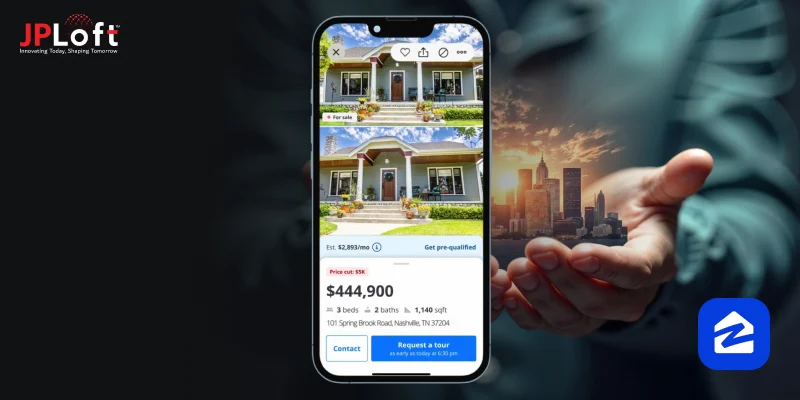
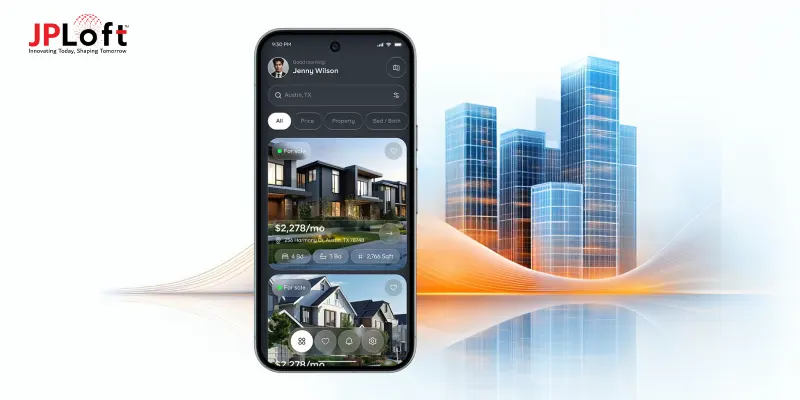
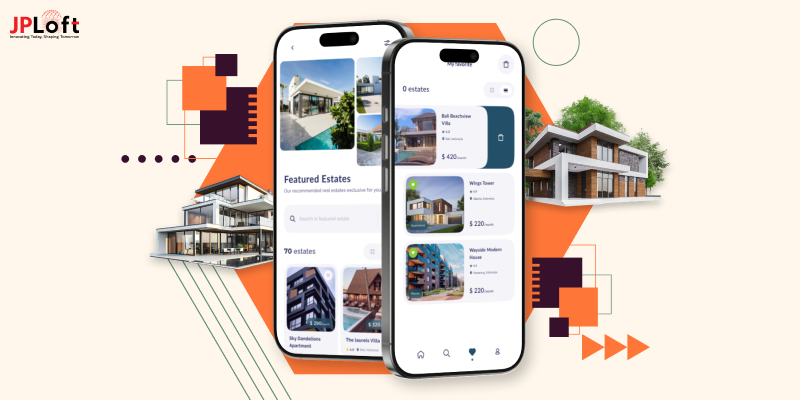
Zillow has redefined digital property search. It combines property listings, maps, virtual tours, and agent communication in one app.
That's why many businesses want to develop a real estate app like Zillow that attracts buyers, sellers, renters, and agents in one place.
However, Zillow like app development is about creating a complete property platform, not just displaying listings.
Every feature and technology decision plays a role in keeping customers engaged.
Therefore, this complete guide to develop an app like Zillow covers everything from essential features and development steps to costs and challenges, helping businesses build a high-performance platform.
Overview of the Zillow App
Zillow is a real estate app that helps users buy, sell, rent, and explore properties in one place. It has become one of the world's leading housing super apps.
Instead of visiting multiple websites, users can search thousands of properties, compare prices, explore neighborhoods, and contact agents from a single application.
The platform has also built a strong mobile presence, with 50M+ downloads, along with a 4.8-star rating from over 7.2 million users.
How Does the Zillow App Work?
Understanding how it works is the first step in learning how to develop a real estate app like Zillow that meets modern user expectations and business goals.
► Users download the app and sign up using their email, phone number, or social account.
► They enter a location and apply filters such as budget, property type, price range, and number of bedrooms.
► The app displays matching properties with photos, pricing, location details, property information, and agent contact details.
► Users explore listings through virtual tours, interactive maps, and neighborhood insights before making a decision.
► Users save favorite properties or contact agents to schedule a visit, ask questions, or continue the buying or renting process.
Finally, the Zillow app enables users to save searches and favorite listings, making it easier to track properties and continue their search later.
Why Invest in a Real Estate App Like Zillow?
Zillow reported $46 million profit in Q1 2026, nearly six times higher than the same period last year, highlighting the strong growth potential of digital real estate platforms.
This growth reflects the increasing demand for digital property solutions. Let’s explore the key reasons why investing in a Zillow clone app development is a smart business decision.
[A] Wider Business Reach
Traditional real estate businesses often rely on local visibility. By choosing to build a real estate app like Zillow, companies can connect buyers, sellers, landlords, and agents from different locations through one digital platform.
[B] Multiple Revenue Opportunities
A real estate platform can generate income from more than property listings. Businesses that make a real estate app like Zillow can earn through featured listings, premium subscriptions, lead generation, and mortgage partnerships.
[C] Better Customer Experience
Modern users expect a simple and transparent property search. To make an app like Zillow, businesses can offer interactive maps, virtual tours, mortgage calculators, saved searches, and instant notifications for a smoother experience.
[D] Data-Driven Business Decisions
User activity provides valuable insights into customer preferences and market trends. Businesses can develop apps like Zillow to track this data and make smarter business and marketing decisions.
[E] Competitive Advantage
The real estate market is becoming increasingly competitive. Businesses that build a real estate app like Zillow can stand out by offering greater convenience, faster communication, and efficient digital property management.
Now that you understand the business value, the next section is identifying the essential features to build apps like Zillow.
Essential Features for Building a Real Estate Platform
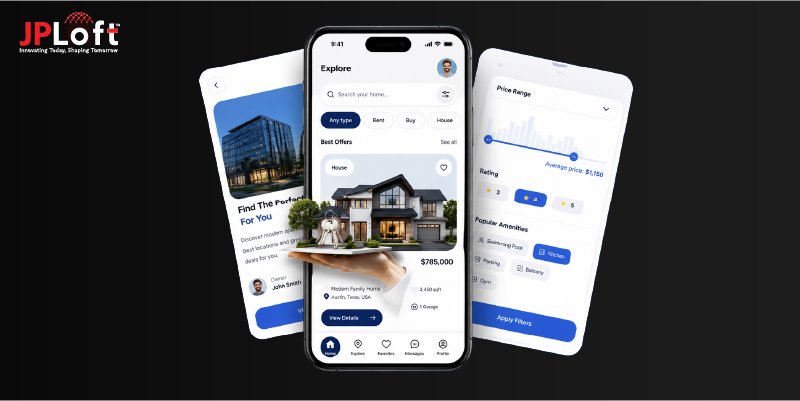
To build an app like Zillow, several key features are essential. Let’s explore these real estate app features in the given table.
|
Panel |
Feature |
Purpose |
|
User |
User Registration & Login |
Allow users to create secure accounts using email, phone number, or social login. |
|
Advanced Property Search |
Help users find properties using filters like location, budget, property type, and amenities. |
|
|
Property Listings |
Display complete property details with images, pricing, descriptions, and specifications. |
|
|
Virtual Property Tours |
Allow users to explore properties remotely through 360° tours and videos. |
|
|
Service Provider (Agent) |
Agent Registration & Profile |
Enable agents to create professional profiles with experience and contact details. |
|
Property Management |
Allow agents to add, update, and manage property listings easily. |
|
|
Lead Management |
Help agents organize customer inquiries and follow up with potential buyers. |
|
|
Appointment Management |
Allow agents to schedule, accept, or reschedule property visits. |
|
|
Admin |
Dashboard |
Provide a centralized view of users, listings, revenue, and platform performance. |
|
User & Agent Management |
Manage registrations, approvals, and account activities efficiently. |
|
|
Property Approval |
Review and approve property listings before they go live. |
|
|
Analytics & Reports |
Track user engagement, business performance, and platform growth. |
With the essential mobile app features in place, now let’s understand the complete process from planning to launch.
Step-by-Step Process to Create an App Like Zillow
Building a successful real estate platform requires careful planning. Below is the step-by-step process for Zillow like app development.
Step 1: Conduct Deep Market Research
Before you develop apps like Zillow, conduct detailed market research. This helps in understanding customer expectations and real estate app development trends that help to stand out from competitors.
► Target Audience: Identify your primary users, including home buyers, renters, property sellers, real estate agents, and investors.
► Competitor Research: Study your competitors to understand their strengths, weaknesses, and unique offerings.
► Market Validation: Conduct surveys, customer interviews, and industry research to validate demand and identify market opportunities.
Step 2: Plan Your UX/UI Design
When learning how to create a real estate app like Zillow, focus on delivering an intuitive user experience. Therefore, invest in professional UI/UX design services to create a simple, visually appealing platform.
► Wireframing: Create wireframes for property search, listing details, saved properties, and user dashboards before designing the interface.
► Prototyping: Build interactive prototypes using tools like Figma or Adobe XD and collect feedback before implementation.
► UI Design: Design separate dashboards for buyers, sellers, agents, and administrators while maintaining a consistent user experience.
Step 3: Choose the Right Tech Stack
The app tech stack determines your platform's speed, security, scalability, and future flexibility. Therefore, to develop an app like Zillow, choose technologies that support business growth.
► Mobile App: Use Flutter or React Native to build applications for both Android and iOS from a single codebase.
► Backend & Database: Choose Node.js, .NET, or Python with PostgreSQL or MongoDB to manage users, listings, and transactions efficiently.
► Cloud & Security: Deploy the platform on AWS, Microsoft Azure, or Google Cloud with advanced security and automatic scaling capabilities.
Step 4: Development & API Integration
In this stage, businesses that want to create a real estate app move from a design file to a real working product.
► Property Listing System: Build features for property uploads, search filters, virtual tours, mortgage calculators, and saved listings.
► User & Agent Dashboard: Allow buyers, sellers, and agents to manage profiles, property listings, appointments, and inquiries.
► Third-Party Integrations: Connect Google Maps, payment gateways, CRM systems, MLS databases, chat services, and push notifications.
Step 5: Test Thoroughly Before Launch
Mobile app testing helps in ensuring every feature works properly before users access the platform, making it an essential step in how to build a real estate app like Zillow.
► Functional Testing: Verify property search, filters, payments, messaging, maps, and appointment scheduling.
► User Acceptance Testing: Let real users test the application and identify usability issues before launch.
► Performance & Security Testing: Evaluate loading speed, scalability, data protection, and payment security under different traffic conditions.
Step 6: Deploy, Monitor, & Optimize
Continuous improvements help businesses to build apps like Zillow that stay competitive and deliver a better customer experience over time.
► App Store Deployment: Publish the app on the Play Store and submit it to the Apple App Store after meeting all platform requirements.
► Performance Monitoring: Track user engagement, property searches, retention rates, and application performance using analytics tools.
► Regular Improvements: Release feature updates, fix reported issues, improve security, supported by ongoing mobile app maintenance services and performance optimization.
How Much Does it Cost to Develop an App Like Zillow?
The cost to make an app like Zillow ranges between $10,000 and $150,000+.
The final cost to create a real estate app depends on the number of features, supported platforms, third-party integrations, design complexity, and scalability requirements.
A simple application with basic property listings costs much less than a feature-rich platform that includes AI recommendations, virtual tours, mortgage calculators, and advanced analytics.
Therefore, businesses should define their requirements before estimating the overall budget.
After estimating the cost, businesses should prepare for the practical challenges involved in building a successful platform.
Common Challenges in Building a Real Estate App
Building a real estate app like Zillow comes with its own set of complexities that require careful planning. Let’s explore the common challenges to develop a real estate app.
Challenge 1: Managing Large Property Databases
Thousands of listings and documents generate large amounts of data.
Without proper optimization, users may experience slow searches and delayed loading times.
Businesses working on Zillow clone app development should design scalable database structures that maintain fast application performance.
Solution: Use cloud databases, indexing techniques, and assistance from the Google Cloud development services to improve search speed.
Challenge 2: Delivering Fast Property Search
Users expect search results within seconds.
Complex filters, map searches, and location-based recommendations can affect platform speed if not optimized properly.
Businesses learning how to build an app like Zillow should prioritize search performance during implementation.
Solution: Hire dedicated developers to implement optimized search algorithms, caching mechanisms, and intelligent filtering systems.
Challenge 3: Integrating Interactive Maps
Maps play a central role in property discovery.
Integrating maps with nearby schools, hospitals, public transport, and local amenities increases technical complexity.
Businesses planning to make a real estate app like Zillow should ensure mapping services remain accurate.
Solution: Use Google Maps, location intelligence, and geospatial databases to deliver reliable location experiences.
Challenge 4: Protecting User Data
Real estate platforms collect sensitive personal and financial information.
Poor security practices may lead to data breaches, legal issues, and customer distrust.
Businesses should implement strong encryption and best mobile app security practices in the process.
Solution: Use multi-factor authentication, encrypted databases, secure APIs, and role-based access controls.
Addressing these challenges is essential for businesses exploring how to make a real estate app like Zillow.
Why Choose JPLoft to Build an App Like Zillow?
Building a real estate platform takes careful planning and the right technical support.
As a trusted real estate app development company, JPLoft helps businesses turn their ideas into reliable and user-friendly real estate solutions.
If you want to make an app like Zillow, our team helps you plan every stage, from selecting the right features to creating a smooth user experience.
We build secure, scalable platforms that support your business as it grows.
Businesses looking to develop a real estate app like Zillow can rely on JPLoft for end-to-end support.
From design and testing to launch and ongoing improvements, our experts create a platform that performs well, supports your business goals, and delivers a better experience for buyers, sellers, and real estate agents.
Conclusion
Building a successful real estate app requires the right balance of planning, technology, and user-focused features.
Every decision in a Zillow like app development guide, from selecting essential functionalities to choosing a scalable architecture, influences the platform's long-term success.
Rather than launching every feature at once, begin with an MVP that includes the most valuable features for target users. As the app grows, add advanced functionalities based on user feedback and changing market demands.
This approach helps control development costs while improving the overall user experience.
If planning to create a real estate app like Zillow, focus on building a secure, scalable, and easy-to-use platform that can grow over time.
For those exploring how to develop an app like Zillow, the key is to combine careful planning, the right technology stack, and regular updates that keep the platform competitive over time.
FAQs
Start by researching the market and understanding user needs. Then, choose the right features, technology stack, and design. Finally, test the app carefully and improve it regularly after launch.
A real estate app gathers property listings from various sources into one platform. Users can search properties, apply filters, contact agents, and schedule property visits with ease.
Some common challenges consist of managing large property data, delivering fast property search, integrating maps, and maintaining data security for growing users and listings.
Commonly used technologies are Flutter or React Native. In addition, there is the use of Node.js or Python, PostgreSQL, Google Maps APIs, cloud services, and secure payment gateways.
Yes. As more people search for properties online, demand continues to grow. Moreover, businesses can generate revenue through subscriptions, featured listings, and advertisements.

Rahul Sukhwal is the CEO and Founder of JPLoft, with 18+ years of experience in software engineering, emerging technologies, and digital product development. His expertise spans artificial intelligence, including AI agents, generative AI, LLMs, chatbots, computer vision, and machine learning, as well as blockchain, IoT, AR/VR, mobile, web, and enterprise software. He focuses on applying these technologies to real business challenges across industries such as healthcare, education, mobility, finance, real estate, and on-demand services.


Share this blog