


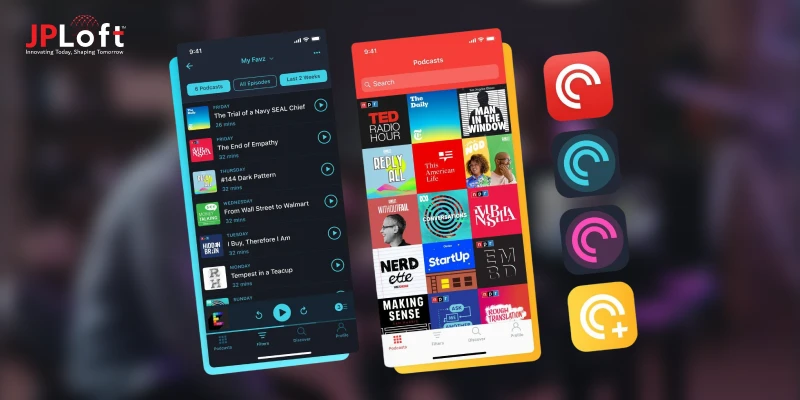
Key Takeaways:
Steps to make an app like Pocket Casts are research, planning, feature choice, development, testing, launching, and maintenance.
Key features of a podcast app include easy discovery, offline playback, speed control, and notifications, which impact retention.
Cost to make an app like Pocket Casts varies between USD 20,000 to USD 80,000+ based on features, platforms, and complexity.
Monetization models include a combination of subscriptions, freemium upgrades, ads, and creator monetization.
Challenges to create an app like Pocket Casts are technical complexity, data management, cross-device sync, and monetization.
Partnering with an experienced company like JPLoft helps turn podcast app ideas into reliable, market-ready digital products.
Thinking beyond music and video?
Podcasts have quietly become a daily habit for millions. They shape habits, drive learning, and build loyal communities. And Pocket Casts is one of the top favorites of this podcast listener market, with thousands of regular listeners.
Now, if you are keen to enter this industry, you might be wondering: How to build an app like Pocket Casts? And turn audio into a scalable product!
You can build an app like Pocket Casts by planning features, choosing scalable tech, designing an intuitive UX, developing a backend, integrating audio streaming, testing, and launching.
It stands out for its clean design, smart playback tools, and smooth user experience. But behind this simple interface sits a well-planned app structure, strong tech choices, and clear business goals.
This guide to make an app like Pocket Casts will help you understand what it really takes to build a podcast app that users enjoy and trust. We will walk through core features, development steps, cost factors, challenges, and growth strategies.
All About Pocket Casts: Podcast App
Pocket Casts is a popular podcast app built for listeners who want control, clarity, and a smooth audio experience. It was built in Australia in 2010. It supports millions of podcasts across various categories, including business, news, education, and entertainment.
The app works on Android, iOS, and web, which helps users switch devices without losing progress. Pocket Casts focuses on clean design and powerful playback tools that suit both casual listeners and daily podcast users.
The app allows users to manage episodes, control playback speed, skip silence, and organize shows with filters. Pocket Casts also supports cloud sync, which keeps the listening history updated across devices.
For businesses exploring how to make an app like Pocket Casts, it gives access to a new, blooming industry. While setting a strong benchmark in usability and performance.
Working of the Pocket Casts
The working of the app before we start with how to create an app like Pocket Casts:
Step 1: User Onboarding
Users sign up or continue as guests. Logged-in users get cloud sync, saved preferences, and access to listening history across devices instantly.
Step 2. Podcast Discovery
The app fetches podcasts through RSS feeds (Really Simple Syndication), showing trending shows, categories, and search results to help users find relevant content quickly.
Step 3. Subscription and Download
Users subscribe to favorite podcasts, receive automatic episode updates, and download episodes to listen offline without interruptions or network dependency.
Step 4. Playback Management
Listeners control speed, trim silence, boost volume, and create custom playback settings that improve clarity and save time during episodes.
Step 5. Sync and Updates
Playback progress, subscriptions, and settings sync across devices while the app automatically updates libraries when new podcast episodes are released.
This structured flow makes the app reliable and easy to use for the modern podcast audience. Thus benefiting businesses planning to create an app like Pocket Casts.
Podcast Market Statistics
Below, we have provided related podcast market statistics:
-
The average yearly revenue generation of Pocket Casts ranges between USD 1 million to USD 5 million, as estimated by Owler.
-
The global podcast industry market size in 2025 is projected to reach between USD 32 billion and USD 47.8 billion, according to the Teleprompter.
-
In research by Grand View Research, the podcast industry is projected to reach over USD 131.13 billion by 2030, growing at a CAGR of around 27.0%.
-
Teleprompter estimated that there are ~584.1 million podcast listeners worldwide in 2025. In the U.S., about 55% of the population listens to podcasts monthly.
-
In the same research by Teleprompter, the average podcast listener spends about 7 hours per week listening, primarily on a smartphone.
Now that you understand how Pocket Casts works and what makes it successful. The next step is to explore the reasons to learn how to create an app like Pocket Casts and why building it can be a smart business decision.

Why Build an App Like Pocket Casts?
To develop a clone like Pocket Casts by hiring a podcast app development company is beyond just following a trendy idea. It is a smart move backed by user demand, creator interest, and scalable revenue models.
Let us explore the key reasons to know how to build an app like Pocket Casts that makes a valuable investment:
1. High Demand from Content Creators
Podcast creators look for platforms that support visibility and audience growth. By building a feature-rich app, you attract creators who want better reach, analytics, and engagement, helping you grow content volume and platform value over time.
2. Growing Podcast Listener Base
Podcast consumption is rising across industries, age groups, and regions. If you create a podcast app like Pocket Casts, it gives access to a fast-growing audience that prefers on-demand audio for learning, news, and entertainment. Creating long-term engagement and repeat usage.
3. Strong User Retention Through Smart Features
If you build a clone like Pocket Casts, it helps retain users with features such as playback control, offline access, and cross-device sync. These tools improve listening comfort and habit formation, which increases session time and keeps users loyal to your platform.
4. Multiple Revenue Opportunities
Pocket Casts like app development, opens diverse monetization options. You can earn through subscriptions, premium features, ads, or creator partnerships. This model allows steady revenue growth while keeping the basic listening experience free and accessible for users.
5. Scalable and Future-Ready Product
A mobile app idea of a podcast app is easy to scale with new features like recommendations, AI-based discovery, or exclusive content. This flexibility makes the app adaptable to changing user behavior and keeps your business competitive in the audio streaming market.
An app like Pocket Casts proves how audio can drive loyalty, engagement, and revenue in the long run. In the next section, we will look at the key features that turn the idea of how to make an app like Pocket Casts into a practical and user-friendly podcast platform.
Key Features of a Podcast App
To create a clone like Pocket Casts, you require the right mix of features. From smooth playback to smart discovery, these components shape user experience, retention, and long-term business growth.
The table focuses on the core components to make an app like Pocket Casts that supports smooth listening, content growth, and long-term user engagement:
|
Component |
Feature |
Description |
|
User Onboarding |
Easy sign-up and login |
Allows users to register using email or social accounts. |
|
Podcast Discovery |
Search and category browsing |
Helps users find podcasts by title, topic, or creator. |
|
Personalized recommendations |
Suggests podcasts based on listening history and interests. |
|
|
Content Management |
Podcast subscription |
Enables users to follow their favorite podcasts. |
|
Episode download |
Let's users download episodes for offline listening. |
|
|
Audio Playback |
Playback speed control |
Gives users control over listening speed. |
|
Silence trimming |
Removes long pauses during playback. |
|
|
Background play |
Allows audio to continue while using other apps or when the screen is locked. |
|
|
User Experience |
Playlist and queue management |
Let users organize episodes in a listening order. |
|
Cross-device sync |
Syncs listening progress across devices smoothly. |
|
|
Notifications |
Episode alerts |
Notifies users when new episodes are released. |
|
Creator Support |
Podcast hosting support |
Enables creators to upload and manage content. |
|
Analytics dashboard |
Provides data on listeners and audience behavior. |
|
|
Monetization |
Subscription model |
Offers premium plans with advanced features. |
|
Ad integration |
Supports audio or banner ads for app monetization. |
These features help build an app like Pocket Casts that supports users, creators, and business goals effectively. Once the key features are clear, we will go through how to turn those ideas into a real product by following the right steps to create an app like Pocket Casts.
Steps to Create an App Like Pocket Casts
To develop a podcast app like Pocket Casts, it requires a blend of strategic planning, design, development, and marketing. Following proper steps helps ensure the app is ready to compete in this growing market.
Let's look at the steps to build a podcast app like Pocket Casts:
Step 1. Market Research and Planning
The first step is understanding your audience and the market landscape.
-
Analyze existing apps like Pocket Casts, Spotify, and Overcast.
-
Identify gaps in their features or user experience.
-
Determine your target audience, such as casual listeners, educational users, or niche podcast fans.
-
Define the app’s goals: Is it purely for listening, or will it allow creators to upload content?
Create a roadmap listing features, timelines, and budget before you develop a podcast app like Pocket Casts. Planning ensures you avoid unnecessary delays or costly redesigns later.
Step 2. Define Core Features
List essential features to create a mobile app according to the research findings:
-
User onboarding and account creation
-
Podcast discovery (search, categories, recommendations)
-
Decide how your app will generate revenue.
-
Offline download and playback
-
Playback controls (speed, skip silence, queue management)
-
Notifications for new episodes
-
Cross-device sync
Also, decide on advanced features: AI-based recommendations, analytics dashboard, podcast hosting, or monetization tools. Clearly defining features helps in creating a precise scope for development.
Step 3. Choose the Right Tech Stack
Select app tech stack for smooth performance and scalability:
-
Frontend: Kotlin (Android), Swift (iOS), or Flutter/React Native for cross-platform
-
Backend: Node.js or Python to handle APIs and real-time data
-
Database: PostgreSQL or MongoDB for structured and unstructured data
-
Audio Streaming: AWS Media Services or CloudFront for global distribution
-
Notifications & Analytics: Firebase Cloud Messaging, Google Analytics
Choosing the right tech stack is one of the important parts of the guide to make an app like Pocket Casts. It ensures faster development and reduces future maintenance issues.
Step 4. Design UI/UX
User experience is critical for podcast apps. Partner with an experienced UI/UX app design company to design an intuitive and minimalistic interface:
-
Easy navigation for categories and playlists
-
Simple player controls
-
Smooth onboarding experience
-
Dark and light mode options
Use wireframes and prototypes to validate designs with a small group of users. Iterating early ensures the interface is user-friendly and appealing.
Step 5. Backend Development
When you build a clone like Pocket Casts, the backend will handle data storage, user accounts, podcast feeds, and analytics. Key backend tasks include:
-
Setting up APIs for content delivery
-
Integrating RSS feed parsers for podcasts
-
Handling user subscriptions and playback history
-
Syncing listening progress across devices
A robust backend ensures stability, fast content delivery, and a seamless user experience.
Step 6. Audio Streaming Integration
The core to develop a clone like Pocket Casts is smooth audio playback. Steps include:
-
Using adaptive streaming to handle different network conditions
-
Implementing background audio support for multitasking
-
Adding offline download capabilities for uninterrupted listening
-
Optimizing buffering to reduce startup time
Proper audio streaming integration keeps users engaged and prevents frustration due to lag or interruptions.
Step 7. Implement Search and Discovery
Users must find content quickly and easily. Integrate:
-
Search by podcast title, host, or keywords
-
Category-based browsing
-
Personalized recommendations using user behavior
-
Trending or curated lists for better engagement
Advanced discovery features improve retention and increase session duration.
Step 8. Testing and Quality Assurance
Mobile app testing ensures your app works across devices and networks. Include:
-
Functional testing for features like playback, subscriptions, and downloads
-
UI/UX testing to ensure smooth navigation
-
Performance testing for fast loading and minimal buffering
-
App security testing to protect user data
Thorough testing reduces bugs and ensures positive user reviews upon launch.
Step 9. Deployment and Launch
Prepare your app for release:
-
Publish on Google Play and Apple App Store with proper app descriptions and screenshots
-
Ensure backend scalability for initial user traffic
-
Monitor for early feedback and quickly fix any critical issues
A well-planned launch sets the stage for user acquisition and brand credibility.
Step 10. Marketing and User Acquisition
Even the best app needs marketing. Use strategies like:
-
Social media campaigns and content marketing
-
Collaborations with podcasters to promote the app
-
Referral programs to incentivize sharing
-
App store optimization (ASO) to improve discoverability
Marketing helps you attract early users and build a loyal listener base.
Step 11. Maintenance and Updates
Post-launch, maintain the app by hiring a mobile app maintenance company. Look out for:
-
Regular updates for new features and improvements
-
Bug fixes and performance optimization
-
Monitoring user feedback to guide feature development
Continuous maintenance ensures long-term user engagement and app growth.
By following these steps to build a podcast app like Pocket Casts, you create a platform that offers an excellent user experience, smooth audio streaming, and scalable business potential.
After outlining the development steps, it’s time to explore the technologies required to support these features and ensure your podcast app, like Pocket Casts, runs smoothly and scales effectively.
Tech Stack to Include in an App Like Pocket Casts
To make a podcast app like Pocket Casts, you have to choose the right tech stack. Building a reliable app needs a balanced tech stack that supports smooth audio playback, fast performance, and future scalability.
Below is the list of the essential technologies used to build an app like Pocket Casts:
|
Layer |
Technology |
Purpose |
|
Frontend |
Kotlin (Android) |
Helps build a stable and high-performance Android app with native user experience and smooth audio controls. |
|
Swift (iOS) |
Used to develop secure and responsive iOS apps with better device-level audio handling. |
|
|
Cross-Platform (Optional) |
Flutter or React Native |
Reduces development time by using a single codebase while maintaining a consistent UI across platforms. |
|
Backend |
Node.js |
Handles user requests, podcast data, subscriptions, and real-time syncing efficiently. |
|
Python |
Useful for content processing, recommendation logic, and background tasks like feed updates. |
|
|
Database |
PostgreSQL |
Stores structured data such as users, subscriptions, playlists, and preferences securely. |
|
MongoDB |
Manages unstructured data like episode metadata, logs, and listening history. |
|
|
Audio Streaming |
AWS Media Services |
Supports fast and reliable audio streaming with low buffering and global reach. |
|
Cloud Storage |
Amazon S3 |
Stores podcast audio files, images, and backups with high availability. |
|
Search |
Elasticsearch |
Improves podcast search speed and accuracy using titles, tags, and categories. |
|
Notifications |
Firebase Cloud Messaging |
Sends episode alerts and updates to users in real time. |
|
Analytics |
Google Analytics |
Tracks user behavior, listening patterns, and feature performance for product improvement. |
|
Security |
OAuth 2.0 |
Ensures secure login and protects user data across devices. |
|
DevOps |
Docker |
Simplifies deployment and helps maintain consistent app performance across environments. |
Using a mix of these technologies helps you make an app like Pocket Casts that stands out in this competitive market. With the tech stack defined, it becomes easier to estimate the budget required to build and scale an app like Pocket Casts.
What's the Cost to Create an App Like Pocket Casts?
The cost to build an app like Pocket Casts ranges between USD 20,000 to USD 80,000+. Knowing the building cost helps you plan smarter and avoid budget surprises.
From basic features to advanced capabilities, knowing where your investment goes ensures better decisions and a scalable podcast app foundation.
Below is the detailed breakdown table of how much does it costs to create an app like Pocket Casts:
|
Component/Phase |
Description |
Cost Range (USD) |
|
Discovery & Planning |
Market research, requirement finalization, wireframes, and project roadmap. |
$1,000 – $2,000 |
|
UI/UX Design |
User interface screens and experience app design for onboarding, search, player, and library. |
$2,000 – $5,000 |
|
Core App Development (MVP) |
Basic features: sign-up/login, search, play & pause, queue, downloads, and simple UI. |
$7,000 – $15,000 |
|
Cross-Platform Development (Optional) |
Flutter/React Native to build both Android & iOS using shared code, reducing costs vs separate native builds. |
$4,000 – $9,000 |
|
Advanced Features |
Features like playback speed, silence trimming, smart playlist, push notifications. |
$4,000 – $10,000 |
|
Backend & APIs |
Server setup, REST APIs, user profiles, content feed parsing, push integration. |
$6,000 – $12,000 |
|
Audio Streaming & CDN Setup |
Streaming server setup or CDN integration for reliable audio delivery. |
$2,000 – $6,000 |
|
Database & Cloud Services |
Database setup (PostgreSQL/MongoDB), cloud storage (S3), backups. |
$1,500 – $4,000 |
|
Search & Discovery Engine |
Search service (like Elasticsearch) and basic recommendation logic. |
$1,500 – $4,000 |
|
Analytics & Monitoring |
User behavior tracking dashboards and data collection setup. |
$800 – $2,000 |
|
QA & Testing |
Manual and basic automated testing across devices. |
$2,000 – $5,000 |
|
Deployment & App Store Launch |
Publishing to Google Play and Apple App Store, including approvals. |
$800 – $2,000 |
|
Maintenance & Support (3–6 months) |
Bug fixes, minor updates, and server upkeep. |
$1,500 – $4,000 |
|
Security & Compliance |
OAuth login, data protection, secure API layers. |
$800 – $2,000 |
Cost Breakdown Based on App Difficulty
Below is the breakdown of the cost to make an app like Pocket Casts based on the complexity level of development:
1. Basic App MVP
Development Cost (in USD): $20,000 – $35,000
Features: Core podcast playback, simple search, user sign-up, basic UI, and offline download support. Works on one platform (Android or iOS).
2. Cross-Platform App
Development Cost (in USD): $30,000 – $50,000
Features: Same core features but supports both Android and iOS using a shared codebase (e.g., Flutter or React Native). Improves development speed.
3. Advanced Featured App
Development Cost (in USD): $50,000 – $75,000
Features: Adds personalized recommendations, analytics dashboard, cloud sync, queue management, push notifications, and better backend infrastructure.
4. Industry-Level App
Development Cost (in USD): $75,000 – $80,000+
Features: Full feature set with powerful search, AI-based recommendations, multi-device sync, podcast hosting support, ad monetization, and premium subscription integration.
After understanding the development cost, the focus naturally shifts to how an app like Pocket Casts can generate revenue and deliver long-term returns.
How to Monetize an App Like Pocket Casts?
Turning Pocket Casts like app development into a profitable product is crucial for getting back the investment. You need smart monetization strategies that support growth without hurting user experience.
Below are the most effective app monetization strategies for a podcast app, explained using a clear and business-focused structure:
1. Subscription Model
This model offers premium features to users who pay a recurring fee monthly or yearly. It works well for apps focused on loyal listeners and long-term engagement.
How it works?
Users access basic features for free. Advanced features like cloud sync, smart filters, or exclusive tools unlock after subscription.
Revenue source
Monthly or annual subscription plans from individual users or teams.
2. In-App Advertising
Advertising allows you to earn from free users without charging upfront. It suits apps with high listener traffic and long session times.
How it works?
Audio ads or banner ads play before or during episodes. Ads can be targeted based on user interests or listening behavior.
Revenue source
Cost per impression and cost per click from advertisers.
3. Freemium Feature Access
This model keeps the app free but charges for selected premium tools. It lowers entry barriers while still generating income.
How it works?
Core listening stays free. Features like advanced playback controls or custom playlists require a one-time or recurring payment.
Revenue source
Feature unlock fees and microtransactions.
4. Creator Monetization Tools
This model focuses on podcasters instead of listeners. It supports creators with tools that help them grow and monetize content.
How it works?
Creators pay for hosting, analytics, or promotion features within the app.
Revenue source
Creator subscriptions and service fees.
5. Affiliate and Sponsored Content
This model blends monetization with content discovery. It works best when user trust is strong.
How it works?
Sponsored podcasts or affiliate links appear in search results or recommendations.
Revenue source
Commission from sponsors and affiliate partners.
These monetization models help you create an app like Pocket Casts that balances user experience with steady revenue growth while scaling. Monetization shows how the app earns, but addressing key challenges ensures the platform remains stable, scalable, and user-friendly.
Challenges to Make an App Like Pocket Casts
As you progress with how to build an app like Pocket Casts, you will also come across challenges. Hidden technical, performance, and user experience challenges can slow progress or increase costs.
Knowing these challenges will help you make an app that users truly enjoy:
1. Audio Playback Stability Issues
Delivering smooth audio playback across devices is complex due to network issues, device differences, and background playback restrictions. These can interrupt users' listening experience and reduce engagement.
Solution:
Use adaptive streaming, efficient buffering, background audio services, and thorough device testing to ensure stable playback under different network and device conditions.
2. Podcast Feed Management Complexity
Managing large volumes of podcast data from multiple RSS feeds requires constant updates, error handling, and accurate metadata syncing to avoid missing or broken episodes.
Solution:
Build a reliable feed parser, automate updates, validate metadata, and monitor feed health regularly to maintain accurate and up-to-date podcast content.
3. Scalable Search and Discovery Limitations
Ensuring fast and accurate podcast search becomes difficult as the content library grows, which can slow performance and frustrate users during content discovery.
Solution:
Implement optimized indexing, caching, and advanced search engines to improve response time and deliver relevant results instantly.
4. Cross-Device Sync and Data Consistency Problems
Cross-device synchronization of listening progress can fail if backend systems are not designed for real-time data consistency and conflict resolution.
Solution:
Use cloud-based syncing with timestamp control and conflict handling logic to maintain seamless listening continuity across all user devices.
5. User Experience vs Monetization Balance
Balancing monetization without hurting user experience is challenging, as excessive ads or paywalls may lead to app abandonment and low retention rates.
Solution:
Adopt a freemium model, limit ad frequency, and offer clear value in premium features to keep users satisfied and engaged.
From technical performance to user expectations, being aware of the challenges early helps you plan better. It also helps reduce risks and create a podcast platform that delivers consistent value and long-term growth.

Connect with JPLoft and Make Your Podcast App
If you plan to build a podcast app that users enjoy and trust, the right development partner matters. JPLoft helps businesses turn podcast ideas into stable and scalable mobile apps. Our team understands how podcast platforms work and what modern listeners expect from them.
We focus on building apps with clean design, smooth audio playback, and simple navigation. From idea validation to launch support, JPLoft stays involved at every stage. We help you define features, choose the right tech stack, and plan a clear development roadmap that fits your goals and budget.
JPLoft, a renowned mobile app development company in Australia, works with startups, media brands, and enterprises that want to create podcast apps with long-term value. We build solutions that support growth, user retention, and monetization without hurting the listening experience. Our developers test apps across devices to ensure stable performance and secure data handling.
When you connect with JPLoft, you gain a team that values clear communication and practical execution. We focus on results, timelines, and quality delivery. If your goal is to launch a podcast app inspired by platforms like Pocket Casts, JPLoft helps you move from concept to a ready product with confidence.
Conclusion
Working with this ‘create an app like Pocket Casts guide’ is a smart move for businesses that want to tap into the growing podcast market. From clean design and smooth audio playback to smart discovery and reliable syncing, every element plays a role in user retention.
Success depends on clear planning, the right tech stack, and a feature set that balances simplicity with control. Starting with a focused MVP helps manage cost while leaving room for future upgrades like personalization, monetization, and creator tools.
It is also important to test thoroughly and adapt based on real user feedback. A well-built podcast app can grow into a long-term digital product that serves listeners and creators alike.
With the right development approach, you can create a podcast platform that delivers value, builds loyalty, and stands strong in a competitive audio streaming space.
FAQs
Build a podcast app like Pocket Casts by planning features, choosing the right tech stack, designing a smooth UI, developing a strong backend and audio streaming, testing thoroughly, and launching with a clear monetization strategy.
Core features include podcast discovery, subscriptions, offline downloads, playback speed control, queue management, cross-device sync, notifications, search, and a clean audio player for smooth and flexible listening.
The cost to build an app like Pocket Casts typically ranges between USD 20,000 and USD 80,000+. Depending on features, platforms, design complexity, backend infrastructure, and development team location.
You can monetize a podcast app through subscriptions, premium features, in-app advertising, exclusive content partnerships, creator commissions, and paid analytics tools while keeping basic listening free for users.
Key challenges include ensuring smooth audio playback, managing large podcast data, accurate search, cross-device syncing, balancing monetization with user experience, and maintaining performance across different devices and networks.

Priyanka Sukhwal is the Managing Director and Business Head of JPLoft, a results-driven leader with 10+ years of experience steering technology ventures and business growth. Her strategic acumen and deep understanding of digital markets and on-demand solutions have consistently translated into innovations that help businesses scale, evolve, and lead in competitive landscapes.


Share this blog