


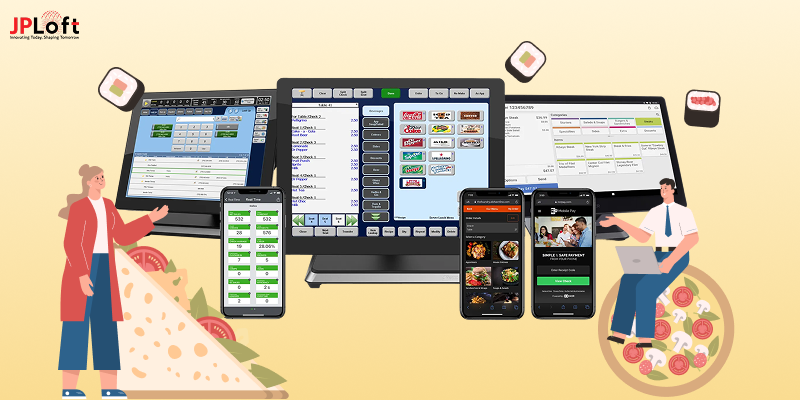
Running a restaurant isn’t just about serving delicious food anymore; it’s about smart management, seamless coordination, and data-driven decisions. That’s why many modern restaurateurs are eager to learn how to build a restaurant management system that can do it all.
From managing orders to optimizing inventory, a powerful restaurant management system keeps everything running smoothly. Whether you want to make a restaurant management system for a cozy café or create a restaurant management system in simple steps for a full-scale franchise, this guide has you covered.
We’ll walk you through how to build a restaurant management system from scratch, integrate modern tech, and craft a solution that drives efficiency, profit, and growth.
Key Takeaways
A restaurant management system streamlines daily operations, reduces human error, and enhances customer experience across dine-in, delivery, and online channels.
Understanding how to build a restaurant management system helps businesses design a scalable solution tailored to their operational needs and long-term growth.
Integrating modern technologies like AI, ML, IoT, and cloud infrastructure empowers restaurants to make data-driven decisions and improve performance efficiency.
Strategic monetization models like SaaS subscriptions, commissions, and customization services, can turn your RMS into a profitable digital product.
Partnering with JPLoft gives you access to expert developers and industry insights to build robust, future-ready restaurant software tailored to your business goals.
What is a Restaurant Management System?
A restaurant management system (RMS) is a comprehensive digital solution designed to automate and streamline restaurant operations. It connects various departments, from order management and billing to inventory tracking and analytics, into one cohesive platform.
In simple terms, understanding how to build a restaurant management system begins with realizing that it acts as your restaurant’s digital command center, helping you reduce manual errors, improve service speed, and boost profitability.
A] Restaurant Management Software Market at a Glance
-
The global restaurant management software market is projected to reach $14.70 billion by 2030, growing at a CAGR of 17.4%.
-
The survey shows that restaurant operators and owners are embracing technology and integrating it into their daily operations.
-
More than one-third (34 %) of restaurants have already adopted AI technology; 48 % plan to this year.
-
The Asia-Pacific restaurant management software market would witness a market growth of 15.2 % CAGR during the forecast period (2022-2028).
B] Core Components of a Restaurant Management System
-
Point of Sale (POS) – The heart of every RMS, enabling fast billing, secure payments, and transaction analytics.
-
Inventory & Supply Management – Tracks stock levels, predicts shortages, and automates reorders.
-
Employee Management – Simplifies shift scheduling, attendance tracking, and performance insights.
-
Customer Relationship Management (CRM) – Stores guest preferences, feedback, and loyalty data to personalize the dining experience.
-
Analytics Dashboard – Offers real-time insights on sales, customer behavior, and operational costs for data-backed decisions.
With the market expanding and customer expectations evolving, implementing a robust RMS is no longer a luxury but a necessity. Businesses investing in tailored solutions today can optimize performance, reduce costs, and ensure seamless customer experiences across every touchpoint.
If you’re planning to digitize your restaurant operations, partnering with a team offering custom software development services can help you design a scalable, future-ready solution aligned perfectly with your restaurant’s unique workflows and goals.
How Does a Restaurant Management System Work?
A restaurant management system functions as an integrated ecosystem connecting all core restaurant operations, from order processing to analytics, through automation and real-time data exchange. Here’s a step-by-step look at how it works:
Step 1: Order Placement and Processing
The system starts by capturing orders from various sources, dine-in, online, or delivery partners. Each order automatically syncs with the POS module, ensuring that kitchen and front-end staff stay in sync without manual input or delays.
Step 2: Kitchen Display System (KDS) Synchronization
Once an order is confirmed, it’s instantly displayed on the kitchen screen. The KDS prioritizes tickets based on preparation time, helping chefs coordinate efficiently and reducing errors in meal preparation.
Step 3: Inventory and Ingredient Tracking
The inventory management module updates stock levels automatically with every order. It monitors ingredient usage, notifies staff of low-stock items, and can even trigger supplier reorders to maintain smooth kitchen operations.
Step 4: Billing and Payment Processing
Integrated POS and payment gateways allow quick and secure transactions. Customers can pay through cash, cards, wallets, or QR-based UPI systems, while the RMS updates financial records in real time.
Step 5: Customer Relationship & Feedback Management
After every transaction, the system can prompt customers for reviews or ratings. The CRM component collects this data to enhance personalization, offering loyalty rewards or tailored discounts to repeat guests.
Step 6: Staff and Table Management
RMS automates employee scheduling, attendance tracking, and table assignments. Managers can visualize occupancy in real time and balance staff allocation to avoid service delays during peak hours.
Step 7: Analytics and Reporting Dashboard
Finally, the RMS compiles all data, sales, inventory, customer insights, and workforce productivity, into an analytics dashboard. Restaurant owners can use these insights to make data-driven decisions that improve performance and profit margins.
A well-structured restaurant management system software integrates these modules seamlessly to create a unified experience for both customers and staff. Whether you want to create a restaurant management system in simple steps or build a restaurant management software with advanced automation, these components ensure every process runs smoothly from order to invoice.
Types of Restaurant Software
Before you make a restaurant management system, it’s crucial to understand that a restaurant’s ecosystem relies on multiple specialized software types working together. Each software category serves a distinct function, from handling daily transactions to enhancing customer experience. Here’s a closer look at the major ones:
1. Point of Sale (POS) System
At the heart of any restaurant operation, the POS system handles all sales transactions, order management, and billing. It connects front-end service staff with the kitchen, tracks order statuses, and ensures that every sale is recorded accurately.
For those exploring how to build a restaurant POS system, it’s essential to understand that modern POS solutions go far beyond basic billing, they often include features like split billing, digital receipts, and mobile POS for tableside service, enhancing both operational efficiency and customer experience.
2. Billing and Invoicing Software
This module streamlines the process of generating and managing invoices. Whether a customer pays via cash, card, or digital wallets, billing software ensures all transactions are processed securely and logged for accounting. It’s especially useful for multi-outlet chains that require consistent billing formats and centralized financial reporting.
3. Inventory Management Software
Inventory software is essential to prevent overstocking or running out of key ingredients. It tracks ingredient usage, updates stock levels in real time, and alerts managers when reordering is necessary. Integration with supplier databases also allows automatic replenishment when inventory hits a threshold.
4. Reservation and Table Management Software
This software optimizes seating arrangements and minimizes wait times. It manages bookings, assigns tables efficiently, and provides real-time visibility into occupancy levels. Integration with customer data can even help personalize the dining experience, remembering a guest’s favorite table or meal preference.
5. Customer Relationship Management (CRM) Software
CRM tools help restaurants maintain lasting relationships with their customers. By analyzing past orders, preferences, and feedback, restaurants can design personalized marketing campaigns, loyalty programs, and special offers that drive repeat business.
6. Employee Management Software
Staff management tools handle scheduling, attendance tracking, and payroll. Managers can easily view shifts, handle replacements, and monitor performance analytics, ensuring smooth operations during both peak and off-peak hours.
7. Reporting and Analytics Software
This software consolidates all operational data, from daily sales to customer behavior, into actionable insights. It helps decision-makers spot trends, identify inefficiencies, and optimize profit margins with data-driven strategies.
From inventory control to analytics, these software types collectively define how efficiently a restaurant runs. Whether you’re planning to create a restaurant management software or integrate existing tools, understanding these modules helps you design a complete, future-ready system.
Features to Include in a Restaurant Management System
When thinking about how to make a restaurant management system, the key lies in integrating powerful, user-friendly features that simplify operations and enhance customer satisfaction. Whether you’re running a small café or a large franchise, these essential components make all the difference.
1. Centralized Dashboard
A unified dashboard provides a bird’s-eye view of restaurant operations, from order status and stock levels to daily revenue. It enables managers to track real-time performance metrics, ensuring informed decision-making at every level.
2. Smart Point of Sale (POS) System
The POS system acts as the operational nerve center. It allows staff to take orders, apply discounts, split bills, and process payments seamlessly. Integrating cloud technology ensures transactions are updated instantly across all devices and branches.
3. Kitchen Display System (KDS)
The KDS eliminates the need for paper order slips. Orders appear digitally on kitchen screens, sorted by preparation time and category. This automation minimizes miscommunication and ensures faster service, essential in high-volume restaurants.
4. Real-Time Inventory Management
Inventory tracking ensures that ingredients and supplies are always maintained at optimal levels. The system automatically updates stock after every order, sends low-stock alerts, and can even auto-reorder items based on preset thresholds. This level of automation helps restaurants minimize waste, control food costs, and ensure that every dish on the menu is always available, creating a more efficient and reliable kitchen operation.
5. Customer Relationship Management (CRM)
A CRM module stores customer data, order history, and feedback. It enables personalized promotions, loyalty programs, and remarketing campaigns, helping restaurants retain customers and improve lifetime value.
6. Reservation & Table Management
Smart reservation tools help optimize space and reduce wait times. The system can automate seat allocation, maintain digital waitlists, and send booking confirmations to diners, improving both efficiency and the guest experience.
7. Billing & Payment Integration
Integrating multiple payment gateways (credit cards, UPI, wallets, QR codes) enhances convenience. Automated tax calculation and invoice generation reduce manual errors and speed up the billing process.
8. Employee Management & Scheduling
This feature automates staff scheduling, shift management, and attendance tracking. Managers can assign duties based on workload forecasts, while employees can view schedules and report availability through the system.
9. Reporting and Analytics
An advanced analytics engine tracks KPIs like daily revenue, table turnover rates, and customer preferences. These insights empower restaurant owners to identify bottlenecks, forecast demand, and make strategic decisions for business growth.
10. Multi-Branch Support
For restaurants with multiple outlets, centralized data synchronization ensures consistency across all branches. This enables remote management, uniform pricing, and consolidated reporting under one platform.
A well-designed system doesn’t just manage operations, it drives smarter business decisions. To build a restaurant management software that stands out, each of these features should integrate seamlessly with intuitive UX, automation, and data-driven intelligence.
Choosing an effective process to develop a restaurant software ensures scalability, security, and adaptability to future tech trends like AI-based personalization and predictive analytics.
Why Build a Restaurant Management System?
If you’ve been wondering how to build a restaurant management system, the answer lies not just in technology but in the transformative value it brings to your business. A well-built system optimizes every operation, from kitchen workflows to customer interactions, resulting in higher profit margins and smoother day-to-day functioning.
Here’s why investing in one is a game-changer for modern restaurants:
1. Enhanced Operational Efficiency
Automation is at the heart of any great restaurant management system. It eliminates repetitive manual tasks such as order tracking, inventory updates, and staff scheduling. This means fewer errors, reduced dependency on paperwork, and faster turnaround times, all contributing to more efficient service.
2. Improved Customer Experience
A seamless dining experience builds loyalty. With quick order processing, accurate billing, and personalized offers, customers feel valued. A system that remembers preferences, provides instant feedback options, and manages reservations ensures your guests enjoy a smoother and more personalized journey.
3. Data-Driven Decision Making
By consolidating sales, customer, and performance data, restaurant owners can identify trends and make informed business decisions. Predictive insights from analytics modules help optimize menu pricing, reduce food wastage, and forecast demand accurately, improving both productivity and profitability.
4. Higher Return on Investment (ROI)
Though the initial setup might seem like an expense, the long-term gains are substantial. Automation cuts labor costs, smart inventory management minimizes waste, and data insights maximize revenue opportunities. These combined benefits significantly boost ROI within months of implementation.
5. Scalability and Adaptability
When you build a restaurant management system from scratch, you gain the flexibility to scale. Whether expanding to new locations or integrating new technologies like AI-based order prediction, the system can evolve alongside your restaurant’s growth, keeping you competitive and future-ready.
In short, building your own restaurant management solution isn’t just about modernizing, it’s about creating a connected, efficient, and data-smart ecosystem that enhances every touchpoint from kitchen to customer.
Build a Modern Restaurant Management System From Scratch
To create a modern restaurant management software from scratch, you need a blend of the right technology, architecture, and development strategy.
This process involves everything from understanding your business needs to deploying a fully functional, scalable system that streamlines restaurant operations and enhances customer satisfaction.
Here’s a complete step-by-step breakdown process.
Step 1: Requirement Analysis and Planning
Every great system begins with clarity. Start by analyzing your restaurant’s operational needs, from POS and billing to CRM and inventory management. Identify your target users (owners, staff, or multi-branch operators) and define what features are essential versus optional.
A well-structured planning phase helps ensure your solution is built with scalability, security, and usability at its core.
Step 2: Designing the System Architecture
At this stage, developers outline how different modules (orders, kitchen, inventory, etc.) interact. Modern restaurant software typically uses microservices architecture, allowing each function to operate independently and scale easily.
UI/UX design also plays a vital role; intuitive dashboards, responsive layouts, and easy navigation can make managing restaurant operations effortless for both admins and staff.
Step 3: Selecting the Right Tech Stack
Choosing the right technology foundation is crucial to develop a restaurant management system that performs efficiently.
-
Frontend: React.js or Angular for interactive interfaces
-
Backend: Node.js, Python (Django), or Java Spring Boot for scalable server logic
-
Database: MySQL or MongoDB for reliable data storage
-
Cloud: AWS or Google Cloud for hosting and scalability
-
Integrations: Payment gateways, third-party APIs for delivery, and CRM tools
This combination ensures real-time data sync, smooth performance, and easy scalability as your restaurant grows.
Step 4: Development Phase
Once the architecture and tech stack are ready, the development begins. The process usually follows an Agile methodology, allowing iterative releases and testing at every stage.
Developers work on modules like:
-
POS and billing
-
Inventory control
-
Table reservations
-
Kitchen display systems
-
Analytics and reporting
Using version control tools like Git ensures consistency and team collaboration throughout the build.
Step 5: Integration of Smart Technologies
Modern systems aren’t limited to basic functionality. AI, ML, and IoT can elevate restaurant management efficiency:
-
AI for predicting popular dishes or rush hours
-
ML for personalized offers and customer segmentation
-
IoT for smart inventory tracking or automated kitchen equipment monitoring
Incorporating these intelligent layers can transform how you make a restaurant management software from scratch, creating a competitive digital edge.
Step 6: Testing and Quality Assurance
Before going live, conduct rigorous testing: functionality, performance, load, and security testing. This ensures every module works seamlessly under real-world conditions.
Testing helps identify potential bugs early, saving post-deployment costs and ensuring smoother user adoption.
Step 7: Deployment and Maintenance
After successful testing, your system is deployed to a secure cloud environment. Continuous maintenance and updates are essential to keep the platform bug-free and adaptable to changing business needs.
Regular updates also ensure compliance with data privacy laws and emerging tech trends.
Step 8: Performance Monitoring and Optimization
Once live, monitor metrics like average order processing time, staff productivity, and customer feedback. Use data analytics to refine your workflows, enhance system speed, and optimize the overall user experience.
Building a system from the ground up allows complete customization, scalability, and integration flexibility. Whether you want to build restaurant management software for a single outlet or a multi-branch chain, following this structured development cycle ensures efficiency, reliability, and long-term ROI.
Can Modern Technologies Help in Shaping the Infrastructure of a Restaurant Management System?
Absolutely, the modern dining landscape thrives on data, automation, and personalization. That’s why today’s restaurant management system development goes far beyond simple order-taking and billing.
It’s now about building an intelligent infrastructure powered by emerging technologies that optimize operations, improve decision-making, and elevate customer experiences.
Here’s how these technologies collectively reshape restaurant management:
1. Artificial Intelligence (AI) for Predictive Efficiency
AI helps restaurants anticipate demand, manage inventory smartly, and streamline staffing. For instance, AI-powered analytics can predict rush hours or identify popular dishes, ensuring that staff and resources are optimally allocated.
Restaurants using AI-driven models can even forecast ingredient consumption, reducing waste while maintaining consistency in quality.
2. Machine Learning (ML) for Personalization
ML takes customer experience to a new level by analyzing behavioral data. From recommending dishes based on order history to sending personalized offers at the right time, ML continuously learns and adapts to improve guest engagement.
It’s a crucial part of how to develop a restaurant management software? that understands and reacts to customer preferences in real time.
3. Natural Language Processing (NLP) for Smart Communication
Integrating NLP into restaurant management software enables conversational interfaces such as chatbots or voice assistants. Customers can place orders, modify reservations, or inquire about menu details using natural speech, simplifying human-machine interaction.
NLP also helps managers access reports through simple voice commands, making system navigation hands-free and intuitive.
4. Internet of Things (IoT) for Connected Operations
IoT integration allows real-time tracking of equipment, stock levels, and even kitchen conditions. For instance, smart refrigerators can monitor temperature and send alerts if storage levels drop below safe thresholds.
This interconnected ecosystem ensures safety, efficiency, and proactive maintenance, vital elements when you make a restaurant management software that aims for operational excellence.
5. Cloud Computing for Scalability and Flexibility
Cloud infrastructure lies at the core of modern RMS architecture. It enables data centralization, remote access, and multi-branch synchronization. Cloud deployment ensures faster software updates, minimal downtime, and reduced IT maintenance costs.
For businesses expanding across multiple outlets, the cloud offers unparalleled scalability, ensuring consistent performance and data flow across all locations.
6. Data Analytics and Automation
By merging automation tools with analytics dashboards, restaurant owners gain a holistic view of sales trends, inventory performance, and employee productivity. Data-driven automation ensures that every action, from reordering ingredients to generating performance reports, happens proactively rather than reactively.
AI and ML enable predictive analytics for demand forecasting, menu optimization, and personalized customer experiences. IoT supports real-time equipment monitoring and automated maintenance, while Cloud-based solutions ensure data accessibility, scalability, and improved security across locations.
Partnering with a restaurant app development company that specializes in AI-driven and IoT-enabled systems can help you future-proof your RMS infrastructure, ensuring your restaurant stays agile, data-smart, and ready to adapt to emerging technologies that shape the dining experience.
Use Cases for a Restaurant Management System
A restaurant management system (RMS) isn’t just software, it’s the operational backbone that connects every moving part of a restaurant. From streamlining front-end service to improving backend logistics, a well-designed solution can completely transform the way restaurants function.
Here are some real-world use cases that highlight how to create a restaurant management system in simple steps and use it effectively to optimize performance.
1. Streamlining Order and Kitchen Operations
In a busy dining environment, speed and accuracy are everything. With an RMS, incoming orders from dine-in, takeout, or delivery apps automatically sync with the kitchen display system (KDS).
Chefs receive orders instantly with clear details and priority indicators, while servers can track preparation status in real time, reducing confusion and cutting wait times dramatically.
2. Smart Inventory and Waste Management
Restaurants often struggle with excess stock or ingredient shortages. The RMS tracks ingredient usage per dish and automatically adjusts inventory levels after every order.
For example, a café using automated stock alerts noticed a 30% drop in ingredient waste within three months, all thanks to predictive restocking and consumption tracking.
3. Enhancing Customer Engagement and Retention
With a built-in CRM module, restaurants can store customer data, send personalized offers, and reward loyalty points. Imagine a pizzeria identifying frequent Friday-night customers and automatically sending them a limited-time discount; that’s smart, data-driven engagement in action.
This level of personalization boosts repeat visits and builds brand loyalty.
4. Multi-Outlet Control and Standardization
For restaurant chains or franchises, maintaining uniform operations across outlets is challenging. RMS allows centralized management, syncing menus, pricing, and performance data.
Managers can compare outlet performance, track inventory for each branch, and make data-backed decisions without being physically present at every location.
5. Data-Driven Decision Making
With integrated analytics dashboards, restaurant owners can access real-time insights into revenue, top-selling dishes, customer behavior, and employee performance.
This data helps in cost optimization, staff planning, and marketing strategy, proving why a structured process to create a restaurant management system is essential for long-term business success.
From small cafés to large franchises, these use cases show how RMS streamlines workflows, enhances guest satisfaction, and drives profitability. It’s more than a tool, it’s the digital engine that keeps modern restaurants running efficiently in a competitive, data-driven world.
What’s the Cost to Build a Restaurant Management System?
When estimating how to make a restaurant management system, it’s essential to understand the cost structure from the start. On average, building a restaurant management system can cost anywhere between $20,000 and $120,000+, depending on factors like feature complexity, scalability goals, and the chosen technology stack.
This investment varies based on several interconnected elements, such as the number of modules (POS, billing, CRM, or inventory), the level of customization required, and the size of your development team. Beyond just identifying “what influences cost,” it’s equally important to analyze how these expenses distribute across different functionalities to plan your budget strategically.
Restaurant Management System Cost Summary (Approximate Breakdown)
|
Component / Module |
Description |
Estimated Cost (USD) |
|
POS & Billing System |
Core module for order taking, billing, and transactions |
$3,000 – $10,000 |
|
Inventory & Supply Chain |
Tracks ingredients, vendors, and stock levels |
$4,000 – $12,000 |
|
CRM & Loyalty Programs |
Customer profiles, feedback, and reward points |
$3,000 – $8,000 |
|
Employee & Payroll Management |
Staff scheduling, attendance, and salary management |
$2,500 – $6,000 |
|
Analytics & Reporting Dashboard |
Real-time sales insights and data visualization |
$4,000 – $10,000 |
|
Cloud Hosting & Integrations |
Server deployment, APIs, and third-party tools |
$5,000 – $15,000 |
|
UI/UX Design & Customization |
User interface design, branding, and system workflow |
$3,000 – $8,000 |
|
Testing & Quality Assurance |
System testing, debugging, and performance checks |
$2,000 – $6,000 |
|
Post-launch Maintenance (Yearly) |
Updates, support, and security patches |
$3,000 – $10,000+ |
Total Development Cost:
-
Basic RMS (Single Outlet): $20,000 – $40,000
-
Mid-Level (Multi-outlet + Cloud Sync): $40,000 – $75,000
-
Advanced (AI, ML, Analytics + Full Automation): $80,000 – $120,000+
Other Key Cost Insights
► Tech Stack & Frameworks
Using advanced stacks like Node.js, React, and AWS Cloud can increase costs but offer scalability and faster performance.
► Development Team Model
Outsourcing to offshore teams (India or Eastern Europe) can reduce costs by 40–60% compared to US-based firms.
► System Scalability
Building a modular system lets you start small with POS, billing, and inventory, and expand later as your restaurant chain grows.
► Maintenance & Upgrades
Budget at least 20% of your annual cost for feature updates, cloud services, and performance optimization.
All in all, to make restaurant management software from scratch, plan for a phased investment strategy: start with essential modules and scale into AI, IoT, or analytics as your operations mature. A transparent roadmap ensures better ROI while maintaining efficiency and innovation.
When followed strategically, the effective process to develop a restaurant software becomes not just about cost savings but about building a system that evolves with your restaurant’s growth.
How Does a Restaurant Management System Earn Money?
Building a restaurant management system isn’t just about improving restaurant operations; it’s also a powerful business opportunity in itself. When you build a restaurant management software, you open multiple streams of recurring revenue that can scale with adoption, usage, and added features.
Let’s explore the most common and profitable monetization models.
1. Subscription-Based Model (SaaS Licensing)
The most popular approach, where restaurants pay a monthly or annual subscription fee for system access. Pricing varies by feature tiers: basic, professional, or enterprise. This predictable, recurring income ensures long-term revenue stability while supporting feature upgrades and cloud scalability.
2. Commission or Transaction-Based Model
Some systems integrate online ordering or delivery modules. Here, the platform earns a small commission (2–5%) on each order processed. This model is ideal for high-transaction restaurants and chains using the system for daily operations.
3. Freemium with Feature Unlocks
Offer the basic version free and charge users for premium features such as advanced analytics, AI-driven forecasting, or multi-branch management. This model lowers the barrier to entry and encourages more sign-ups before converting them into paying customers.
4. Customization & White-Label Solutions
Many developers develop a restaurant management system and then offer white-label licensing to other tech firms or restaurant franchises. Custom modules like POS integrations or delivery tracking, can be sold as add-ons, earning additional income per feature or client.
5. Cloud Hosting & Maintenance Fees
When hosted on cloud infrastructure, restaurants are charged for server usage, security, and data storage. These fees can either be built into the subscription plan or charged separately, offering steady operational revenue for the provider.
6. Data Insights & Analytics Monetization
Aggregated, anonymized data from multiple restaurants can be used to generate valuable insights on food trends, customer preferences, or pricing strategies, creating opportunities for data analytics subscriptions or industry reports.
In short, the right monetization strategy for your restaurant management system depends on your market focus and scalability goals. Whether through SaaS subscriptions or commission-based operations, combining multiple revenue streams ensures sustainable profitability and business growth.
Challenges Faced While Building a Restaurant Management System
Learning how to build a restaurant management system goes beyond understanding technology, it’s about navigating complex operational, technical, and integration challenges. Every restaurant has unique workflows, data structures, and customer touchpoints, which makes developing a unified and scalable system far from simple.
Let’s explore the most common challenges developers face when they develop a restaurant management system and how to mitigate them.
1. Integration with Multiple Platforms
Modern restaurants rely on various third-party services, POS, delivery aggregators, accounting tools, and loyalty platforms. Ensuring that your RMS seamlessly connects with all these services can be tricky. Poor integration may cause data mismatches, delays in order processing, or transaction errors.
Solution: Use robust APIs and middleware that enable two-way synchronization between systems in real time.
2. Handling Real-Time Data Across Multiple Outlets
For multi-location chains, synchronizing live inventory, order queues, and reservations is challenging. Latency or downtime can disrupt the entire workflow, affecting both kitchen staff and customers.
Solution: Opt for a cloud-based infrastructure that supports real-time database updates and distributed data processing.
3. Data Security and Compliance
Payment information, employee details, and customer preferences make restaurant systems a target for data breaches. Managing sensitive data while complying with PCI DSS and GDPR standards adds another layer of complexity.
Solution: Implement multi-layer encryption, role-based access control, and compliance monitoring frameworks.
4. Balancing Cost with Feature Depth
When you create a modern restaurant management software from scratch, it’s tempting to add every possible feature. However, bloated systems can slow down performance and inflate development costs.
Solution: Start with a minimum viable product (MVP), focusing on core modules such as POS, inventory, and analytics, then expand gradually.
5. User Adoption and Training
Even the most advanced system can fail if restaurant staff find it complex to use. Resistance to change or poor onboarding often leads to underutilization.
Solution: Develop a user-friendly UI, provide in-app tutorials, and ensure hands-on training during rollout.
Overcoming these challenges is crucial to delivering a robust, future-ready RMS. By prioritizing integration, security, and scalability from the start, you can ensure your system not only operates efficiently but also adapts as your restaurant ecosystem grows.
Connect with JPLoft to Build Your Own Restaurant Management System
Whether you want to build a restaurant management software from scratch or enhance your existing one, our team at JPLoft, a leading restaurant management software development company, turns your concept into a powerful, scalable reality. From intuitive design to advanced analytics and AI-driven modules, we ensure your restaurant operations are streamlined, efficient, and future-ready.
Let’s create a system that not only simplifies management but also maximizes your business potential.
Partner with JPLoft today and transform the way your restaurant operates!
Conclusion
Building a restaurant management system is no longer just about digitizing operations; it’s about reimagining efficiency, customer engagement, and profitability in the modern dining era. When you make a restaurant management system or upgrade an existing one, you’re investing in smarter workflows and data-driven decision-making.
Whether you start small or aim for a multi-outlet, AI-integrated solution, the journey begins with choosing the right tools and partners. From planning to post-launch optimization, knowing how to make a restaurant management system effectively determines your success.
In essence, the key lies in adaptability, embracing technology today to stay ahead in tomorrow’s restaurant landscape.
FAQs
To build a restaurant management system, start by identifying your restaurant’s key pain points, like billing, inventory, or staff scheduling. Then, design an MVP (Minimum Viable Product) with these essential features. Once the foundation is stable, you can expand with analytics, CRM, and loyalty modules to create a scalable system.
The process to create a restaurant management system typically includes planning, UI/UX design, backend development, integration with POS and third-party apps, testing, and deployment. Using cloud-based infrastructure and secure APIs ensures scalability and smooth performance
On average, it can take 4–8 months to develop a restaurant management system, depending on complexity, features, and team size. Adding advanced technologies like AI or IoT for predictive analytics may extend the timeline but greatly enhances value
Yes, using no-code or low-code tools, you can create a restaurant management software from scratch with basic functionalities. However, for enterprise-grade systems with AI, POS integration, and advanced analytics, hiring professionals is the better route.
A robust RMS should include POS integration, billing automation, order management, real-time inventory tracking, and reporting dashboards. As you make a restaurant management software from scratch, consider adding AI-driven analytics, mobile compatibility, and multi-location management for future scalability.

Kris Jacobs brings 20+ years of experience in digital product strategy, user-focused design, and solving complex product challenges. She has worked across on-demand services, travel, entertainment, sports, insurance, education, and service marketplaces, including handyman, dog-walking, courier, event-management, and equine platforms. Her focus is on shaping practical, scalable digital experiences that align user needs with business goals and long-term product growth.


Share this blog