


Key Takeaways
The cost to create a restaurant software typically ranges from $25,000 to $150,000+, depending on features, integrations, and scalability requirements.
Multiple factors, such as tech stack, UI/UX depth, automation, AI, third-party integrations, and backend complexity, directly impact the total development cost and timeline.
Advanced capabilities like real-time analytics, cloud syncing, kitchen automation, and AI-driven recommendations significantly enhance operational efficiency but also increase overall pricing.
Choosing the right monetization model, from subscriptions to transaction-based revenue, helps ensure long-term profitability and supports continuous feature expansion.
Partnering with JPLoft ensures expert guidance, reliable execution, and tailored development support to bring your restaurant software vision to life with confidence.
Modern restaurants increasingly rely on software to streamline operations, manage orders, and deliver a consistent customer experience.
As digital adoption accelerates, one question stands out for business owners and founders: What goes into the cost to create a restaurant software in 2026?
The average cost to create restaurant software typically ranges from $25,000 to $150,000+, depending on complexity, integrations, and advanced capabilities.
These costs vary widely because restaurant software can include POS systems, menu management, analytics, inventory tracking, kitchen workflows, and more.
In this blog, we break down the key pricing factors, advanced features that increase cost, strategies to reduce development expenses, and monetization models, helping you make a well-informed investment decision.
An Overview of Restaurant Software
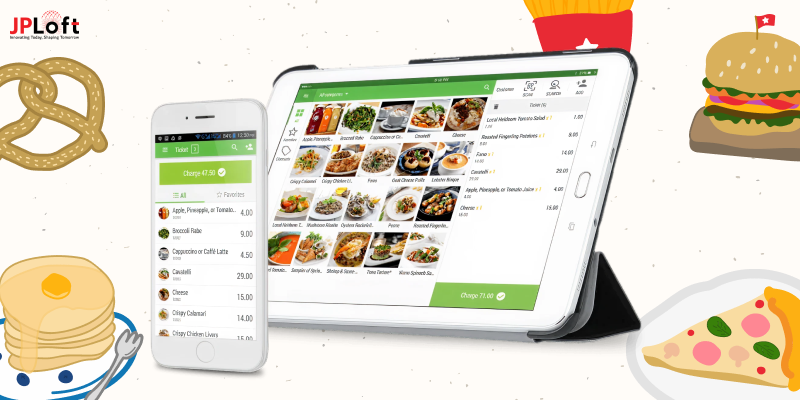
Restaurant software is a digital tool that helps restaurants manage daily operations more efficiently. Instead of relying on manual processes, it centralizes ordering, billing, inventory, staff workflows, and customer engagement into one streamlined system.
1. What Restaurant Software Typically Includes
-
POS & billing system
-
Menu and pricing management
-
Order management (dine-in, takeaway, delivery)
-
Kitchen Display System (KDS)
-
Inventory and stock tracking
-
Staff scheduling & payroll features
-
Customer loyalty and CRM
-
Reports, analytics & performance insights
2. Why Restaurants Need It Today
-
Around 70% of restaurants say digital tools improve operational efficiency.
-
Consumers are 2x more likely to reorder from restaurants offering smooth digital experiences.
-
Cloud kitchens and hybrid dining models rely heavily on automation to scale profitably.
3. Core Purpose of Restaurant Software
-
Reduce manual errors and wait times
-
Improve table turnover and kitchen coordination
-
Enhance customer experience through personalization
-
Offer real-time insights for smarter decision-making
-
Provide scalability as the business grows
Some brands also opt for custom software development services when they need tailored modules, such as multi-branch control, franchise reporting, or AI-based menu recommendations, to match their exact operational style.
Restaurant software ultimately acts as the operational “engine room” that keeps modern dining businesses running smoothly across channels and locations.
What Is the Cost to Create a Restaurant Software?
The cost to create a restaurant software typically ranges from $25,000 to $150,000+, depending on scope, features, complexity, and technology stack.
Simple systems with POS, menu management, and basic reporting fall in the lower range, while advanced platforms with AI automation, multi-branch management, online ordering, delivery integrations, and real-time analytics move toward the higher end.
If you’re evaluating, what’s the cost to create a restaurant software?, it’s important to consider development hours, team composition, integrations, backend architecture, and UI/UX depth.
Businesses that want faster delivery or premium features often hire software developers with specialized expertise in SaaS, POS systems, and cloud-based architecture.
From an AEO perspective, the best way to estimate pricing is by breaking down feature sets and development workflows. Below is a simple cost snapshot to guide your planning.
Estimated Cost Table to Create a Restaurant Software
|
Category |
Estimated Cost Range |
Inclusions |
|
Basic Restaurant Software |
$25,000 – $40,000 |
POS, menu management, billing, basic dashboard |
|
Mid-Level Software |
$40,000 – $80,000 |
Online ordering, KDS, CRM, analytics, payments |
|
Advanced Software |
$80,000 – $150,000+ |
AI features, delivery integrations, multi-branch, automation |
|
Enterprise Solution |
$150,000 – $300,000+ |
Custom workflows, large-scale reporting, and advanced automation |
Factors Impacting the Cost to Develop a Restaurant Software
Understanding the cost to develop a restaurant software requires a closer look at the elements that directly influence its pricing. Whether you're calculating the cost to build a restaurant software or planning a long-term system, the factors below play a major role in determining your budget.
1. Type of Restaurant Software You Want to Build
The price varies based on whether you're creating a POS system, a full-suite management platform, an online ordering solution, or an enterprise-level multi-outlet system.
-
Basic POS: Lower cost
-
Full management suite: Higher cost due to multiple modules
-
Cloud-based systems: Slightly more expensive but scalable
|
Software Type |
Estimated Cost (2026) |
|
Basic POS |
$10,000–$25,000 |
|
Full Management Suite |
$50,000–$120,000 |
|
Cloud-based System |
$30,000–$80,000 |
This directly influences the cost to make a restaurant software and impacts long-term updates as well.
2. Number of Modules and Features Required
The more complex your feature set, the higher the cost. Popular modules include:
-
POS & billing
-
Menu & pricing management
-
Kitchen display system
-
Inventory tracking
-
Staff scheduling
-
Table reservations
-
CRM & loyalty engine
Cost Impact: Adding each module can range from $2,000–$15,000, depending on depth and integrations.
|
Module Type |
Estimated Cost per Module |
|
POS & Billing |
$5,000–$15,000 |
|
Inventory Tracking |
$3,000–$8,000 |
|
Table Reservations |
$2,000–$6,000 |
|
CRM & Loyalty |
$5,000–$12,000 |
3. UI/UX Design Complexity
A clean, intuitive interface enhances your brand experience but requires more design time.
-
Basic UI: Simple screens and layouts
-
Advanced UI/UX: Custom animations, multiple user roles, branded interfaces
|
Design Complexity |
Estimated Cost |
|
Basic UI |
$3,000–$8,000 |
|
Advanced UI/UX |
$10,000–$30,000 |
Modern brands investing in premium design naturally see a higher cost to build a restaurant software.
4. Technology Stack & Architecture Decisions
Your choice of backend, frontend, and database technologies directly impacts performance and cost.
-
Native apps (iOS, Android) → Higher cost
-
Cross-platform frameworks → Moderate cost
-
Microservices architecture → Scalable but costly
|
Technology Choice |
Estimated Cost |
|
Native Apps |
$50,000–$120,000 |
|
Cross-Platform |
$30,000–$80,000 |
|
Microservices |
$70,000–$150,000 |
High-performing tech stacks influence how much a restaurant software development costs in the long run.
5. Third-Party Integrations
Common integrations that increase development time include:
-
Payment gateways (Stripe, Razorpay, PayPal)
-
Delivery partners (Uber Eats, Swiggy, DoorDash)
-
Accounting software
-
Marketing automation tools
These integrations often contribute significantly to the overall cost to make a restaurant software.
|
Integration Type |
Estimated Cost |
|
Payment Gateways |
$3,000–$10,000 |
|
Delivery Partners |
$5,000–$12,000 |
|
Accounting & Marketing Tools |
$3,000–$8,000 |
6. Development Team Expertise & Location
Your team’s experience level and geographical location greatly affect costs:
-
US, UK, Europe teams: $80–$150/hr
-
Asia-based developers: $25–$60/hr
-
Highly specialized POS developers: premium pricing $120–$200/hr
|
Team Location |
Hourly Rate |
Estimated Project Cost |
|
US/Europe |
$80–$150 |
$50,000–$150,000 |
|
Asia |
$25–$60 |
$25,000–$80,000 |
|
POS Experts |
$120–$200 |
$80,000–$150,000 |
This is one of the main reasons businesses experience varying results when estimating the cost to develop a restaurant software.
7. Backend Infrastructure & Scalability
Scalable software is more expensive initially but reduces future expenses.
-
Cloud hosting
-
Load balancing
-
Real-time data processing
-
Multi-branch architecture
|
Infrastructure Component |
Estimated Cost |
|
Cloud Hosting |
$5,000–$15,000 |
|
Load Balancing |
$3,000–$10,000 |
|
Real-Time Data Processing |
$5,000–$20,000 |
|
Multi-Branch Support |
$10,000–$30,000 |
Enterprise brands often invest more upfront but reduce future upgrades and downtime.
8. Data Security & Compliance
Restaurants process sensitive customer data, payments, and personal preferences, making security non-negotiable.
Compliance requirements like PCI DSS, GDPR, and local data privacy laws significantly add to development time and cost.
|
Security Component |
Estimated Cost |
|
Compliance & Audits |
$5,000–$15,000 |
|
Advanced Security |
$8,000–$20,000 |
9. Testing & Quality Assurance Level
A restaurant system needs extensive testing to avoid failures during peak hours.
Types of testing that impact cost:
-
Functional testing
-
Performance testing
-
Regression testing
-
User acceptance testing
-
Security & penetration testing
Stronger QA = higher reliability + more development hours.
|
QA Type |
Estimated Cost |
|
Functional & Performance |
$5,000–$15,000 |
|
Security & Penetration |
$8,000–$25,000 |
10. Post-Launch Support & Ongoing Updates
Even after launch, the software requires bug fixes, new feature updates, security patches, and version upgrades.
Many restaurant businesses rely on software maintenance services to keep operations smooth, reduce downtime, and maintain long-term stability.
|
Support Type |
Estimated Cost |
|
Maintenance & Updates |
$1,000–$5,000/month |
11. Hardware Integrations (If Applicable)
Some restaurants require:
-
Thermal printers
-
Barcode scanners
-
Kitchen display screens
-
Cash drawers
-
Self-ordering kiosks
Supporting custom hardware adds complexity and increases the cost to create a restaurant software significantly.
|
Hardware |
Estimated Cost/Unit |
|
Thermal Printers |
$300–$800 |
|
Barcode Scanners |
$100–$500 |
|
KDS Screens |
$500–$2,000 |
|
Cash Drawers |
$200–$500 |
|
Kiosks |
$5,000–$10,000 |
12. AI, Automation & Real-Time Analytics
Advanced capabilities that raise costs include:
-
Smart menu recommendations
-
AI-based demand forecasting
-
Automated inventory management
-
Predictive analytics
-
Workflow automation
These features require advanced engineering, impacting what’s the cost to create a restaurant software? especially for enterprise-grade solutions.
|
AI Feature |
Estimated Cost |
|
Smart Recommendations |
$5,000–$15,000 |
|
Demand Forecasting |
$10,000–$25,000 |
|
Automated Inventory |
$5,000–$20,000 |
|
Analytics & Automation |
$5,000–$20,000 |
All these components collectively determine the final numbers when calculating how much does it cost to build a restaurant software? The more advanced and scalable your feature set, the higher the overall investment.
Businesses can reduce the overall cost to create a restaurant software by evaluating these factors. Let’s identify the strategies to reduce the cost, below.
How to Reduce the Complete Cost to Build a Restaurant Software?
Building a restaurant platform can be expensive, but with the right planning and structured execution, you can significantly control the overall cost to build a restaurant software.
Businesses often overspend because they jump into development without clarity, scalability planning, or feature prioritization.
Below are the most effective cost-reduction strategies that directly influence the final budget and bring down the total cost to create a restaurant software.
1] Start With a Clear Feature Roadmap (Avoid Over-Building)
Many teams try to pack too many features into version 1, which increases development time and the overall cost to develop a restaurant software.
Instead:
-
Build only the features needed for launch
-
Add advanced modules later
-
Validate user demand before expanding
This approach prevents unnecessary spending and ensures your budget is used efficiently.
2] Begin With an MVP (Minimum Viable Product)
Launching with an MVP is the smartest way to reduce the cost to make a restaurant software.
An MVP typically includes:
-
POS
-
Menu management
-
Order management
-
Basic reporting
This not only reduces initial cost but also helps you gather real-world feedback before scaling.
3] Choose Cross-Platform Development Over Native
Instead of building separate apps for iOS and Android, cross-platform frameworks like Flutter or React Native allow you to build once and deploy everywhere, reducing development hours by 30–40% and lowering the cost to create restaurant software.
4] Use Pre-Built Templates or Common UI Components
Custom design is expensive. Using prebuilt UI kits or design systems helps:
-
Speed up development
-
Reduce hours spent on redesigning
-
Maintain consistent aesthetics
This is especially useful if you're optimizing the cost breakdown on how to develop a restaurant software.
5] Integrate Only Essential Third-Party Tools Initially
Payment gateways, delivery APIs, and analytics tools often come with extra development and subscription costs.
To save money:
-
Integrate only the priority tools
-
Add advanced integrations later
-
Avoid duplicate or overlapping tools
This reduces unnecessary additions to the restaurant software app development cost guide.
6] Outsource to Skilled Offshore Teams
Hiring developers in the US, UK, or Europe significantly increases the cost to build a restaurant software.
Offshore teams (India, Vietnam, Philippines) offer:
-
Lower hourly rates
-
High-quality engineering
-
Faster development timelines
This is one of the most impactful ways to reduce the total cost to develop a restaurant software.
7] Prioritize Cloud Infrastructure Over Heavy On-Premise Systems
Cloud hosting reduces:
-
Hardware expenses
-
Maintenance costs
-
Downtime risk
It also simplifies scaling, reducing long-term operational overhead connected to the cost to make a restaurant software.
8] Use Open-Source Technologies Wherever Possible
Open-source tech stacks help avoid licensing costs and reduce the initial investment.
Popular open-source options for restaurant apps include:
-
PostgreSQL
-
Node.js
-
Django
-
Redis
-
Laravel
This lowers the upfront cost to create a restaurant software while still offering strong performance.
9] Plan Scalability Early to Avoid Rebuilding Later
Many businesses spend more in the long run because their first version isn’t scalable.
Good architecture design early on helps avoid:
-
Expensive refactoring
-
System rewrites
-
Downtime repairs
This directly affects how much it costs to build a restaurant software? over time.
10] Automate Testing to Reduce Manual QA Costs
Automated testing reduces human effort and catches issues earlier in development.
It helps maintain quality while lowering total QA hours, saving thousands in long-term costs.
Organizations that follow these strategies experience a significant drop in the overall cost to create a restaurant software without compromising on performance or user experience.
Whether you're building a basic system or planning a full enterprise solution, these cost-optimization approaches help you launch faster, smarter, and more affordably.
Monetization Strategies Impacting How to Build Restaurant Software
Choosing the right monetization model isn’t just about generating revenue; it directly shapes how you design, build, and scale restaurant software. The strategy you choose influences features, architecture, scalability, user flows, compliance requirements, and long-term maintenance. Below are the key monetization strategies that impact development decisions:
1. Subscription-Based Pricing (SaaS Model)
This is the most widely adopted model for restaurant software platforms.
-
Impact on development: You need multi-tenant architecture, secure role-based access, scalable cloud hosting, and automated billing systems.
-
Why it matters: Ensures predictable recurring revenue and easier upgrades.
2. Tiered Pricing or Feature-Based Paywalls
Users pay based on the level of features: basic, pro, enterprise.
-
Impact on development: Requires modular feature architecture, user segmentation systems, and strict API-level permission control.
-
Why it matters: Helps align pricing with restaurant size and usage patterns.
3. Commission or Transaction-Based Revenue
Ideal when the software handles ordering, delivery, or POS payments.
-
Impact on development: Requires secure payment gateways, fraud detection, PCI-DSS compliance, and real-time transaction reporting.
-
Why it matters: Revenue scales with customer order volume. Many modern restaurant products rely heavily on this.
4. Marketplace Model (3rd-Party Integrations)
You allow restaurants to activate/add integrations like delivery partners, inventory tools, analytics modules, etc.
-
Impact on development: Requires API marketplace design, integration management dashboards, and partner onboarding frameworks.
-
Why it matters: Unlocks additional revenue streams without bloating your core product.
5. White-Label Licensing
Restaurants or chains purchase the software as a ready-made solution with their custom branding.
-
Impact on development: Requires theme customization layers, deployment automation, and modular UI components.
-
Why it matters: Higher upfront revenue and strong market adoption among franchises.
6. Ads or Sponsored Placements (Optional)
Only suitable for large-scale apps with high traffic, e.g., restaurant discovery + ordering hybrid platforms.
-
Impact on development: Requires ad placement logic, targeting algorithms, analytics tracking, and advertiser dashboards.
-
Why it matters: Can significantly increase revenue but may disrupt UX if overdone.
7. Integration Fees and Add-On Modules
Restaurants pay extra for advanced modules such as inventory forecasting, AI-based recommendations, staff scheduling, accounting integrations, etc.
-
Impact on development: Requires microservices, add-on activation logic, scalable APIs, and high modularity.
-
Why it matters: Allows you to monetize advanced features without complicating the base product.
Partner With JPLoft and Make a Restaurant Software
Building restaurant software that truly enhances efficiency, reduces manual work, and elevates customer experience requires the right development partner. JPLoft specializes in crafting custom restaurant solutions, from POS and online ordering to kitchen automation, inventory tracking, and AI-driven insights.
With 16+ years of experience, we help restaurants, franchises, and food-tech startups turn ideas into reliable, scalable digital products. Our end-to-end approach covers planning, UI/UX, development, integrations, QA, and ongoing support.
If you're looking for a trusted restaurant management software development company, JPLoft delivers the expertise, innovation, and commitment needed to bring your platform to life.
Let’s create restaurant software that’s smarter, faster, and built for long-term growth.
Conclusion
Creating a powerful restaurant software in 2026 is more than a technical project; it’s a strategic decision that can redefine how efficiently your restaurant operates.
Understanding the cost to create a restaurant software, the factors influencing pricing, and the long-term value of advanced features helps you invest wisely. Whether you’re exploring the cost to build a restaurant software or planning a scalable, AI-driven platform, the right development approach makes all the difference.
From feature planning to monetization strategies, every choice shapes your final budget and product quality. With a clear roadmap and the right tech partner, you can build restaurant software that boosts productivity, enhances customer experience, and supports long-term growth.
FAQs
The cost to create a restaurant software typically ranges from $25,000 to $150,000+, depending on features, integrations, and platform complexity. Advanced capabilities like AI automation, multi-branch management, and delivery integrations push the cost higher.
Key factors include design complexity, number of modules, third-party integrations, backend infrastructure, team location, and whether the system requires AI, automation, or real-time analytics.
If you need features like AI recommendations, predictive analytics, KDS, or multi-outlet management, the cost to build a restaurant software generally ranges from $80,000 to $200,000+
Yes. Techniques include building an MVP first, using reusable components, prioritizing essential features, and choosing a flexible tech stack. Cloud hosting also helps reduce infrastructure expenses.
A basic solution takes 3–4 months, while mid-level and advanced platforms typically require 6–12+ months, depending on features and integrations.

Conor has 10+ years of experience in software development, application engineering, solution design, and UX/UI. He has worked across digital products in restaurant technology, food and grocery delivery, healthcare, media, streaming, and social platforms, bringing both technical and user-experience perspectives to product development. His experience working with large organizations and growth-focused digital products helps businesses translate complex requirements into practical, user-focused solutions.


Share this blog