


Quick Answer:
To build a fintech app compliant with SAMA and NCA cybersecurity requirements in Saudi Arabia, assess applicable licensing rules, cybersecurity controls, and PDPL obligations. Develop secure financial workflows, integrate suitable payment or banking services, and complete required testing and documentation. Development costs may range from SAR 30,000 to SAR 750,000, depending on scope and complexity.
A fintech app can work well in one market and still face new requirements when entering Saudi Arabia. Unplanned regulatory reviews, security changes, and integration issues can increase development costs and delay launch.
To avoid these setbacks, founders and product owners need to assess compliance requirements before development begins. This includes identifying the relevant financial regulator, understanding applicable cybersecurity controls, and planning for personal data protection.
From licensing considerations to payment integrations and security testing, early planning helps teams make informed technical decisions and reduce avoidable rework.
This guide explains how to build a SAMA compliant fintech app for Saudi Arabia, assess relevant regulatory requirements, choose suitable technologies, estimate development costs and timelines, and prepare for launch.
What Makes a Fintech App Compliant in Saudi Arabia?
A fintech app needs more than useful features and a smooth user experience to operate in Saudi Arabia. Businesses must protect financial and personal data, secure transactions, and meet the regulatory obligations relevant to their services.
The applicable requirements depend on the app’s business model and activities. Depending on the services offered, businesses may need to assess licensing or authorization from the Saudi Central Bank (SAMA), the Capital Market Authority (CMA), or another relevant authority.
In the process of building a fintech app, it is also important to identify applicable cybersecurity controls and data protection obligations under Saudi Arabia’s PDPL compliance for fintech apps.
Developing a secure app does not automatically authorize a business to provide regulated financial services. Licensing, cybersecurity, and data protection requirements must be assessed separately.
Which Saudi Compliance Requirements Apply to A Fintech App?
The compliance requirements for a fintech app in Saudi Arabia depend on the financial services it offers, how it handles data, and how it operates. Before finalizing the product scope and technical architecture, assess the following regulatory areas to identify the obligations relevant to your business.
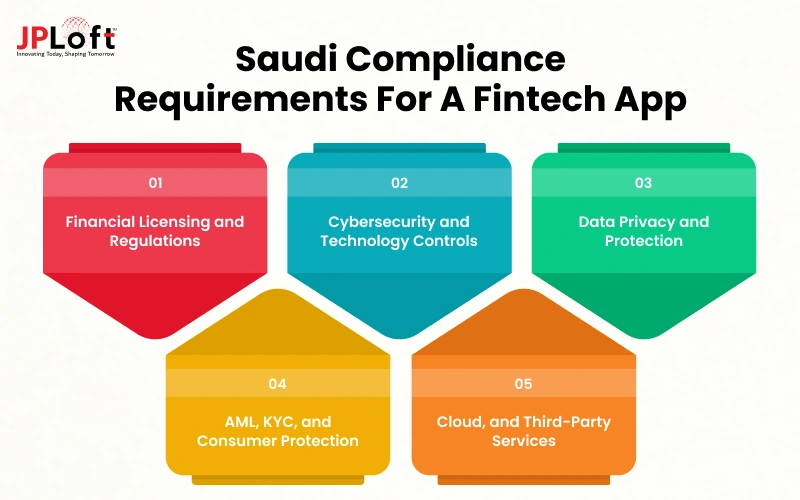
1. Financial Licensing and Regulations
The relevant regulator depends on the financial services the app provides. Identifying Saudi fintech licensing and authorization requirements early helps businesses plan development and launch.
|
Regulation or Authority |
Relevance to Fintech Apps |
|
Saudi Central Bank (SAMA) |
Regulates applicable banking, financing, payment, and other financial activities within its remit. |
|
Capital Market Authority (CMA) |
Oversees relevant capital-market activities, including applicable investment and securities services. |
|
Other Relevant Authorities |
May apply depending on the business model, service type, and operating arrangements. |
2. Cybersecurity and Technology Controls
Applicable cybersecurity frameworks guide security architecture, access controls, monitoring, and incident response for SAMA compliant fintech app.
|
Framework |
Relevance to Fintech Apps |
|
SAMA Cybersecurity Framework |
Applies to SAMA-regulated entities within its scope. |
|
NCA Essential Cybersecurity Controls (ECC) |
Applies to organizations within its defined scope, including specified government entities and Critical National Infrastructure operators. |
|
Relevant Cloud and Technology Controls |
May apply to hosting, outsourcing, third-party access, and technology operations, depending on the provider and regulatory requirements. |
3. Data Privacy and Protection
Fintech apps may process identity documents, account details, transaction records, and other personal data. Businesses should assess their obligations for collecting, using, storing, sharing, and transferring this information.
|
Regulation |
Relevance to Fintech Apps |
|
Personal Data Protection Law (PDPL) |
Governs applicable personal data processing and protection. |
|
Personal Data Transfer Regulations |
Address applicable transfers of personal data outside Saudi Arabia. |
|
Sector-specific data requirements |
May impose additional data obligations on regulated financial institutions. |
4. AML, KYC, and Consumer Protection
Depending on the business model, fintech apps may need customer verification, transaction monitoring, recordkeeping, and customer protection measures.
|
Requirement |
Relevance to Fintech Apps |
|
Anti-Money Laundering (AML) and Counter-Terrorist Financing (CTF) |
Helps prevent financial crime through applicable due diligence and monitoring controls. |
|
Know Your Customer (KYC) |
Supports customer identity verification and risk assessment. |
|
Consumer protection and credit rules |
May cover disclosures, complaints, responsible lending, and credit information. |
5. Payments, Cloud, and Third-Party Services
Payment integrations, banking APIs, identity providers, and cloud platforms may introduce additional regulatory, security, and contractual obligations.
|
Regulation or Service |
Relevance to Fintech Apps |
|
SAMA payment services requirements |
Applies to relevant regulated payment activities. |
|
Open Banking Framework |
Covers qualifying open banking services and participating entities. |
|
Cloud and outsourcing requirements |
May address vendor security, oversight, and business continuity. |
|
CST cloud regulations |
Apply to cloud service providers within the relevant regulatory scope. |
How to Build a Fintech App Compliant with Saudi Requirements?
Building a compliant fintech app requires regulatory planning alongside product development. These nine steps help businesses address applicable Saudi regulations, security controls, and operational requirements throughout the development process.
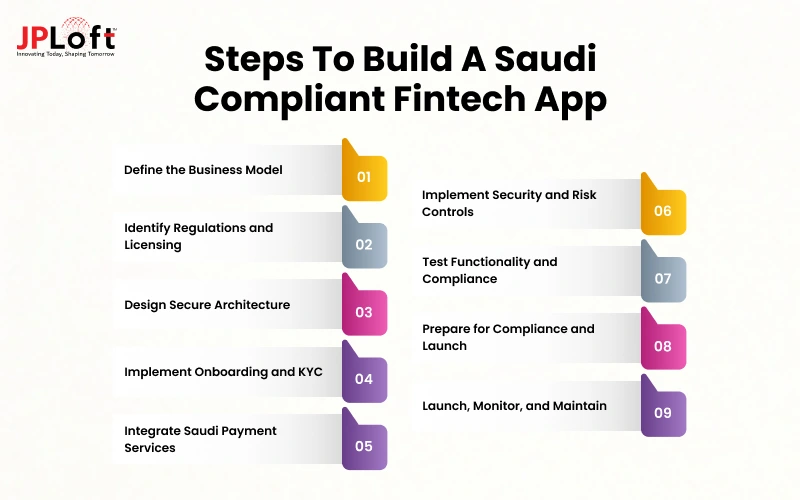
Step 1: Define Your Fintech Business Model
Start by identifying the financial problem your app will solve and the services it will offer in the Saudi market, such as digital payments, lending, money transfers, or investment management. Also check for the latest fintech app development trends and accordingly plan for yur approach and which regulatory requirements may apply.
-
Target users: Define whether the app serves individuals, merchants, businesses, or financial institutions.
-
Core features: Identify the essential services and user journeys.
-
Revenue model: Determine how the app will generate revenue and deliver financial services.
Step 2: Identify Applicable Regulations and Licensing Requirements
Assess the regulations relevant to your business model before finalizing product requirements. Document the applicable obligations, responsible teams, and evidence needed to demonstrate compliance.
-
Financial regulations: Determine whether SAMA, CMA, or another relevant authority oversees the proposed activity.
-
Compliance obligations: Assess applicable cybersecurity, PDPL, AML/KYC, and consumer protection requirements.
-
Licensing and approvals: Confirm the required authorization pathway with qualified Saudi regulatory specialists.
Step 3: Design a Secure Application Architecture
Connect with experienced UI/UX service providers plan how the mobile app, backend, databases, and third-party services will communicate while meeting applicable security and data protection requirements.
-
Data security: Protect data in transit and at rest through appropriate encryption.
-
Access management: Use role-based permissions and secure authentication.
-
Data architecture: Plan storage, retention, hosting, and third-party data access.
-
Reliability: Include backup, recovery, and scalability considerations.
Step 4: Implement Customer Onboarding and KYC Controls
Design registration and verification workflows according to the requirements applicable to the financial service. The level of verification should reflect the product’s regulatory obligations and customer risk profile.
-
Identity verification: Integrate suitable verification services where required.
-
Customer due diligence: Apply relevant identity checks and risk assessments.
-
Consent management: Record applicable customer permissions and disclosures.
-
Data protection: Securely handle identity documents and personal information.
Step 5: Integrate Relevant Saudi Payment and Banking Services
Select integrations based on the app’s functionality, regulatory status, and permitted access. Third-party integrations do not replace licensing obligations that may apply to the fintech business.
-
Payment services: Consider mada or other relevant payment providers.
-
Banking connectivity: Assess eligible open banking services and banking APIs.
-
Identity services: Integrate suitable digital identity verification providers where needed.
-
Integration testing: Validate API authentication, transaction reconciliation, error handling, and status updates.
Step 6: Implement Cybersecurity and Risk Management Controls
Apply mobile app security controls aligned with the frameworks and regulations relevant to your organization.
-
Authentication: Implement multifactor authentication where appropriate and secure session management.
-
Monitoring: Maintain relevant audit logs and monitor suspicious activity.
-
Vulnerability management: Identify, prioritize, and remediate security weaknesses.
-
Incident response: Establish procedures for investigating and responding to security incidents.
-
Third-party security: Review vendor access and applicable cloud security requirements.
Step 7: Test the App Against Functional and Compliance Requirements
Test the app before deployment to identify functional issues, security weaknesses, and gaps against applicable requirements. Such app testing approach allows the developers to plan for
-
Functional testing: Verify registration, account management, payments, and other core workflows.
-
Integration testing: Check data exchange and transaction handling across connected services.
-
Security testing: Conduct vulnerability assessments and penetration testing where required.
-
Remediation: Fix identified issues, retest affected components, and maintain supporting reports.
Step 8: Prepare Compliance Evidence and Launch Readiness
Before launch, confirm that applicable regulatory conditions and operational requirements have been addressed.
-
Regulatory documentation: Organize relevant licences, approvals, and compliance records.
-
Security evidence: Maintain assessment reports, testing results, and remediation records.
-
Operational readiness: Prepare incident response, business continuity, recovery, and customer support procedures.
-
Final review: Verify that required approvals are in place before offering regulated services to customers.
Step 9: Launch, Monitor and Upgrade
Once testing is complete and any critical issues are resolved, prepare your fintech app for release. Plan the launch, ongoing monitoring, app maintenance, and future upgrades to keep the app secure, stable, and aligned with changing user needs.
-
Launch the app: Prepare the production environment and publish the app on the Google Play Store or Apple App Store, as applicable, after completing the required release checks and approvals.
-
Monitor and maintain performance: Track crashes, bugs, transaction failures, and performance issues, then release fixes to maintain app stability and reliability.
-
Plan regular upgrades: Improve the user experience, introduce relevant features, update dependencies, and address emerging security risks as the product grows.
What Security Features Should a Saudi Fintech App Include?
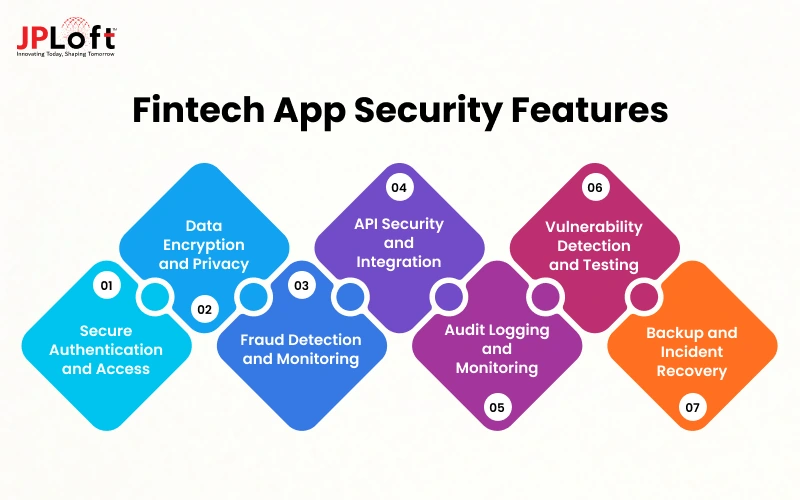
A Saudi fintech app needs security controls to protect customer data, financial transactions, and account access. These selected fintech app features should align with the SAMA, PDPL, and NCA cybersecurity requirements applicable to the business.
1. Multi-Factor Authentication and Secure Access
Multi-factor authentication (MFA) adds an extra layer of protection to customer accounts. Role-based access controls, secure session management, and additional verification for sensitive actions help reduce unauthorized access.
2. Data Encryption and Privacy Controls
Encrypt sensitive data in transit and at rest to protect financial and personal information. Access restrictions, appropriate data retention practices, and secure deletion processes also help address applicable privacy requirements.
3. Fraud Detection and Transaction Monitoring
Transaction monitoring helps identify unusual payment patterns and suspicious account activity. Risk-based rules can flag potentially fraudulent transactions and trigger additional verification or manual review when needed.
4. Secure APIs and Third-Party Integrations
Fintech apps often exchange data with banks, payment providers, and identity verification services. Secure API authentication, protected credentials, input validation, and integration monitoring help prevent unauthorized access and data exposure.
5. Audit Logs and Security Monitoring
Maintain records of relevant login attempts, account changes, administrative actions, and financial transactions. Protect these logs against unauthorized changes and monitor security events to support investigations and compliance reviews.
6. Vulnerability Management and Security Testing
Regularly scan application components and dependencies for known vulnerabilities. Conduct security assessments and penetration testing where appropriate or required, then fix identified weaknesses and retest affected components before release.
7. Backup, Recovery, and Incident Response
Maintain protected backups and test recovery procedures to support service continuity. Establish processes for detecting, containing, and investigating security incidents, as well as for incident reporting and business continuity arrangements that meet applicable requirements.
How Much Does it Cost and How Long Does it Take to Build a Compliant Fintech App?
Building a compliant fintech app in Saudi Arabia can cost between SAR 30,000 and SAR 750,000, and can take from 2 to 12+ months depending on the app’s features, integrations, security requirements, and complexity.
The detailed breakdown of fintech app development cost and timeline in Saudi Arabia is as follows:
|
App Complexity |
Features Covered |
Estimated Cost |
Estimated Timeline |
|
Basic fintech app |
User registration, profile management, basic dashboard, transaction history, and essential security controls |
SAR 30,000 – SAR 100,000 |
2–4 months |
|
Mid-complexity fintech app |
Advanced user dashboard, KYC integration, payment gateway, transaction notifications, reporting, and enhanced security controls |
SAR 100,000 – SAR 300,000 |
4–7 months |
|
Complex fintech platform |
Advanced payment or financial workflows, banking APIs, multi-role access, fraud monitoring, detailed analytics, and extensive security and compliance features |
SAR 300,000 – SAR 750,000 |
7–12+ months |
What Factors Affect Fintech App Development Costs?
If you are planning a broader mobile application project, explore this guide on Mobile App Development Cost in Saudi Arabia to understand the estimated development expenses, pricing factors, and timelines across different app categories.
-
App Features and Functionality: More complex financial workflows, user roles, and transaction capabilities increase development effort.
-
UI/UX Design: Custom interfaces, Arabic and English support, and accessibility requirements affect design time and cost.
-
Security Requirements: Encryption, authentication, fraud monitoring, and security testing add to implementation costs.
-
Regulatory and Compliance Scope: Applicable licensing-related technical needs, documentation, and control requirements influence project scope.
-
Third-Party Integrations: Connecting payment gateways, banking APIs, identity verification, and other services increases integration effort.
-
Technology Stack and Architecture: Scalable infrastructure, backend complexity, and cloud requirements affect development and deployment costs.
-
Testing and Ongoing Maintenance: Functional testing, penetration testing, bug fixes, updates, and post-launch support contribute to the overall budget.
What Fintech App Development Challenges Can Delay Compliance Readiness?
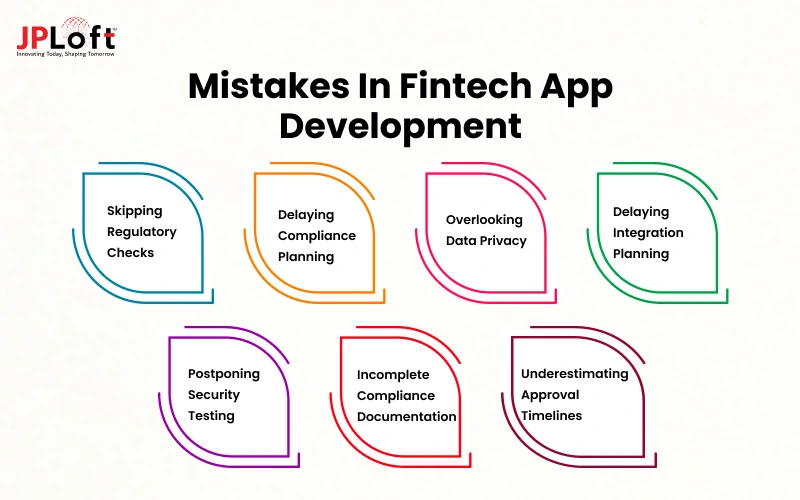
The process to build Saudi compliant fintech apps can face delays when regulatory requirements are considered too late or treated as a final-stage task. These fintech app development challenges can lead to architectural changes, additional testing, integration issues, and launch setbacks in Saudi Arabia.
Challenge 1: Starting Development Without Checking Regulatory Applicability
Building features before identifying the relevant SAMA, CMA, or other applicable requirements can lead to costly rework. The applicable obligations depend on the business model and planned financial activities.
Solution: Map the relevant regulatory requirements and Saudi fintech licensing obligations before finalizing the product scope and technical architecture.
Challenge 2: Treating Compliance as a Final Development Phase
Adding security controls, audit logs, or privacy measures near launch may require significant changes to the app’s architecture and workflows.
Solution: Include applicable fintech app compliance requirements in the initial design, development, and testing plans.
Challenge 3: Overlooking Data Privacy Requirements
Failing to plan for consent, data minimization, retention, and cross-border data transfers can create gaps under Saudi Arabia’s Personal Data Protection Law (PDPL).
Solution: Define data collection, storage, access, retention, and transfer practices before implementing onboarding and data management features.
Challenge 4: Delaying Third-Party Integration Planning
Payment gateways, banking APIs, identity verification services, and other external systems may have separate technical, contractual, and approval requirements that affect project timelines.
Solution: Confirm integration feasibility, provider requirements, access credentials, and dependencies early in the development process.
Challenge 5: Leaving Security Testing Until the End
Late vulnerability assessments or penetration testing can uncover issues that require substantial fixes and repeated testing before launch.
Solution: Schedule security reviews throughout development and allocate time for remediation and retesting before release.
Challenge 6: Maintaining Incomplete Compliance Documentation
Missing risk assessments, security policies, system records, or evidence of implemented controls can slow internal reviews and applicable regulatory assessments.
Solution: Maintain compliance documentation and control evidence alongside development, with clear ownership for each requirement.
Challenge 7: Underestimating Regulatory and Approval Timelines
The completion of the app development does not automatically authorize a fintech platform to provide regulated financial services. Also, the timeline required for the approval processes further affects the planned launch date.
Solution: Plan software development, required licensing or approvals, external assessments, and operational readiness as separate but coordinated workstreams.
Build Your Fintech App with JPLoft, a Compliance-Aware Development Partner
Building a fintech app in Saudi Arabia requires secure architecture, financial integrations, and alignment with applicable SAMA, NCA, and PDPL compliance for fintech apps.
JPLoft as a mobile app development company in Saudi Arabia combines 16+ years of development experience and 1,250+ delivered projects to help businesses develop secure, scalable fintech applications.
Our fintech app development approach covers:
-
Compliance-Aware Architecture: Account for applicable regulatory and cybersecurity requirements during technical planning.
-
Financial Integrations: Connect relevant payment gateways, banking APIs, and identity verification services.
-
Fintech App Security: Implement data encryption, access controls, transaction safeguards, and audit logging.
-
Testing and Documentation: Validate critical workflows, address vulnerabilities, and document implemented security controls.
JPLoft helps businesses address technical requirements early, reduce avoidable rework, and prepare their fintech products for compliance reviews. Regulatory applicability and Saudi fintech licensing obligations should be verified with qualified specialists.
Planning a SAMA-aligned fintech app for Saudi Arabia? Connect with JPLoft to discuss your development requirements and technical roadmap.
Conclusion
Building a fintech app with SAMA compliance in Saudi Arabia requires a clear product strategy, secure technology, and suitable financial integrations. Understanding applicable regulatory requirements early can help businesses plan development, manage costs, and prepare for launch.
Start by defining your target users, prioritizing essential features, and selecting integrations that fit your business model.
Work with qualified Saudi specialists to verify licensing obligations and applicable compliance requirements before offering regulated financial services. A well-planned development process can help reduce technical rework and create a scalable foundation for future growth.
FAQs
No. The applicable authorization depends on the app’s business model and financial activities. Some services require SAMA authorization, while others may fall under the Capital Market Authority (CMA) or another relevant authority. Businesses should verify the requirements that apply to their specific services.
Requirements may include applicable financial licensing, cybersecurity controls, personal data protection under the PDPL, AML/KYC procedures, and payment-related obligations. The exact requirements depend on the services offered and the organization’s regulatory status.
Development may take around 2–4 months for a basic app, 4–7 months for a mid-complexity app, and 7–12 months or longer for a complex platform. Third-party integrations, testing, and project scope affect the timeline. Regulatory approvals may require additional time.
Development costs may range from SAR 30,000 to SAR 750,000, depending on features, integrations, security requirements, and complexity. Licensing, legal advice, external assessments, and third-party fees may add to the overall budget.
Depending on the business model and eligibility, a fintech app may integrate with mada, SADAD, payment gateways, banking APIs, or eligible open banking services. Available options depend on provider requirements and applicable regulatory conditions.
A business must obtain the authorizations required for its regulated financial activities before providing those services. Whether other app functions can launch earlier depends on the business model and applicable requirements, so businesses should confirm their position with qualified Saudi specialists.

Priyanka Sukhwal is the Managing Director and Business Head of JPLoft, with 10+ years of experience in technology, digital product strategy, and business growth. She has worked closely with businesses building mobile applications, custom software, marketplaces, and on-demand platforms across mobility, automotive, consumer services, and startup ecosystems. At JPLoft, she focuses on understanding business models, identifying product opportunities, and helping companies plan digital solutions that can scale with changing market needs.




Share this blog