


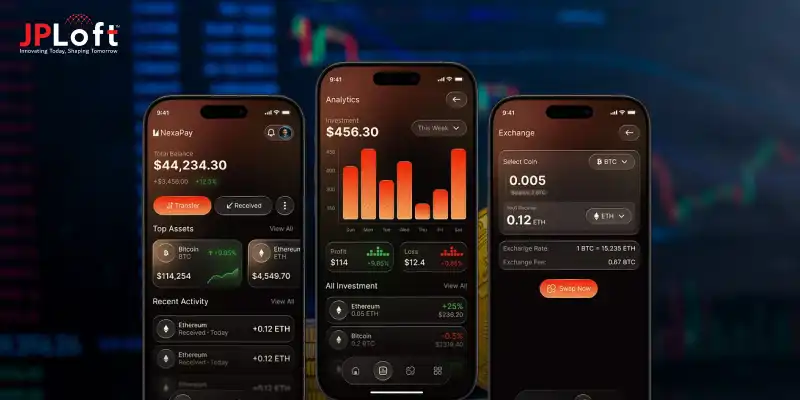
Key Takeaways
The cost of crypto exchange development typically ranges from $25,000 to $350,000+, depending on platform complexity, features, and scalability.
Choosing the right exchange type (CEX, DEX, or hybrid) significantly impacts both development cost and long-term operational requirements.
Core cost drivers include feature complexity, trading engine performance, UI/UX design, blockchain integration, and infrastructure scalability.
Hidden costs such as security audits, liquidity integration, compliance, and ongoing maintenance can substantially increase the total investment.
Starting with a lean MVP and adopting a modular development approach helps control initial costs while enabling scalable growth.
Partnering with an experienced development company like JPLoft ensures optimized architecture, reduced risks, and better long-term cost efficiency.
Crypto exchanges have moved beyond early-stage experimentation to highly-demanded fintech platforms handling substantial transactions, liquidity management, and strict compliance requirements. Hence, offering significant opportunities for the new age entrepreneurs.
But a common concern that most businesses have is: how much does it cost to build a crypto exchange that can stand out in today’s market?
The cost varies based on several key factors, including both pre-and-post development. From deciding on the platform scalability before development to planning for scaling, audits, and ongoing updates to keep the platform secure, every selected aspect determines the final budget.
In this crypto exchange app development cost guide, we will break down the development cost, the factors driving the cost, and how business can strategically plan their investment.
What is the Cost of Crypto Exchange Development?
The average cost to develop crypto exchange platform typically ranges from $25,000 to $350,000+, depending on the platform type, feature depth, security architecture, and scalability requirements.
A basic MVP with essential crypto trading features can be built within $25,000 to $100,000. A mid-level platform can be built for $100,000 to $250,000.
On the other hand, the cost for an advanced one with advanced trading tools, liquidity integration, and enterprise-grade security can go upto $350,000 or more.
|
Development Type |
Description |
Estimated Cost |
|
Basic Crypto Exchange (MVP) |
Core features like user registration, wallet integration, and basic trading |
$25,000 – $100,000 |
|
Mid-Level Crypto Exchange |
Enhanced UI/UX, multiple trading pairs, integrations, improved security |
$100,000 – $250,000 |
|
Advanced / Enterprise Exchange |
Advanced trading tools, liquidity management, compliance, and scalability |
$250,000 – $350,000+ |
Cost Based on Exchange Type
The cost to start crypto exchange also varies significantly based on the type of exchange you choose, as each model involves different levels of architectural complexity, security requirements, and operational control.
|
Exchange Type |
Description |
Estimated Cost |
|
Centralized (CEX) |
Backend-controlled platform with trading engine and user fund management |
$25,000 – $200,000+ |
|
Decentralized (DEX) |
A smart contract-based exchange with no intermediaries requires audits |
$70,000 – $250,000+ |
|
Hybrid Exchange |
Combines centralized control with decentralized architecture |
$120,000 – $350,000+ |

Factors Impacting the Cost of Crypto Exchange App Development
If you are wondering, “How much does it cost to create a crypto exchange?” then, along with the cost estimates, also consider the factors impacting the overall cost.
The cost to develop crypto exchange varies depending on technical, operational, and business decisions.
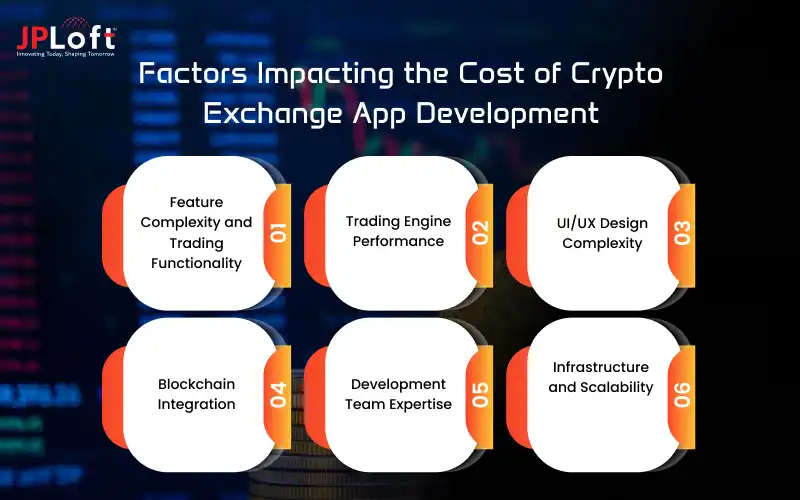
Here are the key factors to be aware of:
1. Feature Complexity and Trading Functionality
The crypto exchange app features directly impact development effort and cost.
While basic exchanges include standard buy/sell and wallet features, advanced platforms require real-time analytics, multiple order types, and trading tools.
|
Level |
Included Features |
Cost Impact |
|
Basic (MVP) |
User onboarding, wallet integration, spot trading |
Low |
|
Mid-Level |
Multiple trading pairs, limit/market orders, basic analytics |
Moderate |
|
Advanced |
Margin trading, staking, futures, copy trading, and real-time analytics |
High |
2. Trading Engine Performance
The trading engine determines how efficiently orders are matched and executed. A high-performance engine capable of handling large volumes and low latency requires deeper technical expertise and higher investment.
|
Level |
Capabilities |
Cost Impact |
|
Basic |
Handles limited transactions, standard order matching |
Low |
|
Scalable |
Supports higher volumes, improved matching speed |
Moderate |
|
High-Performance |
Low-latency execution, real-time processing, high-frequency trading support |
High |
3. UI/UX Design Complexity
User experience plays a critical role in trader retention. However, building intuitive dashboards, smooth navigation, and real-time data visualization with the help of a UI/UX design services provider can increase both design efforts and the cost to start crypto exchange.
|
Level |
Design Scope |
Cost Impact |
|
Basic |
Simple dashboards, basic trading interface |
Low |
|
Enhanced |
Improved navigation, responsive design, and better data visualization |
Moderate |
|
Advanced |
Interactive charts, custom dashboards, pro-level trading interface |
High |
4. Blockchain Integration
Security is a non-negotiable aspect of a crypto exchange platform. The choice of blockchain network impacts development complexity.
Hence, planning for a platform supporting multiple cryptocurrencies or chains requires hiring app developers, hence increased integration effort and cost to make crypto exchange.
|
Level |
Integration Scope |
Cost Impact |
|
Single-Chain |
One blockchain network, limited token support |
Low |
|
Multi-Chain |
Multiple blockchain integrations, broader asset support |
Moderate |
|
Cross-Chain |
Cross-chain functionality, interoperability layers |
High |
5. Development Team Expertise
The quality and structure of your development team significantly influence overall cost.
Experienced teams from an experienced software development company deliver better architecture and fewer long-term issues, but at a higher upfront investment.
|
Team Type |
Characteristics |
Cost Impact |
|
Freelancers / Small Team |
Lower upfront cost, limited scalability, and long-term support |
Low |
|
Mid-Level Agency |
Balanced expertise, structured development process |
Moderate |
|
Experienced Company |
End-to-end development, scalable architecture, long-term optimization |
High |
6. Infrastructure and Scalability
A key factor to consider when planning for the cost to develop a crypto exchange is its scalability.
The platform must handle user growth and trading volume without performance issues. However, scalable cloud infrastructure and load management systems can result in increased costs.
|
Level |
Infrastructure Capability |
Cost Impact |
|
Basic |
Limited hosting, supports early-stage users |
Low |
|
Scalable |
Cloud-based setup, handles moderate traffic |
Moderate |
|
Enterprise |
Auto-scaling, load balancing, and high availability for peak trading volumes |
High |
Hidden Factors Impacting the Cost to Set Up A Crypto Exchange
Beyond the visible development factors for a crypto trading app, several underlying elements exist that can significantly increase the total cost to start a crypto exchange.
These hidden factors are often underestimated during planning but play a critical role in long-term performance, compliance, and scalability.
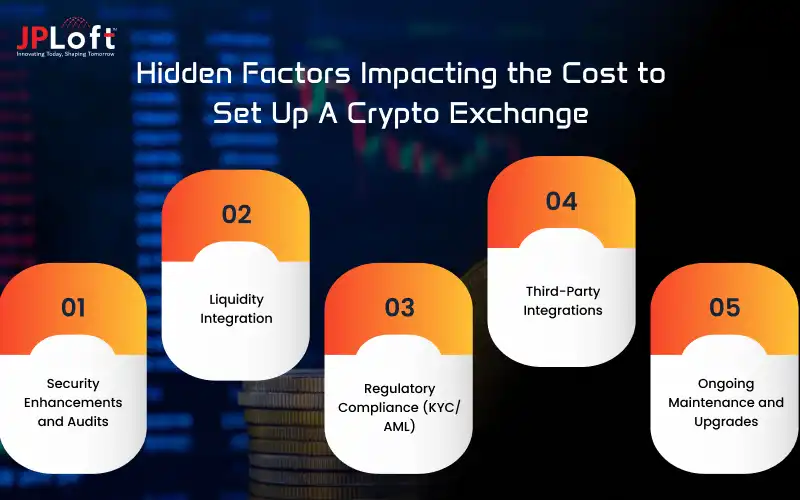
Here are the key hidden factors that need to be considered when deciding the cost to set up a crypto exchange:
► Security Enhancements and Audits
Basic app security setups are not enough for modern exchange platforms, requiring the implementation of advanced protections like multi-signature wallets and conducting third-party security audits.
These upgrades add substantial cost to build a crypto exchange like Binance. Further, ongoing monitoring and periodic testing add to recurring and long-term expenses.
► Liquidity Integration
Building a successful crypto exchange requires planning for strong liquidity options to deliver smooth trading experiences. These experiences should not be compromised for optimized P2P crypto exchange development cost.
However, integrating external liquidity providers or aggregating multiple sources involves API costs, technical setup, and continuous optimization, all of which add to the overall investment.
► Regulatory Compliance (KYC/AML)
Another hidden factor impacting the cost to set up a crypto exchange is regulatory compliance. Meeting these standards requires integrating KYC verification systems, AML checks, and data protection frameworks.
The complexity increases further for platforms aiming to operate across multiple jurisdictions, leading to higher implementation and operational costs.
► Third-Party Integrations
The success of crypto exchanges like Coinbase depends on various external services such as payment gateways, analytics tools, and notification systems.
But each integration involves setup, customization, and recurring subscription or usage costs that are often overlooked initially. Hence, when deciding how much does it cost to start a crypto exchange, keep these recurring expenses in consideration.
► Ongoing Maintenance and Upgrades
The crypto exchange development cost is not just limited to the platform launch. But, also post-launch, continuous updates, performance optimization, bug fixes, and security patches are essential to keep the platform stable and competitive.
These ongoing maintenance services can account for a significant portion of the total lifecycle cost, and hence should be considered before finalizing your development budget.
Best Practices to Optimize the Cost to Build A Crypto Exchange
Till now, we have discussed the cost to create a crypto exchange and the associated factors that impact these costs.
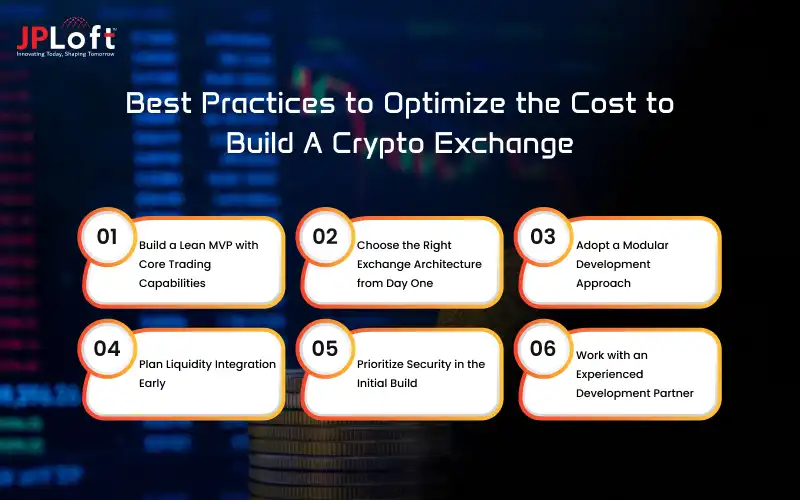
So, now let’s move further to discuss key practices that can help optimize these costs and ensure a scalable and profitable crypto trading platform development.
[A] Build a Lean MVP with Core Trading Capabilities
The best approach to control the cost to build a crypto trading app is by starting with essential features and basic trading instead of launching a fully loaded platform.
This MVP launch minimizes initial investment and allows you to validate market demand early. Further, depending on the investor's response and user demand, you can scale features, add more trading functionalities, or asset classes.
[B] Choose the Right Exchange Architecture from Day One
A common mistake most entrepreneurs make is failing to decide on the type of crypto exchange app to build. Selecting between CEX, DEX, or a hybrid should align with your business model and target users.
Overengineering the architecture without a clear need increases both development time and cost. A well-aligned choice from day one keeps the build efficient and scalable.
[C] Adopt a Modular Development Approach
Hire dedicated developers and plan for an agile development approach by breaking it into functional modules.
Such a development approach reduces high upfront costs and allows gradual investment as the platform grows. It also makes it easier to update or scale specific components without rebuilding the entire system.
[D] Plan Liquidity Integration Early
A trading platform relies heavily on the user's trust and their experience when using the app. Hence, defining how your platform will source liquidity during the planning stage itself is important to ensure a better experience and optimize the development process and the budget.
Late-stage integration often leads to rework, higher costs, delays, and, most importantly, impacts the experience of early adopters.
[E] Prioritize Security in the Initial Build
Along with all, it is important to plan your crypto exchange security right from the start. Incorporating security from the beginning avoids costly fixes and vulnerabilities later.
It is recommended to ensure strong authentication, encryption, and secure architecture early to reduce long-term risks and also to build user trust, which is critical for exchange success.
[F] Work with an Experienced Development Partner
The most effective approach for optimizing the cost to develop a crypto exchange platform is partnering with an expert mobile app development company.
An experienced development partner brings structured processes, optimized architecture, and domain expertise. This helps reduce development time, avoid technical errors, and control overall costs. The right partner ensures your investment delivers long-term value.
How JPLoft Can Help Optimize Crypto Exchange Development Cost?
Optimizing crypto exchange development cost requires a strategic approach that balances performance, scalability, and long-term efficiency.
JPLoft, as a trusted crypto exchange development company, helps businesses achieve this by focusing on structured planning and cost-efficient execution from the very beginning.
By adopting an MVP-first approach, JPLoft enables faster market entry while keeping initial investment controlled. The developers ensure that the crypto exchange platform is built using a modular architecture, allowing businesses to scale features gradually instead of investing heavily up front.
JPLoft also ensures that the right technology stack, built-in security, and compliance readiness are integrated early in the process. This reduces the risk of costly rework, delays, or regulatory issues, ensuring that your investment delivers sustainable value over time.
Conclusion
The cost of crypto exchange development is defined by a combination of strategic choices, technical requirements, and long-term goals.
From selecting the right exchange type to planning features, security, and scalability, every decision directly impacts the final decision regarding “how much does it cost to develop a crypto exchange”.
Businesses that approach development with a clear roadmap, prioritize essential features, and account for both visible and hidden costs are better positioned to control expenses while building a competitive platform.
Rather than focusing only on reducing cost, the goal should be to optimize investment for performance, security, and growth.
With the right approach and development strategy, it’s possible to build a crypto exchange that is not only cost-efficient but also scalable, secure, and ready to adapt to evolving market demands.
FAQs
The cost of crypto exchange development typically ranges from $25,000 to $350,000+, depending on features, exchange type, security requirements, and scalability. A basic MVP costs less, while advanced platforms with high-performance trading and compliance systems require a larger investment.
Key factors include feature complexity, trading engine performance, UI/UX design, blockchain integration, infrastructure, and development expertise. Additionally, security, liquidity integration, and compliance requirements significantly impact the overall cost.
Decentralized exchanges (DEX) are generally more expensive due to smart contract development and security audits. However, centralized exchanges (CEX) also involve high costs for backend control, security systems, and compliance, making the final cost dependent on platform complexity.
You can optimize costs by starting with an MVP, choosing the right exchange architecture, using a modular development approach, and planning integrations early. Partnering with an experienced development company also helps avoid costly mistakes and delays.
Development time typically ranges from 3 to 9+ months, depending on platform complexity, features, and customization level. MVPs can be launched faster, while enterprise-grade exchanges require more time for development, testing, and security implementation.

Savannah is a passionate tech enthusiast with a sharp understanding of client needs across diverse digital domains. With expertise spanning financial platforms, on-demand solutions, and emerging technologies, she brings a unique blend of analytical insight and interpersonal skills, helping businesses decode complexities and make informed decisions in today's rapidly evolving digital world.




Share this blog