



Key Takeaways:
Auction apps offer strong growth potential by enabling real-time bidding, global reach, and higher engagement across multiple industries today.
Selecting the right set of features ensures smooth bidding, secure transactions, and a better overall experience for users and sellers.
Following a structured approach reduces risks and helps businesses move efficiently from idea to launch stage.
The cost to build an auction app typically ranges from $10,000 to $100,000+, depending on features, complexity, and scalability requirements.
Addressing technical challenges and adopting the latest trends improves scalability, performance, and long-term success of modern auction platforms significantly.
Working with an experienced team like JPLoft ensures better planning, faster execution, and continuous support for building and scaling auction platforms successfully.
The way people buy and sell products is changing fast. Online auctions are leading this shift. Today, over 55% of auction transactions happen digitally, showing strong user trust in mobile platforms.
Still, many businesses struggle to turn this opportunity into a working product. Building a reliable platform needs the right strategy, features, and technology choices.
That’s where this auction app development guide becomes important. It helps you understand what it takes to create reliable auction platforms that users trust and enjoy.
Whether you are a startup or an enterprise, the demand is clear. Millions of auctions happen every year, creating huge business potential.
If you are planning to create auction app, this guide will walk you through everything step by step.
What is an Auction App?
An auction app is a digital platform that allows users to buy and sell items through a real-time bidding process. Sellers list products, and buyers place competitive bids within a limited time frame.
The highest bidder at the end of the auction wins the item. These apps support multiple auction formats and ensure secure transactions.
Auction apps are widely used across industries such as collectibles, electronics, and real estate, offering a fast, transparent, and engaging buying experience.
Auction Industry Market Growth: Facts & Figures
The auction industry is growing steadily as more users shift toward digital platforms and mobile bidding.
Here are some key market statistics that highlight its strong momentum:
-
The global online auction market is valued at approximately USD 24.75 billion in 2026 and is likely to reach USD 70.64 billion by 2035.
-
The online salvage auction segment alone is expanding rapidly, rising from $10.71 billion in 2025 to $12.78 billion in 2026, showing a 19.3% CAGR.
-
The broader auction house market is expected to hit $155.29 billion by 2034, reflecting long-term industry growth.
These numbers clearly show that digital auctions are expanding fast, creating strong opportunities for businesses to invest.
How Does an Auction App Work?
Auction apps simplify the entire buying and selling process with a structured workflow.
-
User Registration: Users sign up and create profiles to start bidding or selling.
-
Product Listing: Sellers upload product details, images, and starting bid prices.
-
Live Bidding: Buyers place real-time bids within a defined auction timeframe.
-
Notifications: Users get instant alerts for new bids and auction updates.
-
Winner Selection: The highest bidder wins once the auction ends.
-
Secure Payments: Payment gateways ensure safe and smooth transactions.
-
Order Completion: The product is delivered, and users can leave feedback.
If you plan to create auction app solutions, focusing on these steps ensures a smooth and reliable user experience.
Major Types of Auction Apps
Understanding the different auction formats is essential for choosing the right approach for your business. Each type serves a unique purpose and fits different industries and user behaviors.
Type 1: English Auction Apps
This is the most widely used format where buyers place progressively higher bids in real time. The auction continues until no higher bid is made, and the highest bidder wins. It is commonly used in marketplaces for collectibles, electronics, and luxury goods.
Type 2: Dutch Auction Apps
In this format, the price starts high and gradually decreases until a buyer accepts the current price. It is ideal for time-sensitive sales and inventory clearance, making transactions quick and efficient.
Type 3: Sealed Bid Auction Apps
Users submit bids privately without knowing others’ offers. Once all bids are collected, the highest bidder wins. This format ensures fairness and is often used in high-value or confidential transactions.
Type 4: Reverse Auction Apps
Unlike traditional models, here buyers post requirements, and sellers compete by offering the lowest price. This approach is widely used in service-based industries like logistics, construction, and freelance platforms.
Choosing the right format depends on your business goals and target audience. Partnering with a reliable mobile app development company can help you select and implement the most suitable auction model effectively.

Benefits of Investing in an Auction App
Auction apps help businesses reach more users, increase engagement, and generate higher revenue through real-time bidding experiences. They also offer flexibility, scalability, and strong market demand across industries.
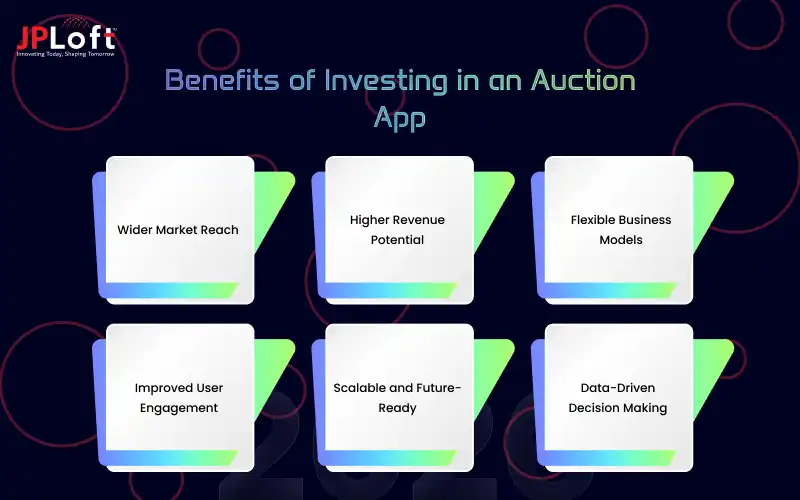
Here are the key benefits of investing in an auction app:
1. Wider Market Reach
Auction apps allow businesses to reach global audiences without location limits. When you build auction app platforms, users can join auctions anytime, increasing visibility, participation, and overall sales opportunities significantly.
2. Higher Revenue Potential
Real-time bidding creates competition among buyers, which increases final product prices. Businesses that create auction app solutions can benefit from higher margins, commissions, and repeat transactions across different product categories.
3. Flexible Business Models
Auction apps support multiple models like B2C, C2C, and reverse auctions. This flexibility helps businesses adapt quickly. Many startups prefer to build a mobile app using this model for faster market entry.
4. Improved User Engagement
Live bidding, instant notifications, and countdown timers keep users actively involved. These features encourage repeat usage and longer session time, making auction platforms more engaging compared to traditional eCommerce apps.
5. Scalable and Future-Ready
Auction apps are highly scalable and can handle growing users and transactions. Businesses often hire mobile app developers to ensure smooth scaling, better performance, and integration of advanced features over time.
6. Data-Driven Decision Making
Auction platforms collect valuable user data, including bidding behavior and preferences. This helps businesses improve strategies, optimize pricing, and offer personalized experiences that drive better results and customer satisfaction.
Key Features of an Auction App
To develop auction app platforms successfully, it is essential to include the right set of features that ensure smooth bidding and secure transactions. Choosing the right auction app features improves user experience and drives higher engagement.
Here are the essential and advanced mobile app features every auction app should include:
|
Feature |
Description |
Why It Matters |
|
User Registration & Profiles |
Users can sign up using email, phone, or social accounts. Profiles store bidding history and preferences. |
Makes onboarding simple and helps personalize user experience. |
|
Product Listing System |
Sellers can upload product details, images, and starting prices easily. |
Ensures clear product visibility and attracts more bidders. |
|
Real-Time Bidding |
Users place live bids within a set timeframe with instant updates. |
Creates excitement and increases participation during auctions. |
|
Push Notifications |
Alerts users about bids, auction updates, and deadlines. |
Keeps users engaged and improves retention rates. |
|
Secure Payment Integration |
Supports multiple payment methods with encryption. |
Builds trust and ensures safe financial transactions. |
|
Auction Timer |
Countdown timers show remaining auction time clearly. |
Creates urgency and encourages quicker bidding decisions. |
|
Bid History Tracking |
Displays previous bids and user activity in real time. |
Improves transparency and helps users make informed bids. |
|
Admin Dashboard |
Central system to manage users, auctions, and reports. |
Simplifies operations and improves overall platform control. |
|
Rating & Review System |
Users can rate sellers and buyers after transactions. |
Builds trust and improves platform credibility. |
|
Multi-Language Support |
Allows users to access the app in different languages. |
Expands reach and improves accessibility for global users. |
These features are highly important to include, as they ensure smooth functionality and better user satisfaction.
As your platform grows and complexity increases, you may need to hire software developers to integrate advanced features like AI bidding and analytics.
Step-by-Step Process to Build an Auction App
Building a reliable auction platform requires clear planning, the right tools, and a strong understanding of user behavior.
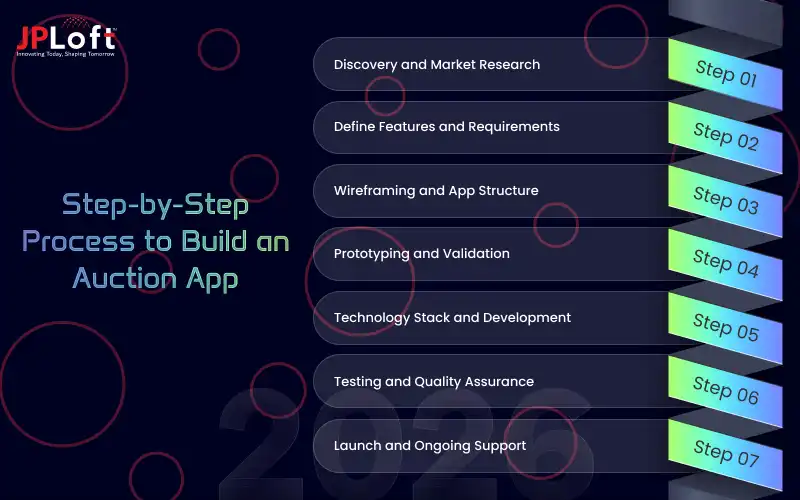
This auction app development process explains the practical steps teams follow to turn an idea into a scalable product.
Step 1: Discovery and Market Research
Start by understanding your audience, competitors, and market demand. This step builds a strong foundation for your app strategy and reduces risks during development.
-
Study existing auction platforms and features
-
Identify user needs and bidding behavior
-
Define business goals and revenue model
A strong market research phase makes it easier to plan the next stages with clarity and confidence.
Step 2: Define Features and Requirements
List all essential and advanced features your app should include. A clear roadmap ensures smooth execution and helps teams avoid confusion during development.
-
Finalize features for users, sellers, and admins
-
Prioritize features based on user value
-
Plan scalability and future improvements
This clarity also supports decisions on how to build an auction app that meets both user expectations and business objectives.
Step 3: Wireframing and App Structure
Visualize your app layout and user journey before development begins. Mobile app wireframing helps define navigation and ensures a smooth user flow across the platform.
-
Create layouts for key screens and sections
-
Plan simple and logical navigation paths
-
Validate the structure before moving forward
This step helps avoid usability issues and improves overall app performance later.
Step 4: Prototyping and Validation
Convert wireframes into interactive models to test usability and flow. Mobile app prototyping allows early validation and reduces the chances of major changes later.
-
Build clickable prototypes for testing
-
Evaluate user interactions and experience
-
Improve design based on feedback
This process ensures your app idea works well before moving into development.
Step 5: Technology Stack and Development
Select the right mobile app tech stack and begin development. This stage is important when planning how to create an auction app as it ensures the platform can supports real-time bidding.
-
Develop frontend and backend components
-
Integrate APIs for payments and alerts
-
Ensure scalability and system performance
Choosing the right technology ensures long-term stability and smooth performance.
Step 6: Testing and Quality Assurance
Test your app thoroughly to ensure smooth performance and reliability. Proper mobile app testing helps identify bugs and improve the overall user experience.
-
Perform functional and performance testing
-
Fix bugs and security issues early
-
Ensure stable and reliable performance
This step ensures your app is ready for real users without major issues.
Step 7: Launch and Ongoing Support
Launch your app and monitor its performance closely after release. Continuous updates and improvements help maintain growth and user satisfaction over time.
-
Track performance and user feedback
-
Release updates based on user needs
-
Improve features based on usage data
After launch, investing in app maintenance services helps keep your platform updated and competitive in the long term.
By following this structured approach, businesses can confidently move forward with development. It ensures better planning, smoother execution, and long-term success.
With the right strategy, it becomes easier to create an auction app that delivers real value and supports consistent business growth.
Cost to Build an Auction App
The auction app development cost usually ranges from $10,000 to $100,000+, depending on features, complexity, and development approach. A clear budget helps you plan better and avoid unexpected expenses.
A basic app with limited features may cost between $10,000 to $25,000. It includes simple bidding, user registration, and payment integration, making it suitable for startups.
A mid-level app usually costs between $30,000 to $70,000. The cost to create an auction app at this level includes advanced features like real-time bidding, notifications, and analytics.
An advanced app can cost $70,000 to $100,000+. It includes AI-based bidding, multi-vendor support, strong security, and scalable infrastructure for large platforms.
Several factors influence the overall cost:
-
App features and complexity
-
UI/UX design quality
-
Technology stack used
-
Third-party integrations
-
Development team location
-
Security and compliance requirements
The overall mobile app development cost also depends on how efficiently these factors are managed during development.
Now, let’s understand the cost breakdown in detail:
|
Component |
Estimated Cost |
|
UI/UX Design |
$1,000 – $10,000 |
|
Frontend Development |
$2,000 – $25,000 |
|
Backend Development |
$3,000 – $35,000 |
|
API Integrations |
$2,000 – $15,000 |
|
Testing & QA |
$1,000 – $12,000 |
|
Maintenance |
$1,000 – $8,000/year |
Understanding the cost at each stage helps you plan resources better and make informed decisions throughout the development journey.
Challenges in Building an Auction App and Their Solutions
When planning an auction platform, businesses often face several challenges in auction app development that can affect performance, scalability, and user experience.
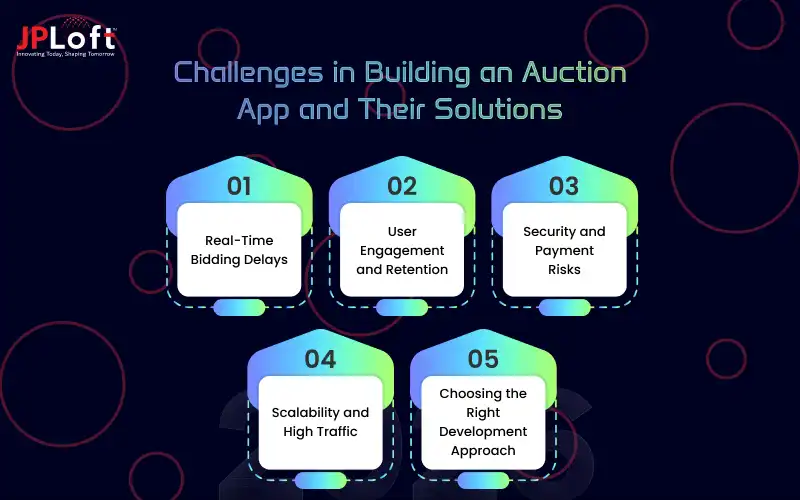
Identifying these issues early helps you build a stable and reliable platform.
Challenge 1: Real-Time Bidding Delays
Auction apps depend on instant bidding updates. Even slight delays can frustrate users and impact trust in the platform.
Solution: Use strong backend systems and real-time technologies like WebSockets. Also, optimize servers to handle multiple bids without delays.
Challenge 2: User Engagement and Retention
Keeping users active on the platform is difficult. Many users leave if the app feels slow or lacks excitement.
Solution: Add features like live notifications, countdown timers, and rewards. These elements keep users engaged and encourage repeat participation.
Challenge 3: Security and Payment Risks
Auction apps handle sensitive data, including payments and user details. Poor security can lead to data breaches and loss of trust.
Solution: Follow mobile app security best practices such as encryption, secure APIs, and trusted payment gateways. Regular audits also improve safety.
Challenge 4: Scalability and High Traffic
Handling large numbers of users during peak auctions can cause performance issues or crashes. This is one of the common mobile app development challenges businesses face.
Solution: Use cloud-based infrastructure and scalable architecture. This helps your app manage high traffic without affecting performance.
Challenge 5: Choosing the Right Development Approach
Many businesses struggle with selecting the right technologies and strategy when deciding how to develop an auction app that meets long-term goals.
Solution: Plan your tech stack carefully and work with experienced developers. A clear roadmap helps avoid costly mistakes during development.
By understanding these challenges, businesses can plan better and reduce risks. Addressing these issues early ensures smoother development and long-term success.
Future Trends in Developing an Auction App
Staying updated with modern technologies is important if you want your platform to remain competitive.
The following latest mobile app development trends are shaping the future of auction platforms.
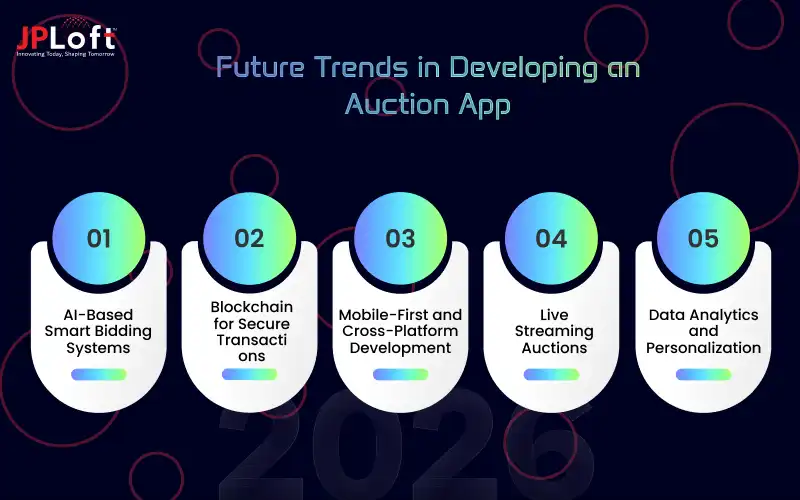
Additionally, they are influencing how users interact with digital bidding systems and marketplaces.
#1: AI-Based Smart Bidding Systems
Artificial intelligence is improving how auction apps work by analyzing user behavior and bidding patterns. With AI app development services, businesses can add smart bidding suggestions and enhance decision-making for users.
#2: Blockchain for Secure Transactions
Blockchain technology is making auction platforms more transparent and secure. Working with a blockchain app development company helps ensure tamper-proof records, secure payments, and better trust among users.
#3: Mobile-First and Cross-Platform Development
Mobile-first development is becoming essential as most users prefer smartphones for bidding. Cross-platform solutions help businesses reach wider audiences while maintaining consistent performance across different devices and operating systems.
#4: Live Streaming Auctions
Live auctions are gaining popularity as they create a more engaging experience. Businesses that build auction app platforms with live streaming features can increase user participation and trust.
#5: Data Analytics and Personalization
Advanced analytics helps platforms understand user behavior and preferences. This makes it easier to develop auction app solutions that offer personalized recommendations and improve overall user engagement.
How Auction Apps Make Money?
A strong revenue strategy is important when you create auction app platforms, as it ensures steady income while maintaining a good user experience.
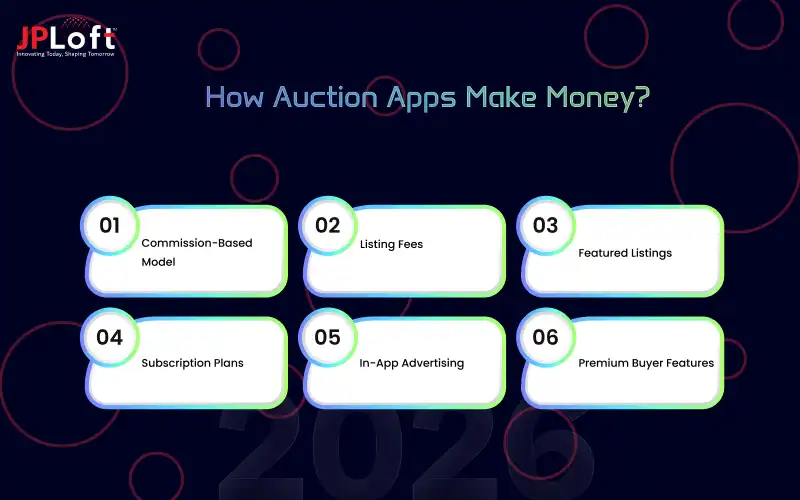
Choosing the right mobile app monetization approach helps balance profitability with user satisfaction.
1. Commission-Based Model
The platform charges a percentage on every successful transaction between buyers and sellers. This model works well for multi-vendor auction platforms and ensures consistent revenue with increasing user activity.
2. Listing Fees
Sellers pay a fixed fee to list their products on the platform. This model helps generate revenue regardless of whether the item is sold, making it a reliable income source.
3. Featured Listings
Sellers can pay extra to highlight their products at the top of search results. This improves visibility and attracts more bidders, while also increasing platform earnings.
4. Subscription Plans
Users or sellers pay a recurring fee to access premium features. These may include advanced analytics, early bidding access, or reduced commission charges for frequent users.
5. In-App Advertising
Auction platforms can display ads from third-party brands or promote sponsored products. This model works well when the app has a large and active user base.
6. Premium Buyer Features
Buyers can pay for added benefits like automated bidding tools, instant alerts, or exclusive auction access. These features enhance user experience while generating additional revenue.
A well-planned revenue strategy helps you scale your platform effectively while ensuring long-term business growth.

Why Choose JPLoft to Build an Auction App?
Choosing the right partner plays a key role in turning your idea into a successful product. As a trusted auction app development company, JPLoft focuses on delivering scalable and user-friendly solutions tailored to your business goals.
With deep industry experience, the team follows a structured and proven approach. This ensures every stage is handled with clarity and precision. From planning to launch, every step is designed to deliver strong performance and a smooth user experience.
JPLoft also supports businesses with flexible development solutions based on project requirements. This helps ensure the right balance between quality and efficiency throughout the development process
With a focus on innovation, security, and long-term support, JPLoft helps businesses build reliable auction platforms that grow and adapt with changing market demands.
Conclusion
Creating a successful auction platform depends on clear planning, the right technology, and a strong user experience. This guide to auction app development has covered each stage, from idea validation to launch.
If you plan to build auction app solutions, focus on reliable features, smooth performance, and secure transactions. These factors help attract users and build long-term trust.
It is also important to define your budget, select a suitable revenue model, and follow modern trends. This approach helps you stay competitive and meet changing user expectations.
With careful execution and continuous improvements, businesses can develop auction platforms that deliver real value and support steady growth over time.
FAQs
To make an auction app, start with market research and define your features clearly. Then design the interface, choose the right technology, develop core functionalities, and test the app before launch for smooth performance.
The cost to build an auction app usually ranges from $10,000 to $100,000+. It depends on features, complexity, design quality, and development approach. Advanced apps with AI and scalability require a higher budget.
An auction app should include user registration, product listings, real-time bidding, secure payments, notifications, and an admin panel. These features ensure smooth operations, better user engagement, and a reliable auction experience.
Developing an auction app usually takes around 2 to 6 months. The timeline depends on features, design complexity, and team size. Advanced apps with custom features may require more time for development and testing.
Common challenges to consider, along with how to make an auction app includes handling real-time bidding, ensuring security, managing high traffic, and maintaining user engagement. With proper planning, scalable technology, and regular testing, these issues can be managed effectively.

Priyanka Sukhwal is the Managing Director and Business Head of JPLoft, a results-driven leader with 10+ years of experience steering technology ventures and business growth. Her strategic acumen and deep understanding of digital markets and on-demand solutions have consistently translated into innovations that help businesses scale, evolve, and lead in competitive landscapes.




Share this blog