


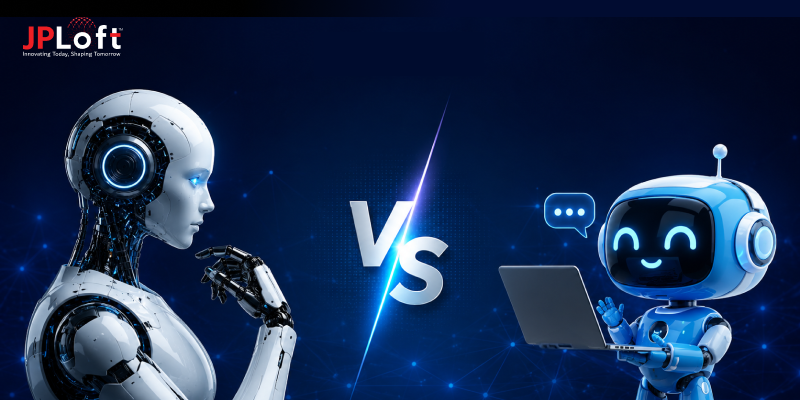
Welcome to our not-so-average comparison of Perplexity AI vs ChatGPT!
ChatGPT serves nearly 800 million users weekly, while Perplexity AI reaches over 22 million users monthly, although these numbers fluctuate, both platforms offer distinct strengths that set them apart.
Over time, these chatbots have evolved into trusted digital companions, supporting everything from academic research to creative brainstorming.
But, in a world flooded with AI, which one truly earns its place in your workflow?
To clear the confusion, we tested the free & paid versions of both models so you don’t have to. We pushed them to handle tough questions, real-time data, and complex challenges to see who actually delivers what.
Let’s get into the head-to-head comparison between Perplexity AI and ChatGPT.
Perplexity vs ChatGPT: A Comprehensive Table
When people look for ChatGPT vs Perplexity, they’re not looking for hype.
They’re trying to figure out which AI actually works for their needs. Both tools are powerful, but they play very different roles.
Perplexity is built to deliver fast, source-backed answers you can trust, while ChatGPT shines at reasoning, conversations, and creative workflows.
For businesses exploring LLM development services to build such a tool, it is important to compare them and know them in-depth.
|
Aspect |
Perplexity AI |
ChatGPT |
|
Core Purpose |
Search-first, fact-focused AI |
Conversation-first, reasoning AI |
|
Answer Style |
Source-backed, citation-based |
Generative, explanatory responses |
|
Real-Time Information |
Strong real-time web access |
Limited real-time data |
|
Best For |
Research, fact-checking, validation |
Ideation, conversations, problem-solving |
|
Creativity |
Low |
High |
|
Conversational Depth |
Limited |
Strong and contextual |
|
Use in Products |
AI search, research tools |
Chatbots, assistants, automation |
|
Ideal Users |
Researchers, analysts, decision-makers |
Creators, developers, businesses |
What is Perplexity AI?
People consider Perplexity AI as a Chatbot, but truly its an AI-powered answer engine.
It combines real-time web search with advanced language models to deliver accurate, cited responses.
Among ChatGPT vs Perplexity AI, it prioritizes research by automatically searching the web for every query and providing transparent source citations.
This makes it particularly strong for fact-checking, current events, and in-depth analysis.
You might be curious to find the unique selling points of Perplexity AI:
-
The “Swiss Army Knife” of Models: One of the huge aspects while deciding between ChatGPT vs Claude vs Perplexity AI, you can use Claude 3.5 for writing, GPT 5 for logic, or Perplexity’s own Sonar models for speed, all under one $20 subscription.
-
Switch Between Tools: Perplexity Pro allows users to switch between multiple AI models like Claude and GPT, giving flexibility for writing, logic, or speed within a single tool.
-
Perplexity “Pages”: This is a game changer for creators and often brought up point when discussing ChatGPT and Perplexity AI. These pages are a huge strength of Perplexity as they can turn a research thread into a fully-formatted, SEO-optimized web page, with images and headers in just one click.
-
The “Receipt”: Perplexity doesn’t just answer; it proves it. Every sentence is linked to a source (Wikipedia, news sites, academic papers). In 2026, this makes it the “anti-hallucination tool’’..
-
Pro Discovery & “Deep Research”: While ChatGPT has a “Search” mode, Perplexity’s Deep research mode acts like a digital detective. Now, what it does is it autonomously browses dozens of pages, verifies conflicting facts, and summarizes them into a report, saving you hours of manual clicking.
-
Focus Modes: You can tell Perplexity AI to only search academic journals or only search what’s on Reddit, and it will do just that.
Knowing all these elements might help you know perplexity better, but the question is, what are the other features that people love to enjoy?.
What Are Some Top Features of Perplexity AI?
When it comes to comparing Perplexity and ChatGPT, the biggest mistake people make is thinking the same type of tool.
While ChatGPT is your creative “brainstorming partner’’, Perplexity is your “Pro Investigator”.
In 2026, Perplexity AI has separated itself from the pack by focusing on “the receipts’’, proving every claim with live data.
Here are some top Perplexity AI app features that make it a search powerhouse:
-
Citations Built Into Every Answer: Perplexity backs its responses with direct sources, allowing users to verify facts instantly instead of trusting generated text blindly.
-
Real-Time Web Search: It pulls information from live online sources, making it useful for current events, fresh data, and rapidly changing topics.
-
Multi-Source Answer Summaries: Rather than relying on a single page, Perplexity scans multiple sources and combines them into one clear, readable response.
-
Query-Driven Research Flow: Follow-up questions refine the search instead of restarting it, helping users dig deeper without losing context.
-
Clear Handling of Uncertainty: When reliable data isn’t available, Perplexity signals gaps instead of guessing, reducing misleading outputs.
-
Structured, Skimmable Responses: Answers are presented in clean formats with highlights and bullets, making research faster and easier to consume.
Honestly, we get it, these features make Perplexity AI especially useful for professionals, researchers, and decision-makers who need accurate and verifiable answers fast, which sets it apart.
In the perplexity vs ChatGPT comparison, this source-first approach clearly sets Perplexity AI apart from ChatGPT’s generative, conversation-focused model.
When to Use Perplexity AI vs When Not to Use It?
If you’ve searched “ChatGPT vs Perplexity AI’’, you must be trying to understand where each AI actually fits in real-world usage.
Perplexity AI works best for fast, source-backed answers and real-time research, while ChatGPT shines in conversations, ideas, and explanations.
The table below makes it easy to see where Persplexity AI suits and where it doesn’t, so you can choose smarter instead of guessing:
|
When to Use Perplexity AI |
When Not to Use Perplexity AI |
|
When you need source-backed, verifiable answers |
When you need creative writing or storytelling |
|
For real-time research and current events |
For deep brainstorming or ideation |
|
While doing market, competitor, or academic research |
When tasks require a long conversational context |
|
For fact-checking and data validation |
For complex reasoning or step-by-step logic |
|
When credibility and citations matter |
When building chat-based user experiences |
|
For quick summaries of multiple sources |
For coding assistance or technical debugging |
|
When accuracy is more important than creativity |
When personalization and tone matter more than facts |
Now that we understand why Perplexity shines as a research-first AI, let’s shift focus to ChatGPT, the model that dominates conversations, creativity, and reasoning.
For teams aiming to create an app like Perplexity, this distinction highlights how product positioning impacts user adoption.
What is ChatGPT?
ChatGPT is a reasoning-first conversational AI, designed to think through problems, hold context-rich conversations, and generate human-like responses across a wide range of tasks.
In 2026, ChatGPT has moved far beyond simple text replies, evolving into a multimodal powerhouse that can see, hear, and execute tasks autonomously.
As per the 2025 latest update, GPT-5 not only outperforms previous models but it is more useful for real-world queries. It has reduced hallucinations and minimized biased agreement.
These improvements in accuracy, instruction-following, and real-world performance raise the bar for apps like ChatGPT, especially in writing, coding, and health.
If you want to understand the difference between Perplexity vs ChatGPT, here are the unique “superpowers” that give ChatGPT the edge in creativity and productivity.
What separates ChatGPT from Other AI tools:
-
The “Digital Architect”: Unlike Perplexity, ChatGPT is built for execution and deep creation. In the 2026 comparison of Perplexity and ChatGPT, if you need to build an app from scratch, draft a 50-page ebook, or automate your business emails, ChatGPT’s logic remains the gold standard.
-
The “Canvas” Interface: This is a game-changer for writers and coders. Often a major talking point in the ChatGPT vs Perplexity AI debate, Canvas opens a separate side-window that lets you edit text or code line-by-line alongside the AI, effectively turning ChatGPT into a collaborative editor rather than just a chat box.
-
Advanced Voice Mode (Emotional Intelligence): ChatGPT doesn't just read text; it "feels" the conversation. In 2026, this feature allows for near-zero lag, native audio-to-audio communication where the AI can detect your tone, whisper, sing, and even use your phone's camera to see and solve real-world problems in real-time.
-
Built-in Code Execution: ChatGPT doesn't just write code; it runs it. While Perplexity can search for code snippets, ChatGPT uses a "Sandboxed Interpreter" to execute Python and Excel VBA, verify the math, and generate downloadable charts or files with 100% logic-backed accuracy.
-
Custom GPTs & Store: You can build your own mini-AIs tailored to specific tasks. Whether it’s a GPT designed for Canva graphics, SEO audits, or legal analysis, the GPT store offers millions of specialized tools that Perplexity’s “Pages” simply can not match in terms of functional depth.
Now that we’ve seen why Perplexity AI excels at research and source-backed answers, let’s shift to ChatGPT and its features.
Get to know what separates this app from other top apps like ChatGPT for conversations, creativity, and reasoning.
What are Some Top Features of ChatGPT?
When you put ChatGPT vs Perplexity side-by-side, the vibe shift is immediate.
ChatGPT is built as a conversation-first AI, designed to think through problems, explain ideas, and adapt to how users interact.
In 2026, ChatGPT has doubled down on being “Human-first”; it doesn’t just spit out facts, it reasons through your problems, adapts to your mood, and remembers your preferences like an actual teammate.
These features explain why ChatGPT is widely used across creative, technical, and business workflows.
-
Advanced Conversational Memory: ChatGPT maintains context across long conversations, allowing users to refine ideas, ask follow-ups, and change direction without starting over.
-
Strong Reasoning and Problem Solving: It excels at breaking down complex topics, explaining logic step by step, and helping users think through decisions.
-
Creative Content Generation: From blogs and scripts to ideas and storytelling, ChatGPT performs well in creative and open-ended tasks.
-
Coding and Technical Assistance: ChatGPT supports debugging, code explanations, logic building, and even tools like Excel VBA, making it popular among developers.
-
Flexible Tone and Personalization: Responses can be adjusted in tone, style, and depth, which is useful for customer support, education, and internal tools.
-
Automation and Workflow Support: ChatGPT is commonly used to power chatbots, virtual assistants, and AI-driven workflows across products.
In the ChatGPT vs Perplexity AI comparison, teams looking to create an app like ChatGPT can clearly see what a conversation-first AI must deliver before it can compete at scale.
When to Use ChatGPT vs When Not to Use It?
ChatGPT shines when speed, brainstorming, and clear explanations are needed.
However, it isn’t designed to replace human judgment in every situation.
Understanding Perplexity AI vs ChatGPT helps teams choose the right tool for the right job.
AI can drive efficiency, while human expertise, accountability, and real-time accuracy remain essential where it matters most.
|
Use ChatGPT When |
Do Not Use ChatGPT When |
|
You need quick drafts, ideas, or outlines |
Decisions involve legal, medical, or financial liability |
|
Brainstorming content, headlines, or concepts |
Information must be 100% real-time or verified |
|
Simplifying complex topics or explanations |
Confidential or sensitive data is involved |
|
Writing first drafts of blogs, emails, or scripts |
Deep domain expertise or original research is required |
|
Generating variations or creative angles |
Final authority or compliance approval is needed |
This distinction becomes even more important when working with a mobile app development company.
Choosing the right AI tools can support speed and creativity without compromising accuracy or decision-making.
Criteria Used to Compare Performance and Usability
By 2026, the AI space will have narrowed down to two leading platforms.
In one corner, Perplexity AI has claimed the throne as the ultimate ‘ Answer Engine,’ while in the other, ChatGPT (GPT 5) stands as the undisputed “Reasoning and Creative Powerhouse.’’
Even though they’re powered by similar AI foundations, they are built for entirely different missions: one hunts for trust, while the other builds worlds.
1. Response Accuracy
► Perplexity AI
Prioritizes “grounded truth”.
It utilizes a retrieval-augmented generation system that scans the live web for every query, achieving an estimated factual accuracy rate of 94%.
By citing sources for every claim, it minimizes hallucinations.
► ChatGPT-5
Whereas ChatGPT, on the other hand, focuses on “Conceptual accuracy.’’
While the knowledge cutoff is more recent, it relies heavily on its internal training.
It is superior for complex logic and nuances, but is more prone to confident hallucinations than perplexity when searching for obscure real-time facts.
2. Contextual Understanding
► Perplexity AI
Designed for “stateless’’ or “short-burst’ context.
It excels at understanding the immediate intent of a search query but often loses the thread in long, multi-turn creative sessions.
► ChatGPT-5
The industry leader in the long-term context.
It features a massive context window (up to 1 million tokens in some variants) and “Memory,” allowing it to remember user preferences and previous conversation details across different sessions.
3. Speed of Response
► Perplexity AI
In a world where every milisecond countrs, Perplexity delivers summarized web results in a heartbeat, often under 1 second.
Its “Quick Search’’ is blistering fast, through its high-intellect “Pro-search’’ takes a deliberate 5-10 seconds to navigate deeper.
► ChatGPT-5
Whereas, ChatGPT Response time usually falls between 1.5 and 3 seconds.
The lightweight 5 mini models respond almost instantly.
In contrast, the full-power 5 and O-series reasoning models prioritize depth and accuracy over raw speed, which slightly increases response time.
4. Ease of Use
► Perplexity AI
While comparing the difference between ChatGPT vs Perplexity AI, this tool takes a winning edge in being intuitive for users transitioning from Google.
It requires less "prompt engineering" because it automatically breaks down queries into search steps.
► ChatGPT-5
Designed for users who want more than basic answers, this tool offers exceptional flexibility.
However, unlocking its full potential comes with a slightly higher learning cuve, especially when using advanced features like GPTs, custom instructions, or multimodal file analysis.
5. Customization and Flexibility
► Perplexity AI
Offers "Model Switching." Pro users can toggle between different LLMs (Claude 4, GPT-5, or Sonar) within the same interface.
It also features "Spaces" to set specific instructions for different research topics.
► ChatGPT-5
Features "GPTs," which are custom-built versions of the bot for specific tasks (e.g., a "Logo Designer" or "Code Reviewer").
It offers deep integration with third-party apps through its robust API.
These architectural differences directly influence how Generative AI development services are structured, depending on whether the product prioritizes verified retrieval or deep reasoning and execution.
Case Studies of Perplexity AI and ChatGPT
As you know, both Perplexity AI and ChatGPT are widely used in real-world scenarios, but they solve problems in very different ways.
Perplexity AI stands out for fast, source-backed research and factual answers.
ChatGPT, on the other hand, is often used for deep reasoning, creative tasks, and complex problem-solving.
These case-studies show how each tool performs in real-world situations and where they deliver the most value:
1. Perplexity AI in Action
Perplexity AI has redefined the "research-to-report" pipeline by focusing on transparency and real-time data retrieval.
-
Live Market Intelligence for Finance: Hedge fund analysts use Perplexity to monitor mid-day earnings calls and breaking geopolitical news.
By citing specific SEC filings and news wires, it allows for immediate validation of market shifts without manual searching. -
Legal & Regulatory Compliance: Legal teams utilize the "Deep Research" mode to track evolving AI regulations across 50+ countries.
It synthesizes complex legal frameworks into cited reports, ensuring that the latest amendments are never missed. -
Medical Literature Synthesis: In healthcare, researchers use it to find the most recent peer-reviewed studies on specific drug interactions.
It provides a "truth layer" that links directly to PubMed and Lancet sources. -
Technical Documentation Retrieval: Engineers use it to find migration guides for obscure API versions. Instead of guessing, it points them to the exact line in a GitHub repository or official documentation. This precision is essential when teams are utilizing Generative AI development services to build reliable, high-uptime software.
-
Crisis & News Monitoring: Journalists rely on it during breaking events to cross-check social media claims against verified wire services in real-time. This makes the Perplexity AI vs ChatGPT choice clear when factual accuracy is a life-or-death requirement.
2. ChatGPT in Action
ChatGPT 5 has moved beyond a simple chatbot to become the primary engine, powering the logic behind complex systems.
-
Autonomous AI Agent Orchestration: Businesses use ChatGPT to build "Agentic Workflows" where the AI manages calendars, updates CRMs, and sends personalized follow-ups. This is a core pillar of modern AI agent development services.
-
Interactive Software Requirements Engineering: Development teams use ChatGPT to turn messy brainstorms into structured technical requirements. It identifies logic gaps and suggests system architectures that a search engine would miss.
-
Creative Narrative & Brand Design: Marketing agencies use it to build "Brand Bibles." Unlike a search engine, ChatGPT can adopt a specific persona, maintaining a consistent tone across thousands of pages of campaign copy.
-
Complex Troubleshooting & Reasoning: Data scientists use it to debug multi-language codebases. Its "Canvas" feature allows for side-by-side editing where the AI reasons through memory leaks and concurrency issues.
-
Educational Simulation & Tutoring: Universities deploy custom GPTs that act as Socratic tutors. They don't just provide answers; they simulate historical scenarios or scientific experiments to help students learn through guided discovery.
So, these are some top use cases of both AI tools, Perplexity AI and ChatGPT.
From Idea to Execution: How JPLoft Builds AI-Powered Applications?
From idea to execution, JPLoft focuses on building AI-powered applications that are practical, scalable, and aligned with real business needs.
Every project starts with understanding the problem first, not forcing AI into the product, but identifying where intelligence genuinely adds value.
The approach goes beyond model selection. JPLoft works on defining data flows, user journeys, and system logic so AI features feel intuitive, reliable, and useful from day one.
Each phase, from planning to prototyping and testing, is designed to reduce risk and improve performance.
As an experienced AI app development company, JPLoft handles the complete development lifecycle, including architecture design, AI integrations, UI/UX, and deployment.
The result is not just an AI feature, but a production-ready application that evolves with user behavior, scales confidently, and delivers long-term impact.
Conclusion
When it comes to ChatGPT vs Perplexity AI, there is no absolute winner, only the right tool for the right purpose.
Perplexity AI stands out as a research-first platform, built for professionals who value real-time data, transparency, and verifiable sources.
It feels like a smarter, more trustworthy version of search. ChatGPT, on the other hand, excels as a reasoning and creation engine. It is designed to think, adapt, and collaborate with users across writing, coding, automation, and complex problem-solving.
In practical terms, Perplexity helps you know what is true, while ChatGPT helps you decide what to build or say.
For businesses and product teams, the choice depends on positioning: search and credibility versus creativity and execution.
The smartest strategy in 2026 is not choosing one over the other, but knowing exactly where each delivers the highest value.
FAQs
Perplexity AI draws criticism for aggressive scraping, unclear publisher permissions, and blurring lines between original reporting and AI-generated summaries that compete directly with sources.
It depends on intent. Perplexity excels at fast, cited answers. ChatGPT shines in reasoning, creativity, long-form thinking, and iterative problem-solving.
Perplexity searches and cites the web in real time. ChatGPT reasons, explains, and builds ideas conversationally, even without live browsing. One retrieves, the other thinks.
Perplexity usually wins on fresh facts due to citations. ChatGPT is stronger at contextual accuracy, logic, and explaining why something is true, not just stating it.
Not fully. ChatGPT replaces searching for understanding. Google still dominates discovery, navigation, and transactional intent. One answers questions. The other maps the internet.
ChatGPT. It helps design systems, debug logic, write explanations, and reason through architecture. Perplexity is better for quick API docs or spec lookups.
Yes. Use Perplexity for research and fact-checking. Use ChatGPT for strategy, content, workflows, and decision support. Together, they cover search plus thinking.

Rahul Sukhwal is the CEO and Founder of JPLoft, a visionary technologist with 18+ years at the forefront of emerging tech innovation and software engineering. He channels deep software engineering and AI expertise into building smarter, scalable solutions that shape how forward-thinking businesses worldwide harness the true power of AI.



Share this blog