


Key Takeaways:
AI therapy app development requires clear planning, the right AI technologies, and a reliable development team.
Essential features like AI chatbots, mood tracking, and personalized recommendations improve user engagement and support.
AI therapy apps can generate revenue through subscriptions, premium services, and healthcare partnerships.
The cost to build an AI therapy app usually ranges from $30,000 to $300,000+, depending on features and complexity.
Ensuring data privacy, regulatory compliance, and accurate AI responses are major challenges in developing an AI therapy app.
Mental health support is becoming harder to access for many people. Therapy is helpful, but therapists have limited time. Long waitlists and high costs also make things difficult.
Because of this, many startups and healthcare companies are now exploring AI Therapy app development to offer support through mobile apps.
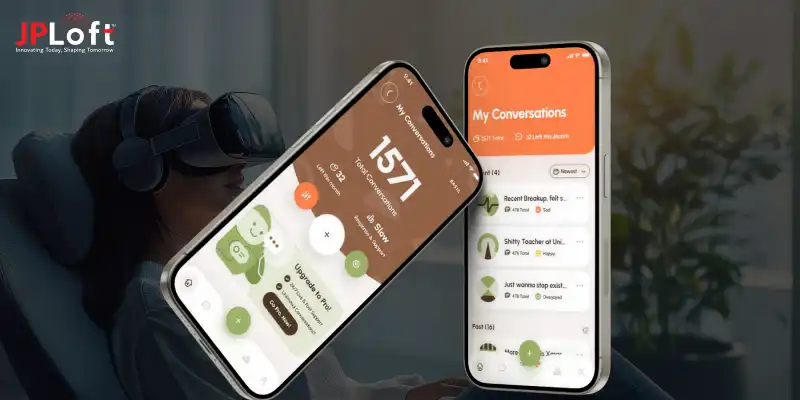
An AI-based therapy app can talk with users, understand their mood, and suggest simple exercises to help them feel better. It cannot replace a real therapist, but it can offer quick support when someone needs to talk. That’s why these apps are gaining attention across the health and tech industries.
For businesses, the opportunity is clear. Demand for digital mental health tools keeps growing every year. Companies that invest in such apps can build products that help people while also creating a strong digital health business.
But building the right app requires careful planning, the right features, and a clear development process. In this blog, we will help you with all you need to know for developing an AI therapy app.
What is an AI Therapy App?
An AI therapy app is a digital platform that uses AI to support mental health. Users can open the app, share how they feel, and receive helpful responses. Most of these apps work through chat or simple conversations.
The goal is to provide guidance, emotional support, and small therapy exercises anytime a user needs them.
Many people feel more comfortable talking to an app first. It feels private, and there is no pressure. That is why the demand for AI-based therapy apps is growing among users of all age groups.
How an AI Therapy App Works?
An AI therapy app usually works through a smart chatbot. The system reads user messages and tries to understand their emotions. Let’s understand how such an app functions:
-
The user starts a conversation with the AI therapy app through a chatbot using text or voice.
-
The system analyzes the user’s messages to understand emotions such as stress, anxiety, or sadness.
-
The app uses NLP technology to understand the meaning of the user’s words and respond naturally.
-
Based on the analysis, the AI provides helpful suggestions like breathing exercises, mindfulness activities, or mental wellness tips.
-
The app tracks user behavior, mood patterns, and past interactions to provide more personalized guidance.
-
Over time, the AI learns from user interactions and improves its responses to offer better support.
Common Uses of AI Therapy Apps
People use these apps for many reasons. Some want help managing stress, others want daily mood tracking or mental health tips.
Many AI behavioral therapy apps also include techniques from cognitive behavioral therapy. Hence, this approach helps users understand their thoughts and habits better.
Some apps also provide journaling tools, meditation guides, and progress tracking. These tools make it easier for users to manage their mental health on a daily basis.
Market Overview of AI Therapy Apps
The growing demand for digital mental health support has fueled the rapid expansion of AI therapy apps. Below are some stats that help businesses understand the market scope.
-
The demand for digital mental health tools is rising fast. Mental health issues affect millions of people worldwide. According to the WHO, around 280 million people globally live with depression, which has increased the need for accessible mental health support.
-
This growing demand has created strong opportunities for AI-powered therapy apps. However, the global mental health apps market is expected to reach about $16.07 billion in 2026 and could grow to $67.26 billion by 2035.
-
The use of AI is increasing in the mental health market and is expected to reach $9.11 billion by 2032.
-
North America accounted for the highest share of the artificial intelligence in mental health market, generating 33.95% of the total revenue in 2025.
-
Moving further, user adoption is also increasing. Studies show that downloads of mental wellness apps have grown by around 40%, and many users now rely on digital tools for mood tracking and stress management.
For startups and related companies, the use of AI in healthcare is a clear opportunity to enter the expanding AI mental health market with innovative digital solutions.
Types of Artificial Intelligence Therapy Apps
AI therapy apps are not all the same. Different apps focus on different mental health needs. Some help users talk about their feelings. Others focus on relaxation, mood tracking, or guided therapy exercises.
Businesses planning AI Therapy app development should understand the following types before building a product.
Type 1: AI Chatbot Therapy Apps
AI chatbot therapy apps are one of the most common forms of AI-based therapy apps. These apps allow users to chat with a virtual assistant that responds to their emotions and concerns. The chatbot reads messages, understands the mood behind them, and offers helpful replies.
Many apps use NLP so conversations feel more natural. The chatbot might ask simple questions, suggest breathing exercises, or guide the user through short mental health activities.
Businesses can build an AI chatbot to support users through the platform and become the starting point because it provides quick and easy interaction for users.
Type 2: Meditation & Mindfulness Apps
Meditation and mindfulness apps focus on relaxation and stress control. Instead of long conversations, these apps guide users through calming exercises. However, users can listen to breathing sessions, sleep stories, or short meditation routines.
Some apps also use AI to recommend sessions based on user behavior. For example, if a user often feels stressed at night, the app may suggest sleep meditation.
Many companies include these tools during AI mental health app development because meditation and mindfulness features help users build healthy daily habits.
Type 3: CBT-Based Therapy Apps
CBT-based apps focus on Cognitive Behavioral Therapy that helps people understand how their thoughts affect their emotions and actions. Many AI behavioral therapy apps use CBT techniques to guide users through simple exercises.
The app may ask users to record negative thoughts and then help them challenge those thoughts with positive alternatives. Over time, this helps users develop healthier thinking patterns.
For businesses, CBT tools are valuable because they bring structured therapy methods into AI Therapy App Development.
Type 4: Emotional Wellness Tracking Apps
Emotional wellness tracking apps help users monitor their mood over time. Users can log daily feelings, stress levels, sleep patterns, and activities. The app then shows patterns that help users understand what affects their mental health.
AI analyzes this data and provides insights. For example, it may notice that a user feels anxious on busy workdays and suggest relaxation exercises.
Many companies build these tools as part of a custom AI therapy app because mood tracking keeps users engaged and encourages regular app usage.
Type 5: Hybrid AI + Human Therapist Platforms
Hybrid platforms combine artificial intelligence with real therapists. The AI handles daily check-ins, simple conversations, and mood tracking. When deeper support is needed, users can connect with licensed professionals.
This model offers the best of both worlds. AI provides instant support, while human therapists deliver personalized care.
Many startups prefer this approach when they build an AI app because it increases trust and provides stronger mental health support for users.

Core Features of an AI Therapy App
AI-based therapy apps work well only when the right features are built into the platform. These mobile app features help users share feelings, track emotions, and safely receive helpful guidance. If a business plans to build an AI therapy app, focusing on practical and user-friendly features makes a big difference in long-term success.
1. AI Chatbot Interaction
AI chatbot interaction allows users to communicate with an intelligent virtual assistant that offers emotional support anytime.
The chatbot uses machine learning to understand user concerns, respond with helpful suggestions, and guide users through stress, anxiety, or emotional challenges.
2. Mood Tracking
Mood tracking helps users record their emotional state regularly. By logging daily feelings, thoughts, and triggers, the app builds a pattern of emotional behavior.
This feature helps users understand mood changes over time and encourages better awareness of mental health habits.
3. Personalized Therapy Plans
Personalized therapy plans use AI to recommend exercises and mental wellness activities based on user behavior and emotional patterns.
These plans may include meditation, CBT exercises, journaling prompts, and breathing activities designed to support individual mental health needs.
4. Progress Dashboard
The progress dashboard provides users with a visual summary of their mental wellness journey. It shows mood trends, completed therapy activities, and improvement indicators.
This feature motivates users by helping them see positive changes and track their emotional development.
5. Emotion Detection
Emotion detection uses AI algorithms to identify emotional signals from text or voice inputs.
The system analyzes language patterns, tone, and expressions to detect feelings such as stress, sadness, or anxiety. Hence, helping the app respond with supportive and relevant guidance.
6. NLP-Based Conversations
NLP-based conversations enable AI therapy apps to understand and respond to human language naturally.
The technology helps the system interpret user messages, recognize emotions, and generate meaningful responses. Thus, creating a more engaging and supportive communication experience.
7. Behavior Analysis
Behavior analysis helps the app study user habits, interaction patterns, and emotional responses over time.
By analyzing this data, AI can identify triggers, detect negative behavior cycles, and suggest practical strategies to help users build healthier emotional routines.
8. User Analytics
User analytics collects and evaluates engagement data such as session frequency, mood logs, and therapy activity usage.
These insights help improve the app experience, personalize recommendations, and allow developers or therapists to better understand user needs.
Step-by-Step Development Process for AI Therapy App
Building an AI-based therapy app follows a clear, step-by-step path that mixes smart AI tech with user-friendly design and strong privacy rules. This guide takes you from idea to launch and beyond, helping create a safe app.
Step 1: Market Research
Before therapy app development begins, businesses must understand the target market, user needs, and existing competition to build a solution
► Identify Target Users
Identifying target users helps define who will benefit most from the Artificial Intelligence therapy app. Businesses study demographics, mental health needs, digital habits, and pain points. Clear user personas guide feature planning, design choices, and communication style.
► Analyze Competitors
Analyzing competitors shows what existing apps offer and where gaps exist. Businesses often review platforms such as AI behavioral therapy apps, chatbot counseling tools, and other AI therapist app development products to understand the market.
► Define MVP Features
Defining MVP features allows businesses to focus on essential capabilities needed for an initial launch. Clear features also help businesses estimate the Artificial Intelligence therapy app cost and overall therapy app development cost.
Step 2: UI/UX Design
A thoughtful design process ensures the therapy app feels comfortable, easy to use, and emotionally supportive for users.
► Create Wireframes
Creating app wireframes helps visualize the structure, layout, and flow of the platform before development begins. This stage is important for companies planning AI mental health app development because it defines the overall user journey.
► Build Prototypes
Building interactive app prototypes turns wireframes into realistic, clickable app simulations. Prototyping helps businesses refine their custom AI therapy app design before moving into full development.
► Conduct User Testing
Conducting user testing ensures the design meets real user expectations. This stage helps businesses create a reliable Artificial Intelligence therapy app solution that supports users seeking digital therapy services.
Step 3: Tech Stack Selection
Choosing the right mobile app tech stack ensures the platform performs efficiently and supports advanced AI capabilities.
► Choose Cross-Platform Frontend
Choosing a cross-platform frontend framework allows developers to build the AI-based therapy app for platforms like iOS and Android. Businesses investing in AI therapist app development often select frameworks that speed up development.
► Select AI Tools & Secure Backend
Selecting suitable AI tools and a secure backend architecture forms the intelligence of the therapy app. Technologies like NLP, ML, and cloud services enable meaningful conversations in modern AI behavioral therapy apps.
► Pick Databases
Picking the right databases ensures mental health information, conversations, and user records are stored safely and accessed quickly. Strong database architecture improves performance for companies building scalable Artificial Intelligence therapy app solutions.
Step 4: Backend & Database Development
The backend powers the app’s core functionality, managing communication between AI systems, databases, and user interfaces.
► Develop Secure APIs
Developing secure APIs allows the frontend, AI models, and databases to communicate smoothly. APIs manage authentication, data exchange, and service integration. Strong architecture supports scalable AI-powered therapy app development for businesses planning long-term platform growth.
► Implement Features
Implementing backend features involves coding business logic, user management, chat systems, notification services, and therapy tools. Developers integrate advanced AI-powered therapy app features such as emotion analysis, conversation tracking, and guided therapy sessions.
► Ensure Encryption
Ensuring strong encryption protects sensitive therapy conversations, emotional data, and personal details. Security is especially important when companies build an AI therapy app that handles personal mental health information.
Step 5: AI Model Development
The intelligence of an AI-powered therapy app depends on well-trained models capable of understanding emotions and providing meaningful support.
► Collect & Prepare Training Data
Collecting and preparing training data is essential for building accurate AI therapy models. Developers gather conversation datasets and resources to improve response quality in AI behavioral therapy apps.
► Train and Test the AI Model
Training and testing the AI model allows systems to understand emotions, context, and user intent. Continuous improvement ensures the AI therapist app development process produces helpful and responsible interactions.
► Improve Model Accuracy
Improving model accuracy requires continuous evaluation and performance tuning. This process helps companies deliver high-quality app solutions that provide reliable emotional support to users.
Step 6: Frontend Development
Frontend development transforms designs into interactive interfaces that allow users to easily access therapy tools and AI conversations.
► Build Responsive Interfaces
Building responsive interfaces ensures the therapy platform works smoothly across smartphones and tablets. Developers create clean layouts and calming visuals, which are important for modern AI mental health app development projects.
► Add Push Notifications
Adding push notifications helps remind users about therapy sessions, mood check-ins, exercises, or supportive messages. These engagement tools are commonly used in AI-powered therapy apps and digital wellness platforms.
► Integrate AI APIs
Integrating AI APIs connects frontend interfaces with intelligent therapy systems. This enables real-time conversations, mood analysis, and personalized therapy recommendations within the app.
Step 7: Security & Compliance
Strong mobile app security practices and legal compliance are critical when dealing with sensitive mental health information.
► Perform Penetration Testing
Performing penetration testing identifies security weaknesses before the therapy app launches. Mobile app testing ensures the application remains secure for users sharing personal mental health data.
► Run Unit Tests
Running unit tests validates individual components of the application. Developers check whether features and integrations perform correctly across the therapy app ecosystem.
► Validate Privacy Laws
Validating privacy laws ensures the app complies with regulations such as HIPAA or GDPR. Compliance protects sensitive data and strengthens trust in digital therapy platforms.
Step 8: Deployment & Launch
After development and testing, the AI-powered therapy app is prepared for release and made accessible to users across platforms.
► App Launch
Launching the AI therapy app makes it available through app stores or web portals. Experienced developers submit the app to the App Store and publish your app to the Play Store.
► Configure Analytics
Configuring analytics tools helps businesses track engagement, retention, and feature usage. This data helps teams identify which Artificial Intelligence therapy app features are most valuable for users.
► Post Launch Testing
Post-launch testing evaluates real-world performance. Businesses monitor crashes, AI responses, and user feedback to improve their custom Artificial Intelligence therapy app after launch.
Step 9: Post-Launch Maintenance
Continuous app maintenance services help the AI-based therapy app remain effective, secure, and scalable as demand grows.
► Monitor User Metrics
Monitoring user metrics helps businesses understand engagement, satisfaction, and therapy outcomes. These insights help companies improve their app solutions over time.
► Feedback-Based Updates
Updating the therapy platform based on feedback improves usability and service quality. Continuous updates are essential for successful Artificial Intelligence therapy app development projects.
► Scale Infrastructure
Scaling infrastructure ensures the app can support growing numbers of users. Cloud services and distributed systems help maintain performance as the AI mental health market continues expanding.
Monetization Models for AI Therapy Apps
Many companies that launch therapy apps use a mix of different app monetization models. The right strategy depends on the target users, the features offered, and the platform's overall value.
Below are a few models that are best for future business growth:
#1: Subscription Plans
Subscription is one of the most common ways to earn from such AI apps. Users pay a monthly or yearly fee to access advanced tools, guided therapy programs, or unlimited chatbot conversations. This model creates stable income for businesses and also helps users stay committed to improving their mental health over time.
#2: Freemium Model
Many companies start with a freemium approach. Basic features remain free so that users can explore the platform without risk. When users want deeper insights, advanced app features, or personalized programs, they upgrade to a paid version. This model helps businesses attract a large number of users quickly.
#3: Corporate Wellness Partnerships
Companies today care more about employee well-being. Because of this, businesses are partnering with AI mental health app development companies to offer therapy apps to their teams. Organizations pay for bulk access, and employees receive mental health support through the app. It benefits both the workforce and the business.
#4: In-App Therapy Sessions
Some platforms allow users to book sessions with licensed therapists directly inside the app. The platform earns a commission for every session booked. This hybrid model combines technology with human support and is often used by AI behavioral therapy apps and advanced therapy platforms.
#5: Premium Mental Health Programs
Many AI therapy app solutions also offer structured programs focused on stress relief, anxiety management, or sleep improvement. These guided programs are usually paid packages with detailed exercises, progress tracking, and expert content. Businesses can use them to create extra revenue streams while delivering deeper value to users.
List of Popular Artificial Intelligence Therapy Apps
The rapid growth of digital mental health apps shows how powerful AI can be in transforming therapy and emotional support. Many successful therapy apps have proven that technology can deliver accessible and scalable wellness services.
Below are a few platforms with valuable insights for a better business understanding.
1. Wysa
Wysa is one of the most widely recognized AI-powered therapy apps that provides emotional support through an intelligent chatbot. The app uses techniques based on cognitive behavioral therapy (CBT) to help users manage stress, anxiety, and depression.
What to Learn From This: Businesses can learn the importance of combining AI chatbots with structured therapy techniques. Integrating CBT-based tools, mood tracking, and guided exercises can significantly improve user engagement and create a more effective solution.
2. Youper
Youper is another popular app that focuses on emotional health through AI-driven conversations and mood analysis. The platform combines artificial intelligence with psychological techniques to help users track emotions, understand mental patterns, and improve well-being.
What to Learn From This: Youper highlights the value of data-driven insights. Businesses developing therapy apps should focus on emotional analytics, personalized therapy suggestions, and intelligent mood tracking to deliver a more customized mental health experience.
3. Replika
Replika is an AI companion app designed to provide meaningful conversations and emotional companionship. Many users rely on it for emotional support, reflection, and stress relief through continuous AI-driven conversations.
What to Learn From This: Replika shows that emotional connection is a key factor in user retention. Businesses should build an app like Replika that focuses on building empathetic AI conversations, natural language understanding, and personalized interactions to create engaging therapy experiences.
4. Woebot
Woebot is a well-known AI therapy chatbot designed to deliver CBT-based support through short daily conversations. Developed with guidance from mental health professionals, the app helps users manage anxiety, depression, and everyday stress.
What to Learn From This: Woebot demonstrates the importance of combining clinical psychology with AI technology. Businesses building therapy apps should prioritize scientifically validated methods, professional guidance, and structured therapy frameworks.
Challenges in AI Therapy App Development
Developing a therapy app involves more than integrating AI technology. Companies must overcome several mobile app development challenges to get a scalable product. Here are a few discussed.
1. Data Privacy & Security Risks
Challenge: Such apps collect highly sensitive information such as emotions, therapy conversations, and mental health patterns. Protecting this data is a major challenge because any breach could harm user trust and lead to legal consequences.
Solution: Developers must implement strong encryption, secure APIs, and strict data protection policies.
2. Bias in AI Training Data
Challenge: AI models rely on training data to understand emotions and respond to users. However, if the dataset is limited or biased, the AI may misinterpret feelings or provide inaccurate suggestions.
Solution: Businesses must hire dedicated developers for diverse and well-balanced datasets during AI model training.
3. Regulatory Compliance Challenges
Challenge: Mental health apps must comply with strict regulations such as HIPAA, GDPR, and other regional health data laws. Meeting these compliance standards can be complex and time-consuming, especially when launching the app in multiple countries.
Solution: You should implement compliance-ready infrastructure, secure data storage, and clear privacy policies.
4. Ensuring AI Accuracy
Challenge: AI systems must correctly understand human emotions and provide supportive responses. However, if AI misinterprets a user’s message, it may give inappropriate advice or fail to detect serious issues.
Solution: You can hire mobile app developers to continuously train AI models using updated datasets and real user interactions.
Cost to Develop an AI Therapy App
The cost to develop an app depends on several factors, such as features, technology stack, design complexity, security needs, and development team expertise. A basic therapy app with simple chatbot support and limited features may cost less, while a fully advanced platform with AI analysis, voice interaction, user tracking, and integrations requires a higher budget.
Compliance with data privacy regulations and strong security systems also increases the mobile app development cost. Businesses should also consider UI/UX design, testing, and ongoing maintenance. On average, developing an AI-powered therapy app may range from $30,000 to $300,000 or more, depending on the app’s complexity and business goals.
|
App Type |
Feature Included |
Estimated Cost |
|
Basic App |
User registration, mood tracking, basic mental health resources |
$30,000 – $80,000 |
|
Mid-Level App |
Mood analysis, personalized recommendations, progress tracking, push notifications |
$80,000 – $150,000 |
|
Advanced App |
AI voice interaction, video therapy sessions, wearable integration, personalized therapy plans |
$150,000 – $300,000+ |
Why Choose JPLoft for AI Therapy App Development?
Choosing the right development partner plays an important role in the success of an AI therapy app. JPLoft is an experienced AI development company that offers strong expertise in building secure, scalable, and user-focused healthcare solutions.
They help businesses enter the growing digital mental health market. The team understands how to combine advanced AI technologies with intuitive design to create therapy apps that provide meaningful user experiences.
JPLoft focuses on building AI-powered features such as smart chatbots, mood tracking, personalized therapy suggestions, and data-driven insights to improve user engagement. They also prioritize data security and privacy, ensuring the app follows important healthcare standards and protects sensitive user information.
From idea validation and UI/UX design to development, testing, and launch, our experts support businesses at every stage of the project. The developers help businesses build reliable therapy apps that meet modern user expectations and support long-term growth.
Conclusion
AI therapy apps are transforming the way people access mental health support by making it more accessible and personalized. With the growing demand for digital healthcare solutions, businesses have a strong opportunity to invest in AI-powered therapy platforms.
These apps use technologies like AI chatbots, mood tracking, and personalized recommendations to provide continuous support and improve user engagement. However, building a successful app requires careful planning, the right features, strong security, and compliance with healthcare regulations.
Businesses must also focus on user-friendly design and reliable performance to ensure a positive experience for users. By partnering with an experienced development company, businesses can turn their idea into a secure and scalable solution.
With the right strategy and technology, apps can not only support mental well-being but also create long-term value and growth opportunities in the digital healthcare industry.
FAQs
Building such an app involves steps including market research, defining core features, a simple interface, and choosing the right AI technologies. The development process usually includes AI chatbot integration, mood tracking systems, secure data management, and thorough testing.
Some important features include an AI chatbot for conversations, mood tracking, therapy suggestions, progress monitoring, secure login, and push notifications. Advanced apps may also include voice interaction, video therapy sessions, and integration with wearable devices.
AI apps can generate revenue through subscription plans, in-app purchases, premium therapy sessions, partnerships with healthcare providers, and corporate wellness programs.
The therapy app development cost depends on the app’s features, design complexity, and technologies used. On average, developing such an app may cost between $30,000 and $300,000+.
Some common challenges include ensuring data privacy, meeting healthcare compliance standards, building accurate AI responses, maintaining user trust, and integrating secure data systems.

Rahul Sukhwal is the CEO and Founder of JPLoft, a visionary technologist with 18+ years at the forefront of emerging tech innovation and software engineering. He channels deep software engineering and AI expertise into building smarter, scalable solutions that shape how forward-thinking businesses worldwide harness the true power of AI.



Share this blog