


Key Takeaways:
Aviation cybersecurity protects airlines, airports, aircraft, passenger data, and critical digital systems from cyber threats, helping maintain safe operations, prevent disruptions, and strengthen trust across the aviation industry.
Cyberattacks can disrupt flight operations, airport services, passenger systems, and business continuity.
Airlines and airports should use layered security, including encryption, MFA, network segmentation, monitoring, and regular testing.
Connected aircraft, IoT devices, cloud platforms, and APIs require continuous security monitoring.
AI can improve threat detection, anomaly monitoring, and response across complex aviation environments.
Strong cybersecurity requires regular updates, employee training, incident response planning, and third-party risk management.
Compliance with aviation cybersecurity regulations and recognized security frameworks helps organizations strengthen their overall security posture.
Every flight today runs on more than jet fuel and pilot skill. Airlines and airports depend on interconnected software, sensors, and cloud systems to keep planes in the air and passengers moving smoothly.
However, expanded digital attack surfaces expose airlines and airports to severe financial loss, regulatory non-compliance, and operational downtime.
That is why aviation cybersecurity has become a top priority for airlines, airports, and regulators worldwide.
In this blog, we will break down why aviation cybersecurity matters, the threats airlines and airports face today, and the best practices that keep flights safe and systems protected.
Why is Aviation Cybersecurity Important?
A modern airline ecosystem runs on thousands of interconnected digital touchpoints that must remain resilient against evolving threats.
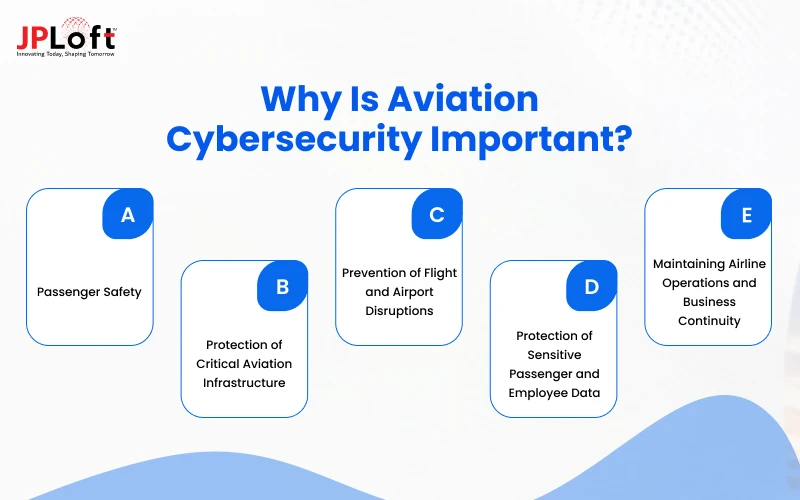
Here are the biggest reasons airlines and airports cannot ignore digital protection today when they build aviation software.
1. Passenger Safety
Cyberattacks on aviation systems can put passenger lives at risk. Hackers targeting flight control or navigation systems threaten more than data; they threaten safety in the sky.
Strong digital defenses protect the systems pilots and crew depend on every day. When aviation networks stay secure, passengers can trust that every flight operates as intended.
2. Protection of Critical Aviation Infrastructure
Airports and airlines rely on interconnected infrastructure, from baggage systems to air traffic control towers. Aviation security protects these critical systems from attackers who want to cause widespread damage.
A breach in one system can ripple across an entire airport within minutes. Protecting infrastructure means safeguarding the backbone that keeps flights, staff, and passengers moving safely.
3. Prevention of Flight and Airport Disruptions
Delays and cancellations frustrate passengers and cost airlines significant money every year. Rising aviation cybersecurity threats like ransomware and system outages can ground flights and disrupt entire airport schedules.
Preventing these disruptions requires constant monitoring and quick response plans in place. Airlines and airports that stay prepared can keep operations running even when attackers strike.
4. Protection of Sensitive Passenger and Employee Data
Airlines store vast amounts of personal data, including passport details, payment information, and travel history. This data is a prime target for cybercriminals seeking financial gain.
Protecting this information builds passenger trust and avoids costly data breaches down the line. Strong encryption and access controls keep sensitive records safe from unauthorized access.
5. Maintaining Airline Operations and Business Continuity
A single cyberattack can shut down booking systems, check-in counters, or scheduling tools for hours. Strong cybersecurity in aviation keeps daily operations running without costly interruptions to service.
Business continuity planning helps airlines recover quickly after an incident occurs. This minimizes financial losses and keeps passengers moving even during a security event.
How to Implement CyberSecurity in Aviation Software?
Building secure aviation software takes more than good code. It requires a clear aviation cybersecurity strategy that combines risk assessment, access controls, data protection, testing, and monitoring from the earliest stage of development.

Below are the steps that help businesses understand how to implement cybersecurity:
Step 1: Security Risk Assessment
Before developing or upgrading aviation software, organizations must first understand what needs protection. A security risk assessment identifies vulnerable systems, sensitive data, user access points, and possible attack routes across the entire organization.
This step helps teams prioritize risks based on their potential impact before real software development begins.
Key activities include:
-
Identify critical software and systems
-
Map possible attack points
-
Assess data and infrastructure risks
-
Prioritize high-impact vulnerabilities
-
Define suitable security controls
Step 2: Security-by-Design Approach
Security should be part of the software architecture from day one, not an afterthought added later. Adding protection later often leaves hidden weaknesses and increases the cost to build aviation software significantly down the line for everyone.
A security-by-design approach ensures every major component is planned with protection built in from the very start.
Developers should focus on:
-
Secure coding practices
-
Strong authentication mechanisms
-
Least-privilege access
-
Secure system architecture
-
Proper input validation
Step 3: Identity and Access Management
Not every employee, partner, or system needs access to every aviation application within the organization. Strong identity and access controls make sure users only reach the resources required for their specific role.
This approach reduces risk while making daily access management simpler for IT and security teams.
Effective controls include:
-
Multi-factor authentication
-
Role-based access controls
-
Least-privilege permissions
-
Regular access reviews
-
Automatic removal of inactive accounts
Step 4: APIs and Third-Party Integrations
Aviation applications often connect with booking platforms, payment systems, cloud services, and outside vendors regularly. Each connection creates another possible entry point that attackers can exploit if left unsecured.
Weak integrations often become the easiest way for cybercriminals to enter otherwise well-protected aviation networks and systems.
Organizations should consider:
-
Strong API authentication
-
Encrypted data transfers
-
Input validation
-
Rate limiting
-
Third-party security checks
Step 5: Aviation Data Protection
Airlines and airports handle valuable information, including passenger records, payment details, and employee data daily. Losing this information can create serious financial, legal, and reputational problems for the organization.
This data remains one of aviation's most attractive targets for cybercriminals seeking financial gain or disruption.
Important measures include:
-
Encrypt data during transmission and storage
-
Restrict access to sensitive information
-
Use secure databases and backups
-
Apply clear data retention policies
-
Monitor unusual data access
Step 6: Secure Cloud, IoT, and Connected Systems
Modern aviation depends heavily on cloud platforms, IoT devices, and connected aircraft systems every day. These technologies improve efficiency but also expand the digital attack surface significantly across the network.
Smart airport infrastructure adds even more connected devices that organizations must carefully secure and monitor.
Organizations should:
-
Secure cloud configurations
-
Protect connected devices
-
Segment critical networks
-
Integrate IoT in aviation systems
-
Apply security controls to edge systems
Step 7: Test and Monitor Aviation Software
Even well-designed software can develop weaknesses as technologies, integrations, and threats keep changing constantly over time. Regular aviation software testing helps teams find gaps before attackers can exploit them in production.
Testing early prevents small issues from quietly becoming major security incidents down the line.
A strong testing process should include:
-
Vulnerability assessments
-
Penetration testing
-
Code reviews
-
Dependency scanning
-
API security testing
-
Real-time monitoring
Step 8: Incident Response and Regular Updates
No cybersecurity plan can guarantee that an attack will never happen to aviation systems. Organizations must prepare for incidents in advance and know exactly how to recover quickly.
This preparation reduces downtime significantly and limits damage whenever an incident actually occurs.
The plan should include:
-
Defined incident response responsibilities
-
Secure backup systems
-
System isolation procedures
-
Recovery processes
-
Regular security updates
-
Post-incident reviews
Cost of Implementing Aviation Cybersecurity
The cost of implementing aviation cybersecurity typically ranges from $20,000 to $300,000+, depending on the size and complexity of an organization's operations.
A small regional airport with limited digital infrastructure spends far less than a major international airline managing global connected systems.
Choosing the right aviation cybersecurity strategy means balancing budget with actual risk exposure. Below is a general breakdown based on the complexity of security integration.
|
Complexity Level |
Estimated Cost Range |
What's Typically Included |
|
Basic (small airports, regional carriers) |
$20,000 – $60,000 |
Firewalls, basic access controls, endpoint protection, employee awareness training |
|
Moderate (mid-sized airlines, regional airports with digital systems) |
$60,000 – $150,000 |
Multi-factor authentication, network segmentation, vulnerability assessments, API security |
|
Advanced (major airlines, international airports) |
$150,000 – $300,000+ |
Zero-trust architecture, 24/7 monitoring, penetration testing, incident response planning |
Every organization's needs differ, but understanding these tiers helps decision-makers plan realistic budgets. Investing early in strong airline cybersecurity measures often costs far less than recovering from a breach after the fact.
Common Aviation Cybersecurity Implementation Challenges
Securing aviation systems is far from simple and comes with a lot of aviation software development challenges.
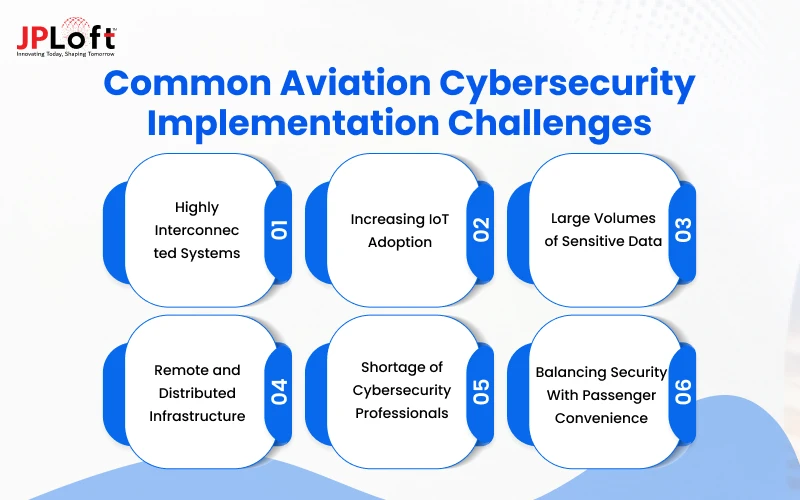
Below, we will discuss the common challenges that occur while implementing cybersecurity in aviation.
Challenge 1: Highly Interconnected Systems
Aviation networks link booking platforms, air traffic control, baggage handling, and airport operations into one connected ecosystem.
A weakness in one system can quickly spread across others, making isolated protection nearly impossible and increasing the overall attack surface significantly for every connected stakeholder involved.
Solution: Use network segmentation to separate critical aviation systems from less sensitive networks. This limits unauthorized movement and reduces the impact of a security breach.
Challenge 2: Increasing IoT Adoption
Airports and airlines increasingly rely on IoT devices for surveillance and passenger services across terminals.
Each connected device becomes a potential entry point for attackers, and many lack built-in security features, expanding cybersecurity risks in aviation considerably as adoption grows.
Solution: Monitor connected IoT devices continuously and apply regular security patches. Maintain updated device inventories to identify vulnerable endpoints before attackers can exploit them.
Challenge 3: Large Volumes of Sensitive Data
Airlines process massive amounts of passenger and employee data daily, including passports, payment details, and travel history records.
Storing and transferring this information safely across multiple systems is difficult, and any exposure can trigger regulatory penalties and lasting reputational damage for the organization.
Solution: Encrypt sensitive data during storage and transmission. Restrict access based on user roles and regularly review permissions to prevent unauthorized data exposure.
Challenge 4: Remote and Distributed Infrastructure
Aviation operations span multiple terminals, regional offices, and remote facilities that are often difficult to monitor consistently.
This distributed setup makes centralized oversight challenging and increases exposure to aviation cybersecurity threats that exploit gaps in remote infrastructure and inconsistent security coverage.
Solution: Use centralized security monitoring across remote facilities and terminals. Real-time visibility helps teams identify suspicious activity quickly and respond before threats spread.
Challenge 5: Shortage of Cybersecurity Professionals
The aviation industry faces a global shortage of skilled cybersecurity professionals who understand its unique regulatory and technical demands.
This gap leaves many organizations understaffed and slower to detect, respond to, and recover from aircraft cybersecurity incidents when they occur.
Solution: Use AI-driven security tools to automate routine monitoring and threat detection. This reduces manual workloads and allows limited security teams to focus on complex incidents.
Challenge 6: Balancing Security With Passenger Convenience
Airlines and airports must protect systems without making travel feel slow or frustrating for passengers moving through terminals.
Adding too many security layers can create friction, while too few leave critical systems exposed, forcing organizations to constantly balance protection with a smooth passenger experience.
Solution: Implement adaptive authentication that adjusts security requirements based on risk. This protects critical systems while reducing unnecessary verification steps for passengers and authorized users.
Best Practices for Better Cybersecurity in the Aviation Industry
Strong protection does not happen by accident. These aviation cybersecurity best practices help airlines and airports build reliable, lasting defenses against everyday digital threats.
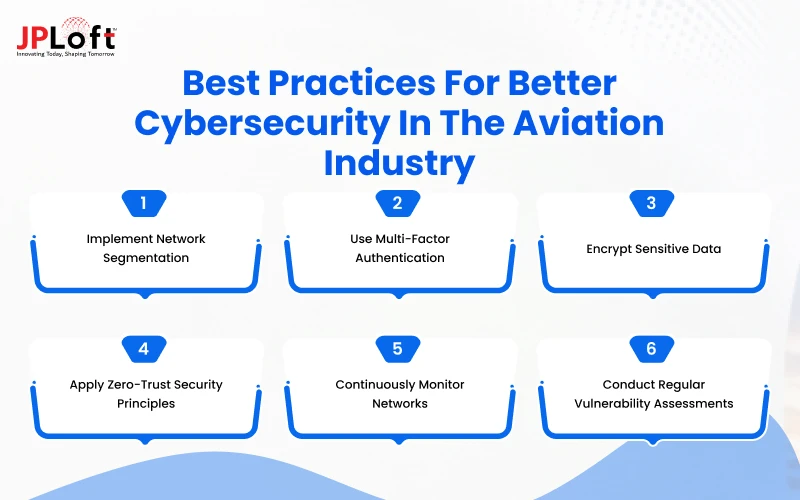
1. Implement Network Segmentation
Dividing networks into smaller sections limits how far an attacker can move if one system is breached. This keeps critical systems isolated from less sensitive ones.
Segmentation also makes it easier for security teams to monitor traffic and spot unusual activity quickly. It reduces the overall impact of any single security incident.
2. Use Multi-Factor Authentication
Passwords alone are no longer enough to protect sensitive aviation systems from unauthorized access. Multi-factor authentication adds an extra layer of verification for every login attempt made.
This simple step significantly reduces the risk of stolen credentials leading to serious breaches. Strong airline cybersecurity depends heavily on verifying who is really logging in.
3. Encrypt Sensitive Data
Encryption scrambles data so it remains unreadable to anyone without proper authorization or access. This protects passenger records, payment details, and operational data from exposure.
Applying strong aviation security measures like encryption during storage and transmission keeps sensitive information safe. It also helps organizations meet strict data protection regulations.
4. Apply Zero-Trust Security Principles
Zero-trust assumes no user or device should be trusted automatically, even inside the network. Every request for access must be verified before it is granted.
This approach strengthens an organization's broader aviation cybersecurity strategy by reducing blind trust across systems. It limits damage even if one account becomes compromised.
5. Continuously Monitor Networks
Constant monitoring helps security teams detect unusual activity before it turns into a major incident. Real-time visibility across systems makes early detection possible and reliable.
Strong aircraft cybersecurity depends on catching threats early, before they can spread further into connected systems. Continuous monitoring gives teams the time needed to respond.
6. Conduct Regular Vulnerability Assessments
Systems change constantly, and new vulnerabilities can appear without warning at any given time. Regular assessments help identify these weaknesses before attackers find them first.
This proactive approach strengthens airport cybersecurity by closing gaps before they become serious problems. Scheduled assessments should become a routine part of daily operations.
Future Trends in Aviation Cybersecurity
The next phase of aviation cybersecurity will rely on smarter, faster, and more predictive defenses across every connected system in the industry.
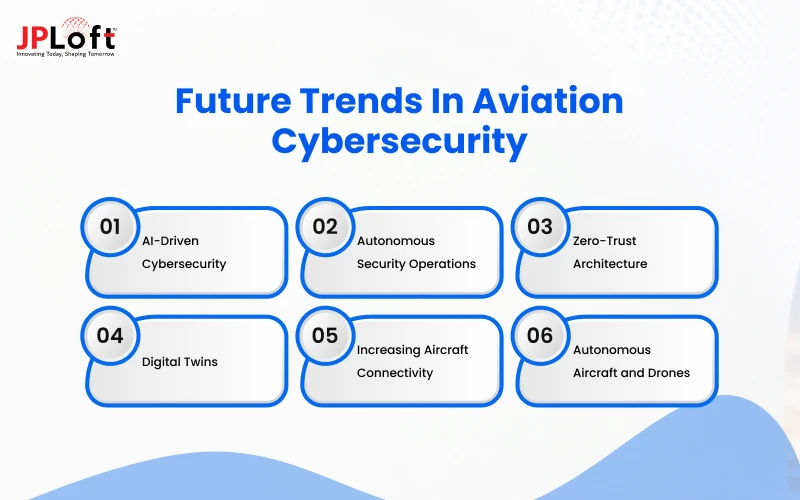
► AI-Driven Cybersecurity
AI in the aviation industry will help detect threats faster by analyzing patterns across massive datasets in real time. This strengthens overall aviation security by catching risks before they escalate.
► Autonomous Security Operations
Automated systems will handle routine monitoring and response tasks without constant human input. This allows security teams to focus on complex threats and strategic decisions.
► Zero-Trust Architecture
More organizations will adopt zero-trust models as standard practice across networks. This shift strengthens cybersecurity in aviation by removing automatic trust for any user or device.
► Digital Twins
Digital twins will let teams simulate attacks and test defenses safely. This helps organizations identify weaknesses before real-world incidents occur.
► Increasing Aircraft Connectivity
As aircraft become more connected, exposure to aviation cybersecurity threats will grow. Manufacturers and airlines must build stronger safeguards into every connected component.
► Autonomous Aircraft and Drones
Autonomous aircraft and drones will demand new security frameworks entirely. Protecting these systems will become essential as adoption expands across commercial and defense aviation.
How Can JPLoft Help With Aviation Cybersecurity?
As aviation becomes more connected, secure software is essential for protecting critical systems, sensitive data, and daily operations. Airlines and airports need technology that can handle evolving threats while remaining reliable and scalable.
This requires security to be considered throughout the software lifecycle, from architecture and development to testing and ongoing maintenance.
JPLoft is a trusted aviation software development company that helps organizations build secure digital solutions around their specific operational needs. Its team can integrate security measures such as strong access controls, encrypted data, secure APIs, and continuous monitoring into aviation software.
From airport platforms and airline applications to connected aviation systems, JPLoft focuses on building technology with security considered from the start.
The team can also support AI, cloud, and IoT solutions that help organizations improve monitoring, protect data, and create more resilient aviation operations.
Conclusion
Aviation cybersecurity is no longer optional for airlines and airports operating in today's connected world. From protecting passenger safety to maintaining smooth operations, strong digital defenses touch every part of the aviation industry.
This guide covered why cybersecurity matters, the real costs involved, common implementation challenges, and the aviation cybersecurity best practices that keep systems protected against evolving threats.
However, technologies like AI, zero-trust architecture, and digital twins will continue to reshape how airlines and airports defend their networks. Staying prepared means treating cybersecurity as an ongoing priority rather than a one-time fix.
Organizations that invest early in strong security practices protect not just their systems but the trust passengers place in them every time they fly. Aviation's future depends on staying one step ahead of every threat.
FAQs
Major threats include ransomware, phishing, malware, data breaches, insider attacks, supply chain vulnerabilities, credential theft, and attacks targeting airline networks, applications, cloud platforms, and connected systems.
Yes, connected aircraft systems can face cyber risks if attackers exploit vulnerabilities in communication networks, onboard systems, connected devices, or supporting software. Strong security controls help reduce these risks.
AI can analyze large amounts of security data, identify unusual behavior, detect potential threats, support predictive analysis, and automate alerts, helping security teams respond faster to emerging attacks.
Airports use network segmentation, access controls, encryption, continuous monitoring, security testing, employee training, incident response plans, and regular system updates to protect critical digital infrastructure and connected systems.
Aviation cybersecurity is influenced by requirements and guidance from organizations such as ICAO, FAA, and EASA, alongside frameworks including NIST and standards such as ISO/IEC 27001.

Rahul Sukhwal is the CEO and Founder of JPLoft, with 18+ years of experience in software engineering, emerging technologies, and digital product development. His expertise spans artificial intelligence, including AI agents, generative AI, LLMs, chatbots, computer vision, and machine learning, as well as blockchain, IoT, AR/VR, mobile, web, and enterprise software. He focuses on applying these technologies to real business challenges across industries such as healthcare, education, mobility, finance, real estate, and on-demand services.




Share this blog