



Key Takeaway
The cost of UI/UX web design in Denver varies widely, making it essential for businesses planning scalable websites.
Web design affects usability, branding, and user experience, forming the foundation for trust, engagement, and website success.
Web design cost in Denver ranges between USD 5,000 to USD 30,000+, depending on the project scope and budget.
Website designing cost in Denver depends on scope, customization, UX effort, page count, timelines, and designer expertise.
Clear planning, selected features, and the right partners help reduce the cost to design a web in Denver without quality loss.
Designing typically ranges from basic, affordable sites to premium custom platforms based on business complexity needs.
JPLoft delivers structured, scalable web design solutions focused on usability, cost control, and long-term business growth value.
Planning a new website? Need a top-notch web design?
For businesses in Denver, web design pricing can initially seem unclear. Rates change based on project size, design goals, and the team you choose. From startups to established enterprises, companies seek clean design, smooth navigation, and pages that load quickly. But before planning features or layout, one question that arises: what's the cost to design a web in Denver?
The web design cost in Denver generally ranges between USD 5,000 to USD 30,000+. This pricing depends on many factors, like business goals, design complexity, number of pages, and the type of agency you choose. A simple business website costs very little compared to a custom platform built for growth. Denver’s active tech and creative market also plays a role in shaping prices.
In this guide to web design cost in Denver, we will break down everything you need to know about pricing. You will learn what affects pricing, average cost ranges, and how to plan your budget with clarity. Whether you are launching a new website or redesigning an existing one, this guide helps you make smart decisions without any guesswork.
What is Web Design?
Web design is the process of creating the visual layout and user experience of a website. It focuses on structure, usability, branding, and how visitors interact with pages. For businesses, web design supports credibility, engagement, and conversations.
A well-planned design helps users navigate easily, understand offerings clearly, and take action without friction. This strategic design also ensures the website looks professional across devices and aligns with business goals.
Web design sets the foundation for performance, scalability, and long-term digital growth, making it a key factor in overall success and planning of the overall cost to create a web design in Denver. For companies in competitive markets like Denver, web design plays a key role in standing out.
Key Steps of the Web Designing Process
The design process follows a structured approach as stated in this guide to web design cost in Denver.
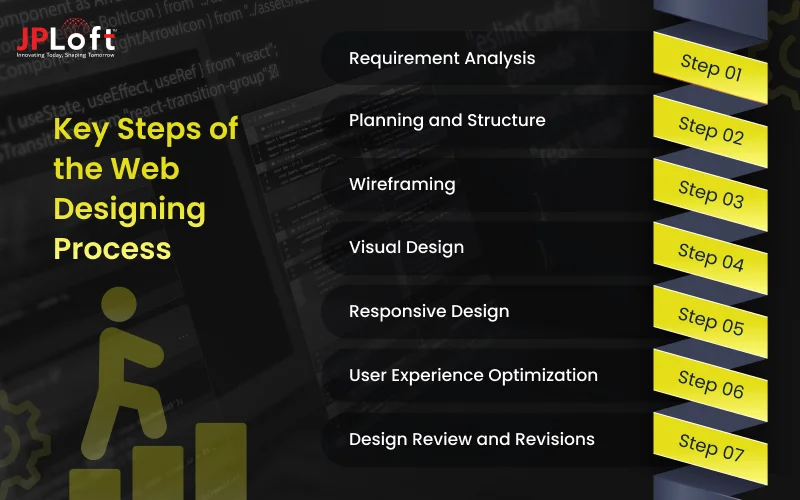
This ensures the website meets business goals, delivers a smooth user experience, and supports seamless long-term growth.
Step 1: Requirement Analysis
Identify business objectives, target users, core features, branding needs, and competitors to define the website’s purpose and align design decisions with measurable business outcomes.
Step 2: Planning and Structure
Create a sitemap and page hierarchy that organizes content logically, improves navigation flow, and ensures users can reach key information with minimal clicks.
Step 3: Wireframing
Develop low-fidelity layouts that map content placement, user journeys, and functionality, helping stakeholders visualize structure before investing time in detailed designs.
Step 4: Visual Design
Apply brand colors, typography, images, and UI elements to create a consistent visual identity that communicates professionalism and builds trust with visitors.
Step 5: Responsive Design
Design layouts that adapt smoothly to desktops, tablets, and smartphones, ensuring consistent usability, readability, and appearance across all screen sizes.
Step 6: User Experience Optimization
Improve interactions, spacing, readability, and call-to-action placement to guide users naturally, reduce confusion, and increase engagement and conversions.
Step 7: Design Review and Revisions
Test designs, collect feedback, fix usability issues, and refine visuals to ensure the final design meets business goals before development begins.
Each of these steps adds time, effort, and expertise, which directly impacts the complete web design cost in Denver. Understanding what web design involves sets the foundation, but the next important step is knowing a detailed breakdown of how much web design cost in Denver to help businesses plan.

How Much Web Design Cost in Denver?
For most Denver-based businesses, complete web design costs in Denver typically range between USD 5,000 to USD 30,000+. The final price depends on how simple or advanced the design needs to be. What's the cost to design a web in Denver varies based on project size, design complexity, and business requirements.
There is no fixed price, but most projects fall into clear cost ranges. Smaller websites with limited pages and basic design sit at the lower end. Larger websites with custom layouts, advanced UX planning, and brand-focused visuals move toward the higher range.
Cost Breakdown by Website Type
Below we have stated how much web design cost in Denver based on the different types and requirements:
1. Basic Business Website
Estimated Web Designing Cost (in USD): $2,500 to $6,000
This includes a simple layout with 5 to 7 pages, basic branding, responsive design, and standard contact forms. It works well for local businesses, consultants, and early-stage startups.
2. Small Business or Service Website
Estimated Web Designing Cost (in USD): $5,000 to $10,000
These websites include custom design elements, stronger branding, improved user experience, and more content sections. They suit growing businesses that need better engagement and lead generation.
3. Custom Business Website
Estimated Web Designing Cost (in USD): $10,000 to $18,000
This range covers tailored layouts, UX strategy, custom visuals, integrations, and advanced responsiveness. It fits companies that want a unique online presence aligned with long-term growth goals.
4. Enterprise or Complex Website
Estimated Web Designing Cost (in USD): $18,000 to $30,000+
Large businesses with complex structures, multiple user journeys, custom features, and detailed design systems fall into this category. These projects involve deeper research, planning, and multiple revision cycles.
Project-based cost to design a web in Denver is more common for businesses because it offers cost clarity and defined deliverables. Understanding these ranges helps businesses plan budgets with confidence and avoid hidden expenses.
Choosing the right scope, design partner, and growth plan ensures your Denver web design cost delivers measurable business returns without unnecessary spending. Once you understand the average UI/UX web design cost in Denver, it becomes important to explore the key factors that influence why these prices vary from one project to another.
Different Drivers Impacting the Overall Web Design Cost in Denver
Several factors influence how much web design cost in Denver for businesses looking for investment. Each driver affects the project scope, effort, and expertise required, which directly shapes the final cost.
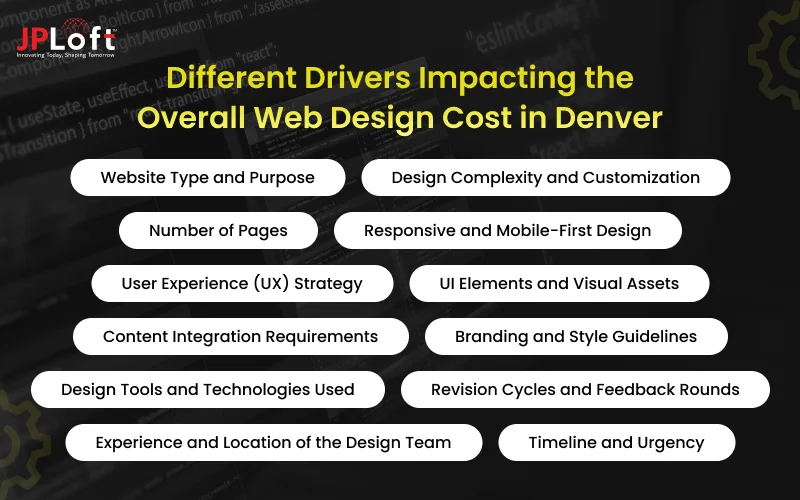
Below, we have broken down the factors to help businesses understand where design investments go and the cost to develop a web design in Denver:
1. Website Type and Purpose
The type of website directly shapes its design requirements and cost. A simple informational website focuses on clean layouts and brand presentation, while eCommerce, SaaS, or enterprise websites require complex page structures and conversion-driven design.
In Denver, many businesses aim for scalable digital platforms rather than basic sites. As functionality and business goals grow, the cost of hiring web developer and design costs rises accordingly due to added effort and strategy.
|
Website Type |
Design Scope |
Estimated Cost (in USD) |
|
Basic Business Website |
Informational layout, branding |
5,000 – 8,000 |
|
Corporate Website |
Multiple services, structured UX |
8,000 – 15,000 |
|
eCommerce Website |
Product-focused layouts |
15,000 – 25,000 |
|
SaaS or Platform Website |
Conversion-driven UI |
20,000 – 30,000 |
2. Design Complexity and Customization
Design complexity plays a major role in cost estimation. Custom designs require original layouts, branding elements, and user interaction planning, unlike templates that follow predefined structures. Denver businesses often prefer unique designs to stand out in competitive markets.
This demand increases wireframing, visual exploration, and revisions. Higher customization means more design hours, creative expertise, and quality assurance, impacting the total web app development cost in Denver.
|
Design Level |
Customization Depth |
Estimated Cost (in USD) |
|
Template-Based Design |
Minimal changes |
5,000 – 7,000 |
|
Semi-Custom Design |
Brand-aligned visuals |
8,000 – 12,000 |
|
Fully Custom Design |
Unique layouts and UX |
15,000 – 25,000 |
|
High-End Custom Design |
Advanced visuals |
20,000 – 30,000 |
3. Number of Pages
Each page of a website requires individual attention for layout, spacing, content alignment, and visual balance. A website with multiple service pages, landing pages, and resources takes more time to design consistently.
Denver-based businesses often expand their sites to support marketing and local targeting. As page count increases, so does design coordination and review effort. This directly raises the overall cost to create a web design in Denver.
|
Page Count |
Design Effort |
Estimated Cost (in USD) |
|
1–5 Pages |
Basic layout work |
5,000 – 7,000 |
|
6–10 Pages |
Moderate consistency work |
8,000 – 12,000 |
|
11–20 Pages |
High coordination |
13,000 – 20,000 |
|
20+ Pages |
Large-scale design |
20,000 – 30,000 |
4. Responsive and Mobile-First Design
Modern websites must perform smoothly across devices. Responsive design ensures usability on desktops, tablets, and smartphones. In Denver, where users browse across varied devices, businesses expect seamless experiences everywhere.
Designers must adjust layouts, font sizes, images, and navigation for each screen type. This additional planning, testing, and optimization increases time investment, making responsive design a significant driver of web design cost in Denver.
|
Responsiveness Level |
Coverage |
Estimated Cost (in USD) |
|
Desktop-Only Design |
Limited device support |
5,000 – 7,000 |
|
Responsive Design |
Desktop and mobile |
8,000 – 12,000 |
|
Mobile-First Design |
All screen sizes |
12,000 – 18,000 |
|
Advanced Responsiveness |
Extensive testing |
18,000 – 25,000 |
5. User Experience (UX) Strategy
UX strategy focuses on guiding users toward actions such as inquiries, sign-ups, or purchases. This includes navigation planning, page flow, and content hierarchy. Denver businesses prioritize user engagement and conversion optimization, which requires research and usability planning.
UX-driven design improves results but adds workshops, testing, and refinement phases. These strategic efforts increase design value and overall cost of UI/UX web design in Denver.
|
UX Scope |
Activities Included |
Estimated Cost (in USD) |
|
Basic UX |
Simple navigation |
5,000 – 8,000 |
|
Structured UX |
User flow planning |
8,000 – 15,000 |
|
Conversion-Focused UX |
CTA optimization |
15,000 – 22,000 |
|
Research-Driven UX |
Testing and refinement |
20,000 – 30,000 |
6. UI Elements and Visual Assets
Custom visual assets such as icons, banners, illustrations, and interactive elements enhance brand identity. Creating these assets requires time and specialized design skills. Many Denver brands avoid generic stock visuals to maintain originality.
Custom UI elements increase creativity demands and design effort. The more unique the visuals, the higher the design workload, which directly impacts UI/UX web design cost in Denver.
|
Visual Assets |
Level of Originality |
Estimated Cost (in USD) |
|
Stock Assets |
Minimal customization |
5,000 – 7,000 |
|
Semi-Custom UI |
Branded elements |
8,000 – 12,000 |
|
Custom UI Assets |
Icons and graphics |
12,000 – 20,000 |
|
Premium Visual Design |
Illustrations and motion |
20,000 – 30,000 |
7. Content Integration Requirements
Designing with actual content is more complex than using placeholders. Blogs, portfolios, case studies, and detailed service descriptions require flexible layouts. Denver businesses often rely on content marketing, which increases layout variations.
Designers must ensure readability and scalability. Managing content-heavy pages increases alignment and testing time, raising overall cost to develop a web design in Denver.
|
Content Volume |
Design Complexity |
Estimated Cost (in USD) |
|
Low Content |
Static pages |
5,000 – 7,000 |
|
Medium Content |
Services and blogs |
8,000 – 12,000 |
|
High Content |
Case studies, resources |
12,000 – 20,000 |
|
Content-Heavy Platform |
Scalable layouts |
20,000 – 30,000 |
8. Branding and Style Guidelines
Strong branding requires consistent colors, typography, and visual tone. When guidelines are missing, designers must define them from scratch. Even with existing brand rules, applying them across pages takes effort.
Denver businesses emphasize brand credibility, which increases design refinement and review cycles. Branding alignment adds time and increases project scope.
|
Branding Scope |
Design Work |
Estimated Cost (in USD) |
|
Existing Brand Applied |
Minor alignment |
5,000 – 8,000 |
|
Partial Branding |
Visual refinement |
8,000 – 12,000 |
|
Full Brand Design |
Colors and typography |
12,000 – 20,000 |
|
Brand-Led Web Design |
Strong visual identity |
20,000 – 30,000 |
9. Design Tools and Technologies Used
Professional agencies use advanced tools for prototyping, collaboration, and testing. These tools improve design quality and client communication.
Many Denver design teams rely on premium software to meet high standards. While these tools enhance outcomes, they increase operational costs. This investment is reflected in the overall website design pricing.
|
Tools Used |
Design Capability |
Estimated Cost (in USD) |
|
Basic Design Tools |
Standard layouts |
5,000 – 7,000 |
|
Professional Tools |
Prototyping |
8,000 – 12,000 |
|
Advanced Tool Stack |
Interactive previews |
12,000 – 20,000 |
|
Enterprise-Level Tools |
High collaboration |
20,000 – 30,000 |
10. Revision Cycles and Feedback Rounds
Design revisions are a natural part of the process, but excessive rounds increase web design cost in Denver. Each change requires updates, reviews, and approvals.
Denver clients often involve multiple stakeholders, which extends feedback timelines. More revision cycles mean additional design hours and resource usage, directly increasing the final cost.
|
Revision Rounds |
Effort Involved |
Estimated Cost (in USD) |
|
1–2 Rounds |
Minor changes |
5,000 – 7,000 |
|
3–4 Rounds |
Moderate revisions |
8,000 – 12,000 |
|
Multiple Rounds |
Extensive changes |
12,000 – 20,000 |
|
Open-Ended Revisions |
High iteration |
20,000 – 30,000 |
11. Experience and Location of the Design Team
Experienced Denver-based designers understand local business needs and user behavior. Their expertise results in higher-quality design and fewer long-term issues. However, the cost to hire a web designer based on their experience level can be higher.
Businesses pay for reliability, strategy, and design precision. Team experience and local presence strongly influence the overall cost to create a web design in Denver.
|
Team Profile |
Expertise Level |
Estimated Cost (in USD) |
|
Junior Designers |
Basic execution |
5,000 – 7,000 |
|
Mid-Level Team |
Business-focused design |
8,000 – 12,000 |
|
Senior Designers |
Strategy-driven UX |
15,000 – 22,000 |
|
Top Denver Agency |
High reliability |
20,000 – 30,000 |
12. Timeline and Urgency
Project timelines affect resource allocation. Urgent projects require designers to prioritize work and compress schedules. In Denver’s fast-moving business environment, quick launches are common.
Short deadlines increase workload pressure and may require additional resources. Faster delivery often leads to a higher cost of UI/UX web design in Denver due to intensified effort.
|
Project Timeline |
Delivery Speed |
Estimated Cost (in USD) |
|
Flexible Timeline |
Standard delivery |
5,000 – 8,000 |
|
Moderate Deadline |
Prioritized tasks |
8,000 – 12,000 |
|
Tight Timeline |
Accelerated workflow |
12,000 – 20,000 |
|
Urgent Delivery |
Fast-track design |
20,000 – 30,000 |
Understanding these factors of cost to develop a web design in Denver helps you plan realistic budgets and choose the right web design approach for long-term value. Knowing these factors makes it easier to identify practical steps you can take to control spending without compromising website quality.
How to Minimize the Web Design Cost in Denver?
Managing UI/UX web design cost in Denver requires smart planning and clear decisions. By understanding how to control expenses, businesses can reduce unnecessary spending while still achieving a professional, user-friendly website that supports long-term growth.
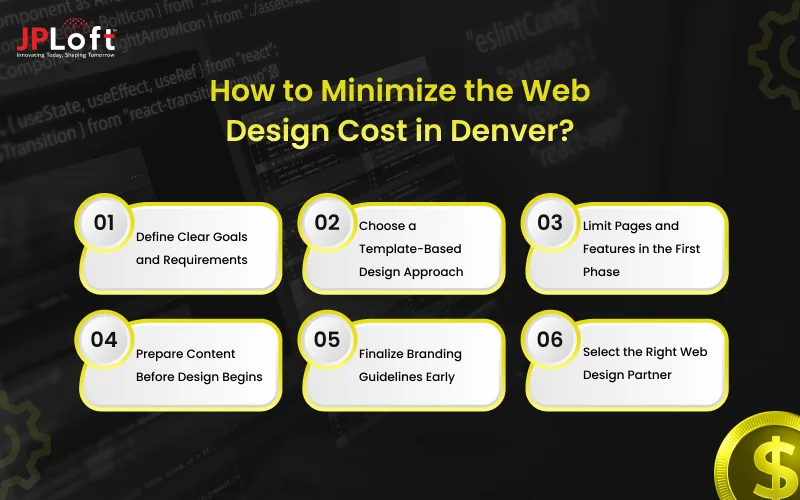
1. Define Clear Goals and Requirements
Clear goals prevent unnecessary design changes. When you define website purpose, target audience, and core actions early, designers focus only on required elements. This avoids scope creep, shortens timelines, and reduces revision cycles that often increase the complete web design cost in Denver.
2. Choose a Template-Based Design Approach
Using pre-designed templates lowers custom design effort. Templates provide proven layouts, a responsive structure, and a faster setup. Designers spend less time on visual creation, helping businesses save money while still achieving a professional and functional website presence for Denver-based business needs.
3. Limit Pages and Features in the First Phase
Keeping page count and features minimal, controls design scope. Focus on essential pages like home, services, and contact first. Additional pages or features can be added later without inflating initial web design budgets during early project planning stages for clarity.
4. Prepare Content Before Design Begins
Providing content before design starts saves time and cost to develop a web design in Denver. When text, images, and brand assets are ready, designers avoid rework. This keeps layouts stable, speeds execution, and reduces unexpected design revisions later across multiple approval cycles in Denver projects overall.
5. Finalize Branding Guidelines Early
Clear branding guidelines reduce design experimentation. When colors, fonts, logos, and style direction are finalized early, designers work faster. This minimizes trial and error, shortens feedback loops, and lowers total web design expenses for long-term business scalability and consistency goals.
6. Select the Right Web Design Partner
Selecting a design partner with relevant experience avoids costly mistakes. Agencies that understand business needs, industry standards, and local Denver markets deliver accurate estimates, efficient workflows, and fewer revisions. This helps in controlling overall web design spending through structured planning and communication.
Reducing the cost to design a web in Denver does not mean compromising quality or performance. With clear goals, limited scope, and the right design partner, businesses in Denver can build effective websites that meet user expectations, stay within budget, and deliver consistent business value.

Why Connect with JPLoft for Designing Your Web?
Choosing the right web design partner directly impacts how your business is perceived online. JPLoft focuses on building websites that balance visual clarity, user experience, and business objectives. Our design approach is rooted in understanding your brand, audience, and growth goals before any creative work begins.
With JPLoft, you get a team that values structure and transparency. We follow a clear design process that reduces revisions, controls timelines, and keeps the overall cost to create a web design in Denver predictable. From layout planning to responsive design, each stage is aligned with usability and performance. Our designers focus on clean navigation, fast-loading pages, and intuitive user journeys that improve engagement and conversions.
JPLoft brings industry experience across diverse business domains. This allows us to design websites that meet both functional needs and market expectations. Whether you need a simple business website or a fully customized platform, our team scales the design to fit your requirements.
Our web designs are flexible, scalable, and easy to update as your business grows. By connecting with JPLoft, an experienced web development company in Denver, you invest in a design partner that delivers consistency, clarity, and long-term digital value, not just a visually attractive website.
Conclusion
How much web design cost in Denver depends on much more than visual appeal. It reflects planning, strategy, usability, and long-term business value. From simple business websites to complex custom platforms, pricing changes based on design scope, features, and experience of the design partner.
Being aware of the guide to web design cost in Denver helps businesses avoid overspending and make informed decisions. A well-designed website supports branding, builds trust, and improves customer engagement.
Investing in the right design approach ensures better scalability, a smoother user experience, and stronger results over time. When planned correctly, web design becomes a smart investment rather than an expense.
With the right balance of cost of UI/UX web design in Denver, quality, and strategy, businesses can create websites that deliver lasting value and support consistent growth in a competitive digital space.
FAQs
Web design focuses on planning a website’s layout, visuals, and user experience. It ensures users can navigate easily, understand services, and take action. Good web design supports branding, performance, and usability, making it essential for businesses competing in Denver’s market.
Web design in Denver typically costs between USD 5,000 and USD 30,000+, depending on website type and complexity. Basic sites cost less, while custom or enterprise designs require deeper strategy, UX planning, and multiple revisions, increasing overall investment significantly for growing businesses.
Businesses can reduce web design costs by defining clear goals, limiting initial features, preparing content early, and using templates. These steps prevent rework, shorten timelines, and help designers focus on essentials, resulting in controlled budgets without sacrificing website quality standards.
Website design costs in Denver vary due to factors like design complexity, page count, customization, UX strategy, and agency expertise. Each element adds planning and execution effort, directly influencing timelines, resource usage, and final pricing for different business requirements levels.
Web design is not always a one-time expense. Initial design covers structure and visuals, but ongoing updates, content changes, design refinements, and optimization are often required. These improvements help maintain performance, usability, and relevance as business needs and user expectations grow.

Priyanka Sukhwal is the Managing Director and Business Head of JPLoft, a results-driven leader with 10+ years of experience steering technology ventures and business growth. Her strategic acumen and deep understanding of digital markets and on-demand solutions have consistently translated into innovations that help businesses scale, evolve, and lead in competitive landscapes.



Share this blog