


Key Takeaways:
Depending on the scope, the development of the web application cost in Denver generally ranges between USD 10,000 to USD 150,000+.
App complexity depends on features, integrations, and design choices that influence timeline, effort, and development cost in Denver.
App complexity, design requirements, the tech stack, team model, and timeline directly influence the overall cost to create a web app in Denver.
Hidden costs are maintenance, third-party tools, security compliance, and scope changes that often raise the total estimated cost.
Best practices for reducing costs include clear planning, MVP development, agile workflows, and partnering with experienced partners in Denver.
Long-term costs include maintenance, security updates, hosting, and scaling, which must be planned early for sustainable Denver web apps.
Partnering with JPLoft gives Denver businesses a reliable web app development team that balances cost, quality, and scalability.
Building a web app in Denver can be a smart move for businesses that want to grow, scale, and reach users faster. But before you invest in the design of features, one common question comes up: How much does it cost to develop a web app?
The answer varies between USD 10,000 to USD 150,000+. Web app development price changes based on the type of app you build, the features you choose, the design quality, and the development team you hire.
Denver has a strong and growing tech ecosystem. You will find highly experienced developers for whom modern agencies and startups compete. This demand directly affects the web app cost in Denver. Without a clear cost breakdown, businesses often face delays, budget overruns, or unexpected changes mid-project.
In this blog, you will get a clear understanding of the web app development cost in Denver. It explains key cost factors, average pricing ranges, and the best practices to plan your budget with confidence.
If you want to avoid the guesswork and make informed decisions, this blog is here to get you prepared for all.
What is a Web App?
A web app is a software application that runs on a web browser instead of being installed on a device. Users access it through the internet using a URL of the web app. Web apps work across devices like desktops, tablets, and smartphones. They handle tasks such as user login, data processing, and real-time updates.
Common examples include online banking portals, e-commerce platforms, project management tools, and social media dashboards. Web apps are built using frontend and backend technologies that allow them to store data, interact with users, and integrate with other systems. They are easy to update and scale for business growth.
Market Stats
-
Polaris Market Research estimated that the global progressive web apps (PWA) market is projected to reach USD 22.07 billion by 2034, growing at a CAGR of 31.0% from 2025 to 2034.
-
According to Research and Markets, the mobile apps and web analytics market reached USD 14.88 billion in 2025 and is projected to grow to USD 27.19 billion by 2029, at a CAGR of 16.3%.
Now that you understand what a web app is and how it works, it is important to explore why Denver stands out as a strong location to build one.
Why Build a Web App in Denver?
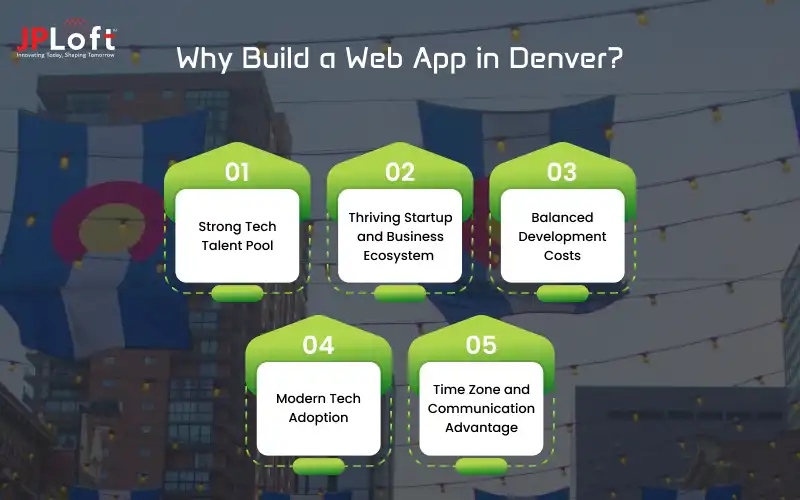
Building a web app in Denver can be an excellent decision for several reasons, ranging from the city’s growing tech scene to its vibrant customer demands. Here are some key factors that might make Denver the right place to build a web app:
1. Strong Tech Talent Pool
Denver offers access to experienced developers, designers, and product experts. With years in the industry, the city has seen how this talent mix helps teams build scalable web apps faster while maintaining clean code, strong UX, and long-term performance.
2. Thriving Startup and Business Ecosystem
The city supports startups, enterprises, and growing businesses equally. Denver’s ecosystem encourages innovation, collaboration, and faster decision-making. This environment helps web apps move from idea to launch with better feedback and fewer roadblocks.
3. Balanced Development Costs
Compared to coastal tech hubs, Denver offers a more reasonable mobile web app development cost. You get high-quality work without extreme pricing. This balance helps businesses manage budgets while still investing in secure architecture and future-ready features.
4. Modern Tech Adoption
Web development service providers in Denver actively use modern frameworks, cloud platforms, and AI-driven tools. From my experience, this mindset improves build speed, app stability, and scalability. It also ensures your web app stays relevant as technology standards evolve.
5. Time Zone and Communication Advantage
Denver’s time zone works well for both US and global clients. Clear communication, overlapping work hours, and structured workflows reduce delays. This makes collaboration smoother and keeps projects aligned with timelines and expectations.
Building a web app in Denver offers a combination of a supportive ecosystem, skilled talent, and relatively better cost to develop a web app. While Denver offers strong talent, modern technology, and a supportive business environment for web app development, understanding the cost involved is the next critical step before you move forward.

Cost To Build A Web App In Denver
The cost to build a web app in Denver varies between USD 10,000 to USD 150,000+, based on business goals, feature depth, and execution strategy. Companies often underestimate this section, yet it shapes the entire project outcome.
Denver’s strong tech market offers quality talent, but pricing reflects experience, demand, and delivery standards. Understanding how much it costs to create a web app helps businesses set realistic budgets and avoid surprises when building a web app in Denver.
Most web application cost in Denver falls under these three categories based on their development complexity:
|
App Complexity |
Estimated Cost (in USD) |
Description |
|
Simple Web App |
$10,000 to $30,000 |
Include basic dashboards, landing-driven platforms, or internal tools with limited user roles and standard design. |
|
Middle-Level Web App |
$30,000 to $80,000 |
Includes custom UI, multiple user roles, API integrations, and moderate business logic |
|
Complex Web App |
$75,000 to $150,000+ |
Advanced platforms with real-time features, custom workflows, high security needs, and scalability. |
The cost to build a web app are estimates and depends on your scope, business targets, and rates of hiring dedicated developers in Denver. Once you understand the overall cost range to build a web app in Denver, the next step is to break down the specific factors that influence how that final price is calculated.
Factors Impacting The Cost To Develop a Web App In Denver
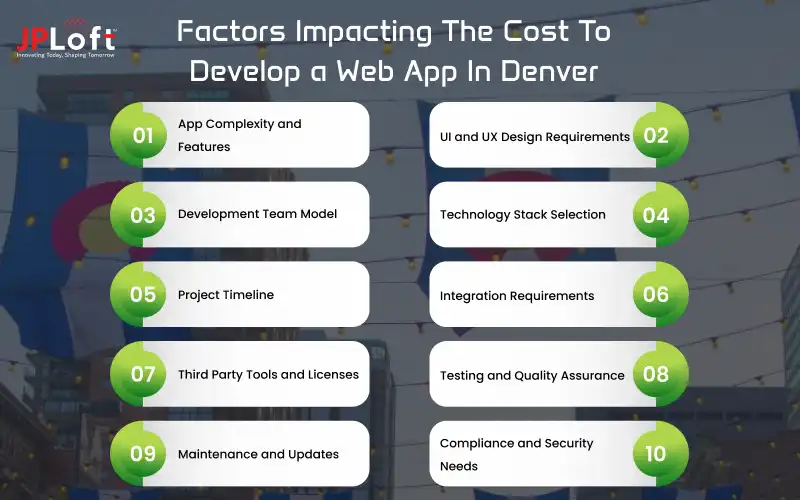
Knowing the factors that impact web app development cost in Denver helps you plan your budget smartly. Each decision, from features to team selection, shapes your budget. Knowing these elements early reduces risk, prevents overspending, and keeps your project aligned with business goals.
1] App Complexity and Features
The number of features and logic layers directly affects development time. Basic apps with limited web app functionality cost less, while complex workflows, real-time updates, user roles, and advanced automation require more planning, coding, testing, and ongoing refinement.
2] UI and UX Design Requirements
Design impacts how users interact with your web app. Custom layouts, animations, accessibility standards, and usability testing increase design effort. A well-designed interface improves engagement but requires more time, iterations, and collaboration between designers and developers.
3] Development Team Model
The cost of web app development varies based on whether you hire a local developer in Denver, in house team, or remote developers. Each model affects hourly rates, communication effort, project management needs, and overall delivery speed throughout the development lifecycle.
4] Technology Stack Selection
Choosing frameworks, databases, and cloud services influences the performance and scalability of the app developed by the hired mobile app development company. Popular or cutting-edge tech stacks may need specialized skills. Licensing costs, setup time, and long-term support requirements can increase both initial development and future maintenance expenses.
5] Project Timeline
Shorter timelines often require larger teams or parallel development. This increases the coordination effort and cost to develop a web app. Rushed schedules can also lead to rework, additional testing, and higher risk if planning is not handled carefully.
6] Integration Requirements
Connecting your web app with existing systems, APIs, or third-party platforms adds complexity. Data synchronization, security checks, and custom logic increase development time, testing effort, and cost, especially when legacy systems are involved.
7] Third Party Tools and Licenses
Many web apps rely on external services for payments, analytics, notifications, or hosting. Subscription fees, pricing based on usage, and integration effort add recurring costs that are often overlooked during initial estimation of how much does it cost to develop a web app.
8] Testing and Quality Assurance
Thorough web app testing ensures performance, security, and cross-browser compatibility. Manual and automated testing across devices takes time. Skipping this step may reduce short-term cost, but it often leads to expensive fixes after launch.
9] Maintenance and Updates
After launch, web apps need regular updates, security patches, and performance monitoring. These ongoing tasks create a long-term cost of developing a web app that should be planned from the start. Hiring an app maintenance service agency to patch these will add up as a post-launch cost.
10] Compliance and Security Needs
Data protection laws, industry standards, and security best practices require extra development effort. Implementing encryption, secure authentication, and audit readiness increases web app development cost but helps protect user trust and reduce legal risks.
Here is a summerized web app development cost breakdown table in Denver:
|
Cost Component |
What It Includes |
Typical Denver Range |
|
Discovery & Planning |
Requirement gathering, project proposal, specs |
$1,500 – $8,000 |
|
UI/UX Design |
Wireframes, prototypes, visual screens |
$3,000 – $15,000 |
|
Frontend Development |
User interface, responsive views |
$5,000 – $30,000 |
|
Backend Development |
Server logic, databases, APIs |
$7,000 – $45,000 |
|
Third Party Integrations |
Payments, maps, chat, analytics |
$1,000 – $10,000 |
|
QA & Testing |
Functional, cross-browser, performance |
$2,000 – $10,000 |
|
Deployment & DevOps |
Hosting, cloud setup, CI/CD |
$1,500 – $8,000 |
|
Yearly Maintenance |
Bug fixes, updates, and server costs |
$3,000 – $15,000 |
By evaluating these core factors affecting how much it cost to develop web app upfront, businesses in Denver gain better control over web app budgets. Beyond the visible cost factors, there are several hidden expenses that often go unnoticed but can significantly impact the total web app development budget.
Hidden Cost Associated With Building A Web App
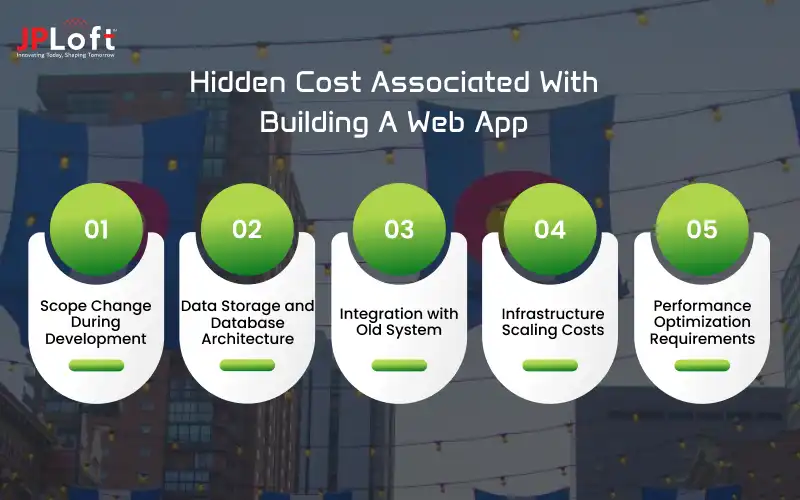
The hidden side of how much does it cost to build a web app often surfaces after development begins and goes unnoticed during planning. These expenses can disrupt budgets and timelines if ignored. Understanding these hidden factors early helps businesses prepare realistic estimates while building a scalable web app in Denver:
A] Scope Change During Development
New ideas often emerge once development starts. Even small changes can impact architecture, design, and testing. Without clear scope control, these changes add unplanned hours and gradually push the project beyond the original web app cost in Denver.
B] Data Storage and Database Architecture
The choice between simple databases and complex data architectures affects setup time, performance tuning, and long term scalability costs. Large datasets, real time syncing, backups, and data security requirements further increase development effort and infrastructure planning.
C] Integration with Old System
Connecting the web app with existing business software or older systems often requires custom development and additional testing effort. Compatibility challenges, data migration, and system limitations can increase timelines and the overall cost of web app development .
D] Infrastructure Scaling Costs
As user traffic grows, the hosting, storage, and performance optimization increases the cost of web app development. Auto scaling setups, load balancing, and cloud resource adjustments add ongoing expenses that are rarely considered during early project budgeting.
E] Performance Optimization Requirements
Speed optimization, caching strategies, and load handling increase development time but are critical for high user traffic applications. These efforts improve user experience but require advanced engineering and continuous performance testing.
Accounting for hidden costs leads to better planning and smoother execution. Understanding these hidden expenses behind how much does it cost to build a web app makes it easier to plan, which leads naturally to the best practices that help control and optimize your budget.
Best Practices To Control The Web App Cost
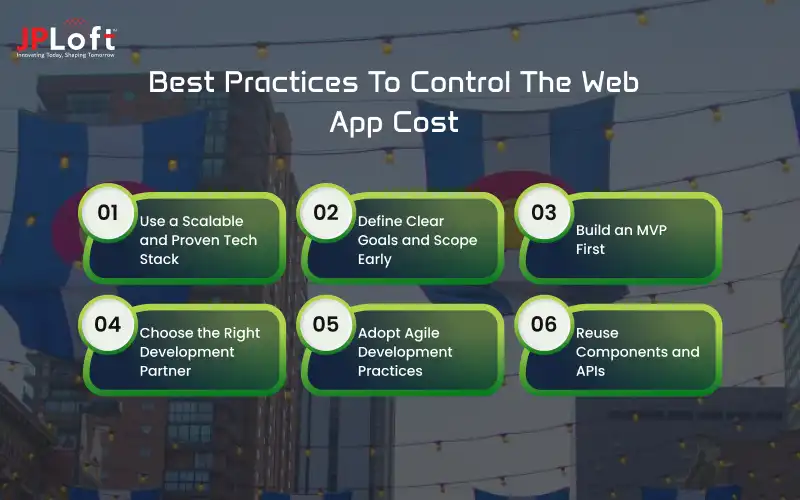
Web application cost in Denver can rise quickly without the right planning. High talent demand, evolving features, and technology choices all affect the final budget. Following proven cost control practices helps businesses stay focused, reduce waste, and build a high-quality web app without overspending or delaying launch:
1. Use a Scalable and Proven Tech Stack
Select technologies that fit your app’s size, goals, and plans. Proven frameworks reduce bugs, speed up development, and lower long term maintenance costs. Avoid choosing tools based only on trends, as they often increase complexity and expenses.
2. Define Clear Goals and Scope Early
Clearly outline your business goals, target users, core features, and technical needs before development starts. A fixed scope helps Denver teams estimate effort correctly, avoid repeated changes, reduce rework, and keep timelines and cost of developing a web app predictable throughout the project lifecycle.
3. Build an MVP First
Start with a minimum viable product that includes only essential features. This approach lowers the initial cost of web app development, speeds up launch, and helps you test real user demand before investing more money in advanced features or complex integrations.
4. Choose the Right Development Partner
Work with a development service provider in Denver that has experience in similar web apps. An experienced team understands local pricing, avoids common mistakes, follows efficient workflows, and delivers quality output without unnecessary development hours or inflated cost of developing a web app.
5. Adopt Agile Development Practices
Agile development allows you to review progress regularly, gather feedback early, and adjust priorities. This reduces wasted effort, prevents costly last-minute changes, and helps control spending by keeping development aligned with real business needs.
6. Reuse Components and APIs
Use existing components, libraries, and third-party APIs wherever possible. Reusing tested solutions saves development time, lowers coding effort, and reduces bugs, which directly helps control overall web app cost in Denver.
Controlling custom web app development cost in Denver is about making informed decisions at every stage. With clear planning, the right partner, and continuous tracking, businesses can avoid unnecessary expenses. These best practices help deliver a scalable, reliable web app that meets goals while staying within budget.

Why Partner With JPLoft To Build A Web App in Denver?
Choosing the right development partner matters as much as choosing the right features. At JPLoft, we help Denver businesses build web apps that are reliable, scalable, and aligned with real business goals.
With years of hands-on experience, our team understands how to balance the cost to create a web app, performance, and long-term value. JPLoft follows a structured development process that starts with deep requirement analysis and clear planning. This reduces risks, avoids scope creep, and keeps your budget under control.
JPLoft focuses on transparency at every stage. You get clear timelines, regular updates, and full visibility into progress and costs. Our agile workflow enables prompt feedback, expedited delivery, and flexibility without unexpected financial consequences.
What truly sets us apart is our business-first mindset. We do not just build web apps. We solve problems. By partnering with JPLoft, a renowned web development company in Denver, your business can gain a trusted technology partner committed to quality, efficiency, and measurable results.
Conclusion
Figuring out how much does it cost to create a web app in Denver helps you plan better and invest with confidence. The final cost of developing the web app depends on the complexity, features, design needs, and development approach. Building an MVP, tracking progress, and planning for long-term maintenance help control costs.
Denver offers a strong balance of skilled talent and reasonable prices, making it an attractive location for web app development. Defining your goals early, choosing the right tech stack, and working with an experienced development partner can make a major difference in how much it cost to develop web app.
Instead of focusing only on the lowest price, aim for value, reliability, and scalability. A robust web app not only fits your budget but also supports business growth, user engagement, and future expansion. With the right strategy, your Denver web app investment can deliver lasting returns.
FAQs
The cost to build a web app in Denver usually ranges from USD 10,000 to USD 150,000. The final price depends on app complexity, number of features, design quality, tech stack, development timeline, and whether you hire a local agency or a remote team.
The biggest cost drivers include app complexity, custom UI and UX design, backend architecture, third-party integrations, security requirements, and project timeline. Frequent scope changes and advanced features also increase overall development expenses.
Most web apps take between 3 to 9 months to build. Simple apps may launch sooner, while complex platforms with custom features, integrations, and testing phases require longer development timelines.
You can control web app development costs by defining clear requirements early, building an MVP first, choosing the right tech stack, using agile development, avoiding scope changes, reusing existing tools, and planning maintenance to prevent unexpected expenses.

Priyanka Sukhwal is the Managing Director and Business Head of JPLoft, with 10+ years of experience in technology, digital product strategy, and business growth. She has worked closely with businesses building mobile applications, custom software, marketplaces, and on-demand platforms across mobility, automotive, consumer services, and startup ecosystems. At JPLoft, she focuses on understanding business models, identifying product opportunities, and helping companies plan digital solutions that can scale with changing market needs.




Share this blog