



Key Takeaways
Social media focuses on large-scale content distribution, while social networking prioritizes relationship-building and meaningful long-term digital connections.
Platform architecture differs significantly, with media apps emphasizing algorithmic feeds and networking platforms strengthening direct communication systems.
Monetization models vary, as social media relies on advertising reach, while networking platforms depend on subscription-driven value.
User intent determines feature priorities, influencing engagement mechanics, scalability planning, and overall product development strategy.
Choosing the right model requires validating audience behavior, growth potential, and long-term sustainability objectives before development.
Partnering with JPLoft ensures scalable architecture, strategic planning, and expert execution tailored to your platform vision.
In today’s digital landscape, the terms social media and social networking are often used interchangeably, but they serve distinct purposes.
Understanding the nuances between these platforms is essential for businesses, marketers, and entrepreneurs aiming to engage audiences effectively.
Social media focuses on content sharing, broadcasting ideas, and driving engagement, while social networking emphasizes building relationships, communities, and meaningful connections.
Choosing the right approach can influence your platform’s growth, user retention, and overall success.
In this comprehensive guide, we’ll break down the definitions, pros and cons, and real-world examples of social networking vs social media.
We’ll also provide a detailed comparison that clarifies social networking sites vs social media, so you can make informed decisions for your digital strategy.
What is a Social Media App?
A social media app is a digital platform that allows users to create, share, and interact with content such as text, images, videos, and live updates.
Unlike traditional communication channels, social media apps prioritize content broadcasting, audience engagement, and viral sharing.
They are designed to foster large-scale visibility while offering tools for personalization, analytics, and interaction. The core elements businesses must consider when they plan to build a social media app.
Understanding social media vs social networking examples helps businesses identify which platform suits their goals, whether it’s driving brand awareness, building communities, or enhancing direct engagement.
1. Pros
-
Wide Reach: Connects with millions globally in real time.
-
Engagement Opportunities: Facilitates likes, comments, shares, and feedback.
-
Brand Awareness: Businesses can amplify their message quickly.
-
Data Insights: Offers analytics for informed marketing decisions.
-
Viral Potential: Content can spread rapidly, increasing visibility.
2. Cons
-
Time-Consuming: Maintaining active engagement requires constant effort.
-
Information Overload: Users may feel overwhelmed by content volume.
-
Privacy Risks: Data breaches or misuse can occur if platforms are not secure.
3. Examples
Some of the best social media apps include Facebook, Instagram, Twitter, TikTok, and LinkedIn, each catering to different content styles and audience preferences.
For businesses or developers aiming to build a new platform, understanding how to design a social media app with intuitive navigation, personalized feeds, and interactive features is key to success.
Platforms that balance user engagement, performance, and security tend to outperform others in the long run.
What is a Social Networking Platform?
A social networking platform is a digital space built primarily to help users connect, communicate, and maintain relationships.
Instead of focusing on mass content broadcasting, these platforms emphasize profile creation, direct messaging, community groups, and relationship-building tools.
When analyzing social media and social networking, the key distinction lies in intent; networking platforms are relationship-centric, while media platforms are content-centric.
1. Pros
-
Stronger Relationship Building: Encourages meaningful one-to-one or group interactions.
-
Community Formation: Supports niche groups and professional circles.
-
Direct Communication: Messaging features enhance engagement.
-
Trust Development: Real identities and profiles improve credibility.
-
Professional Growth: Ideal for career and business networking.
2. Cons
-
Slower Content Virality: Growth depends on connection depth, not reach.
-
Privacy Concerns: Personal data visibility can be sensitive.
-
Limited Content Discovery: Less focus on algorithm-driven exposure.
3. Examples
LinkedIn and community-based forums are the classic examples of social networking vs social media whenever discussions arise around these platforms.
These platforms prioritize connections over content broadcasting, clearly illustrating what is a social network vs social media in terms of structure and purpose.
For founders exploring relationship-driven platforms, understanding how to develop a messaging app becomes crucial. This is because private communication acts as the backbone of most networking ecosystems.
In contrast to content-first platforms, networking models focus more on strengthening user relationships than maximizing algorithm-driven reach.

Social Media vs Social Networking: Deep-Dive Comparison
Understanding social media and social networking requires looking beyond definitions and into structural, technical, and strategic differences. While both connect people online, their intent, architecture, and monetization logic differ significantly.
Summary Comparision Table
|
Aspect |
Social Media |
Social Networking |
|
Purpose & User Intent |
Content broadcasting and visibility |
Relationship-building and communication |
|
Content Distribution Architecture |
Algorithm-driven discovery and viral reach |
Connection-driven, network-based visibility |
|
Community Building |
Audience-based followers |
Relationship-based groups and circles |
|
Algorithm & Personalization |
AI-heavy behavioral recommendation systems |
Network-centric feed prioritization |
|
Data Ownership & Privacy |
Engagement-optimized data monetization |
Identity-focused privacy and trust controls |
|
Scalability Challenges |
Media-intensive infrastructure and AI moderation |
Graph expansion and secure messaging stability |
|
Core Features |
Reels, stories, feeds, analytics, creator tools |
Profiles, connections, messaging, communities |
|
Development Cost |
Higher due to AI, storage, and scale complexity |
More structured and predictable scaling |
|
Revenue Model |
Ads, influencer marketing, subscriptions |
Premium memberships and professional services |
Let’s examine each dimension in detail.
1. Purpose and User Intent
This defines why users join and what they expect.
Social Media:
The focus is on large-scale content distribution. Users post videos, reels, or articles to maximize visibility and reach. Engagement centers on content performance, impressions, shares, and virality.
Developing an app like TikTok allows creators to reach millions without necessarily forming relationships, reflecting common social media vs social networking examples.
Social Networking:
The priority is connection-building. Communication, trust, and long-term engagement matter more than reach.
On LinkedIn, professionals connect for collaboration, clearly showing the social media vs social networking difference.
2. Content Distribution Architecture
How content flows determines scalability and discoverability.
Social Media:
Distribution is algorithm-driven. Feeds prioritize trending, personalized, and promoted content beyond direct connections.
Systems amplify posts based on behavior signals, reinforcing the mechanics behind Social networking vs social media debates.
Viral loops and recommendation engines expand reach exponentially.
Social Networking:
Distribution is relationship-driven. Content appears primarily within your network, connections, groups, or communities. Growth depends on trust chains rather than algorithms.
This structure limits virality but strengthens relational depth, further clarifying Social media vs social networks in technical architecture terms.
3. Community Building Capabilities
Community depth varies significantly between the two models.
Social Media:
Communities are audience-based. Followers gather around creators, brands, or trends. Interaction is broad but often surface-level. Engagement centers on posts rather than personal bonds.
This model thrives in influencer ecosystems and entertainment-first platforms.
Social Networking:
Communities are relationship-based. Users participate in professional circles, niche groups, or collaborative forums. Interaction is consistent and trust-oriented.
In comparing Social networking sites vs social media, networking platforms enable sustained collaboration rather than temporary audience spikes.
4. Algorithm and Personalization Systems
Personalization determines user retention and engagement loops.
Social Media:
Advanced AI-driven algorithms analyze behavior, watch time, and preferences to curate feeds. Modern Social media app development trends heavily rely on machine learning to increase session duration and engagement.
These engines decide visibility at scale. At the advertising level, platforms also differentiate between network targeting vs social targeting on social media to refine audience segmentation and improve campaign performance.
Social Networking:
Personalization is lighter and network-centric. Feeds prioritize updates from known connections. Content is less influenced by behavioral virality and more by relationship proximity.
This structural contrast explains another layer of Social network vs social media architecture differences.
5. Data Ownership and Privacy Considerations
Data handling reflects each platform’s business model.
Social Media:
Data collection fuels advertising and personalization. User behavior is monetized to improve targeting efficiency. Privacy is important, but secondary to engagement optimization.
Social Networking:
Identity integrity and trust require stronger profile authenticity and privacy controls. Emerging decentralized and privacy-focused models are reshaping how platforms approach user data ownership and transparency.
These governance decisions further differentiate social media vs social networking sites at the infrastructure level.
6. Scalability Challenges
Growth introduces technical and operational complexity.
Social Media:
Scaling involves media storage, AI processing, moderation systems, and real-time engagement handling. These are major social media app development challenges faced during hyper-growth stages.
Infrastructure must support unpredictable traffic spikes.
Social Networking:
Scaling focuses on connection graph expansion, secure messaging, and stable performance. Many startups choose to hire dedicated developers to maintain backend scalability while preserving relationship data integrity.
This structural demand reinforces distinctions in social network vs social media engineering priorities.
7. Core Features
Feature priorities reflect platform intent.
Social Media:
Core components include discovery feeds, stories, reels, reactions, analytics dashboards, and creator tools. The focus remains on engagement loops, content visibility, and retention strategies. Strong implementation often depends on expert UI/UX design services to ensure intuitive navigation and seamless content interaction.
Social Networking:
Core features emphasize detailed profiles, connection requests, messaging systems, and community groups.
Communication tools dominate over viral discovery systems, further highlighting structural differences between social media and social networking sites.
8. Development Cost
Budget varies depending on complexity and architecture.
Social Media:
Development requires advanced AI feeds, media hosting infrastructure, and scalable cloud systems. Overall, social media app development costs increase with personalization complexity and security layers.
Social Networking:
Costs are often more predictable, especially when messaging systems dominate over algorithmic engines. Infrastructure is connection-focused rather than media-heavy.
This financial contrast plays a key role in evaluating Social networking service vs social media investments.
9. Revenue and Monetization Models
Monetization strategy defines long-term sustainability.
Social Media:
Revenue commonly comes from advertising, influencer marketing, and subscriptions. Understanding how social media apps make money is crucial before scaling, as platforms often rely on diversified revenue streams driven by audience reach and engagement. These revenue priorities frequently influence decisions around network marketing vs social media marketing strategies.
Social Networking:
Monetization leans toward premium memberships, recruitment tools, and professional services. Revenue depends more on value-driven subscriptions and professional utility than viral traffic.
This final distinction clarifies the broader Social networking service vs social media business model contrast.
At its core, the comparison is between broadcasting at scale and building meaningful connections. Choosing the right model depends entirely on whether your vision prioritizes visibility or relationship depth.
Which Platform Model Should Your Business Build?
Choosing the right platform model isn’t just a theoretical debate; it directly impacts your product strategy, revenue model, and scalability roadmap.
The right choice depends on your audience type, growth goals, and monetization vision.
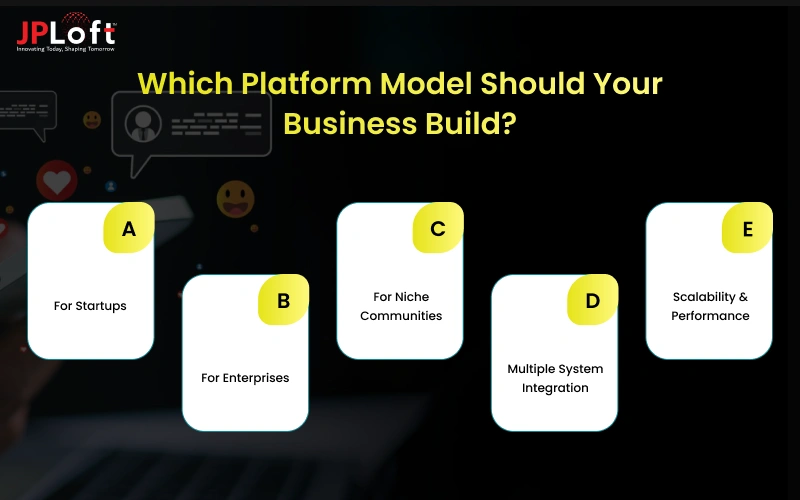
Let’s break it down by business category.
[A] For Startups
Startups often prioritize rapid user acquisition and visibility. If your goal is to capture attention quickly, a content-first approach aligned with Social networking vs social media mechanics may work better.
Social media platforms scale faster because algorithmic feeds amplify discovery beyond direct connections.
Founders exploring new social media app ideas often choose niche content verticals, fitness reels, short-form learning, creator-driven communities, or entertainment-focused apps.
These models benefit from viral loops and engagement analytics. However, they demand strong AI infrastructure and a clear differentiation strategy to survive competition.
If speed and reach are your priorities, a social media model offers more aggressive growth potential.
[B] For Enterprises
Enterprises usually focus on structured ecosystems, long-term engagement, and data control.
In evaluating Social media vs social networking sites, enterprises often lean toward networking-style platforms when collaboration, communication, and controlled interaction are central.
For example, B2B companies building internal communities or industry collaboration hubs benefit from connection-driven architecture rather than open broadcasting.
Networking platforms offer better control over identity verification, moderation, and relationship management.
That said, enterprises launching consumer-facing platforms may still adopt hybrid models, combining media distribution with networking tools to balance engagement and retention.
This decision often aligns with broader discussions around social network marketing vs social media marketing approaches in enterprise ecosystems.
[C] For Niche Communities
If your platform targets a specialized audience, professionals, hobbyists, alumni networks, or regional groups, the networking model often delivers stronger value.
The social media vs social networks distinction becomes critical here: depth matters more than reach.
Niche communities thrive on trust, shared interests, and consistent participation. A relationship-first platform fosters loyalty and long-term retention, even if growth is slower.
In many cases, the best solution isn’t choosing one extreme. Hybrid ecosystems that blend discoverability with connection tools are becoming increasingly common, redefining the traditional media vs social networking for modern businesses.
Ultimately, the right platform model depends on whether your business values scale-driven visibility or connection-driven engagement.
Align your choice with user intent, growth capacity, and long-term monetization goals, because architecture decisions made early will define your platform’s future.
How to Validate Your Platform Idea Before Development
Before investing in development, validation ensures your idea aligns with real user demand and sustainable growth logic.
Whether you are exploring a content-driven ecosystem or a relationship-focused model, understanding Social media vs social network helps define early assumptions clearly.

The goal is simple: reduce risk, confirm traction potential, and avoid building app features users may never adopt.
1. Define Your Core Value Proposition
Start by clearly identifying the primary problem your platform solves and the audience it serves. The debate around social networking vs social media should influence your positioning from the beginning.
Conduct interviews, surveys, and competitor audits to measure demand. Test whether users prioritize reach, visibility, and content discovery or deeper relationships and communication.
Clarity at this stage prevents confusion during feature development and long-term scaling decisions later.
2. Build and Test a Lean MVP
Develop a minimum viable product with only essential features that represent your platform’s core intent.
Early-stage social media app testing allows you to measure usability, engagement behavior, retention rates, and user feedback before expanding infrastructure.
Track interaction depth, session duration, and content or connection growth carefully. Real behavioral data offers stronger validation than assumptions.
Also, it helps determine whether your model naturally aligns with media amplification or networking engagement patterns.
3. Analyze Monetization Feasibility
Revenue validation is equally important during early planning stages. Evaluate how your platform will generate income and whether users are willing to engage with that model.
The broader distinction between what is a social network vs social media becomes clearer when you analyze monetization behavior, advertising, subscriptions, premium tools, or community-based revenue.
Conduct small-scale experiments or landing page tests to measure willingness to pay before committing to complex development investments.
4. Plan Post-Launch Sustainability
Validation must extend beyond launch preparation and include long-term sustainability planning.
Continuous improvements through structured social media app maintenance ensure your platform evolves with user expectations and market competition.
Prepare infrastructure for updates, security patches, scalability improvements, and feature enhancements.
Platforms that fail to iterate quickly lose relevance, regardless of strong initial traction or launch success.
Effective validation transforms uncertainty into an informed strategy. Test assumptions early, measure user behavior consistently, and refine your direction before scaling.
Clear validation strengthens confidence in your product vision and increases the probability of long-term success.

How JPLoft Helps You Build Scalable Social Platforms?
Building the right platform requires more than coding; it demands clarity around social media vs social network architecture, scalability planning, and long-term monetization strategy.
At JPLoft, we help businesses translate platform ideas into structured, high-performance ecosystems tailored to their audience goals.
As a trusted social media app development company, our approach begins with product discovery and market validation.
We analyze whether your model should prioritize content amplification or connection-building, ensuring the technical foundation aligns with your growth vision.
From intuitive UI/UX design to scalable backend infrastructure, our team focuses on performance, security, and future-ready integrations.
Whether you’re building a media-driven app or a relationship-centric network, we develop solutions that reflect the true difference. This ensures your platform scales smoothly while sustaining long-term engagement.
Conclusion
Understanding social media vs social networking is more than just a conceptual distinction. It’s a strategic decision that shapes platform architecture, user engagement, scalability, and revenue potential. This shift mirrors the broader evolution from online social networking vs traditional media, which has fundamentally reshaped digital interaction.
While social media thrives on visibility, content reach, and algorithm-driven discovery, social networking platforms prioritize relationships, trust, and long-term interaction. The right choice depends on your business goals, target audience, and growth strategy.
By analyzing the structural and operational Social media vs social networking difference, businesses can avoid costly misalignment and build platforms that truly resonate with users.
Whether you aim for viral expansion or meaningful connection-building, clarity at the foundation stage ensures sustainable success in an increasingly competitive digital ecosystem.
FAQs
Social media primarily focuses on content distribution and audience reach, while social networking emphasizes relationship-building and meaningful interactions. Social media platforms prioritize visibility and engagement metrics, whereas networking platforms prioritize direct communication and long-term connections.
Yes, many modern platforms combine both models. For example, some apps allow large-scale content sharing while also offering private messaging, groups, and connection features. However, most platforms still lean more heavily toward one core intent, either distribution or relationship-building.
Profitability depends on execution and the target audience. Social media platforms often generate revenue through advertising and influencer marketing, while social networking platforms typically rely on subscriptions, premium memberships, or professional services. Each model has scalable monetization potential when aligned with user intent.
Businesses should evaluate target audience behavior, content strategy, monetization goals, scalability requirements, and long-term engagement plans. The decision should align with whether the platform aims to maximize reach or foster deeper community relationships.
Social media apps prioritize feed algorithms, discovery engines, and content distribution systems. Social networking platforms focus more on user profiles, connection management, messaging infrastructure, and community-building tools. These architectural differences directly impact development cost, scalability, and data management strategies.

Conor has 10+ years of experience in software development, application engineering, solution design, and UX/UI. He has worked across digital products in restaurant technology, food and grocery delivery, healthcare, media, streaming, and social platforms, bringing both technical and user-experience perspectives to product development. His experience working with large organizations and growth-focused digital products helps businesses translate complex requirements into practical, user-focused solutions.





Share this blog