


Key Takeaways:
AI-powered forecasting is becoming one of the most valuable trends for milk delivery apps, helping reduce waste and improve inventory management.
Flexible subscription trends are helping to deliver greater convenience and increase customer retention.
Technologies such as IoT monitoring, route optimization, and smart lockers are making milk delivery operations more efficient.
Quick commerce, B2B services, and sustainability initiatives are among the latest trends creating new growth opportunities
Partnering with JPLoft can help businesses align with the latest industry trends.
Every missed milk delivery is a lost customer, and most businesses still do not see it coming.
Consumers now expect fresh dairy at their doorstep before breakfast. But most dairy businesses are still running on outdated logistics, missed deliveries, and no real way to track orders.
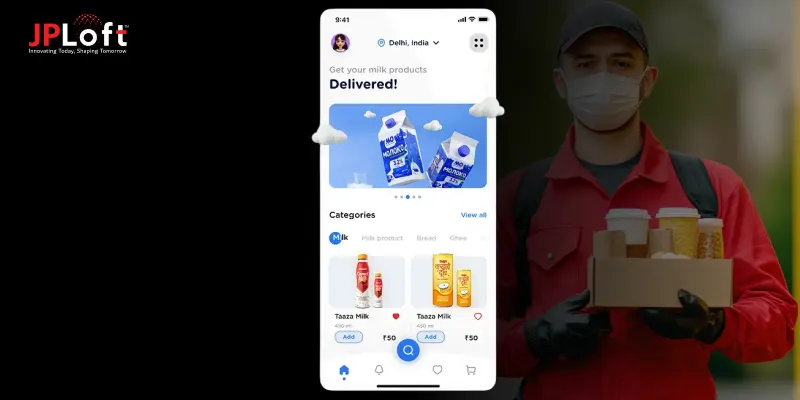
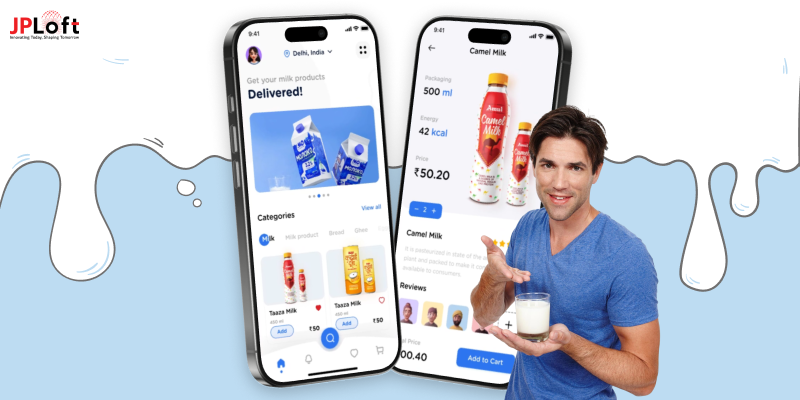
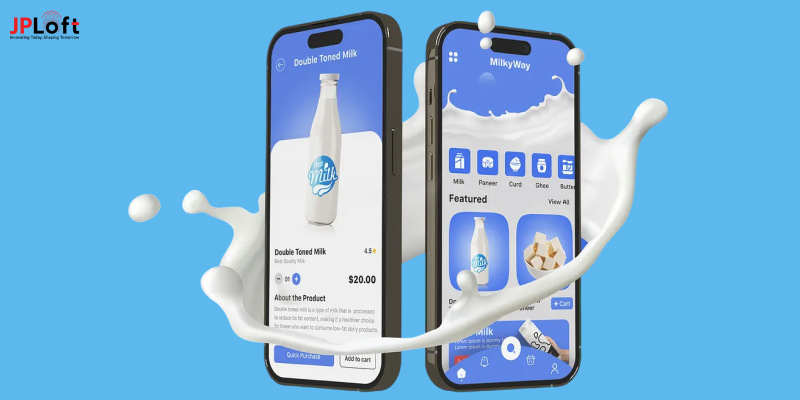
A milk delivery app fixes that. And businesses that develop one now are already pulling ahead.
The technology has evolved, consumer habits have shifted, and investor interest is at a peak. That is why understanding the latest milk delivery app trends matters right now.
Thus, this blog breaks down the milk delivery app market trends in 2026 and what they mean for your next move.
Major Milk Delivery App Trends Shaping the Industry
The world of milk delivery is evolving due to changes in consumer expectations and technological advancements.
For investors, knowing about these mobile app trends can prove to be helpful in finding opportunities with good potential.
Let’s look at the top milk delivery app trends that will shape the future in 2026.
1. AI-Powered Demand Forecasting
The first trend worth paying attention to is how AI is changing the way delivery platforms manage inventory.
AI uses historical milk sales, consumer buying behaviour, and seasonal patterns to predict future milk consumption.
These insights enable automatic inventory management and adjustments in delivery scheduling.
AI-driven demand forecasting reduces milk spoilage. This reduction enables businesses to lower operating losses and achieve better profit margins.
2. Flexible Subscription Management
The next trend reshaping the market is how subscriptions are being delivered to customers.
Customers look for more control over their deliveries, including the ability to pause, skip, reschedule, or customize their orders according to requirements.
Modern milk delivery apps provide self-service subscription features for customers to manage deliveries without contacting support.
As customer expectations rise, businesses that develop a milk delivery app with flexible subscription management can generate predictable recurring revenue.
3. Expansion Beyond Dairy Products
One of the key trends in milk delivery apps is the focus on daily essentials alongside dairy items.
Apart from dairy products, many milk delivery apps now offer bread, eggs, vegetables, and other essential items.
Customers can buy many products in one order, making the shopping experience more convenient. At the same time, businesses can increase order value.
However, it can also introduce operational complexities, making it important to understand challenges to develop a milk delivery app as businesses expand.
4. IoT-Enabled Cold Chain Monitoring
Keeping milk fresh during delivery is just as important as delivering it on time. This is why more milk delivery apps are adopting IoT-enabled cold chain monitoring.
IoT sensors placed in delivery vehicles and storage units can track temperature and humidity in real time.
This helps reduce spoilage, maintain product quality, and support food safety compliance.
It also reflects broader IoT trends focused on real-time monitoring and automation, as milk delivery apps become more technology-driven.
5. AI-Powered Route Optimization
AI-powered route optimization has become one of the leading milk delivery app trends.
It calculates the efficient delivery sequence each morning, based on active subscriptions, skipped stops, address clusters, and live traffic conditions.
For investors, this is not just an operational upgrade but a long-term efficiency advantage.
Although it initially increases the cost to create a milk delivery app, but eventually reduces the delivery costs and improves scalability.
6. Contactless Delivery & Smart Lockers
Faster routes solve one problem. But what happens when no one is home?
That question has given rise to one of the more interesting milk delivery app market trends: smart lockers.
AI-powered contactless delivery lockers use facial recognition and secure access codes to allow drop-offs without any human interaction.
For investors targeting apartment buildings, gated communities, and commercial clients, this trend reduces failed deliveries and the cost of re-attempts.
7. Blockchain-Based Supply Chain Traceability
Another key trend in milk delivery apps is the growing demand for full supply chain transparency.
Consumers want to trace their milk’s origin, processing methods, and storage procedures.
The blockchain technology helps by recording each step along the way in a secure way.
Users can scan a QR code in the app to access this information. This is one of the leading milk delivery app trends that builds trust and improves efficiency.
8. Eco-Friendly & Sustainable Delivery
Eco-friendly packaging and sustainable delivery are becoming an important trend in milk delivery apps.
Businesses are now focusing on reducing their environmental impact while still ensuring safe and fresh milk delivery.
Instead of plastic-heavy packaging, many milk delivery apps are shifting to reusable, biodegradable, or recyclable materials.
Delivery operations are also becoming more efficient, with better route planning and optimized trips to reduce fuel usage and emissions.
9. Quick Commerce & Dark Store Integration
Quick commerce and dark store integration are becoming major trends in milk delivery apps.
To meet the quick demand of consumers, businesses are adopting dark stores, which are small local hubs located closer to residential areas.
This approach reduces delivery time and improves efficiency, especially in busy urban areas where speed matters.
It also shapes important milk delivery app features like real-time availability and hyperlocal delivery essential for smooth operations.
10. Expansion of B2B Milk Delivery Services
Many milk delivery platforms are missing the growing importance of commercial customers.
Cafes, hotels, schools, and offices order dairy in bulk, follow predictable schedules, and generate higher revenue compared to residential accounts.
The commercial segment is already growing at a higher rate than the residential segment. Yet most milk delivery apps are still designed primarily for household customers.
For businesses and investors, that gap is an opportunity. Adding bulk orders, invoicing, and multi-location support makes the same system far more profitable.
11. Personalization Through Customer Data
Another important trend shaping milk delivery apps is personalization driven by customer data and behaviour.
Apps continuously track order history, consumption patterns, and user preferences to understand buying behaviour in a better way.
This allows apps to deliver highly personalized user experiences based on individual needs and preferences.
As a result, it improves customer experience, strengthens engagement, and increases long-term subscription value for businesses.
12. Voice-Enabled Ordering Systems
Voice-enabled ordering is becoming a new trend in milk delivery apps, improving overall convenience.
Users can place new orders or modify existing subscriptions using simple voice commands through mobile apps or connected devices.
This makes the ordering process smoother, faster, and more accessible for all types of users, including busy individuals.
It also improves usability, reduces manual effort, and creates a smoother daily ordering experience for customers.
Businesses can partner with UI/UX design services to create designs that improve usability and user experience of voice-based ordering systems.
13. Real-Time Delivery Tracking
Real-time delivery tracking has become one of the essential mobile app features in modern milk delivery apps and trends.
Customers can track their milk orders live, including delivery status, route movement, and expected arrival time updates.
This improves transparency and builds stronger trust between customers and delivery platforms over time.
At the same time, it reduces customer support requests and improves operational clarity for businesses managing daily deliveries.
14. AI-Based Customer Support Chatbots
AI-based customer support chatbots are increasingly being used in milk delivery apps for faster service.
They handle common queries like order changes, delivery issues, and subscription updates without delay or manual intervention.
This ensures instant responses and reduces dependency on large customer support teams significantly.
With AI chatbot development services, businesses can scale support operations efficiently while maintaining consistent service quality and user satisfaction.
15. Loyalty Programs & Gamification
Loyalty programs and gamification are becoming a strong trend in milk delivery apps for retention.
Users earn points, rewards, and discounts for regular orders and consistent engagement with the platform.
This encourages customers to continue subscriptions and reduces churn over time in competitive markets.
For businesses, it strengthens customer relationships and engagement. Partnering with a mobile app development company in Germany can help build a user-friendly platform.
Why Choose JPLoft for Milk Delivery App Development?
Developing an efficient milk delivery app requires a clear understanding of customer behaviour, delivery processes, subscription management, and operational efficiency.
With expertise in milk delivery app development services, JPLoft develops custom solutions that address the real challenges faced by businesses.
Our team focuses on creating intuitive user experiences, effective delivery processes, and efficient applications that support long-term growth.
Be it launching a subscription-based platform, optimizing delivery operations, or integrating emerging technologies, we build solutions aligned with your business goals.
With a focus on performance, reliability, and innovation, JPLoft helps businesses create milk delivery apps that deliver measurable value.
Conclusion
Emerging technologies and changing consumer behaviour are redefining how milk delivery businesses operate and scale.
Businesses that keep track of top milk delivery app trends like AI-driven forecasting, flexible subscriptions, smart route planning, and quick commerce have better chances to compete in the existing market.
However, emerging trends do not mean integrating every innovation that comes along.
What matters more is understanding the trends that solve operational challenges and improve the overall customer experience.
The businesses that adapt to these milk delivery app trends will be better equipped to manage deliveries efficiently, reduce operational challenges, and meet growing customer demand.
FAQs
Some of the latest trends include AI-powered automation, flexible subscriptions, real-time delivery tracking, digital payments, and personalized customer experiences.
A modern milk delivery app should include subscription management, order scheduling, delivery tracking, secure payments, push notifications, and customer support features.
Subscription plans allow customers to schedule regular deliveries, while businesses benefit from steady income and improved customer retention.
The cost ranges from $5,000 to $60,000+. The final cost depends on factors such as app features, design complexity, platform selection, third-party integrations, and customization requirements.
Real-time tracking lets customers know where their order is and when it will arrive, creating a more transparent and reliable delivery experience.

Rahul Sukhwal is the CEO and Founder of JPLoft, a visionary technologist with 18+ years at the forefront of emerging tech innovation and software engineering. He channels deep software engineering and AI expertise into building smarter, scalable solutions that shape how forward-thinking businesses worldwide harness the true power of AI.


Share this blog