


Key Takeaways:
Popular salon app monetization models include commissions, subscriptions, product sales, affiliate marketing, and other revenue-generating strategies. Choosing the right model helps businesses build sustainable income from their platform.
Booksy, Mindbody, StyleSeat, Fresha, and Vagaro use some of the top salon app monetization strategies to generate revenue.
Choosing the right salon app monetization strategy depends on the target audience, business model, customer behavior, and revenue goals.
JPLoft helps businesses build salon apps that support multiple revenue streams without compromising user experience.
A salon app may start with a simple booking feature. But with the right strategy, every booking, payment, and customer interaction can become a revenue opportunity.
Businesses invest heavily in salon platforms, making it important to understand the ways salon apps make money and recover their investment.
From salon bookings and subscriptions to brand partnerships and product sales, there are several ways to turn a salon app into a revenue-generating platform.
However, businesses often get confused about whether to adopt all the monetization strategies or invest time in choosing one that supports long-term stability and profitability.
This blog will help you understand everything. It includes all monetization models to analyze how salon apps make money. It also looks at top salon apps and the strategies they use to monetize.
Salon App Market: Key Statistics
The salon app market is driving tremendous growth in 2026. Before investing in building a salon app, identify the industry's growth potential over the last few years.
Here are some key statistics highlighting the digital adoption of salon apps.
-
The global salon software market is projected to reach $4.14 billion by 2035 at a CAGR of 14.31%.
-
AI-powered hyper-personalization could contribute an estimated 2.3% impact to market growth.
-
71% of salons are now using digital booking and management software. This is because 87% of salon sales or revenue comes from repeat clients who prefer digital solutions. This represents the growing demand for salon digital technology adoption.
-
90% of salons are adopting cloud-based management software to improve efficiency, profitability, and customer experience.
Most Commonly Used Business Models of Salon Apps
Salon apps are more than just booking platforms. They are a highly profitable digital model if strategically paired with the right revenue strategy. Some earn from salons, while others charge customers or partner with brands.
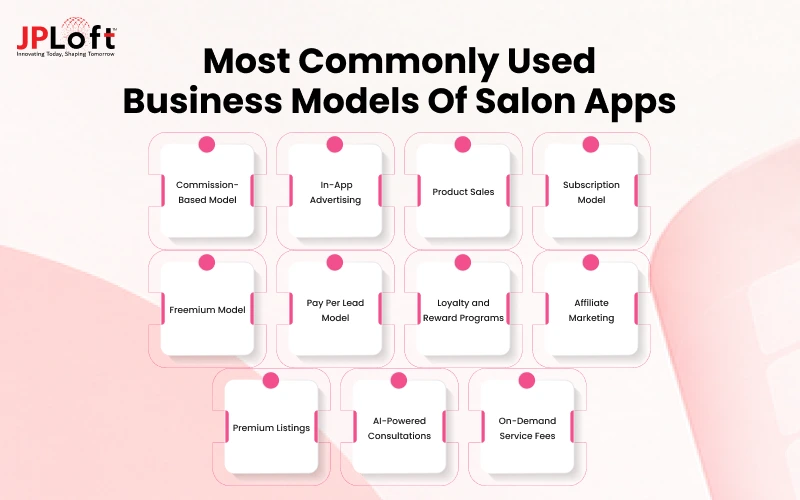
Here are the most successful and common salon app monetization strategies.
1. Commission-Based Model
The commission-based model is one of the best salon app monetization models. Whenever a user books an appointment or makes a purchase through the platform, the salon app charges a percentage of the total amount.
For instance, a salon business offers all its services on the app. Whenever a customer purchases a service, salon app owners can charge a 5% fee on every appointment. This creates a reliable revenue opportunity. However, it is necessary to maintain a balance with user experience so that excessive charges do not drive users away.
2. In-App Advertising
In-app advertising strategies are another smart way salon apps make money. Beauty, wellness, and haircare businesses pay a reasonable amount to display their service or product ads on the app.
For instance, a haircare startup could promote shampoos or conditioners on the app to appear on search pages, service pages, or promotional sections. The app must have a larger user base to display ads in banners, sponsored listings, native advertisements, or promotional social media campaigns.
3. Product Sales
Many salon apps offer in-app purchasing of beauty products to improve user engagement. This is also one of the effective and popular salon app monetization models. Top salon apps such as Mindbody and Fresha allow users to buy products within the app.
Users can access add-on features, order products digitally, or purchase VIP memberships. After a successful transaction, the app either earns money by charging a commission percentage or by adding add-on features.
4. Subscription Model
Salon apps make money through a subscription-based revenue model. Salon businesses or individual beauty professionals use such platforms to access online booking, scheduling, and customer management tools. The business pays a subscription fee on a monthly or yearly basis.
This revenue strategy is very useful for generating regular income for business owners and improving user engagement. Booksy is one of the salon apps that has adopted this idea.
5. Freemium Model
The freemium model allows salon businesses to use basic salon app features such as online booking, user management, and transactions at no cost. However, to access advanced features or premium services, the app charges a fee. This is one of the common salon app monetization strategies known as the freemium model.
This model reduces the initial investment risk for businesses. It allows them to attract more users with free features and gradually encourage upgrades to premium services. As the platform grows, premium features can increase a steady revenue stream while improving the customer experience.
6. Pay Per Lead Model
Pay-per-lead is one of the easiest models to understand how salon apps make money. The app charges a per-lead cost to salon owners. Whenever a user visits the app and makes an inquiry about a service, the app shares the contact details with locally available salon owners.
Salon owners pay a fixed fee to the app, whether or not the buyer purchases the service. This model is effective because small salon owners who cannot spend more on social media campaigns or promotional strategies can use it to connect with potential clients.
7. Loyalty and Reward Programs
Loyalty and reward programs provide a dual benefit by encouraging repeat customers and generating revenue opportunities. Whenever a customer makes a booking or uses the app to avail salon services, they earn reward points. These points can be used to access discounts, special offers, and free services.
The app can make money in two ways: first, it encourages users to buy paid memberships. The second is that beauty brands can pay the app to promote their services or offerings in reward sections. This encourages repeat bookings and creates an effective way salon apps make money.
8. Affiliate Marketing
Affiliate marketing allows salon apps to earn commissions by promoting products from partner businesses. The app can recommend beauty products, such as shampoos and lotions, through special links or promo codes.
When a customer clicks an affiliate link or uses a promo code to purchase a product, the partner business pays the salon app a commission on the sale. This allows the app to generate additional revenue without selling or managing the products itself.
9. Premium Listings
Premium listing is a salon app monetization model that allows businesses to pay for featured listings and better visibility on the app. Beauty brands and individual stylists can pay to appear in premium positions across the platform.
These listings can appear in category highlights, homepage sections, landing page banners, and top search results. Better visibility can help salons and stylists attract more customers and increase bookings. The app earns revenue by charging businesses a fee for these premium placements.
10. AI-Powered Consultations
AI-powered consultations create a new revenue opportunity. Integrating AI in a salon app provides personalized consultations on hair, skincare, and other recommended treatments. In return, customers can pay a fee to receive smart tips and recommendations.
It helps improve revenue opportunities, brand identity, and customer experience. Partnering with an AI development service provider can help integrate scalable AI features into the salon platform.
11. On-Demand Service Fees
Sometimes users book urgent, on-demand, or in-house salon services, which include additional charges when the professional travels directly to the consumer. The charges cover convenience, scheduling, and platform support.
This approach not only increases revenue but also expands the app's services beyond physical salon locations. However, before booking the service, the customer must be informed about the additional charges.
What are the Top Salon App Revenue Models?
There are several salon apps present in the market. Different platforms use different monetization strategies based on their business goals and target audience.
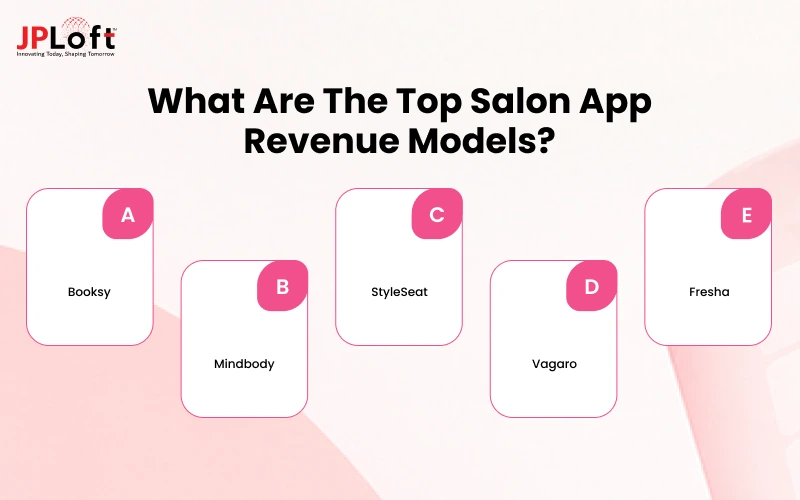
Here are some popular apps and their best salon app monetization models to help you understand which approach works best for your salon app.
[A] Booksy
Booksy is a beauty and salon booking platform that lets users discover salons, book services online, and manage appointments. This platform is also helpful for service providers in managing appointments, scheduling staff bookings, and securing transactions.
It offers several features, such as salon profiles and service catalogs, secure payment integration, loyalty programs and rewards, customer reviews, and a dashboard for businesses. The app’s popularity often attracts many businesses looking to develop an app like Booksy.
Monetization Model:
-
Booksy uses a subscription-based model. It allows salon businesses to pay a monthly fee to use the platform.
-
Booksy takes transaction or commission fees when users make a booking or purchase through the app.
-
It offers premium membership plans to users to access discounts and offers. Through this, it generates monthly membership fees.
[B] Mindbody
Mindbody is a digital salon booking platform mainly for wellness, spa, and haircare treatments. It helps business owners with tools to access services such as online salon booking, staff scheduling, and customer management.
The Mindbody app targets salon owners, boutique studios, wellness businesses, and spas to generate stable revenue and improve customer experience.
Monetization Model:
-
Mindbody generates revenue by charging businesses a monthly subscription fee. The fee depends on the different plans businesses choose for their salon services.
-
It charges transaction fees for every payment made using the app.
-
The platform generates additional revenue from add-on features or app integrations. These include custom branding, reporting, or marketing tool integrations.
[C] StyleSeat
StyleSeat is an effective online booking platform that connects users with salon and beauty professionals. It allows users to view locally available salon professionals, explore services and profiles, and schedule appointments.
Salon and beauty professionals can set up their own prices and profiles, manage their calendars, and handle no-shows or cancellations. Its wide range of services and business-focused features make it an interesting model for investors looking to build an app like StyleSeat.
Monetization Model:
-
StyleSeat uses a commission-based monetization model. The platform charges transaction fees for appointments when it brings new clients to professionals.
-
The platform offers premium subscriptions for clients and professionals to unlock new features and services on the app.
-
Salon professionals can also make e-commerce sales through the app, generating additional income for the platform.
[D] Vagaro
Vagaro is a complete salon management software for clients and professionals in the beauty, wellness, and fitness industry. It helps salons, spas, and wellness businesses manage daily operations, process payments, and handle client queries.
Its combination of management tools and promotional features supports multiple revenue streams. Businesses planning to build an app ike vagaro can explore its business model to understand the best salon app revenue models.
Monetization Model:
-
The app charges salon professionals different subscription fees based on their business needs.
-
Businesses can pay for add-on features or premium listing fees to appear at the top of search results.
-
The Vagaro app charges salon, beauty, and wellness professionals for promoting their products, campaigns, or services on the app. This helps businesses boost their visibility.
[E] Fresha
Fresha helps users easily find and book locally available salon, beauty, haircare, and wellness services. The app features clear and easy navigation and allows online bookings, while salon professionals use it to manage bookings, payments, and inventory.
The platform has a large user base and is widely used for booking salon services. If you are planning to build an app like Fresha, examining its monetization models can help you understand how the platform generates revenue.
Monetization Model:
-
The app earns revenue through in-app advertising by showcasing relevant products and services.
-
The platform charges a commission when a salon business gains access to new clients through the Fresha app.
-
Fresha earns a payment processing fee when a transaction is processed within the platform.
Build a Profitable Salon App With JPLoft
Understanding top salon app revenue models is important when planning a profitable salon platform.
JPLoft, a salon app development company, helps businesses choose and implement monetization strategies that match their audience and business goals.
Before the development process begins, our team works with clients to identify suitable revenue models and the features needed to support the salon platform.
These features include online bookings, subscriptions, secure payments, commissions, product sales, and loyalty programs.
AI can improve customer experiences while creating new revenue opportunities for salon platforms.
Therefore, our professionals integrate AI-powered recommendations, virtual consultations, and personalized experiences. These features can support premium services while improving customer engagement.
From booking apps to multi-salon marketplaces, we help businesses build scalable salon app solutions that support multiple revenue streams.
Conclusion
Building a salon app is easy, but understanding how salon apps make money takes time and careful analysis of various aspects.
Salon apps can generate revenue through several different business models.
These include subscriptions, commissions, product sales, advertising, and premium listings.
The strongest opportunity often comes from combining complementary revenue streams with informed decisions.
Business owners should first understand their customers, salons, costs, and market position. Then, selecting a monetization model would be much easier and supportive of sustainable growth.
Current salon data also shows why digital platforms have strong business potential.
Online booking, memberships, retention, and AI are becoming important growth drivers.
For investors and founders, the key question is not simply how to generate money.
The better question is how to identify the best salon app revenue models to scale with the business.
FAQs
Commission, hybrid subscription, featured listing, and premium feature add-ons are the most profitable salon app monetization models. It helps you earn revenue through monthly fees from salon owners.
Salon apps make money through brand partnerships, in-app purchases, a commission-based model, and AI-powered consultations. Revenue choice mainly depends on whether the app offers a complete management tool or a single business app.
AI can support 24/7 customer assistance, helping answer queries and convert more inquiries into bookings. It can also identify abandoned bookings and client follow-ups to recover potential revenue. Personalized recommendations can create another paid revenue option.
Salon owners who offer a free version generate revenue by charging salon business owners for premium tools, in-app advertising, commissions for customer referrals and payments, e-commerce sales, and featured listings to target buyers.
Salon apps increase revenue from in-app advertising by showing relevant ads to users and charging brands a commission fee to promote their products or services.

Rahul Sukhwal is the CEO and Founder of JPLoft, a visionary technologist with 18+ years at the forefront of emerging tech innovation and software engineering. He channels deep software engineering and AI expertise into building smarter, scalable solutions that shape how forward-thinking businesses worldwide harness the true power of AI.


Share this blog