


Key Takeaways
Gamification uses rewards, badges, and progress elements to make video apps interactive, turning passive viewers into active users.
The role of gamification in video apps is to boost engagement and retention through challenges, rewards, and interactive elements.
Effective adoption includes defining goals, studying users, planning rewards early, focusing on UI/UX, testing, and phased feature rollout.
Future trends involve AI-driven personalization, AR/VR interactions, community challenges, and blockchain rewards to make video apps more immersive.
JPLoft, a leading app development company, helps businesses integrate gamification with reward systems, AI personalization.
Modern video apps are more addictive than ever and gamification plays a key role in transforming passive viewers into active, returning users.
But here comes the most important question, “what is the role of gamification in video apps?”
It’s the strategic use of game-like elements to boost engagement, retention, and user satisfaction. Today, video platforms aren’t just places to watch content, they’re interactive ecosystems where rewards, challenges, badges, progress bars, leaderboards, and streaks motivate users to stay active.
When users earn something for their time, they not only stay longer but also come back more frequently. This shift is turning passive viewers into active participants, helping businesses build stronger connections and dramatically improve user loyalty.
So, in this guide, let’s dive into the magic of gamification and its power to boost video app engagement.
Gamification in Video Apps: A Quick Overview
Gamification has become a cornerstone of modern video apps, transforming passive viewers into active, loyal users. If you’re looking to build a video streaming app, understanding how gamification works in video apps is crucial.
By integrating elements like rewards, leaderboards, progress tracking, challenges, and badges, app developers can create immersive experiences that motivate users to engage repeatedly.
These strategies not only make content consumption more enjoyable but also enhance user retention and time spent on the platform. Incorporating gamification is one of the most effective strategies that help businesses turn casual viewers into dedicated fans while driving long-term growth.
In essence, gamification bridges entertainment and psychology, making video apps more interactive and habit-forming.
Key Gamification Mechanics Used in Video Apps
Gamification works through a set of proven mechanics that make video apps more interactive, rewarding, and engaging for users. These mechanics encourage users to watch more content, participate actively, and return to the platform more frequently.
Below is a quick visual breakdown of the most common gamification elements used in modern video streaming apps.
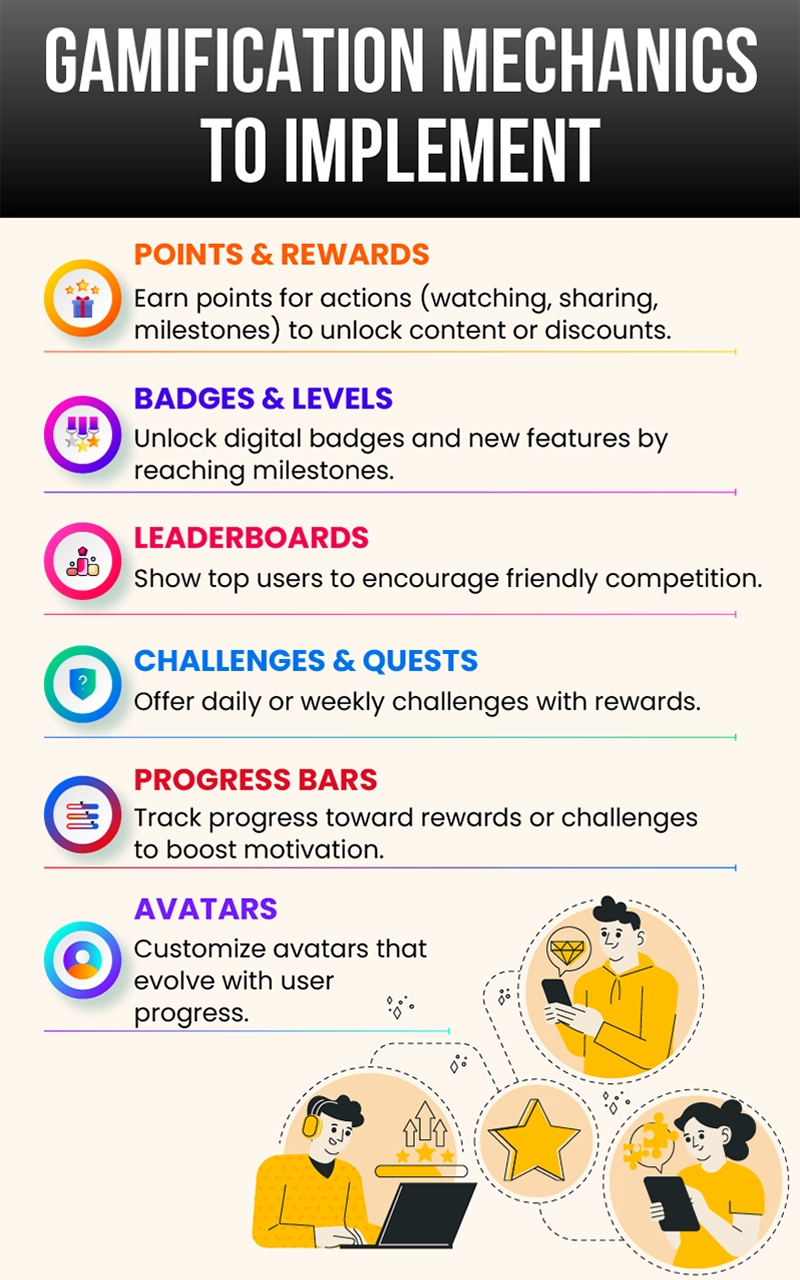
These mechanics lay the foundation for building a highly engaging user experience. By integrating them strategically, video apps can significantly boost retention, interaction, and long-term user loyalty.
Benefits of Gamification in Video Apps
Gamification is transforming the digital entertainment world, and its impact is especially powerful in video platforms.
Whether you want to improve user engagement or start an online video streaming business, understanding the benefits of gamification in mobile apps gives you a significant advantage.
Here are the top benefits:
1. Boosts Overall User Engagement
Gamification introduces rewards, points, streaks, and challenges that encourage users to interact more deeply with the platform.
These elements create a highly gamified user experience, turning everyday viewing into something fun and rewarding.
2. Strengthens User Retention & Loyalty
One of the biggest roles of gamification in video streaming apps is its ability to keep users coming back.
Features like leaderboards, badges, and progress bars motivate viewers to complete goals, maintain streaks, and return regularly to unlock new achievements.
3. Delivers Personalized Interactions
With AI-driven gamification, video apps can tailor tasks, goals, and rewards based on user behavior.
This personalization makes users feel valued and keeps them engaged with content that aligns with their interests.
4. Encourages More Content Consumption
Users tend to watch more videos when they are rewarded for progress.
Challenges tied to content categories, genres, or creators encourage users to increase their watch time, boosting platform performance and user satisfaction.
5. Creates Habit-Forming Experiences
Gamification helps build long-term habits by making every interaction feel meaningful.
Whether it’s streak-based rewards or daily challenges, users get hooked on completing small wins. This also enhances the gamified listening experience for audio-based video features.
6. Improves Monetization & In-App Purchases
Highly engaged users convert better, hence gamification helps to convert the users, effectively.
Gamification encourages users to unlock premium rewards, participate in exclusive challenges, or buy features that amplify their journey, ultimately increasing app revenue.
7. Builds Strong Community Interaction
Social elements like leaderboards, team challenges, and community-based goals encourage users to interact with others, creating a sense of belonging.
This increases social engagement and makes the platform more dynamic.
Overall, the benefits of gamification in video streaming apps is no longer just an add-on, it’s a must-have feature for any competitive video platform. By blending fun, psychology, and rewards, it elevates user satisfaction while driving long-term growth.

Role of Gamification in Video Streaming Apps
When we talk about the role of gamification in video apps, we’re essentially talking about how entertainment platforms are transforming into more interactive ecosystems rather than passive watching tools.
Today’s users want more than videos, they want rewards, challenges, and participation. That’s exactly why the role of gamification in video streaming apps has become one of the strongest engagement strategies for developers and brands looking to keep viewers hooked.
Below is a detailed breakdown of how gamification reshapes user behaviour and why it matters for the future of video platforms:
1] Turning Passive Watchers into Active Users
The biggest role of gamification in video streaming apps is that it converts viewers from passive consumers into active participants. Features like badges, streaks, XP points, and watch-levels encourage users to return daily, watch more content, and complete challenges.
This dramatically improves retention, which is why many businesses, especially those partnering with a mobile app development company in the USA, then focus on how to increase engagement in video apps through compelling gamified loops.
This shift matters because traditional watch behaviour doesn’t guarantee loyalty. But when users have goals, missions, and rewards, the entire platform feels more alive, leading to a truly gamified user experience.
2] Driving Higher Retention & Session Time
If there’s one metric every streaming product fights for, it’s retention. That’s why gamification impact on retention has become a major topic among app developers.
Levels, leaderboards, and role-based achievements nudge users to spend more time inside the app, which directly influences your platform’s session duration.
Modern platforms are even adopting AI-driven gamification, where personalization engines recommend challenges based on user habits, watch history, difficulty preference, or reward sensitivity. This elevates the gamified listening experience (for audio-video hybrids) and creates a stronger emotional bond between the content and the consumer.
3] Personalization Through AI & Smart Rewards
With the rise of AI in video streaming apps, platforms can now map behaviour patterns and offer highly relevant gamified rewards. Imagine badges for specific genres, or points for completing a content journey, or dynamic challenges that adjust automatically.
This goes beyond basic gamification for video apps, it builds a long-term value cycle that enhances gamification ROI in apps.
When rewards feel personal and meaningful, users stay longer and convert better, improving metrics across engagement, subscription renewals, and in-app purchases.
4] Enhancing Content Discovery Using Gamified Mechanics
One of the hidden advantages of video app gamification is its ability to boost discoverability. Many users struggle to find new content quickly. Gamified discovery, such as surprise boxes, spin-to-discover, or quiz-based recommendations, solves this problem effectively.
That’s why gamification for video discovery is increasingly being adopted by new streaming platforms. This approach works especially well when combined with a solid video streaming app tech stack.
It also allows your app to handle recommendation logic, real-time scoring, and dynamic UI experiences without performance issues.
5] Delivering a More Engaging UI/UX Design
The best gamification practices for video app development always start with smart UI/UX planning. Elements like progress bars, interactive cards, achievement pop-ups, and micro-animations make the platform feel more vibrant.
This is where gamification in UI/UX design becomes essential. It introduces visual and emotional cues that reward users for every interaction, making the experience more dynamic and memorable.
When combined with a professional UI/UX design service, your platform gains a structured approach to intuitive layouts, seamless navigation, and well-crafted gamified components. Combined with intuitive navigation, it also improves how users explore video streaming app features, leading to better satisfaction and app stickiness.
6] Community Building with Artist-Fan Gamification
For platforms that include creators, artists, educators, or influencers, artist-fan engagement gamification becomes a powerful tool. Fans can unlock exclusive rewards, compete in fan challenges, or earn supporter badges.
This strengthens belonging and opens doors for monetization models such as premium access, fan memberships, and creator-driven quests.
These community loops can differentiate your platform in a crowded market, especially when combined with thoughtful features inspired by live streaming business ideas.
7] Encouraging Consistent Usage Through Streaks & Challenges
Streaks, missions, daily rewards, and limited-time challenges motivate users to return every day. This is a classic gamification technique for app developers, helping stabilize daily active user (DAU) numbers.
Streak psychology is simple, users do not want to lose progress, which becomes a natural driver of long-term retention and watch consistency.
When applied smartly, these mechanics also highlight gaps where why video streaming apps fail is common, specifically low engagement and weak loyalty. Gamification fills these gaps effortlessly.
8] Improving Watch Behavior & User Learning
For platforms offering educational or skill-based content, the role of gamification in video apps expands beyond entertainment. Reward-based learning, quiz checkpoints, level-based course progress, and “completion certificates” significantly improve content completion rates.
When users feel like they’re leveling up in knowledge or entertainment, they’re more motivated to finish videos, meaning gamification builds healthier consumption patterns.
This not only boosts engagement but also strengthens the overall value users derive from the platform.
9] Strengthening Brand Loyalty Through Rewards
Badges, trophies, and reputation points add emotional weight to the user journey. They make the platform memorable and reinforce identity-driven usage.
This emotional cycle contributes to repeat engagement while enhancing the benefits of gamification in video streaming apps by increasing watch-time, boosting subscription renewal rates, improving in-app interaction, and creating stronger platform stickiness.
These combined attributes elevate the role of gamification in video streaming apps, making it a non-negotiable part of modern platform strategies.
10] Supporting Global Expansion with Localized Gamification
When entering new markets, adding region-specific challenges, cultural badges, or localized reward systems enhances user connection. This ties perfectly with localization in streaming apps, helping your product feel native to different user groups.
Localized gamified elements also align well with regional genres, festivals, creators, and seasonal content releases, making your platform more relatable.
By adapting rewards and challenges to local preferences, brands can significantly boost adoption rates and build deeper cultural relevance. This approach ensures that global expansion feels organic rather than forced, ultimately strengthening user loyalty.
11] Compliance-Ready & Future-Proof Gamification Systems
Any gamified platform must also follow compliance and data privacy norms. When integrating interactive mechanics, you should consider factors like user data permissions, reward eligibility, and fairness algorithms. These align closely with video streaming app compliance.
Future-proof gamification also includes integrating cloud-native reward engines, scalable user scoring systems, and secure tracking mechanisms.
By maintaining transparency and adhering to regulations, platforms can build user trust while ensuring long-term scalability. This careful balance of innovation and compliance helps apps stay competitive in rapidly evolving digital ecosystems.
12] Supports End-to-End App Development
Lastly, when you design a video streaming app, gamification should not be an afterthought, it should be part of the initial architecture. From database planning to UI mapping and reward logic integration, everything works better when gamification is planned early.
If planned late, the reward system may feel forced. But when integrated from the foundation, it naturally enhances content paths, strengthens user progression, improves recommendation accuracy, and elevates the overall engagement flow.
This strengthens the platform at every level, ensuring a strong foundation for long-term success.
Gamification helps to strengthen the platform at every level, ensuring a strong foundation for long-term success. This integrated approach ensures your video platform remains competitive, scalable, and deeply engaging in an industry where user attention is everything.
Process to Adopt Gamification in Video Apps
To integrate gamification smoothly into your video streaming app, you need a structured, experience-focused approach.
Here’s how platforms can adopt it effectively:
1. Define the Core Gamification Goals
Start by identifying what you want to achieve through gamification: improved user engagement, longer watch time, retention boosts, or enhanced content discovery.
Align these goals with your existing user behavior patterns to avoid adding features that feel forced. This helps your team set a clear foundation while addressing the engagement-related issues commonly found in video apps.
2. Research User Personas & Motivation Triggers
Understand why your audience uses your app. Whether it’s binge-watchers, casual viewers, or niche content seekers, each persona has different motivation triggers.
This stage helps you plan features like reward badges, watch streaks, or challenges that are relevant and tied to user retention strategies.
3. Plan the Reward Ecosystem Early
Build the reward system during the architecture phase to avoid patchy integrations later. This is also the stage where businesses should hire dedicated developers who understand scalable reward engines, scoring logic, and real-time interaction systems.
Their expertise ensures that points, badges, coins, and streaks are seamlessly woven into the app’s core experience.
4. Focus on UI/UX for Smooth Gamified Interactions
Design intuitive interfaces where users can easily find their rewards, levels, missions, or achievements. A well-structured UI turns gamification into an enjoyable experience rather than a distraction.
This helps reduce confusion, increases session length, and improves navigation consistency across video content.
5. Integrate Real-Time Analytics & Tracking
To make your gamification system effective, set up analytics to track actions like watch time, interaction frequency, challenge completion, and reward redemption.
Real-time data helps with engagement optimization and supports predictive insights for better content recommendations.
6. Build Personalised Progress Paths
Use AI-driven user segmentation to show personalised missions, recommendations, and progression paths.
Whether it’s leveling up by watching specific genres or completing themed challenges, personalised experiences help improve user loyalty and reduce the content overload problem in video apps.
7. Test, A/B Test & Improve Continuously
Gamification isn’t a one-time setup. It requires continuous testing. Experiment with different types of badges, streak rules, reward cycles, or event-based challenges (e.g., festive seasons).
A/B mobile app testing helps you understand what keeps users active and what doesn’t, ensuring a smoother, more engaging experience.
8. Launch in Phases for Maximum User Acceptance
Instead of adding all gamification features at once, release them in phases, starting with light features (like badges) and expanding to advanced ones (like missions or progression loops).
This phased rollout reduces user friction and helps gather insights early, preventing performance or scalability issues.
When these steps are followed thoughtfully, gamification becomes more than a feature, it becomes an integral experience that transforms how users interact with your platform. With a strategic approach, video apps can achieve higher engagement, stronger retention, and a meaningful competitive edge in the streaming market.
Future Trends of Gamification in Video Apps
Gamification is rapidly evolving, and the next wave of innovation is set to transform how viewers interact with content.
As user expectations shift, several emerging ideas are becoming the top trends in video streaming apps, shaping the future of engagement and retention.
A] Hyper-Personalized Gamification Experiences
As AI and machine learning advance, video apps will deliver deeply personalized challenges, rewards, and progression systems. These adaptive elements will respond to user behavior, content preferences, and viewing habits, making every interaction feel tailor-made.
B] Integration of AR/VR-Driven Gamified Interactions
With the rise of AR VR in video streaming apps, users will soon earn rewards by exploring virtual spaces, completing 3D tasks, and interacting with immersive digital elements, unlocking a new level of engagement.
C] Social & Community-Based Gamification Models
Future video platforms will focus heavily on social experiences. Group missions, team-based challenges, friend-versus-friend competitions, and community leaderboards will strengthen user connections and turn streaming into a shared, interactive activity rather than a solo experience.
D] Blockchain-Powered Reward Systems
Digital ownership will shape the next era of gamification. With blockchain-backed badges, NFT rewards, and token-based achievements supported by blockchain development services, platforms can offer secure and valuable digital assets that boost loyalty and engagement.
As gamification continues to merge technology with user psychology, video apps will become more immersive, rewarding, and interactive than ever before. These trends signal a future where viewers aren’t just watching, they’re participating, progressing, and winning.
The transformation has already begun, and the apps that embrace it early will lead the market.
How JPLoft Can Help You Integrate Gamification in Video Apps?
When it comes to building high-performing, future-ready video platforms, JPLoft stands out as a trusted video streaming app development company.
With deep expertise in app architecture, UI/UX, gamification mechanics, and emerging technologies, we help businesses transform simple video apps into immersive, addictive user experiences.
Their team specializes in crafting custom gamification features such as reward systems, streaks, badges, leaderboards, AI-based personalization, and interactive challenges tailored to your audience.
From conceptualization to deployment, JPLoft ensures your platform is designed for maximum engagement, retention, and scalability.
Whether you're planning to upgrade an existing app or launch a brand-new streaming platform, we provide end-to-end development, seamless integrations, and future-proof solutions that give your business a competitive edge.
With JPLoft, you don’t just build an app, you build an engaging digital ecosystem.

Final Wrap-Up
Nowadays, the role of gamification in video apps is becoming more crucial than ever. Gamification is no longer just an optional enhancement, it’s a powerful strategy that transforms user behavior, boosts retention, and encourages viewers to spend more time engaging with content.
By blending entertainment with psychology-driven mechanics, businesses can turn passive viewers into active participants who enjoy completing challenges, unlocking rewards, and progressing through personalized journeys.
As video consumption continues to grow, platforms that adopt gamification early will stay ahead of user expectations and industry trends. Whether through AI-personalized rewards, AR-powered experiences, or socially driven challenges, gamification is paving the way for the next generation of video apps.
FAQs
Gamification adds game-like elements such as points, badges, and rewards to apps, making video streaming interactive and engaging. It encourages users to interact more, complete challenges, and feel a sense of accomplishment while using the app.
It boosts engagement, retention, and loyalty by turning passive viewers into active participants and enhancing content discovery. Gamification also helps platforms create personalized experiences and build stronger emotional connections with users.
Gamification increases watch-time, improves content completion, strengthens retention, and creates a fun, rewarding user experience. It also encourages consistent usage, improves subscription renewals, and makes the platform more competitive in the market.
Define goals, select a gamification model, plan rewards early, integrate into UI/UX, personalize with AI, and optimize continuously. Following a structured approach ensures seamless integration and a smooth, engaging experience for users.
AI-driven personalization, AR/VR integration, community challenges, and adaptive reward systems will shape the future of gamified streaming experiences. Platforms will increasingly leverage predictive rewards and interactive journeys to keep users motivated and engaged long-term.

Conor has more than 10 years of experience in software development, app creation, solution engineering, and UX/UI design. With an impressive track record of high retention and growth working with Fortune 500 companies, he brings the technical depth and strategic perspective needed to help businesses build impactful, user-focused digital solutions.


Share this blog