


Key Takeaways
For a successful flower delivery app, follow a structured process from planning to launch to ensure scalability and success.
The development cost depends on features, complexity, and technology, so planning your budget early helps avoid unexpected expenses.
Including essential features like real-time tracking, secure payments, and easy navigation improves user experience and boosts engagement.
Modern trends like AI recommendations, AR visualization, and instant delivery are transforming flower delivery apps.
Choosing the right tech stack ensures better performance, scalability, and seamless integrations for your app.
JPLoft offers expert support to develop scalable and user-friendly flower delivery apps tailored to your business needs.
With the growing market demand for flower delivery apps, the first question that investors ask is: How to build a flower delivery app in 2026 that drives engagement.
The answer lies in combining the right features, user experience, and scalable technology. As online gifting and convenience-based services continue to grow, flower delivery apps are becoming a go-to solution for customers seeking quick and reliable services.
The global flower delivery app market will grow to $14.8 billion by 2034, showing strong demand for digital gifting experiences.
Businesses are now actively investing in digital platforms to expand their reach and boost sales. If you’re a startup or an established florist, creating a feature-rich app can help you tap into a wider audience.
So, in this guide, you’ll explore everything from planning to execution, helping you successfully launch and grow your own flower delivery platform.
How Can a Flower Delivery App Benefit Your Business?
Nowadays, choosing to make a flower delivery app can significantly transform your business operations and customer reach.
With the rising demand for convenience, investing in a mobile solution is no longer optional; it’s essential.
-
According to Grand View Research, the global flower delivery service market is expected to grow at a CAGR of 7% from 2025 to 2030.
-
The U.S. is expected to lead the North American flower delivery market in revenue by 2030.
-
Mexico will be the fastest-growing market, projected to reach $179.3 million by 2030.
-
Simplify operations if you plan to start an online flower delivery business using automation tools for order management and delivery tracking.
Therefore, businesses can streamline their services and improve customer satisfaction. Ultimately, developing a flower delivery app allows you to stay competitive while unlocking new revenue opportunities in a rapidly growing market.
Features You Must Include in a Flower Delivery App
If you truly want to launch a successful on-demand flower app, then focusing on essential and advanced features is crucial.
To know what features can help, here are some app features you need to ensure success:
|
Feature Category |
Key Features |
Benefits |
|
User Panel |
Easy sign-up/login, search filters |
Smooth user experience |
|
Product Catalog |
Flower categories, images, pricing |
Better browsing and selection |
|
Order Management |
Cart, checkout, order history |
Simplified purchasing process |
|
Payment Integration |
Multiple payment options |
Secure and flexible transactions |
|
Real-Time Tracking |
GPS tracking, delivery updates |
Transparency and trust |
|
Notifications |
Push alerts, SMS updates |
Improved engagement |
|
Admin Dashboard |
Order control, analytics |
Efficient business management |
Including these features ensures your app is scalable, user-friendly, and competitive in the market.
How to Develop a Flower Delivery App?
For a successful app, you need a structured and strategic approach. This step-by-step flower delivery app development guide will help you understand each phase involved in creating a scalable and efficient solution.
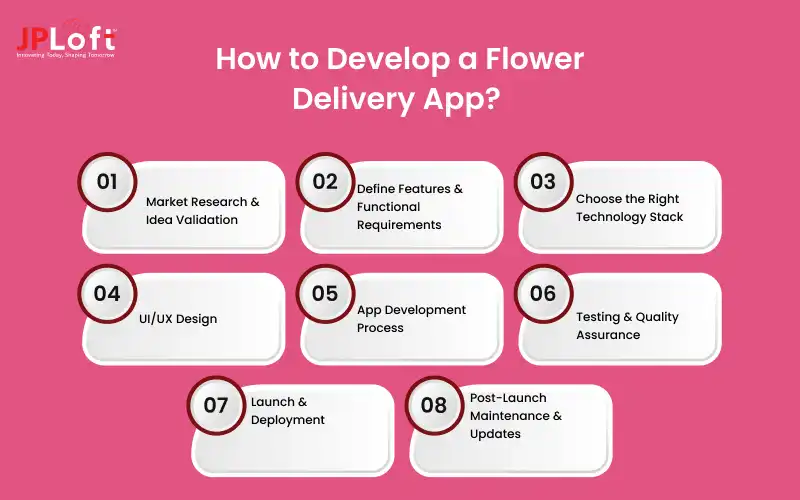
Below is the detailed development process:
Step 1: Market Research & Idea Validation
Start with market research and validating your idea before you create a flower delivery app. This step builds a strong foundation for your business strategy.
-
Analyze Target Audience: Identify your ideal users, such as individual buyers or businesses, and understand their preferences, behavior, and expectations.
-
Study Competitors: Research existing apps, analyze their features, pricing, and customer feedback to identify market gaps.
-
Define Unique Value Proposition: Decide what makes your app unique, such as faster delivery or advanced features, to stand out in the market.
Step 2: Define Features & Functional Requirements
The next step in this complete guide to make a flower delivery app is to finalize the features and functionalities.
-
User Panel Features: Include easy registration, product browsing, wishlist, and secure checkout to enhance user experience.
-
Admin Panel Features: Enable order management, inventory control, and analytics for better business operations.
-
Advanced Features: Consider adding features like real-time tracking, personalized recommendations, and scheduled deliveries for a custom flower delivery app.
Step 3: Choose the Right Technology Stack
To build an on-demand delivery app, selecting the right mobile app tech stack is essential for performance and scalability.
-
Frontend Development: Use technologies like React Native or Flutter to create a smooth, responsive, and user-friendly interface across devices.
-
Backend Development: Choose Node.js or Django to manage server-side operations efficiently and ensure fast, secure data processing.
-
Database & APIs: Integrate databases like MongoDB and APIs for payments, maps, and notifications to power your online flower delivery system.
Step 4: UI/UX Design
A visually appealing design is critical, and leveraging professional UI/UX design services can significantly enhance user engagement and satisfaction.
-
User-Friendly Interface: Ensure easy navigation, clear categories, and a smooth checkout process for a better user experience.
-
Attractive Visuals: Use high-quality images and modern layouts to enhance engagement and make the app visually appealing.
-
Responsive Design: Make your app accessible across devices, including smartphones and tablets, for a consistent experience.
Step 5: App Development Process
This is where your idea comes to life, coding, feature integration, and smooth performance, often with the help of hiring dedicated developers.
-
Frontend Development: Build interactive screens and user interfaces for smooth user interaction.
-
Backend Development: Develop server-side logic, databases, and APIs to support app functionality.
-
API Integration: Integrate payment gateways, GPS tracking, and notification systems for a complete experience.
Step 6: Testing & Quality Assurance
Mobile app testing is essential in any flower delivery app development guide to ensure performance, reliability, and a bug-free experience.
-
Functional Testing: Check all features to ensure they work as expected and meet user requirements, providing a seamless and error-free user experience.
-
Performance Testing: Test app speed and responsiveness to ensure smooth performance under different conditions.
-
Bug Fixing: Identify and resolve errors before launching your app to ensure smooth performance.
Step 7: Launch & Deployment
Once testing is complete, it’s time to launch your app that ensure it’s optimized for performance and user experience before going live.
-
Pre-Launch Checklist: Ensure your app is free from bugs and ready for real users before going live.
-
Play Store Launch: Prepare your app listing with proper details, screenshots, and policies before you publish an app to the Google Play Store.
-
App Store Submission Process: Ensure you properly submit an iOS app to the App Store by meeting Apple’s strict guidelines and requirements.
Step 8: Post-Launch Maintenance & Updates
After launch, continuous improvements and app maintenance services are essential for long-term success, and keep your app secure.
-
Monitor Performance: Track user behavior and app performance regularly to identify issues, improve functionality, and enhance overall user experience.
-
Update Features: Introduce new features and improvements based on user feedback and evolving market trends to keep your app relevant and competitive.
-
Ensure Security: Keep your app updated with the latest security measures and protocols to protect user data and maintain trust.
By following this step-by-step flower delivery app development guide, businesses can efficiently build an app that meets user expectations.
No matter if you want to build an on-demand delivery app for local services or for a larger market, a strategic approach ensures long-term growth and success.
How Much Does it Cost to Build a Flower Delivery App?
The cost to develop a flower delivery app ranges from $5000 - $40,000+, depending on features, complexity, design, and development location. Whether you plan to create a flower delivery app with basic or advanced functionalities, the investment can vary.
Below is a breakdown of estimated costs based on different types of development components:
|
App Type |
Estimated Cost Range |
Description |
|
Basic App |
$5000 – $10,000 |
Includes core features like user login, product listing, and simple checkout. |
|
Medium App |
$10,000 – $25,000 |
Comes with advanced features like real-time tracking, notifications, and better UI/UX. |
|
Advanced App |
$25,000 – $40,000+ |
Includes AI features, custom integrations, and a fully scalable system. |
Businesses looking to make a flower delivery app should consider talking to an expert app development company for the right estimate.
Emerging Trends to Use While Developing a Flower Delivery App
The flower delivery industry is rapidly evolving with the adoption of the latest mobile app development trends and changing customer expectations.
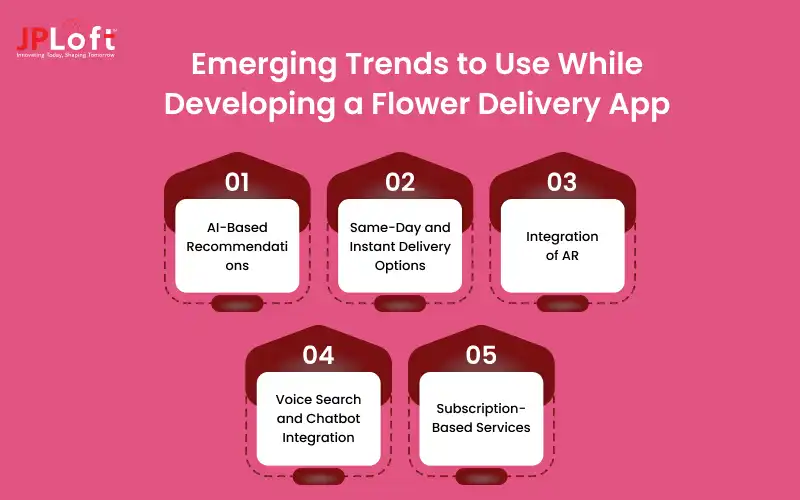
To stay competitive, businesses must keep up with the latest innovations. Let’s get to know those trends one by one:
[A] AI-Based Recommendations
AI helps analyze customer preferences and buying behavior to suggest relevant bouquets, improving user engagement and increasing conversions. It also delivers more personalized shopping experiences.
[B] Same-Day and Instant Delivery Options
Customers now expect faster services, making real-time and same-day delivery features a key differentiator in modern apps. This increases convenience and boosts last-minute orders.
[C] Integration of AR
Augmented Reality allows users to visualize flower arrangements before purchasing, enhancing confidence and reducing returns, especially when developed with an experienced AR VR app development company.
[D] Voice Search and Chatbot Integration
Voice-enabled search and AI chatbots simplify ordering and provide instant customer support, improving overall user experience. They also reduce response time and improve support efficiency.
[E] Subscription-Based Services
Subscription models enable recurring orders, helping businesses generate consistent revenue and build long-term customer relationships. They encourage customer loyalty and repeat purchases.
These emerging trends are transforming how businesses build a flower delivery app, making apps more interactive, efficient, and customer-centric in today’s digital landscape.

Why Choose JPLoft for Your App Development?
With increasing competition in the digital marketplace, making the right development choice becomes more important than ever. Choosing the right flower delivery app development company is crucial for your project’s success.
JPLoft stands out as a trusted partner with years of experience in delivering scalable and user-friendly mobile applications. From ideation to deployment, their team ensures a seamless development process tailored to your business needs.
If you want a simple app or a feature-rich platform, JPLoft offers customized solutions that align with market trends. Their expertise in advanced technologies, UI/UX design, and backend systems ensures high performance and security.
With a client-focused approach and proven track record, JPLoft helps businesses turn their ideas into successful digital products.
Final Wrap Up
Businesses need a clear strategy, the right technology, and user-focused features. From understanding market needs to implementing advanced functionalities, every step plays a vital role in the app’s success.
A well-developed app not only enhances customer experience but also opens new revenue streams and strengthens brand presence.
By following a structured development approach and staying updated with emerging trends, you can create a scalable and competitive platform.
If you are starting fresh or expanding your business, investing in a flower delivery app is a smart move in today’s digital landscape.
FAQs
Start with market research, define features, choose the right tech stack, design UI/UX, develop the app, test it, and finally launch and maintain it.
Key features include user registration, product catalog, secure payment options, real-time tracking, push notifications, and an admin dashboard for efficient management.
The cost typically ranges between $5000 - $40,000+, depending on design, features, and development scope.
Common technologies include React Native or Flutter for frontend, Node.js or Django for backend, and APIs for payments, maps, and notifications.
The development timeline can range from 2 to 6+ months, depending on the app’s complexity, features, and customization requirements.

Conor has more than 10 years of experience in software development, app creation, solution engineering, and UX/UI design. With an impressive track record of high retention and growth working with Fortune 500 companies, he brings the technical depth and strategic perspective needed to help businesses build impactful, user-focused digital solutions.


Share this blog