



Key takeaways:
The most common event management app challenges include customer support issues, complicated onboarding, cross-platform compatibility, and beyond.
Event management apps are gaining significant popularity due to the high demand for digital experiences, centralized event planning, and optimal revenue opportunities.
To address event management app development challenges, modern technologies such as AI-powered features, IoT integration, and cloud infrastructure play a crucial role.
Continuous app testing, user-focused solutions, and an intuitive interface create a smooth experience for both event organizers and attendees.
JPLoft helps overcome challenges in developing an event app through a structured process, expert team knowledge, and scalable mobile app solutions.
Planning an event, whether it is a conference, live music event, theater performance, or sports competition, sounds very exciting. However, for organizers and management committees, this journey is not always smooth.
Users demand quick registration, online tickets, and instant event updates, while management teams must handle technical glitches, third-party service integrations, and slow performance.
In the words of MEL ODOM, "It takes real planning to organise this kind of chaos”.
This is where an event management app helps simplify event planning and manage chaos. It supports event planning, organization, event notifications, and smoother day-to-day operations.
However, with the increasing number of events, businesses continue to experience common event app development challenges. Identifying these issues will help reduce costly mistakes and improve decision-making.
In this blog, we will explore the key event management app development challenges, practical solutions, and the reasons behind the growing popularity of event management apps.
Why are Event Management Apps Gaining Popularity?
The event management app market is projected to reach $54.79 billion by 2035, growing at a CAGR of 14.12%. Therefore, explore the top reasons why event management apps are gaining popularity.
1. Rising Demand for Digital Event Experiences
Audiences are now expecting a digital event experience through a single platform.
Moreover, a custom mobile app development company in USA will help to implement a smart digital event experience within the app to meet the rising demand.
2. Centralized Event Management
Event management mobile apps help organizers manage bookings, track attendees, and send real-time alerts and notifications through a centralized platform.
Therefore, it is necessary to add smart, advanced app features and functionalities for smooth app performance.
3. Top Industries Investing
Whether it is a corporate business hosting meetings, a healthcare organization conducting fundraising events, or a sports organization managing bookings, these apps support a wide range of industries.
Businesses entering this market often explore the best event app ideas to understand which event formats and features can deliver the highest engagement and long-term value.
4. Increasing Revenue Opportunities
Businesses are generating revenue through selling digital sponsorships. Charging sponsors for visibility on the app’s home screen.
Offering special online VIP passes makes purchases faster, and creating early-bird discount banners helps attract greater visibility.
While event management apps offer significant opportunities, businesses should also understand the challenges to develop an event app before starting the development process.
Key Event App Development Challenges and How to Overcome Them
Developing an event management app offers many business benefits, but it also comes with several app development challenges. If these challenges are not addressed at the right stage, they can affect app performance.
Therefore, here are the common event management app challenges and their solutions.
Challenge 1: Complicated Onboarding Process
One of the most common challenges in event app solutions is creating a simple onboarding experience. A complicated onboarding process, lengthy forms, an exhaustive verification process, and confusing navigation can reduce user engagement and logins.
This results in incomplete registrations, lower app adoption, and reduced attendee participation. Many users also get dissatisfied with unclear directions on how to fill out the registration form and miss opportunities to attend events, networking, and important conferences.
Solution:
-
Create a user-friendly mobile app design and a simple sign-up process that can be completed in 5 maximum steps.
-
Provide tutorials and videos for users to understand simple registration.
-
Add AI-driven features, such as a chatbot, to address users' challenges during registration.
-
Provide email and social media ID registration to avoid friction.
Challenge 2: Lack of Customer Support
During large events, the sudden increase in users accessing the app can make a lack of customer support a major challenge. Users are unable to get support when they forget their password or face constant payment failures.
In such cases, a lack of customer support makes it difficult for users to receive timely assistance. Users get delayed responses, miss sessions, and wait in long queues for solutions. This affects business reliability and credibility while reducing user interaction with the app.
Solution:
-
Integrating an in-app customer support feature improves users’ journey while using the event app.
-
To ensure 24/7 support team assistance during live event streaming, businesses hire dedicated developers to improve user experience.
-
Adding FAQs, user guides, and short tutorials in the app helps users read the guidance and find better solutions.
-
Send timely alerts for changes in application or check-in procedures.
Challenge 3: Data Privacy Concerns
Event management apps include users’ private details, payment or transaction information, and business data. Data privacy concerns are one of the challenges in event management apps that can cause unauthorized access, data breaches, and fraudulent transactions.
No one wants to use an application that puts their personal and business data at risk, reducing trust in the platform. Such privacy concerns arise when your app requests unnecessary permissions from attendees, or there is no updated privacy policy on the platform.
Solution:
-
Set up a two-factor authentication system while onboarding.
-
Choose a safe third-party application that maintains data security.
-
Encrypt sensitive and payment information, especially during rush event planning.
-
Conduct regular security testing and connect with a mobile app development company that follows security protocols, data protection rules, and regulations.
Challenge 4: Multiple Device Compatibility
The audience uses multiple devices to access the event management app. Some use Android devices, iPhones, or tablets. If your app is unable to provide cross-platform compatibility, then it creates serious issues.
This is one of the common challenges in event apps, where many businesses struggle to provide users with a seamless experience across different devices. Limiting cross-platform reach reduces audience interest in exploring the app features.
Solution:
-
Use a cross-platform framework to make your app available on multiple platforms.
-
Make sure to run cross-platform framework testing before launching the app.
-
All platforms must ensure seamless connectivity, features, and security compliance.
-
Ensure the attendee list and event updates are reflected across Android, iOS, MacBook, and more.
Challenge 5: Technical Confusion While Implementing the App
Businesses often have a clear event idea but face several challenges to build an event management app successfully. Choosing the right technology and deciding between native and cross-platform development can become confusing without the right technical expertise.
These technical complexities often lead to development delays, poor implementation decisions, and higher costs. Along with selecting the right technology, businesses should also understand the event app development cost to plan their budget effectively and avoid unexpected expenses during development.
Solution:
-
Define business goals and clear features before developing event app solutions.
-
According to budget, timelines, and business requirements, choose between cross-platform, no-code, or low-code solutions.
-
Choose the right mobile app tech stack for an event app that provides long-term success.
-
Add third-party ticketing platforms to automate the booking process.
Challenge 6: Delivering an Intuitive User Experience
An event management app should be able to solve user queries and make event booking seamless and simple, instead of confusing navigation. Businesses often struggle to create a simple and intuitive user experience due to a lack of required skills and knowledge.
Users face issues with complicated app menus, slow page load times, and unclear CTA buttons, which reduces satisfaction with the app. Businesses that overlook the UI/UX interface often struggle to retain users on the app.
Solution:
-
Simple, clear, and fast-loading UI/UX design services improve user experience. Also, avoid adding too much information on the menus.
-
The registration, event check-in, and payment modules should be quick and straightforward with a minimum of steps.
-
Launch your app to a small group of audience first to identify usability issues and then make changes with the final app launch.
-
Use a card-based layout for a smooth visual appearance and easier app interactions.
Challenge 7: Poor Scalability During High Event Crowds
Large events bring a sudden rush of crowds to the app. Users are simultaneously exploring the app, booking tickets, checking in and out, and joining live streaming sessions. This often leads to slow loading times, failed transactions, or even complete system outages.
To avoid these performance issues, businesses should first understand how to develop an event app. Poor scalability leads to cancelled or delayed ticket confirmation, app crashes, financial losses, and reduced attendee trust.
Solution:
-
Integrate IoT, automated bookings, and AI-enabled technology for seamless app performance.
-
Allow the audience to complete pre-booking registration to avoid a rush.
-
Hire mobile app developers to improve database queries and server response time and ensure the system can handle more extensive requests.
-
Track server performance and user activity during the rush booking process to resolve issues.
Challenge 8: Integrating Third-Party Services
Event management applications are no longer limited to standalone systems. They rely on several integrations, including secure payment gateways, email notifications, and live streaming services. However, as these integrations increase, they also introduce several challenges.
It includes security complexities, incompatible APIs, outdated platforms, and hidden costs associated with video streaming. Due to these challenges, users may experience payment failures, technical errors, and poor user experience.
Solution:
-
Use secure and standardised API authentication and monitor integration performance continuously.
-
Ensure third-party integrations are compatible with different platforms and payment gateways such as PayPal.
-
Design the app architecture to support updated integrations in the future.
-
Work with the quality assurance team to conduct regular testing of third-party integrations.
Challenge 9: Real-Time Information Updates
Sometimes, event management applications fail to deliver real-time information updates. During a live event, schedules may change, venues may be updated, or emergency announcements may need to reach attendees instantly.
Delays in updating information can create confusion, especially during peak event hours, and reduce users' trust. During important sessions or announcements, even a minute's delay can significantly affect the user experience.
Solution:
-
Ensure instant notification by integrating a real-time database and cloud-based synchronisation across all devices.
-
Integrate AI-driven analytics to identify schedule changes and operational issues for better decision-making.
-
During peak event hours, continuously monitor notification delivery to ensure attendees receive timely updates.
-
Simplify your event app workflow by automating reminders, important event timings, and specific speaker announcements.
Challenge 10: Ignoring Offline App Usability
Ignoring offline usability in areas with poor network connectivity creates confusion and increases user frustration. Important features, such as maps, speaker information, and event schedules, should remain functional without internet access.
For organizers, limited offline accessibility can also slow down attendee check-ins, disrupt staff coordination, and increase dependency on manual processes during critical event operations. This is one of the common challenges to build an event management app successfully.
Solution:
-
Design the app for offline access to check crucial event information.
-
Use local data caching to store event management data and minimise dependency on internet connectivity.
-
Test offline functionality under different network conditions to ensure the event app works properly.
-
Synchronise event images and session videos automatically when a stable internet connection becomes available.
How Can JPLoft Help Businesses Overcome These Challenges?
Choosing the right development partner helps businesses overcome common event management app development challenges.
At JPLoft, an event management app development company, we develop custom event management applications tailored to your business goals.
Our structured development process, experienced team, modern technologies, and strategies help overcome event management challenges while delivering a reliable and scalable solution.
Our team works closely with clients to understand their business challenges and target audience, and suggests secure solutions for a scalable application across multiple platforms.
The development team focuses on secure architecture and real-time performance monitoring to ensure the app runs smoothly, even during high-traffic events.
Our team follows a strategic approach that aligns with industry needs and future scalability. From defining the right feature set to creating an intuitive user experience, every stage of development is planned to deliver a fast-loading and future-ready application.
Conclusion
Businesses face several event management app development challenges. It includes maintaining customer support, resolving technical issues, providing real-time updates, and ensuring scalability during high-traffic live events.
As events continue to grow, the challenges will also increase if the right technology, business goals, and target audience requirements are not clear before launching the final app. Ignoring these challenges can affect both user and business growth.
Therefore, implementing scalable solutions such as simplified onboarding, AI-enabled technology, machine learning algorithms, and an intuitive user interface helps solve common event app challenges.
The demand for event management apps continues to grow across industries, so if you are planning to invest in digital solutions, it will help improve event planning, attendee engagement, and operational efficiency.
FAQs
The common event management app challenges include data security, poor third-party integration for payments and booking, limited scalability, and technical glitches.
Using event management tools such as ticket booking platforms, automation tools, cloud platforms, Razorpay for payment integration, and performance monitoring tools helps to overcome top event management app challenges.
Event management apps generate revenue through paid sponsorship ads, ticket booking commissions, event registration fees, and adding advanced features in the app.
To develop an event management app, common technologies include Flutter, React Native, Node.js, and integrating APIs for payments, maps, and QR code integration.
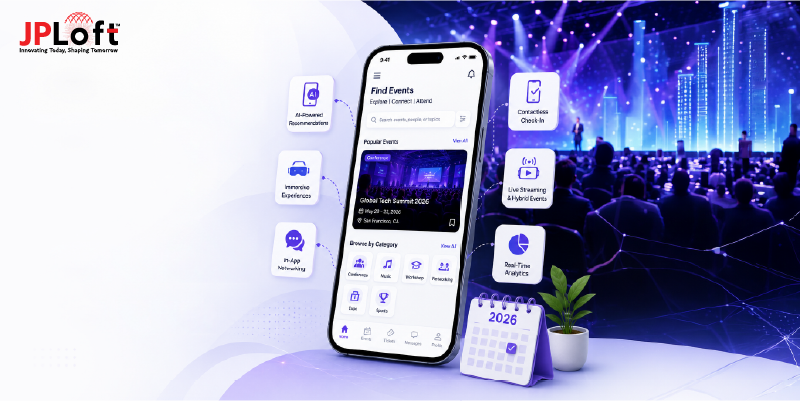
Latest trends in event management apps include AI-enabled technology for personalised sessions, AR and VR for live streaming, gamification for live questions or games, and interactive sessions for attendees.

Kris Jacobs brings 20+ years of experience in digital product strategy, user-focused design, and solving complex product challenges. She has worked across on-demand services, travel, entertainment, sports, insurance, education, and service marketplaces, including handyman, dog-walking, courier, event-management, and equine platforms. Her focus is on shaping practical, scalable digital experiences that align user needs with business goals and long-term product growth.




Share this blog