


Key Takeaways
Proper RTL support improves navigation, readability, and user experience for Arabic-speaking mobile users.
The cost to build an English-Arabic app depends on app features, localization needs, and technology complexity.
Flutter and React Native help businesses build multilingual mobile apps faster and more efficiently.
Arabic app localization requires careful testing to ensure smooth language support and consistent user experiences.
Industries like ecommerce, healthcare, fintech, and education benefit greatly from Arabic-first mobile applications.
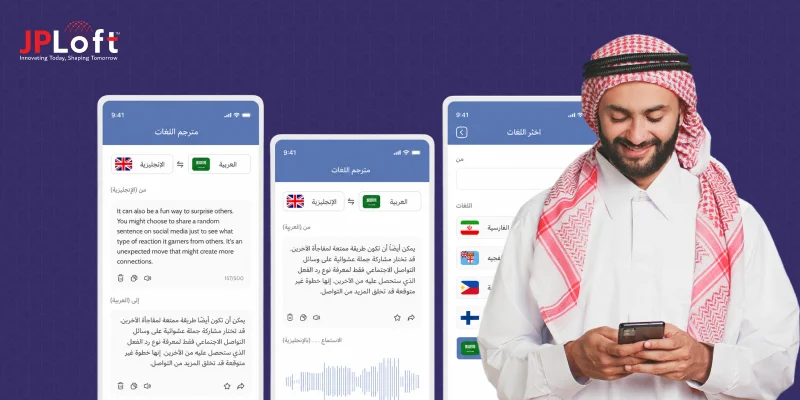
Expanding into the Middle East Market is now a smart move for modern businesses. Millions of users across the GCC region prefer apps in their native language.
This growing demand has increased the need for English-Arabic app development across industries.
From ecommerce to healthcare, companies now invest in better digital experiences for Arabic-speaking users. However, building bilingual apps is not as simple as direct translation.
Businesses often face layout issues, cultural gaps, and user experience problems during development. Proper development is also important for creating smooth, user-friendly interfaces.
This is why businesses now focus more on Arabic app localization and region-specific design planning. A well-planned development process helps companies improve engagement, trust, and customer retention.
In this guide, we will explain the biggest English-Arabic app development challenges, practical solutions, and key strategies for a successful mobile app.
Why Should Businesses Invest in English-Arabic Apps Now?
According to reports, Arabic is among the fastest-growing languages on the internet. However, only 3% of online content is available in Arabic despite millions of Arabic-speaking internet users worldwide.
Let’s discuss the reasons why businesses should invest in such apps:
1. Better Market Reach Across MENA Regions
Businesses can reach a much larger audience through properly localized multilingual mobile apps.
Studies show that nearly 62% of MENA app users prefer downloading apps available in Arabic.
2. Improved Customer Trust and Accessibility
Users trust applications that feel familiar and culturally relevant. Many customers avoid apps with poor translations or confusing navigation systems.
Proper development of RTL app and effective RTL UI design improve readability, navigation, and customer satisfaction significantly.
3. Higher App Engagement and Retention
Localized apps usually perform better than generic multilingual platforms, and users spend more time on applications that offer familiar language support.
Today, Arabic-speaking internet users represent one of the fastest-growing digital audiences globally.
4. Competitive Advantage in Arabic-First Markets
Many international apps still offer limited Arabic support and incomplete localized experiences.
Companies investing early in Arabic language app development can stand out from competitors quickly.
7 Major English-Arabic App Development Challenges
Building apps for Arabic users is not only about changing the language. Businesses also face design, testing, and user experience problems during development.
These app development challenges can affect app quality, user trust, and overall business growth across MENA markets.
Challenge 1: Right-to-Left (RTL) UI/UX Design Complexity
Arabic users read content from right to left. This changes the complete layout of the mobile application. Menus, buttons, icons, sliders, and images must follow the same direction properly.
Many businesses face challenges in managing RTL UI design in bilingual app development. If layouts are not adjusted correctly, users may feel confused while using the application. Poor navigation can also quickly reduce user engagement and increase app uninstall rates.
This challenge becomes more difficult when businesses manage both English and Arabic interfaces together inside multilingual mobile apps.
Solution: Use RTL-friendly layouts, test navigation properly, and design app prototypes separately for Arabic-speaking mobile users.
Challenge 2: Arabic Typography & Font Compatibility
Arabic text is very different from English text. Letters change shapes depending on their position inside words and sentences. This makes Arabic typography harder during Arabic mobile app development.
Some fonts do not support the Arabic language properly across all devices. Poor font selection can make content difficult to read for users. Text spacing and alignment problems may also affect the overall Arabic UX design badly.
Businesses working on Arabic app development must carefully choose fonts that support clear and readable Arabic content everywhere.
Solution: Consider professional UI/UX design services to use Arabic-supported fonts and test text readability across different screen sizes, devices, and operating systems carefully.
Challenge 3: Managing Multiple Arabic Dialects
The Arabic language is spoken differently across many countries. Users in Saudi Arabia, the UAE, Egypt, and other regions often use different local words and phrases daily.
Many businesses struggle while creating region-focused experiences during Arabic language app development projects. Using the wrong dialect may confuse users and reduce customer trust quickly.
Most companies use “Modern Standard Arabic” for general communication. However, some apps still need local language support for better customer engagement and regional connection.
Solution: Use Modern Standard Arabic first and add local dialect support according to business goals and target audiences.
Challenge 4: Content Expansion & Layout Issues
Arabic text usually takes more space than English content inside mobile applications. This creates layout, spacing, and screen adjustment problems during multilingual app development.
Buttons, menus, and forms may break when developers do not create flexible layouts properly. Long Arabic sentences can also affect screen readability and overall user experience badly.
This challenge becomes more common when businesses manage English-Arabic mobile apps with multiple pages, forms, and notification systems together.
Solution: Hire dedicated developers to create flexible layouts and responsive screen designs that adjust easily for both Arabic and English text content.
Challenge 5: Localization Testing & QA Challenges
Testing bilingual applications takes more time than testing single-language mobile apps. Businesses must check language accuracy, layouts, font visibility, and RTL functionality carefully.
Even small translation mistakes can create confusion and damage customer trust quickly. Arabic app localization also needs testing across multiple devices and operating systems regularly.
Many companies skip proper testing during GCC mobile app development projects. This often creates user experience problems after the application launch process.
Solution: Test applications with native Arabic users across devices to find language, layout, and navigation issues before launch.
Challenge 6: Performance Optimization for Multilingual Apps
Multilingual applications usually contain more content, language files, and design resources. These extra files may slow down app speed and overall performance.
Users expect fast-loading applications on every device. Slow applications often increase uninstall rates and reduce user satisfaction quickly. Businesses creating multilingual mobile apps must manage resources carefully.
Poor optimization can also affect app scalability when businesses expand their services across multiple GCC and MENA regions successfully.
Solution: Hire a professional app development company in Saudi Arabia to reduce file sizes, optimize app resources, and use fast caching systems for better multilingual app performance everywhere.
Challenge 7: Cultural Sensitivity & Regional Compliance
Arabic users expect applications that match their culture and local values properly. Colors, images, words, and content styles may affect user opinions quickly.
Businesses entering MENA markets must understand local traditions and business regulations carefully. Content that works in Western countries may not always work in Arabic-speaking regions.
Proper Arabic localization services help businesses create user-friendly and culturally suitable applications for regional audiences across different GCC markets successfully.
Solution: Research regional culture carefully and follow local content rules before launching apps for Arabic-speaking users across MENA markets.
Essential Features of a Modern Arabic-First Mobile App
Modern users expect fast, simple, and localized mobile experiences across every device. Businesses entering GCC markets must focus on app features that improve accessibility, engagement, and customer satisfaction.
The table below highlights the most important features businesses should include while building modern Arabic-first mobile applications.
|
Feature |
Purpose |
Business Benefit |
|
Multi-Language Switching |
Helps users switch between Arabic and English easily. |
Improves accessibility and supports wider user reach across MENA regions. |
|
RTL Navigation Support |
Supports right-to-left navigation for Arabic users properly. |
Creates a smooth user experience and reduces navigation confusion. |
|
Arabic Voice Search Integration |
Allows users to search using Arabic voice commands. |
Increases user convenience and improves app engagement rates. |
|
AI Chatbots and Arabic NLP Support |
Provides smart customer support in the Arabic language. |
Improves customer service and faster user response handling. |
|
Region-Specific Payment Gateway Integration |
Supports local payment systems and regional currencies. |
Builds customer trust and improves payment success rates. |
|
Push Notifications in Multiple Languages |
Sends alerts in Arabic and English. |
Improves customer retention and increases user interaction. |
Cost of English-Arabic App Development in 2026
The cost to develop an English-Arabic app ranges from $8,000 - $100,000+ (AED 30,000 - AED 370,000+). However, the final cost depends on app features, design complexity, and localization requirements
A simple bilingual application may cost between $8,000 and $30,000. Advanced multilingual mobile apps with AI features, Arabic voice support, and custom integrations may cost over $100,000.
RTL layout, Arabic localization, and region-specific payment integration can also increase the overall app development cost in Saudi Arabia.
Businesses should choose scalable technologies and experienced development teams for better long-term results and smoother MENA app development processes.
English-Arabic App Design Best Practices
Good app design improves user experience and helps businesses connect better with Arabic-speaking audiences. Businesses should follow proper design practices during Arabic mobile app development for better engagement and usability.
► Creating Consistent RTL User Interfaces
Keep layouts, menus, buttons, and navigation aligned properly for right-to-left reading. Consistent RTL UI design improves navigation and creates smooth user experiences across Arabic applications.
►Optimizing Arabic Typography for Readability
Use simple Arabic fonts with proper spacing and readable text sizes. Clear typography improves readability and helps users understand content quickly across different mobile devices.
► Designing Culturally Relevant Visual Experiences
Use colors, images, and icons matching local culture and regional preferences. Culturally suitable designs help businesses build trust and improve user engagement successfully.
► Improving Accessibility for Arabic Users
Add voice support, readable layouts, and simple navigation for better accessibility. User-friendly multilingual mobile apps help more people access digital services comfortably.
Top Technologies to Create an English-Arabic App
The right tech stack helps businesses build secure, scalable, and user-friendly Arabic applications. Modern development tools also improve app performance, localization management, and multilingual user experiences.
|
Technology Stack |
Common Tools & Frameworks |
Business Benefit |
|
Flutter for Multilingual App |
Flutter, Dart, Firebase, SQLite |
Supports faster development and smooth performance across Android and iOS devices. |
|
React Native for Cross-Platform |
React Native, JavaScript, Expo, Redux |
Helps businesses build multilingual mobile apps faster using a single codebase. |
|
Native App Development Technologies |
Swift for iOS, Kotlin for Android |
Provides better app performance, security, and smoother device-level functionality. |
|
AI and Arabic NLP Integration Tools |
OpenAI, Google Dialogflow, IBM Watson, Microsoft Azure AI |
Improves Arabic chatbots, voice search, and smart customer interactions. |
|
Cloud and Backend Technologies for Localization |
AWS, Google Cloud, Node.js, MongoDB, PostgreSQL |
Supports scalable multilingual app development and easy localization management. |
Role of AI in English-Arabic Apps
AI in mobile apps helps businesses build smarter and more user-friendly Arabic platforms. AI tools improve personalization, customer support, localization, and user engagement across multilingual mobile apps.
[A] AI-Based Arabic Content Personalization
AI helps apps show content based on user interests and language preferences.
-
Displays personalized Arabic content automatically
-
Improves customer engagement and app retention
-
Supports region-specific recommendations and offers
-
Enhances user experience across Arabic applications
[B] Arabic Voice Assistants and Conversational AI
AI voice tools improve communication and customer support inside applications.
-
Supports Arabic voice search and commands
-
Provides instant chatbot support in Arabic
-
Reduces customer response time significantly
-
Improves accessibility for Arabic-speaking users
[C] Smart Translation and Localization Automation
AI tools simplify translation and localization management for businesses.
-
Automates multilingual content translation processes
-
Detects language preferences automatically
-
Reduces manual localization efforts and errors
-
Maintains consistent multilingual user experiences
[D] Predictive Analytics for User Engagement
AI analytics help businesses understand customer behavior and app usage patterns.
-
Tracks user activity and engagement trends
-
Helps improve customer retention rates
-
Supports personalized notifications and offers
-
Improves business decision-making with user insights
How JPLoft Can Help Build Scalable English-Arabic Mobile Apps?
JPLoft helps businesses build scalable and user-friendly applications for Arabic-speaking markets. Our team understands the English-Arabic app development challenges, including RTL layouts, Arabic localization, and multilingual user experiences.
We create mobile applications that match regional preferences and business goals across GCC and MENA regions. As a trusted custom mobile app development company in Dubai, JPLoft focuses on performance, scalability, and smooth customer experiences.
Our developers use modern technologies to build secure multilingual mobile apps with AI features, Arabic voice support, and region-specific integrations.
We also help businesses improve customer engagement through proper Arabic UX design and localization strategies. From planning to deployment, our team supports every stage of developing an Arabic mobile app carefully.
Conclusion
English-Arabic applications are becoming important for businesses expanding across GCC and MENA markets. Users now expect localized, user-friendly, and culturally relevant digital experiences on every platform.
This growing demand has increased the need for proper development of English-Arabic apps and smart localization strategies. However, building successful Arabic applications requires more than direct translation.
Businesses must focus on RTL app development, Arabic UX design, performance optimization, and regional user preferences carefully. Features like AI chatbots, multilingual support, and Arabic voice integration also improve customer engagement and long-term app success.
Companies investing in multilingual mobile apps can reach wider audiences and improve customer retention significantly.
With the right planning and an experienced development team, businesses can build Arabic apps that support long-term growth.
FAQs
RTL support helps Arabic users navigate applications naturally and comfortably. Proper RTL layouts improve readability, user experience, accessibility, and customer engagement across Arabic-speaking markets and multilingual mobile applications.
The development usually costs from $8,000 to $100,000+. Final pricing depends on app features, localization complexity, AI integrations, platform selection, and overall business requirements.
Flutter and React Native are popular frameworks for bilingual app development. They support faster development, multilingual features, smooth performance, and easier maintenance across Android and iOS platforms.
The process usually takes 3 to 7+ months, depending on app size, content volume, testing requirements, and customization needs for Arabic language support and RTL functionality.
Industries like ecommerce, healthcare, fintech, education, food delivery, travel, and entertainment benefit greatly from Arabic mobile apps due to growing digital adoption across GCC and MENA markets.

Priyanka Sukhwal is the Managing Director and Business Head of JPLoft, with 10+ years of experience in technology, digital product strategy, and business growth. She has worked closely with businesses building mobile applications, custom software, marketplaces, and on-demand platforms across mobility, automotive, consumer services, and startup ecosystems. At JPLoft, she focuses on understanding business models, identifying product opportunities, and helping companies plan digital solutions that can scale with changing market needs.


Share this blog