


Key Takeaways
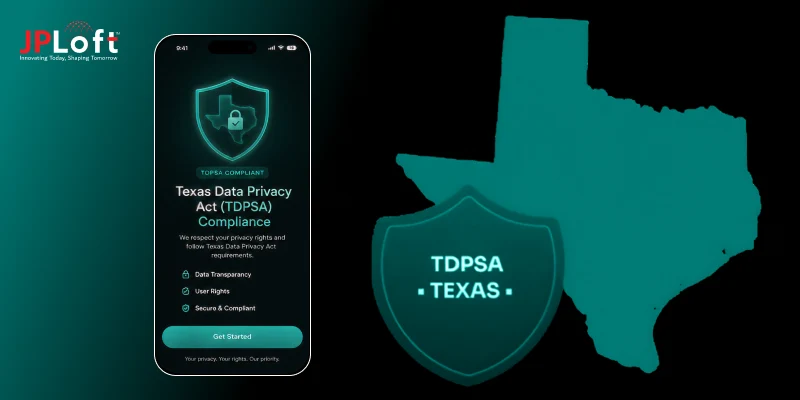
TDPSA compliance ensures mobile apps handle user data transparently, securely, and in line with Texas privacy regulations.
Businesses must implement consent systems, data controls, and privacy policies to meet TDPSA requirements effectively.
Regular audits and monitoring help identify privacy gaps early and maintain ongoing compliance across mobile applications.
Ignoring TDPSA rules can lead to financial penalties, legal actions, and loss of user trust over time.
Developers play a critical role in building secure, privacy-focused apps with strong architecture and data protection practices.
Partnering with JPLoft helps businesses build secure, scalable, and privacy-compliant mobile applications aligned with modern regulatory standards.
Mobile apps collect large amounts of user data every day. From location tracking to payment details, users now expect stronger privacy protection. At the same time, Texas has introduced stricter privacy regulations for businesses handling consumer information. This has made TDPSA compliance for mobile apps a priority for app owners and developers.
Many businesses still struggle to understand what the law actually requires. Missing a single compliance step can create legal risks, financial penalties, and customer trust issues. That is why businesses must clearly understand the Texas Data Privacy and Security Act for mobile apps before launching or updating their applications.
This guide explains the key TDPSA requirements, compliance steps, common mistakes, penalties, and best practices businesses should follow to build privacy-focused mobile applications.
Why TDPSA Matters for Mobile Apps?
Mobile apps now handle sensitive user information every second. This includes contact details, payment data, browsing activity, and location history. Because of this, privacy regulations are becoming stricter across the United States. Businesses ignoring these laws can face legal and financial risks very quickly.
Below are the main reasons why TDPSA compliance for mobile apps has become essential for modern app businesses.
1. Protects User Trust
Users want to know how their data is collected and stored. Clear privacy practices help businesses build stronger customer confidence. Apps with transparent policies often achieve better user retention and engagement.
2. Reduces Legal and Financial Risks
Non-compliance can lead to investigations, penalties, and business disruptions. Following proper data privacy compliance for apps helps companies avoid expensive legal issues and operational problems.
3. Supports Safer Data Handling
Many apps collect personal and behavioral data without proper controls. TDPSA encourages businesses to manage user information more responsibly. This improves overall app security and reduces data misuse risks.
4. Improves Brand Reputation
Privacy-focused apps create stronger credibility in today’s competitive app market. Users trust businesses that clearly explain data usage, respect consumer privacy rights, and follow responsible data handling practices consistently.
5. Prepares Apps for Future Privacy Regulations
Privacy laws are expanding across different states and industries. Businesses already following TDPSA standards can adjust faster to future legal updates without making major operational or technical changes later.
Who Needs TDPSA Compliance?
Many businesses assume privacy laws only apply to large tech companies. In reality, the law affects a wide range of app-based businesses handling consumer data in Texas.
Any app collecting personal information should carefully review its legal responsibilities under the Texas Data Privacy and Security Act for mobile apps.
Below are the businesses and app categories that commonly require compliance attention.
► Businesses Collecting Consumer Data
Apps collecting names, email addresses, phone numbers, payment details, or location data may fall under TDPSA obligations. This applies even if the business operates outside Texas but serves Texas users.
► eCommerce and Marketplace Apps
Online shopping and marketplace apps process sensitive customer information daily. Order history, saved payment methods, and browsing activity all require proper data protection measures.
► Healthcare and Fitness Applications
Healthcare apps often store highly sensitive information, including health records and wellness data. Strong privacy controls become critical for both legal compliance and user trust.
► Fintech and Payment Apps
Financial applications handle banking details, transaction records, and identity verification data. These apps must maintain strict privacy and security standards to reduce compliance risks.
► SaaS and Subscription-Based Platforms
Subscription apps usually track user behavior, preferences, and account activity. Businesses offering cloud-based services must also focus on proper consent and data management practices.
► Startups Scaling Their User Base
Growing startups often collect more user data while expanding features and services. Early focus on Texas privacy law compliance for businesses helps reduce future compliance and operational risks.
Businesses handling consumer information should prioritize privacy compliance from the beginning. Many companies also partner with a mobile app development company in the USA to build privacy-focused and scalable applications more effectively.
What Are the Key TDPSA Requirements for Mobile Apps?
Businesses handling consumer information must follow important privacy obligations under Texas regulations. Companies focusing on TDPSA compliance for mobile apps should build privacy protections into their applications from the beginning. This helps reduce compliance risks and improve user trust.
Below are the major compliance requirements businesses should understand before launching or updating their applications.
[1] Clear Privacy Notice Requirements
Apps must clearly explain what information they collect and why it is needed. Users should easily understand how personal data is stored, processed, and shared across the application ecosystem.
[2] Consumer Access and Deletion Rights
Users have the right to request access to their personal information. Businesses must also provide options allowing users to correct inaccurate data or request permanent information deletion when necessary.
[3] Consent for Sensitive Data Collection
Apps collecting sensitive information must receive proper user consent before processing that data. Sensitive information may include biometric records, financial details, health information, and precise location tracking activities.
[4] User Opt-Out Rights
Consumers must receive simple options allowing them to opt out of targeted advertising and certain profiling activities. These controls should remain visible and easily accessible inside app privacy settings.
[5] Data Minimization Requirements
Businesses should only collect information necessary for app functionality and services. Collecting unnecessary personal information increases privacy risks, operational complexity, and long-term compliance management challenges for organizations.
[6] Transparent Third-Party Data Disclosure
Many apps share information with analytics providers, advertisers, and external service platforms. Businesses must clearly disclose when user information is shared and explain the purpose behind those partnerships.
[7] Responsible Data Retention Practices
Apps should not store personal information longer than operationally necessary. Businesses need retention policies explaining when user data will be deleted, anonymized, or removed from internal systems properly.
[8] Reasonable Security Safeguards
Strong security measures help protect consumer information from unauthorized access and cyber threats. Businesses should maintain responsible safeguards that reduce risks and support safer mobile application environments overall.
[9] Internal Compliance Documentation
Maintaining proper records helps businesses track privacy updates, user requests, and operational responsibilities more effectively. A structured TDPSA compliance checklist for apps can simplify internal compliance management processes.
[10] Ongoing Compliance Monitoring
Privacy regulations continue evolving across industries and states. Businesses should regularly review internal privacy systems to maintain alignment with changing TDPSA requirements for mobile applications and operational responsibilities over time.
How to Make Your Mobile App TDPSA Compliant?
Understanding privacy obligations is only the first step. Businesses must also implement practical compliance measures across their applications and internal workflows.
Companies focusing on TDPSA compliance for mobile apps should build privacy protections directly into their app ecosystem from the beginning.
Below are the most important implementation steps businesses should follow to reduce compliance risks and strengthen consumer data protection practices.
1. Conduct a Mobile App Data Audit
Start by identifying every type of information your app collects from users. This includes contact details, payment information, browsing activity, location tracking, device identifiers, and other sensitive user-related records.
2. Map User Data Flows Across Systems
Businesses should understand how information moves between APIs, databases, SDKs, analytics systems, cloud platforms, and internal tools. Clear data mapping improves visibility and helps identify hidden privacy risks early.
3. Build Granular Consent Management Systems
Apps collecting sensitive information should request permission before processing that data. Consent systems must clearly explain why information is collected and provide users with flexible permission management options.
4. Implement In-App Privacy Control Features
Businesses should provide users with privacy dashboards allowing them to access, correct, download, or delete personal information. These controls should remain simple, accessible, and easy to manage.
5. Encrypt APIs and Data Storage Systems
Strong security systems help businesses prevent unauthorized access and cyber threats. Encryption, secure APIs, protected databases, and authentication layers strengthen privacy protection across the application infrastructure effectively.
6. Review Third-Party SDKs and Integrations
Many mobile apps depend on analytics platforms, payment gateways, advertising SDKs, and cloud services. Businesses should carefully evaluate how these providers collect, process, and store consumer information internally.
7. Configure Internal Access Control Systems
Not every employee should access sensitive user information. Businesses should create role-based permissions limiting internal access to authorized teams responsible for handling privacy-related operational responsibilities safely.
8. Maintain Compliance Documentation and Records
Businesses should document privacy workflows, consent systems, data processing activities, and operational changes regularly. Structured records simplify audits and help maintain alignment with TDPSA requirements for mobile applications over time.
9. Perform Ongoing Privacy Testing and Monitoring
Privacy compliance requires continuous operational reviews. Businesses should regularly test consent systems, monitor SDK behavior, examine security controls, and review user privacy workflows across the application ecosystem.
10. Maintain Updates and Security Improvements
Outdated systems can create serious compliance and security vulnerabilities. Regular mobile app maintenance helps businesses strengthen security layers, improve stability, remove unsupported components, and reduce operational privacy risks effectively.
Businesses learning how to comply with Texas data privacy laws should treat compliance as an ongoing operational responsibility. Building privacy into development, monitoring, and security processes creates safer user experiences while reducing future legal and operational risks.
Common TDPSA Compliance Mistakes Mobile App Businesses Should Avoid
Many mobile app businesses understand privacy obligations but still make avoidable mistakes during implementation. These operational gaps often create compliance risks, weaken user trust, and increase long-term legal exposure for businesses.
A. Collecting Unnecessary User Information
Many apps collect more user information than required for core functionality. Excessive data collection increases storage risks, operational complexity, and long-term privacy management challenges for mobile app businesses significantly.
B. Using Outdated or Unclear Privacy Policies
Some apps fail to update privacy policies after introducing new features or tracking systems. Unclear policies reduce transparency and make users less confident about overall application privacy practices.
C. Failing to Handle User Privacy Requests Properly
Apps sometimes delay or ignore requests related to data access, correction, or deletion. Poor request management creates compliance concerns and negatively impacts overall user experience and trust levels.
D. Implementing Weak Authentication and Security Controls
Poor encryption practices and outdated libraries can expose sensitive consumer information to serious security risks. Weak authentication systems and unsecured APIs also increase privacy and cybersecurity vulnerabilities within mobile applications.
E. Sharing User Information Without Proper Disclosure
Some businesses share consumer information with advertisers, analytics providers, or external platforms without explaining those practices clearly. This weakens transparency and creates avoidable privacy-related compliance concerns internally.
F. Ignoring Risks From Third-Party SDKs
Many apps integrate external SDKs and services without reviewing how they process consumer information. Hidden tracking behavior and poor vendor practices can create significant operational privacy risks later.
G. Retaining User Information Longer Than Necessary
Some businesses continue storing consumer information without a valid operational reason. Long-term retention increases security risks and creates unnecessary challenges for maintaining data privacy compliance for apps effectively.
H. Treating Compliance as a One-Time Activity
Privacy regulations, technologies, and app ecosystems continue evolving regularly. Businesses that stop monitoring privacy operations often fall behind compliance expectations and increase future operational and legal risks unnecessarily.
Avoiding these mistakes helps businesses strengthen compliance readiness, improve operational transparency, and build more trustworthy mobile applications for long-term consumer confidence.
TDPSA Penalties for Non-Compliance
Non-compliance with TDPSA can create serious consequences for mobile app businesses.
These penalties are designed to ensure companies take user privacy seriously and follow proper data protection standards. Ignoring privacy laws for mobile apps can lead to both financial and operational risks.
► Financial Penalties
Businesses that fail to follow required privacy rules may face monetary penalties. These fines can increase depending on the severity of the violation and how long the issue remains unresolved.
► Legal Action and Investigations
Regulatory authorities may investigate apps that ignore user privacy obligations. Failure to meet TDPSA requirements for mobile applications can trigger formal reviews, legal notices, and enforcement actions against the business.
► Loss of Consumer Trust
Users quickly lose trust in apps that fail to protect personal data. Once trust is damaged, it becomes difficult for businesses to recover user confidence and maintain long-term engagement.
► Restrictions on Data Processing
In serious cases, authorities may limit how a business collects or uses consumer data. This directly impacts app functionality, growth, and user experience across platforms.
► Reputational Damage
Non-compliance can negatively affect brand reputation in the market. Businesses seen as unsafe or careless with data often struggle to compete effectively in the mobile ecosystem.
Following proper Texas privacy law compliance for businesses helps reduce these risks and ensures smoother operations. Companies that prioritize compliance from the beginning are better protected from legal and financial consequences.
Best Practices for Maintaining TDPSA Compliance in Mobile Apps
Maintaining compliance requires continuous monitoring, responsible data handling, and strong internal privacy practices. Businesses should treat compliance as an ongoing operational responsibility instead of a one-time legal task.
1. Build a Privacy-First Business Culture
Privacy awareness should become part of daily operations. Teams handling consumer information must understand how their decisions affect compliance, transparency, and user trust across the application ecosystem.
2. Conduct Regular Privacy Audits
Businesses should review app permissions, consent systems, SDK behavior, and data collection practices regularly. Routine audits help identify compliance gaps before they create larger operational or legal risks.
3. Create Structured Compliance Workflows
A clear TDPSA compliance checklist for apps helps businesses manage privacy reviews, user requests, policy updates, and operational responsibilities more efficiently across internal teams.
4. Monitor Changing Privacy Regulations
Businesses following the Texas Data Privacy and Security Act for mobile apps should regularly review legal updates and evolving compliance expectations. Staying informed helps companies avoid future operational disruptions and compliance gaps.
5. Maintain Vendor Accountability
Third-party providers handling consumer information should follow strong privacy and security practices. Businesses must review how external vendors collect, process, and store user information across connected services.
6. Prepare for Security Incidents
Businesses should maintain clear response plans for data breaches or unauthorized access incidents. Faster response systems help reduce operational disruption and protect long-term brand reputation.
7. Align Compliance With Business Growth
Strong data privacy compliance for mobile app developers requires continuous investment in privacy management and operational improvements. Businesses should also consider these factors while estimating the overall mobile app development cost in the USA for sustainable scaling.
8. Scale Privacy Strategies Over Time
As applications grow, businesses often collect more consumer information. Long-term privacy planning helps companies maintain alignment with evolving Texas consumer privacy law expectations and increasing operational responsibilities.
Businesses asking how to make a mobile app TDPSA compliant should follow these best practices from the early development stage. This approach helps strengthen compliance readiness, improve user trust, and reduce long-term operational risks.

How Developers at JPLoft Help Businesses Meet TDPSA Requirements?
Developers play a key role in building mobile apps that are secure and privacy-focused from the start. A mobile app development company in Texas, like JPLoft, ensures compliance is integrated into the development process instead of being added later.
JPLoft builds apps with secure architecture, controlled data flow, and proper consent systems. This helps businesses maintain strong data privacy compliance for apps while keeping user information handling transparent and well-structured.
The development team also implements secure APIs, data mapping, and carefully reviews third-party integrations to reduce hidden privacy risks. JPLoft further helps businesses understand how to comply with Texas data privacy laws through privacy-focused development and secure data management practices.
In addition, JPLoft follows privacy-first development practices that improve scalability and reduce compliance issues during future updates. This ensures apps remain stable, secure, and aligned with evolving regulatory expectations.
Conclusion
TDPSA compliance is becoming an essential part of building and running modern mobile applications. Businesses can no longer treat privacy as an optional feature. It must be built into every stage of development and management.
From data collection to user consent and security practices, every step plays a role in protecting user information. Following structured processes helps reduce risks and improves long-term trust with users.
A clear understanding of TDPSA compliance for mobile apps allows businesses to avoid penalties and maintain smoother operations. It also ensures better alignment with evolving privacy expectations and regulatory standards.
When privacy is prioritized from the start, apps become more reliable, secure, and user-friendly. This approach not only supports legal compliance but also strengthens brand reputation in a competitive digital market.
FAQs
TDPSA compliance ensures mobile apps follow Texas privacy rules for collecting and handling user data. It focuses on transparency, user consent, and secure data practices to protect personal information and reduce legal risks for businesses.
Any business collecting or processing user data from Texas residents must follow the Texas Data Privacy and Security Act for mobile apps. This applies even if the company operates outside Texas but serves Texas users.
Businesses should begin by reviewing collected user data, updating privacy policies, and implementing clear consent systems. They should also strengthen app security and create proper processes for handling user data requests and privacy management effectively.
TDPSA protects personal data such as names, emails, phone numbers, financial details, and location information. Apps must handle this data carefully and ensure users have control over how their information is used and shared.
TDPSA helps businesses build trust, avoid penalties, and improve data security. It ensures apps follow proper privacy standards and maintain compliance while delivering safe and transparent user experiences across mobile platforms.

Priyanka Sukhwal is the Managing Director and Business Head of JPLoft, with 10+ years of experience in technology, digital product strategy, and business growth. She has worked closely with businesses building mobile applications, custom software, marketplaces, and on-demand platforms across mobility, automotive, consumer services, and startup ecosystems. At JPLoft, she focuses on understanding business models, identifying product opportunities, and helping companies plan digital solutions that can scale with changing market needs.



Share this blog