


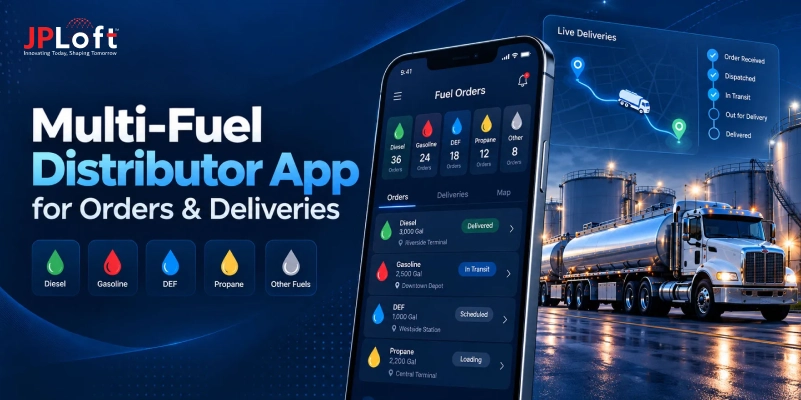
Selling more than one fuel should grow your business, not double your workload. Yet many oil and gas stations run each fuel through its own phone line, spreadsheet, or separate system.
Customers then order through different channels, records get duplicated, and dispatch struggles to see the full picture across diesel, gasoline, heating oil, and propane orders.
A unified mobile app brings every order into one place. Customers order any fuel from one app, and your team plans deliveries from one clear view.
Many distributors now explore diesel delivery app development services that can also support their other fuel lines, so one app fits every product, customer type, and delivery process without forcing changes to daily work.
In this blog, we will explain the problems separate systems create, what to get right before combining them, and more.
Visit: Fuel Delivery App Development Company
Why Do Multi-Fuel Distributors Need a Unified Ordering App?
Multi-fuel distributors serve customers who often buy more than one product. A farm may need diesel for equipment and propane for heating. A small business may need gasoline for vehicles and heating oil for winter.
When each fuel has its own ordering process, customers must remember which number, form, or contact to use. Your team then spends more time matching orders, checking accounts, and fixing mistakes.
A unified ordering app solves this by giving every customer one place to order and giving your team one place to manage requests. It helps distributors:
-
Show all available fuels in one ordering screen
-
Keep one customer record across every fuel line
-
Apply the right units, limits, and prices for each fuel
-
See all open orders without checking separate systems
-
Offer other fuels to customers who already order from you
This makes ordering simpler for customers and growth easier for your fuel distribution business.
Also Read-: How Can a Mobile Ordering App Help Propane Delivery Companies Streamline Their Business?
Multi-Fuel Distribution Challenges a Unified Mobile App Can Help Solve
|
Multi-Fuel Distribution Challenge |
How a Unified Mobile App Helps |
|
Orders for different fuels arrive through many channels |
Customers order any fuel in one app, and every request lands in one shared list |
|
Customer-specific pricing and contract agreements |
Agreed prices and terms are stored in the app, and the right price shows for each fuel |
|
Bulk orders across multiple commercial locations |
One account holds several sites, each with its own address, quantity, contact, and notes |
|
Fuel availability across different depots |
Linked stock records show what each depot can supply before an order is confirmed |
|
Assigning trucks and drivers by fuel requirements |
Order details help dispatch pick the right truck and driver, and drivers see jobs on their phone |
|
Urgent requests that disrupt scheduled deliveries |
Urgent orders are flagged right away, so dispatch can fit them in and update affected customers |
|
Tracking actual quantities and confirming deliveries |
Drivers record real quantities and mark deliveries complete, so invoices match what was delivered |
|
Inaccurate customer accounts, invoices, and delivery records |
One profile per customer across all fuels, updated automatically after every order and delivery |
Multi-fuel distributors manage several products, customers, and delivery needs at once. When these tasks run on separate systems, small gaps slow the whole operation. These challenges show where a unified mobile app can help most.
1. Managing Orders for Different Fuel Products Across Multiple Channels
Customers of a multi-fuel distributor often order different fuels through different channels. Diesel may come by phone, gasoline by email, and heating oil through a message to a sales rep.
Orders end up scattered across inboxes, call logs, and notes, so no one has the full picture.
Staff must collect them all by hand before planning deliveries, which takes time and raises the chance of a missed or duplicated order, especially when demand is high.
How a unified mobile app helps:
Customers order any fuel from one app, and every request lands in one shared list. Your team sees all orders together and plans deliveries without searching through calls, emails, and messages.
2. Handling Customer-Specific Fuel Pricing and Contract Agreements
Few distributors charge the same price to every customer. Fleet accounts may have contract rates, regular customers may get volume discounts, and some pay a fixed price for a set period.
With several fuels, each customer may have a different deal for each product.
Staff must check the agreements before quoting any price, and one wrong rate can lead to billing disputes, lost margin, and awkward conversations with long-term customers who expect fair, consistent treatment.
How a unified mobile app helps:
Each customer’s agreed prices and contract terms are stored in the app. When they order, the app shows the right price for each fuel, so staff no longer check agreements by hand.
3. Coordinating Bulk Fuel Orders Across Multiple Commercial Locations
Commercial customers rarely order for just one site. A construction company may need diesel at three job sites, while a business may need gasoline at several branches.
Each location has its own address, quantity, contact person, and delivery time.
When these details arrive in one long message or phone call, staff must then split them into separate orders, and any missed detail can send a truck to the wrong site or deliver the wrong amount.
How a unified mobile app helps:
Business customers can add several locations under one account and place a separate order for each site in one go. Each location keeps its own address, quantity, contact, and delivery notes, so nothing gets mixed up.
4. Managing Fuel Availability Across Different Storage and Distribution Facilities
Many distributors store fuel at more than one depot or terminal. Stock levels differ by location, and a fuel that is plentiful at one depot may run low at another.
Without a shared view, sales staff may accept an order for a fuel that the nearest depot cannot supply.
They then have to call around, find another source, and tell the customer about a delay, which wastes time and puts a promised delivery date at risk.
How a unified mobile app helps:
Linked to your stock records, the app shows which fuels each depot can supply before an order is confirmed. Customers see only products you can deliver, and your team avoids promising fuel that is not in stock nearby.
5. Assigning Delivery Trucks and Drivers Based on Fuel Requirements
Not every truck can carry every fuel. Truck size, tank compartments, and driver training or permits can all limit which loads a driver can take.
Dispatchers must match each order with a truck and driver that can handle it, while also thinking about location and delivery time.
With orders arriving through many channels, mistakes are easy. A wrong match can mean a delayed delivery, an unused truck, or a driver sent out with a job they cannot complete.
How a unified mobile app helps:
Each order in the app shows the fuel type, quantity, and location. Dispatchers can use these details to assign the right truck and driver, and drivers see their jobs on their phone, with fewer mix-ups.
6. Handling Urgent Fuel Requests Without Disrupting Scheduled Deliveries
Urgent requests can arrive at any hour. A generator runs low, a fleet needs fuel before a big job, or a customer simply forgot to order in time.
Each urgent order forces dispatchers to rework a plan that was already set.
Without a clear way to flag and place these requests, planned deliveries get pushed back, other customers are left waiting without notice, and drivers spend the day changing routes instead of completing deliveries smoothly.
How a unified mobile app helps:
Customers can mark an order as urgent in the app, and dispatch sees it right away. The team can then check which trucks are nearby, fit the request in, and tell affected customers about any change.
7. Tracking Actual Fuel Quantities and Confirming Completed Deliveries
The amount ordered is not always the amount delivered. Tank space, site limits, or last-minute changes can mean a driver pumps more or less than requested.
When the real quantity is written on paper slips, it may reach the office late or not at all.
Invoices are then often based on the order, not the delivery, which causes billing errors and customer disputes. It also leaves the office unsure whether a delivery was actually completed.
How a unified mobile app helps:
Drivers record the actual quantity in the app right after fueling and mark the delivery as complete. The office gets this data right away, so invoices match what was delivered and customers get clear confirmation.
8. Maintaining Accurate Customer Accounts, Invoices, and Delivery Records
A customer who buys three fuels may exist as three separate records, one for each product line. Addresses, contacts, and account notes then differ from one record to another.
Invoices and delivery history sit in different places, so staff must search several systems to answer one simple question.
Mistakes follow, such as outdated contact details, mismatched balances, and repeated data entry. These problems waste time, slow payments, and make it harder to answer customers about their accounts.
How a unified mobile app helps:
The app keeps one profile per customer across all fuels, with contacts, locations, orders, invoices, and delivery history in one place. Every order and delivery updates the record automatically, so staff and customers see the same information.
Also Read: How Can Heating Oil Delivery Companies in the USA Modernize Customer Ordering With Mobile Apps?
How Can a Unified Mobile App Support Different Fuel Distribution Businesses?
Fuel businesses differ in the customers they serve and the orders they handle. A flexible app can adapt to each model. A trusted gasoline delivery app development company can build one platform that supports each of these distribution models well.
1. Diesel Distributors Serving Construction and Industrial Businesses
Diesel distributors often deliver to job sites, plants, and equipment yards. Orders change with project schedules, and fuel is needed at several places, often in large amounts.
A unified app lets site managers order for each location, set delivery notes, and see delivery status. Distributors can keep large accounts well organized and respond quickly when a project needs fuel sooner.
2. Gasoline Suppliers Managing Commercial and Fleet Fueling
Gasoline suppliers serve fleets, local businesses, and organizations that need regular fueling for many vehicles. Each customer may have different vehicle counts, fuel limits, and delivery times to manage.
With a unified app, fleet managers can request fueling, track vehicles served, and view past orders. Suppliers get cleaner records, clearer schedules, and an easier way to bill each fleet accurately.
3. Multi-Fuel Suppliers Serving Customers Across Multiple Locations
Some customers need several fuels at several sites, such as a farming business, a school district, or a retail group. Different locations may need different products, quantities, and delivery days.
A unified app lets one account manage every location. Customers can order each fuel for each site in one place, while suppliers see the full account and avoid costly mix-ups.
4. Wholesale Fuel Distributors Managing Bulk Customer Orders
Wholesale distributors handle large orders for resellers, dealers, and big commercial buyers. These orders need clear quantities, agreed prices, and firm delivery dates, because even small mistakes can get costly.
A unified app lets buyers place bulk orders, confirm quantities, and track deliveries. Distributors can review requests, keep order details in one place, and give wholesale customers a clear record.
Also Read: How a Branded Fuel Ordering App Helps US Fuel Delivery Companies Grow Their Business
What Should Multi-Fuel Distributors Consider Before Digitizing Their Operations?
Going digital works best with a clear plan. Before building an app, distributors should review how their current systems, fuels, depots, and teams work. A skilled gasoline delivery app development company can design a solution that fits real daily operations.
► Connecting Existing ERP, Dispatch, and Accounting Systems
The app should work with the tools your team already uses. Plan connections for:
-
ERP records for customers and products
-
Dispatch tools for routes and driver jobs
-
Accounting software for invoices and payments
This avoids double entry and manual errors.
► Managing Different Fuel Types, Grades, and Ordering Rules
Each fuel follows its own rules. The app should handle:
-
Fuel types and grades, such as regular, premium, and diesel
-
Units, minimum quantities, and order limits
-
Product-specific delivery instructions
Setting these rules early prevents wrong orders and delays at delivery.
► Maintaining Inventory Visibility Across Multiple Fuel Depots
Accuracy depends on knowing what fuel is available and where. The app can:
-
Show stock levels for each depot
-
Update availability after loading and deliveries
-
Prevent orders for fuel that cannot be supplied
Accurate stock data protects delivery promises.
► Supporting Different Customer and Driver Workflows
Customers and drivers use the app differently, so each needs a simple experience:
-
Customers: order, reorder, and track deliveries
-
Drivers: view jobs, record quantities, and confirm completion
Easy workflows help both groups adopt the app quickly and with little training.
Also Read: Fuel Delivery App Development Cost
How Can JPLoft Help Multi-Fuel Distributors Build a Unified Mobile App?
JPLoft helps multi-fuel distributors replace scattered ordering channels with one mobile app that works for every fuel, customer, and depot. The goal is simple: faster orders, fewer errors, and a smoother delivery process from request to completion.
With JPLoft’s multi-fuel distribution app development services, distributors get an app built around their fuel types, pricing rules, depots, and delivery workflows.
The app connects with your current ERP, dispatch, and accounting systems, so teams avoid double entry. Customers can order any fuel, manage multiple locations, and track deliveries, while drivers confirm quantities on their phones.
JPLoft also plans a gradual rollout, trains your team, and provides ongoing support after launch, so the app keeps pace as your fuel lines, customers, and depots grow.
If you are ready to bring every fuel, customer, and delivery into one system, JPLoft can build it.
Visit: On-Demand Fuel Delivery App Development Company
Conclusion
Running several fuel lines should not mean running several disconnected systems. When orders, prices, stock, and records sit in different places, distributors lose time, miss details, and struggle to give customers a smooth experience.
A unified mobile app brings these tasks together. Customers order any fuel in one place, and your team plans deliveries, tracks quantities, and manages accounts with clear, shared information.
Success depends on planning. Connect existing systems, set clear rules for each fuel, keep depot stock visible, and make the app easy for customers and drivers to use.
With the right app development partner, multi-fuel distributors can modernize ordering and delivery without disrupting daily work. JPLoft can help build a unified app that fits your fuels, customers, and depots, and supports your growth for years to come.
FAQs
Mobile apps bring orders for every fuel into one system. Customers order faster, dispatch sees all requests, and drivers confirm quantities on their phones, so teams make fewer mistakes and spend less time on paperwork.
Yes, one app can handle diesel, gasoline, and other fuels. Each fuel keeps its own grades, units, order limits, and prices, while customers use one screen and your team sees every order in one list.
The cost depends on features, fuel types, integrations, and platforms. A simple ordering app costs less, while one with ERP links, depot stock, and driver tools costs more. A discovery call gives a clearer estimate.
Yes, buyers can place bulk orders, confirm quantities, and set delivery dates in the app. Distributors review requests, apply agreed prices, and track the delivery, which keeps large wholesale and commercial orders clear and organized.
Yes, customers can add several sites under one account. Each location keeps its own address, contact, fuel type, quantity, and delivery notes, so distributors can plan deliveries and avoid sending fuel to the wrong site.
Yes, apps can connect securely with ERP, dispatch, and accounting systems, if those systems allow it. This keeps customer, pricing, order, and invoice data in sync and helps staff avoid double entry and manual errors.

Savannah Bustos is a technology professional with experience across financial platforms, mobility solutions, and on-demand digital products. Her areas of expertise include FinTech, digital banking, eWallets, lending, BNPL, stock trading, fuel delivery, and taxi-booking platforms. She combines a strong understanding of business requirements with practical technology insight, helping companies evaluate challenges, define product needs, and make informed decisions about scalable digital solutions.


Share this blog