



Key Takeaways:
Evaluate aviation industry experience, technical expertise, regulatory knowledge, security practices, and support services before selecting a development partner.
Look for proven experience, transparent communication, strong technical capabilities, and reliable post-launch support.
Aviation software development costs vary depending on project complexity, features, integrations, security requirements, and maintenance needs.
Identify applicable FAA, EASA, and aviation software standards based on the software's purpose and operating region.
Hiring experienced aviation software developers helps reduce project risks, improve system reliability, and support long-term business growth.
Choosing the wrong software development partner can cost an aviation business more than just money.
For airlines, airports, and aviation service providers, reliable software plays a key role in managing daily operations, maintaining safety, and improving efficiency. However, finding a company that understands both aviation needs and software development is not always easy.
Knowing how to select an aviation software development company can help businesses avoid costly mistakes and make better decisions. From checking industry experience and technical skills to reviewing compliance knowledge and support services, every factor deserves attention.
This guide explains the essential steps to choosing a reliable aviation software development partner. It will help you compare potential companies, ask the right questions, and confidently hire a partner that supports your business goals.

Steps to Choose the Right Aviation Software Development Company
Choosing the right aviation software development partner requires careful planning and evaluation. Following a clear process helps businesses compare companies, avoid common mistakes, and find a partner that meets their needs.
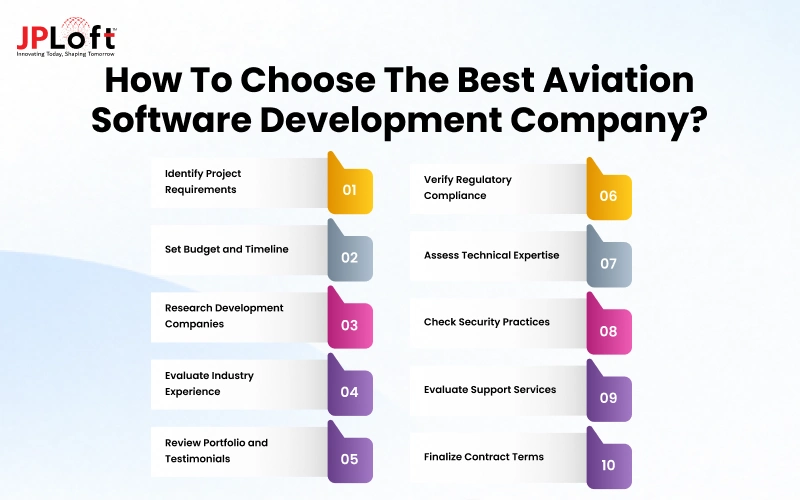
Step 1: Identify Project Requirements
Before searching for an aviation software development company, clearly define your project requirements. Understanding your business needs will help you identify companies with relevant experience and expertise. This also makes it easier to compare potential partners for the development of aviation software.
Before approaching a development company, define:
-
Business Goals: Identify the operational problems your software should solve.
-
Essential Features: List the functions your application must include.
-
System Requirements: Determine which existing aviation systems need integration.
Clear requirements help you shortlist suitable companies and make the selection process more focused and effective.
Step 2: Set Budget and Timeline
Once your requirements are clear, decide how much your business can invest in software development. Consider the project's size, required features, and technical complexity. Set realistic deadlines that allow enough time for development, testing, and deployment.
Focus on these financial and planning aspects:
-
Development Budget: Estimate design, development, testing, and integration costs.
-
Project Timeline: Set achievable milestones for each development stage.
-
Additional Expenses: Keep funds available for changes and maintenance.
Proper planning helps prevent unexpected costs and delays.
Step 3: Research Development Companies
With your requirements and budget established, begin searching for companies that provide aviation software development services. Explore their websites, industry experience, and service offerings. Focus on companies that understand aviation operations and have worked on similar projects.
While researching potential partners, check:
-
Company Background: Review their experience and areas of specialization.
-
Industry Expertise: Look for experience with airlines, airports, or maintenance businesses.
-
Market Reputation: Check independent reviews and professional recommendations.
Shortlist companies that match your project needs and budget.
Step 4: Evaluate Industry Experience
After creating a shortlist, examine each company's experience in the aviation industry. Aviation software often involves complex operations, strict requirements, and existing business systems. A company familiar with these challenges can better understand your needs and recommend suitable solutions.
Consider the following factors during evaluation:
-
Relevant Experience: Check previous aviation software projects.
-
Industry Knowledge: Assess their understanding of aviation operations and challenges.
-
Problem-Solving Skills: Ask how they handled difficulties in previous projects.
Relevant experience helps reduce development risks and improves project planning.
Step 5: Review Portfolio and Testimonials
A company's portfolio provides useful information about its development capabilities and previous work. Review projects similar to your requirements to understand the types of aviation solutions the team has delivered. Client feedback can also reveal how the company manages projects and communicates.
Pay attention to these details:
-
Previous Projects: Examine relevant aviation software applications.
-
Client Testimonials: Read feedback about service quality and project delivery.
-
Project Results: Look for measurable improvements achieved through their software.
These details help verify the company's claims and experience.
Step 6: Verify Regulatory Compliance
Aviation software may need to meet specific safety and regulatory requirements depending on its purpose. Before selecting a software development company, confirm that the partner understands the standards relevant to your project. This is especially important for software connected to safety-critical aviation operations.
Check the company's knowledge of:
-
Aviation Regulations: Understand applicable FAA and EASA requirements.
-
Industry Standards: Verify familiarity with relevant standards, such as DO-178C for airborne software.
-
Compliance Documentation: Review their testing and documentation practices.
This helps reduce regulatory risks during development.
Step 7: Assess Technical Expertise
Once regulatory knowledge is verified, examine the company's technical capabilities. Your development partner should understand the technologies required to build reliable aviation software. It should also have experience connecting new applications with existing systems without disrupting business operations.
Evaluate these technical areas:
-
Technology Skills: Review their experience with relevant development tools and platforms.
-
System Integration: Check their ability to connect existing aviation systems.
-
Software Testing: Understand their approach to identifying and fixing errors.
Strong technical capabilities support reliable performance and future software improvements.
Step 8: Check Security Practices
Aviation software may handle sensitive passenger information, maintenance records, and operational data. Therefore, data protection should be an important part of your vendor evaluation. Ask how the company protects information during development and after the software is deployed.
Review the following security measures:
-
Data Protection: Check encryption methods and access controls.
-
Security Testing: Confirm that regular security checks are conducted.
-
Backup and Recovery: Understand how data is restored after system failures.
Proper security practices help protect business information and maintain software reliability.
Step 9: Evaluate Support Services
Before making your final decision, review the company's post-launch support services. Aviation businesses depend on reliable software for daily operations, so technical problems should be addressed quickly. A suitable partner should provide trusted software maintenance services after deployment.
Check the availability of these services:
-
Technical Support: Confirm response times and support availability.
-
Software Maintenance: Ask about bug fixes and regular updates.
-
Future Improvements: Check whether the company supports additional features and upgrades.
Reliable support reduces downtime and maintains smooth business operations.
Step 10: Finalize Contract Terms
After completing the evaluation, choose the company that best meets your business and technical requirements. Before signing an agreement, carefully review the proposed services, costs, responsibilities, and delivery conditions. Ensure that all important commitments are clearly documented.
Pay special attention to:
-
Project Scope: Confirm deliverables, features, and development milestones.
-
Payment Terms: Review total costs and payment schedules.
-
Ownership Rights: Clarify source code ownership and intellectual property rights.
A clear contract helps prevent misunderstandings and establishes expectations for both parties.
Questions to Ask Before You Hire an Aviation Software Development Partner
Before making your final decision, asking the right questions can help you understand a company's experience, capabilities, and working approach. These discussions also help clarify expectations and identify potential risks before signing a contract.
Here are some important questions to ask an aviation software development company during the selection process:
-
Have you worked on aviation software development projects before?
-
Which aviation regulations and industry standards are relevant to our project?
-
Can you share relevant case studies and client references?
-
How will you integrate the software with our existing aviation systems?
-
What security and quality assurance practices do you follow?
-
What is the estimated development cost and project timeline?
-
Who will own the source code and intellectual property?
-
What post-launch maintenance and technical support do you provide?
Clear answers to these questions can help you compare potential partners and make a more informed hiring decision.
Benefits of Choosing the Right Software Development Partner
Choosing the right aviation software development company offers several long-term advantages. From improving daily operations to ensuring software reliability, an experienced team helps aviation businesses achieve better results and sustainable growth.
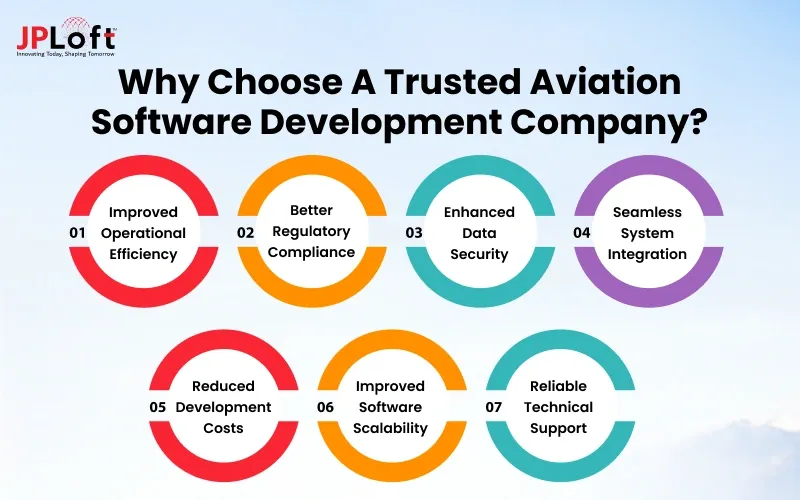
1. Improved Operational Efficiency
A reliable development partner creates software that simplifies daily aviation operations. For this, you can consider JPLoft, which has over 16 years of software development experience. Their team helps automate repetitive tasks, reduce manual work, and improve coordination between departments.
With better tools for flight scheduling, maintenance tracking, and resource management, aviation businesses can save time, reduce errors, and keep their operations running smoothly.
2. Better Regulatory Compliance
An experienced aviation software partner understands the importance of meeting applicable industry regulations. They develop solutions that support required safety procedures, accurate recordkeeping, and proper documentation.
This helps aviation businesses manage compliance responsibilities more effectively. It also reduces the risk of missing important requirements and makes regulatory reviews and audits easier to handle.
3. Enhanced Data Security
A trusted development partner builds software with security measures that protect sensitive aviation information. These may include data encryption, secure access controls, and regular security testing.
Such practices help protect passenger records, operational details, and business information from unauthorized access. Strong security also supports reliable operations and builds confidence among customers and stakeholders.
4. Seamless System Integration
The right development partner understands how aviation systems work together. They create software that connects with existing applications, databases, and operational tools without requiring unnecessary changes.
This allows information to move smoothly between departments and reduces duplicate data entry. Better integration also improves communication, supports accurate decisions, and helps maintain consistent daily operations.
5. Reduced Development Costs
Choosing an experienced partner helps aviation businesses avoid unnecessary expenses caused by poor planning, repeated changes, and software errors. A skilled team can identify potential issues early.
With clear requirements, realistic estimates, and proper testing, businesses can manage development costs more effectively. This also helps reduce expensive fixes and maintenance expenses later.
6. Improved Software Scalability
A capable development partner builds aviation software that can support changing business needs. As operations expand, the software can accommodate additional users, features, and larger amounts of data.
This flexibility allows airlines, airports, and aviation service providers to grow without replacing their existing systems frequently. It also makes future improvements easier to manage.
7. Reliable Technical Support
A dependable software development partner continues providing assistance after the application is launched. Their support services may include fixing errors, installing updates, and monitoring software performance.
Ongoing maintenance helps aviation businesses address technical problems quickly and minimize operational disruptions. It also keeps the software secure, functional, and ready to support changing business requirements.

Conclusion
Choosing the right aviation software development company is an important decision that can directly affect your business operations, efficiency, and long-term growth. A reliable partner not only understands your software requirements but also has the technical skills and industry knowledge to deliver suitable solutions.
From defining project goals and reviewing company experience to checking regulatory compliance, security practices, and support services, every step plays an important role in making the right choice.
Understanding how to evaluate an aviation software development company can help you avoid common hiring mistakes and select a partner that meets your expectations.
Take time to compare companies, ask relevant questions, and review their previous work before making a final decision. If you're looking for a development partner, JPLoft can be one of the options to explore for your aviation software needs.
The right partnership can support reliable operations and long-term business growth.
FAQs
Start by identifying your project requirements and budget. Evaluate companies based on aviation experience, technical expertise, regulatory knowledge, security practices, and client reviews. Compare their services, pricing, and support before making your final decision.
A good aviation software development partner has relevant industry experience, strong technical skills, and knowledge of applicable regulations. They also provide clear communication, reliable security measures, transparent pricing, and ongoing technical support after software deployment.
Aviation software development costs depend on project complexity, required features, integrations, security needs, and development time. Simple applications generally cost less, while complex aviation management systems require larger budgets for development, testing, and ongoing maintenance.
Applicable regulations depend on the software's purpose and operating region. FAA and EASA requirements may apply, while standards such as DO-178C are relevant to certain airborne software projects requiring specific safety and development assurance processes.
Specialized aviation software developers understand industry operations, technical challenges, and relevant regulatory requirements. Their experience helps businesses develop reliable software, integrate existing systems, reduce development risks, and maintain solutions that support long-term aviation business needs.

Rahul Sukhwal is the CEO and Founder of JPLoft, with 18+ years of experience in software engineering, emerging technologies, and digital product development. His expertise spans artificial intelligence, including AI agents, generative AI, LLMs, chatbots, computer vision, and machine learning, as well as blockchain, IoT, AR/VR, mobile, web, and enterprise software. He focuses on applying these technologies to real business challenges across industries such as healthcare, education, mobility, finance, real estate, and on-demand services.





Share this blog