


Key Takeaways:
Tinder’s success comes from simplicity paired with smart design, not feature overload. Every interaction is fast, intuitive, and purpose-driven.
The swipe-based model works because it reduces friction and decision fatigue, making dating feel light and approachable rather than overwhelming.
Tinder’s algorithm relies heavily on user behavior and engagement quality, not just profile data, which helps matches feel more relevant over time.
Monetization is layered thoughtfully through subscriptions, boosts, and paid signals, enhancing user outcomes without blocking core functionality.
Features like location-based matching, Super Likes, and visibility boosts turn attention and intent into revenue while keeping the experience user-first.
For founders, Tinder serves as a blueprint for building scalable apps where UX, psychology, and monetization work together, not against each other.
Launched in 2012, Tinder is a popular dating app in the market.
It has changed how people meet, connect, and start conversations online.
What began as a simple swipe-based dating app has grown into one of the most widely used platforms in the online dating space.
From casual matches to long-term relationships, Tinder’s design focuses on speed, simplicity, and instant interaction, which explains its massive global adoption.
Behind this simple user experience sits a carefully designed system that blends users' behavior, location data, and monetization strategies to keep people engaged.
For businesses and product teams, it represents a powerful example of how digital products scale through smart design & data-driven decisions.
This guide breaks down how Tinder works. From its core features, its working to how Tinder app makes money.
It also explores why Tinder’s models continue to influence modern dating and social networking apps.
What Is Tinder & Why Is It So Popular?
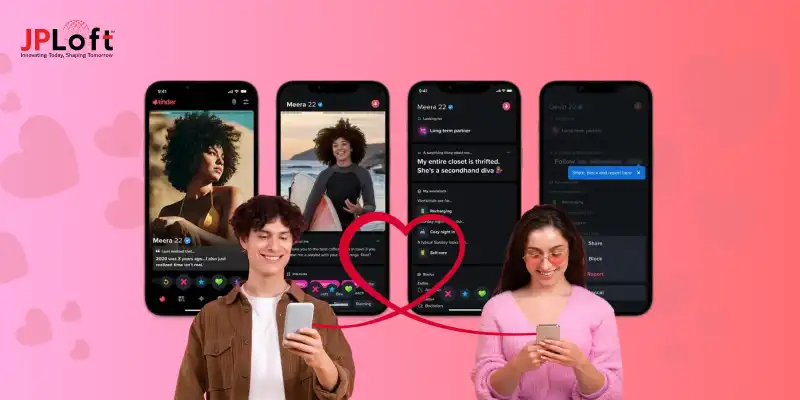
Tinder is one of the most popular dating apps.
It is a location-based dating app that made online dating feel fast, simple, and intuitive.
Instead of long profiles and complex filters, Tinder introduced a swipe-first experience that lets users make quick decisions and instantly see mutual interests.
Sean Rad (born May 22, 1986) is an American entrepreneur best known as the co-founder of Tinder.
He launched the dating app in 2012, and by 2015, Tinder became the top-grossing app in 99 countries.
In 2017, it ranked as the highest-grossing app on Apple’s App Store. He is based in Los Angeles, California, US.
For founders and product teams looking to create an app like Tinder, the real lesson is how a focused interaction model, paired with strong engagement loops, can scale into a digital platform.
Why Tinder Is So Popular?
Here’s the thing: Tinder didn’t become popular by accident. It simplified online dating, removed friction, and made matching feel effortless.
The Tinder app's working model focuses on speed, visuals, and instant feedback, which keeps users engaged without feeling overwhelmed.
It feels less like filling out a form and more like discovering people in real time.
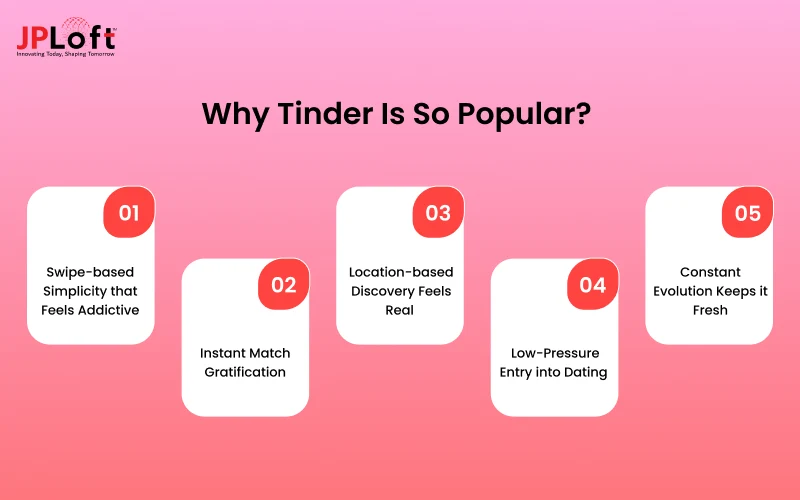
Let's get to know how it works:
1. Swipe-based Simplicity that Feels Addictive
Tinder replaced long profiles with a simple swipe, where one gesture signals interest.
Behind this simplicity sits a smart dating app matchmaking algorithm that learns from user behaviour.
Quick decisions create momentum, reduce overthinking, and keep users moving.
The experience stays light, fast, and intuitive, which naturally pulls users back into the app multiple times a day without feeling like a commitment.
2. Instant Match Gratification
The moment two users like each other, a match happens.
No waiting, no uncertainty. This instant validation triggers excitement and curiosity.
It taps into basic human psychology, rewarding users quickly and encouraging them to keep swiping to chase the next match.
3. Location-based Discovery Feels Real
Tinder connects users nearby, not across continents. That makes matches feel achievable and relevant. Users know they could actually meet.
This proximity-based approach increases trust, reduces hesitations, and turns digital connections into real-world possibilities.
4. Low-Pressure Entry into Dating
There’s no requirement to write long bios or send awkward first messages immediately.
Users can explore quietly. This lowers emotional risk, especially for first-time dating app users. It feels casual, not intimidating, which attracts a wider audience.
5. Constant Evolution Keeps it Fresh
From boosts and super likes to profile prompts and safety features, Tinder keeps evolving.
These updates prevent stagnation and adapt to user behavior. The app grows with its audience, which helps it stay relevant even as dating trends change.

How Does the Tinder App Work?
As a leading dating app in the UAE, USA, UK, & Many other places, Tinder is built to make human connections effortlessly.
The logic is simple, but the system behind it is smart.
If you’re wondering how does Tinder works, it starts with understanding user intent, location, and behavior, then turning those signals into fast, relevant matches that feel natural, not forced.
Let’s break down the working process of the Tinder app and get to know it all, step-by-step:
► How Tinder Works From the User’s Side:
At the surface, Tinder feels effortless.
You open the app, swipe a few profiles, maybe get a match, and start chatting. But this simplicity is intentional.
The user experience is designed to reduce pressure, remove friction, and keep interactions early.
To really understand how does Tinder works. You have to look at how each user-facing action is carefully shaped to feel fast, comfortable, and rewarding.
Step #1: Profile Creation Shapes First Impressions
When users set up a profile, they choose photos, write a short bio, and select preferences.
From the outside, this feels casual, but it directly influences visibility and match quality.
This step explains how does the Tinder app works for users because the app relies on these signals to understand intent. Strong photos and clear bios attract better matches, while incomplete profiles limit exposure.
Users aren’t just presenting themselves; they’re actively defining how the app introduces them to others.
Step #2: Swiping Keeps Decisions Quick and Stress-free
The swipe is Tinder’s defining action.
One motion replaces long forms and awkward introductions. This is where how does the app Tinder works becomes obvious to users.
Swiping removes overthinking and makes dating feel lighter. There’s no pressure to explain rejection or justify interest.
Each swipe keeps momentum going, encouraging repeated use.
The faster decisions feel natural, the more often users return, which is exactly how Tinder maintains daily engagement without exhausting its audience.
Step #3: Matching Creates Mutual Confidence
A match only happens when both people swipe right.
This mutual consent eliminates fear of rejection and creates a safe space to start conversations. If you’re asking how does Tinder works, this mechanic is key.
It transforms dating from one-sided outreach into shared interest. Users feel more confident messaging because they know the interest is mutual.
That emotional safety increases response rates and keeps conversations flowing instead of dying after a single message.
Step #4: Messaging Feels Casual, Not Forced
Once matched, users can chat instantly. There’s no required opener or structured conversation flow.
This tells us how Tinder works at a behavioural level.
Messaging feels optional, flexible, and low-pressure. Users can reply immediately or later without penalty.
This relaxed approach makes conversation feel human instead of transactional.
As a result, users stay engaged longer and don’t feel drained by the process of constant introductions.
Step #5: Location-based Discovery Feels Realistic
Tinder prioritizes nearby profiles, which makes matches feel possible rather than imaginary.
Users know the person they’re swiping on is within reachable distance. That realism builds trust and increases the likelihood of offline meetings.
Location-based discovery also keeps the app relevant during travel, events, or city changes, making Tinder adaptable to how people actually move.
So, this is the working of the Tinder dating app. Let’s get to know further more:
► How Tinder Works Behind the Scenes?
What looks like a casual swipe is actually a signal. What feels like a coincidence is calculated.
Behind Tinder’s clean, effortless interface runs a system that never stops learning. Every action feeds it.
This is where curiosity shifts from usage to logic.
To truly understand how Tinder app works, you need to see how the platform evaluates activity, relevance, and engagement in real time, quietly shaping outcomes without users ever noticing the complexity beneath the screen.
Step #1: User Behavior Constantly Feeds the System
Every swipe, match, message, and pause becomes data.
This is central to how does Tinder's algorithm works. The platform observes patterns over time to understand preferences.
Users who swipe selectively send stronger signals than those who swipe randomly. Messaging behavior also matters.
Consistent engagement helps the system refine future recommendations, making matches feel more aligned the longer the app is used.
Step #2: Activity Level Impacts Visibility
Tinder rewards active participation. Profiles that log in regularly, swipe, and engage in conversations appear more often.
This explains Tinder working from a ranking perspective. Inactive users gradually receive less exposure, keeping the ecosystem fresh.
The goal is balance. Active users see better results, while inactive profiles don’t clog discovery feeds, maintaining overall experience quality.
Step #3: Match Relevance is Dynamically Adjusted
Tinder doesn’t look at users' fixed preferences; it adapts.
If a user consistently engages with certain profiles, the system adjusts future suggestions. Shared interests, swipe behavior, and interaction qualityall influence ranking.
This dynamic adjustment allows the app to evolve with user behaviour instead of relying on static filters.
Step #4: Engagement Quality Matters More than Volume
It’s not about how many matches you get, but how meaningful they are.
Tinder evaluates conversation length, response consistency, and interaction depth. This answers your question beyond surface mechanics.
Users who build genuine conversations tend to receive better visibility. This discourages spammy behavior and promotes healthier interactions across the platform.
Step #5:New Profiles are Tested Strategically
When someone joins Tinder, their profile often receives a temporary visibility boost.
This allows the system to gauge responses quickly. It acts as an evaluation phase where early interactions help determine how the profile performs.
Based on how others engage, future exposure is adjusted, creating a fair balance while allowing the system to learn and optimize efficiently.
So, this is how a dating app like Tinder works, from the user perspective to the backend of the app. We showed how it all works.
Key Features that Make Tinder Work
Tinder didn’t win by adding more.
It won by choosing the right dating app features and executing them flawlessly.
Each feature removes friction, speeds up-decision making, and keeps users emotionally invested without feeling overwhelmed.
Let’s take a closer look at the features that truly attract and retain users:
[1] Swipe Right, Swipe Left: The Core Interaction
This is the heartbeat of Tinder.
A single swipe replaces long profiles and awkward introductions. Swipe right to show interest, swipe left to pass, and move on instantly.
This mechanic removes hesitation and keeps decisions fast. It feels playful, not heavy.
Behind that simplicity, every swipe helps the system understand preferences, making future matches feel more relevant while keeping users engaged without mental fatigue.
[2] Super Likes: What They Are and How They Work
Super Likes add intention to interest. Instead of blending into the crowd, a Super Like tells someone you genuinely noticed them.
This small action changes the dynamic. It increases visibility, signals confidence, and often sparks faster conversations.
For users, it feels like a bold but controlled move. For the platform, it introduces urgency and emotional weight without disrupting the natural flow of matching.
[3] Tinder Boost: Increasing Your Profile Visibility
Boost temporarily puts your profile front and center.
During this window, more people see you, which naturally increases match potential. It’s especially useful in crowded locations or peak hours.
What makes Boost effective is timing. It doesn’t change who you are or who you see. It simply amplifies presence when attention matters most, turning passive browsing into active engagement.
[4] Top Picks: Curated Daily Matches
Top Picks feel personal. Instead of endless scrolling, Tinder highlights profiles it believes align closely with user preferences.
These suggestions change daily, adding a sense of freshness and curiosity. For users, it feels like the app understands taste.
For Tinder, it’s a way to showcase smarter matching without overwhelming choice, guiding attention toward higher-quality connections rather than random discovery.
[5] Rewind Feature: Undoing Accidental Swipes
Everyone swipes too fast sometimes.
Having an app feature like Rewind fixes that. It lets users undo a left swipe and revisit a missed opportunity.
This feature reduces frustration and regret, making the experience more forgiving.
Psychologically, it removes fear of mistakes, encouraging faster interaction.
Users swipe freely knowing there’s a safety net, which keeps momentum high without anxiety slowing things down.
[6] Location-Based Matching Technology
Location is what makes Tinder feel real. Matches are shown based on proximity, not abstract compatibility alone.
This creates a sense of possibility. Users know connections are nearby and achievable.
Location-based matching also adapts as users move, travel, or change cities. It keeps the app relevant in everyday life, turning digital interest into potential real-world interaction.
To create a dating app as successful as Tinder, you will need such features in your app. With that being said, let’s check out how the app is earning revenue.
How Does Tinder Make Money?
Tinder may feel free on the surface, but its business model is carefully layered.
The platform turns attention, visibility, and intent into revenue without blocking basic usage. If you’re wondering how Tinder makes money, the answer lies in smart upsells that enhance the experience rather than interrupt it.
Here’s how it does that:
A. Subscription-based Premium Plans
Tinder offers tiered subscriptions like Plus, Gold, and Platinum. Each tier unlocks added control, such as unlimited swipes, advanced filters, and visibility perks.
This model works because users pay for convenience and better outcomes, not access itself.
Among dating app monetization models, subscriptions are powerful because they create recurring revenue while letting free users stay active and engaged.
B. Boosts for Short-Term Visibility
Boosts allow users to push their profile to the top of the stack for a limited time. This taps into urgency.
People pay when timing matters.
As far as these models go, this is a classic on-demand purchase that delivers immediate perceived value, especially in crowded cities or peak hours.
C. Super Likes as Paid Signals
Super Likes are limited by design. That scarcity makes them valuable.
Users pay to stand out and express stronger intent. This microtransaction model works because it adds emotional weight to interactions.
Here. Paid signals convert emotion into revenue without disrupting the core experience.
D. Tinder Gold Features like Top Picks
Gold users get access to curated matches and can see who already liked them. This removes uncertainty and saves time.
People pay to reduce effort and increase certainty. From an investor perspective, this is about selling clarity and efficiency rather than basic functionality.
E. Location-based Monetization Opportunities
Tinder benefits from geographic density.
High-traffic cities naturally drive more competition, making paid visibility more attractive.
This indirect mobile app monetization effect strengthens all other revenue streams. It’s a subtle but effective layer that amplifies how Tinder makes money without additional features.
Tinder Plus vs Tinder Gold vs Tinder Platinum: What’s the Difference?
Tinder doesn’t put dating behind a hard paywall.
Instead, it opens the door and lets users choose how far they want to go.
Control, visibility, and intent are added gradually through paid plans, giving people more influence over how and when they connect.
For anyone looking to start an online dating business, this model shows how the Tinder app works, going beyond matching, prioritizing profiles and interactions in ways that drive both user satisfaction and revenue.
To really understand the value of these plans, it helps to see How does Tinder app works. not just for matching, but for prioritizing profiles and interactions.
Here’s a clear breakdown:
|
Feature |
Tinder Plus |
Tinder Gold |
Tinder Platinum |
|
Unlimited Swipes |
Yes |
Yes |
Yes |
|
Rewind (Undo Swipes) |
Yes |
Yes |
Yes |
|
Passport (Change Location) |
Yes |
Yes |
Yes |
|
Ads-Free Experience |
Yes |
Yes |
Yes |
|
See Who Liked You |
No |
Yes |
Yes |
|
Top Picks |
Limited |
Daily curated picks |
Priority access to Top Picks |
|
Priority Likes |
No |
No |
Yes (likes shown first) |
|
Message Before Matching |
No |
No |
Yes |
|
Profile Visibility |
Standard |
Higher than Plus |
Highest visibility |
|
Best For |
Casual users exploring matches |
Users who want clarity and faster matches |
Users are serious about standing out and starting conversations |
How to choose the right plan:
-
Tinder Plus is about freedom and flexibility.
-
Tinder Gold focuses on saving time and removing uncertainty.
-
Tinder Platinum is built for intent, giving users priority placement and conversation control.
Each tier aligns with how deeply a user wants to engage, proving that Tinder’s monetization isn’t about restriction, it’s about choice and outcomes.
How JPLoft Can Help You Build a Dating App Like Tinder?
Great dating apps don’t start with code. They start with understanding people. JPLoft brings that mindset to every project.
As an experienced dating app development company, JPLoft helps founders move from idea to impact by building platforms that feel effortless to users and powerful under the hood.
The team designs swipe-first experiences, intelligent matchmaking logic, and real-time chat systems that keep users engaged without friction.
Every app is built with scalability in mind, so growth never breaks performance. Location-based discovery, secure data handling, and smooth onboarding are treated as core foundations, not add-ons.
What sets JPLoft apart is the strategic layer. Beyond development, the team advises on monetization, feature rollouts, and long-term product evolution.
The result is not just an app that works, but a dating platform designed to attract users, retain them, and scale confidently in a competitive market.

Conclusion
Tinder’s success is not accidental. It’s the result of clear product thinking, smart design decisions, and a deep understanding of human behavior.
This is why many users, as well as investors look for: How tinder app works?
From swipe-based interactions and location-driven discovery to intelligent algorithms and layered monetization, every part of the app works together to keep users engaged and returning.
For founders and product teams, Tinder offers a real blueprint on how simplicity, data, and strategy can scale a digital product globally.
And with the right technology partner, building a dating app with a similar impact is absolutely achievable.
FAQs
Tinder starts by letting users create a profile with photos, a bio, and preferences. The app then shows nearby profiles based on location and activity. Users swipe right to like or left to pass. A match happens only when both users like each other, unlocking messaging.
Tinder’s algorithm analyzes swipe behavior, engagement levels, location proximity, and interaction quality. Active users with meaningful conversations tend to get better visibility, helping matches feel more relevant over time.
Yes, Tinder offers a free version with core features like swiping and matching. However, premium plans provide added benefits such as unlimited swipes, profile visibility boosts, and seeing who already liked you.
Tinder focuses on speed, simplicity, and instant interaction. Its swipe-first design removes friction, while real-time location matching makes connections feel realistic and achievable.
Absolutely. With the right strategy, features, and technical foundation, businesses can build scalable dating platforms inspired by Tinder. Partnering with an experienced development team helps turn that idea into a competitive, revenue-ready product.

Savannah is a passionate tech enthusiast with a sharp understanding of client needs across diverse digital domains. With expertise spanning financial platforms, on-demand solutions, and emerging technologies, she brings a unique blend of analytical insight and interpersonal skills, helping businesses decode complexities and make informed decisions in today's rapidly evolving digital world.





Share this blog