


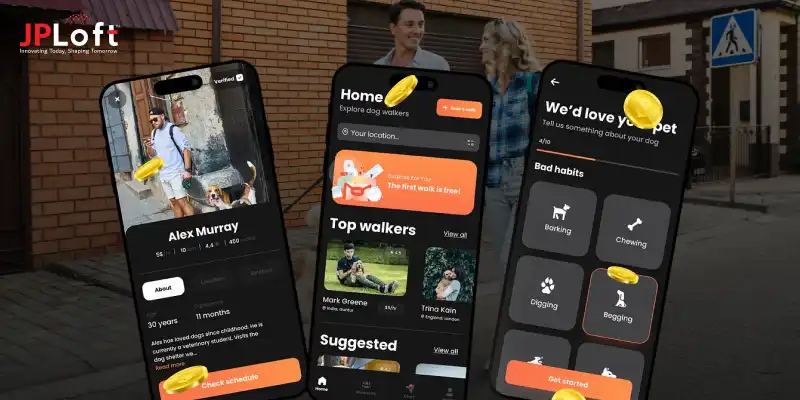
Key Takeaways
The cost to develop a dog walking app typically ranges from $8,000 to $90,000+, depending on features, complexity, and platform selection.
App features, UI/UX design, development platform, team location, third-party integrations, and app scalability are the main factors that influence the final budget.
Beyond development, expenses like app maintenance, server hosting, API charges, marketing, and security updates significantly impact the overall investment.
To reduce the cost start with an MVP, prioritize essential features, outsource smartly, and plan scalable architecture.
JPLoft delivers cost-efficient, scalable dog walking app solutions with end-to-end development support and transparent pricing.
Have you ever wondered how much does it cost to develop a dog walking app in today’s growing pet care market?
The answer is simple yet depends on multiple factors. On average, the cost can range between $8,000 to $90,000+, depending on features, complexity, design, and technology stack.
The rising demand for on-demand pet services has made dog walking apps a profitable business idea in 2026. From busy professionals to pet lovers who need reliable walkers, the industry is booming faster than ever.
As a result, understanding the cost to develop a dog walking app has become essential for startups and entrepreneurs planning to enter this space.
So, in this blog, we cover pricing, factors, hidden costs, and ways to reduce your app budget.
|
App Type |
Features Included |
Estimated Cost |
|
Basic App |
User login, booking, payment integration |
$8,000 – $20,000 |
|
Medium App |
Basic features + notifications, tracking, reviews |
$20,000 – $50,000 |
|
Advanced App |
Real-time GPS tracking, AI matching, chat, analytics |
$50,000 – $90,000+ |

Factors Affecting the Cost to Build a Dog Walking App
The cost to develop a dog walking app is not fixed because it depends on multiple technical, functional, and business-related factors. Every feature, design choice, and technology decision directly impacts the final budget.
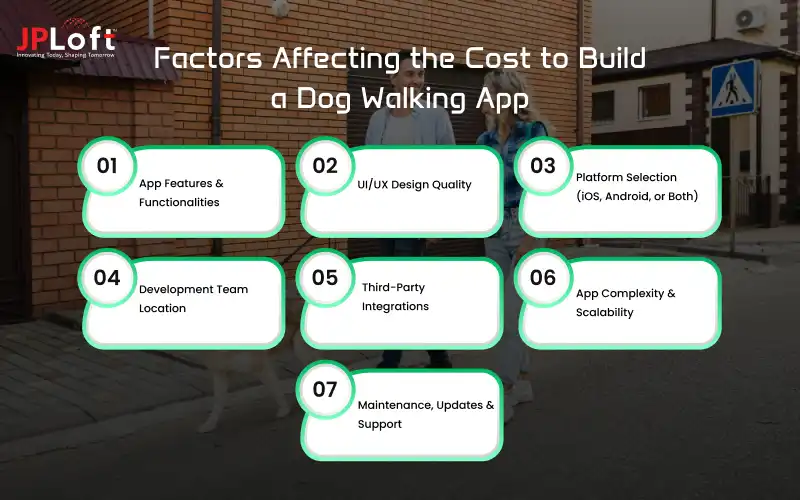
Below are the key factors affecting dog walking app development cost in a clear and structured way:
1. App Features & Functionalities
Features are the biggest cost-driving factor in any app development. Basic mobile app features like user registration, booking system, and payment integration will keep the pet care app development cost relatively low.
However, as you add advanced functionalities such as real-time GPS tracking, AI-based walker matching, in-app chat, push notifications, and rating systems, the complexity increases significantly.
2. UI/UX Design Quality
Design plays a major role in user engagement and retention. A simple and template-based design is cost-effective, but a custom, visually appealing, and user-friendly interface requires skilled designers and UI/UX design services along with more effort.
A premium UI/UX design improves user experience but increases the cost to build a dog walker app development price due to additional design hours and prototyping stages.
3. Platform Selection (iOS, Android, or Both)
The choice of platform directly impacts development cost. Building the dog walking app for a single platform is more budget-friendly.
However, developing for both Android and iOS separately increases development time and resources, raising the overall budget. This is why many businesses ask, how much does it cost to create a dog walking app when choosing between native and cross-platform options.
4. Development Team Location
Where your development team is located also affects pricing. Developers in regions like North America or Western Europe typically charge higher rates compared to teams in Asia or Eastern Europe.
Choosing an experienced offshore team or deciding to hire dedicated developers can help reduce the dog walking app development cost without compromising quality.
5. Third-Party Integrations
Modern apps rely heavily on external APIs and services. Features like payment gateways, Google Maps, SMS notifications, and cloud storage all require third-party integrations.
While they enhance functionality, they also add recurring charges and increase the initial cost to develop a dog walking app. These integrations are essential for delivering a seamless and scalable user experience.
6. App Complexity & Scalability
The overall architecture and complexity of the app also play a big role. A simple app with limited users and features will cost much less compared to a scalable marketplace-style platform that supports multiple users and real-time interactions.
Advanced backend systems also increase complexity and overall development effort. Higher complexity directly increases the cost to make a dog walking app.
7. Maintenance, Updates & Support
Development cost does not end at launch. Regular updates, bug fixes, performance optimization, and security patches are essential for long-term success.
These ongoing requirements contribute to the long-term cost to make a dog walking app, making maintenance a crucial part of the budget. Choosing reliable mobile app maintenance services ensures your app stays secure, updated, and performs smoothly over time.
All these factors affecting dog walking app development cost. From design to development and maintenance, every decision impacts the total investment.
By carefully planning features, choosing the right technology, and working with an experienced development team, businesses can efficiently control the dog walker app development price while ensuring high-quality performance and scalability.
Hidden Costs You Should Know
While planning your budget, many focus only on development, but hidden expenses impact the total cost and raise the question, how much does it cost to create a dog walking app overall.
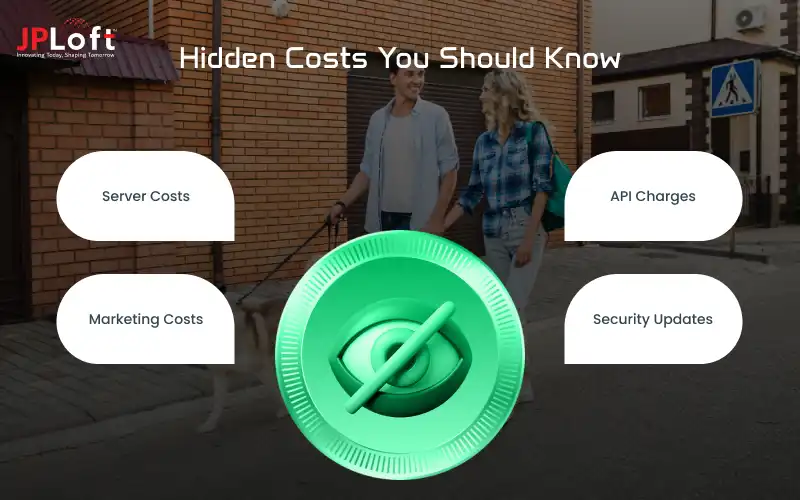
Below is a breakdown of the key hidden costs you should consider.
[A] Server Costs
As your user base grows, so does the demand for storage and processing power. Hosting services, cloud infrastructure, and database management all contribute to increasing server expenses.
Scalable server architecture is essential, but it also adds to the long-term cost to develop a dog walking app.
[B] API Charges
Modern apps rely heavily on third-party APIs for essential functionalities like maps, payment gateways, GPS tracking, SMS notifications, and authentication services.
While these integrations enhance functionality and user experience, most of them come with recurring usage-based fees that add up over time.
[C] Marketing Costs
Building the app is only half the journey, attracting users is equally important. Marketing efforts such as digital advertising, social media promotions, influencer campaigns, and app store optimization require additional investment.
Without proper marketing, even a well-built app may struggle to gain visibility.
[D] Security Updates
With increasing cyber threats, ensuring data protection and compliance is critical. Regular mobile app security patches, encryption upgrades, and vulnerability fixes are necessary to protect user data and maintain trust.
These updates are an essential but often underestimated part of the overall cost to create a dog walking app.
Ignoring these hidden costs can significantly increase the long-term financial burden and make the cost much higher than initially expected. Proper planning and budgeting for these expenses ensure better scalability, performance, and long-term success of your app.
How to Reduce Dog Walking App Development Cost?
Reducing the cost to develop a dog walking app is completely possible with smart planning, the right strategy, and efficient decision-making during the development process.
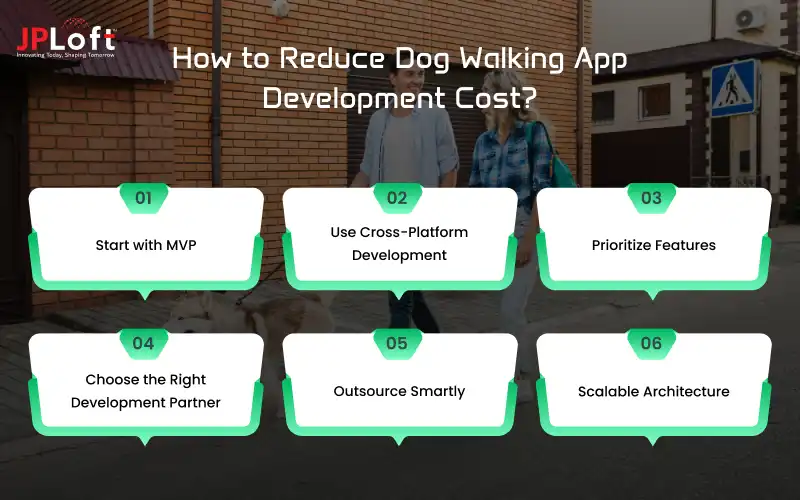
Instead of overspending on unnecessary features or complex systems from the start, businesses should focus on building a cost-effective yet scalable product.
1. Start with MVP
Building a Minimum Viable Product (MVP) is one of the most effective ways to control cost. An MVP includes only essential features like user registration, booking, and payment integration.
This helps you launch faster, test the market, and gather real user feedback before investing more into advanced features.
2. Use Cross-Platform Development
Using frameworks like Flutter or React Native allows developers to build a single codebase for both Android and iOS.
This significantly reduces development time and overall cost to build a dog walking app, making it a budget-friendly approach for startups.
3. Prioritize Features
Not every feature needs to be included in the first version. Focus on core functionalities that solve user problems first.
Advanced features like AI matching, analytics, or advanced tracking can be added later based on user demand and business growth.
4. Choose the Right Development Partner
Selecting an experienced development company plays a major role in cost optimization.
A skilled team can guide you in choosing the right technology, avoiding unnecessary features, and efficiently managing the budget to create a pet care mobile app without compromising quality.
5. Outsource Smartly
Hiring offshore developers or outsourcing to regions with lower development costs can significantly reduce expenses.
However, it is important to ensure proper communication, experience, and quality standards to maintain performance and reliability.
6. Scalable Architecture
Designing a scalable system from the beginning helps avoid costly redevelopment in the future.
A well-structured backend ensures that your app can handle growing users and features without requiring a complete rebuild, ultimately reducing long-term expenses.
By following these smart strategies, businesses can effectively control the cost while still ensuring high performance, scalability, and a strong user experience.

Why Choose JPLoft for Your Dog Walking App Development Journey?
Choosing the right development partner plays a key role in building a successful product. JPLoft is a trusted dog walking app development company with strong expertise in creating scalable and feature-rich solutions, especially in the pet care industry.
From booking systems and real-time tracking to secure payment integration, the team understands exactly what it takes to build a high-performing app. With a focus on cost-efficient development, modern technologies, and smart architecture, JPLoft delivers high-quality solutions without unnecessary overspending.
Their end-to-end support, from idea validation to launch ensures smooth execution at every stage of development.
In short, JPLoft transforms your idea into a powerful digital product with the right balance of quality, speed, and affordability.
Conclusion
Understanding the cost is the first step toward building a successful pet care business in 2026. From $8,000 to $90,000+, the pricing varies based on features, complexity, and business goals.
While the cost to develop a dog walking app may seem significant, the long-term growth potential in the pet care industry makes it a highly profitable investment.
If you are planning to enter this market, careful planning, smart budgeting, and the right development partner can help you achieve success efficiently.
In the end, a well-built dog walking app is not just an expense; it is a scalable business opportunity waiting to grow.
FAQs
The cost usually ranges from $8,000 to $90,000+, depending on features, platform, design, and complexity.
Key factors include app features, UI/UX design, platform choice (iOS/Android), third-party integrations, development team location, and maintenance requirements.
Hidden costs include app maintenance, server hosting, API charges, marketing, and security updates, which significantly increase the overall investment beyond initial development.
You can reduce costs by starting with an MVP, using cross-platform development, prioritizing essential features, outsourcing smartly, and planning a scalable architecture from the beginning.
Important features include user registration, booking system, real-time GPS tracking, payment gateway, chat support, ratings, and reviews.

Kris Jacobs brings 20+ years of experience solving complex digital product challenges through strategic thinking and user-centric design. With deep exposure to on-demand services, entertainment, travel, and interactive platforms, she collaborates across teams to shape scalable, engaging solutions that align business goals with intuitive user experiences across evolving digital landscapes.




Share this blog