


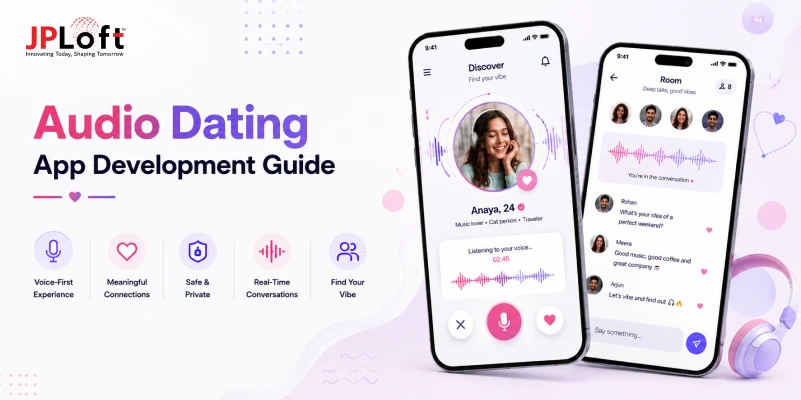
Dating apps have come a long way from just swiping through photos and bios.
Today, users want connections that feel real, and hearing someone’s voice often reveals more authenticity than a curated profile picture ever could.
This shift is exactly why audio dating apps are gaining serious traction, offering a fresh, more genuine way for people to connect before ever meeting face-to-face.
This audio dating app development guide walks you through everything you need to know about building a platform in this growing space.
Whether you’re a startup founder or an established business exploring new ideas in the dating industry, this guide gives you a clear roadmap to turn your audio dating app concept into a market-ready product.
What Is an Audio Dating App?
Wondering what an audio dating app is? Well, an audio dating app is a platform where users connect through voice instead of photos or text as the primary mode of interaction.
Instead of swiping through profile pictures, users listen to voice notes, join live audio rooms, or have voice-based conversations to gauge chemistry and compatibility before ever seeing a face.
This way, personality and tone take the lead, making connections feel more real. As of right now, in the market, there are platforms including Jigsaw, Boo, Waves, and String that are making audio dating apps the new norm.
So, if you want to create a dating app to stand out in a crowded market, audio-first platforms offer a unique angle, one that appeals to users seeking authenticity over aesthetics.
Why Invest in Audio Dating App Development?
Voice is becoming one of the most powerful ways to build genuine connections online, and businesses are noticing this shift.
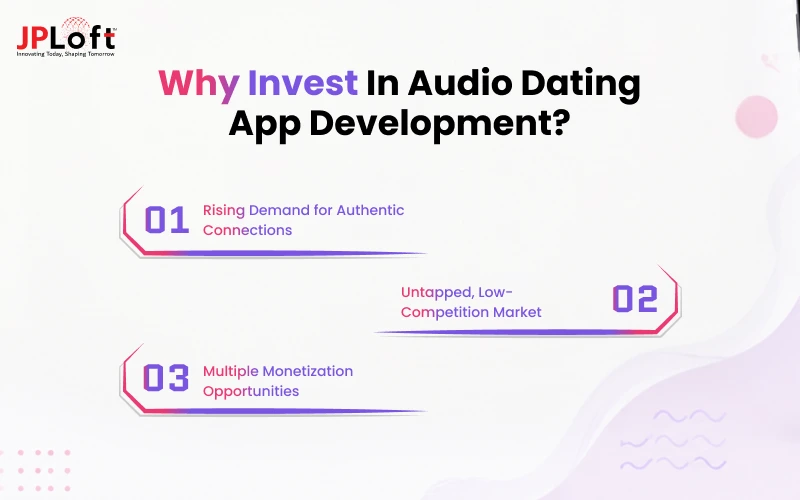
As users grow tired of endless swiping and surface-level judgements, audio dating app development is emerging as a fresh, high-potential space for founders looking to stand out in the crowded dating app market.
1. Rising Demand for Authentic Connections
Users are burnt out on tailored profiles and picture-perfect filters that rarely match reality.
Voice-first dating cuts through the noise, letting personality shine before appearances even enter the picture.
This shift toward authenticity is driving real interest, giving early investors a chance to meet a demand traditional apps simply aren't built to satisfy.
2. Untapped, Low-Competition Market
Unlike photo-based dating apps that are oversaturated with near-identical features, audio dating remains a relatively fresh space.
Few major players have fully claimed this niche, which means founders entering now can establish themselves as pioneers rather than followers, capturing early users before the market becomes crowded and competitive.
3. Multiple Monetization Opportunities
From subscription tiers and pay-per-minute voice calls to premium features like voice filters or priority matching, audio dating apps open up diverse revenue streams.
This flexibility allows businesses to experiment with pricing models and find what resonates best with their audience, maximizing profitability without relying on a single income source.
How Does an Audio Dating App Work?
Ever wondered how dating apps work when voice takes center stage instead of photos?
The process is refreshingly simple, built around real conversations rather than curated profiles, letting users connect based on how someone sounds, not just how they look in a picture.
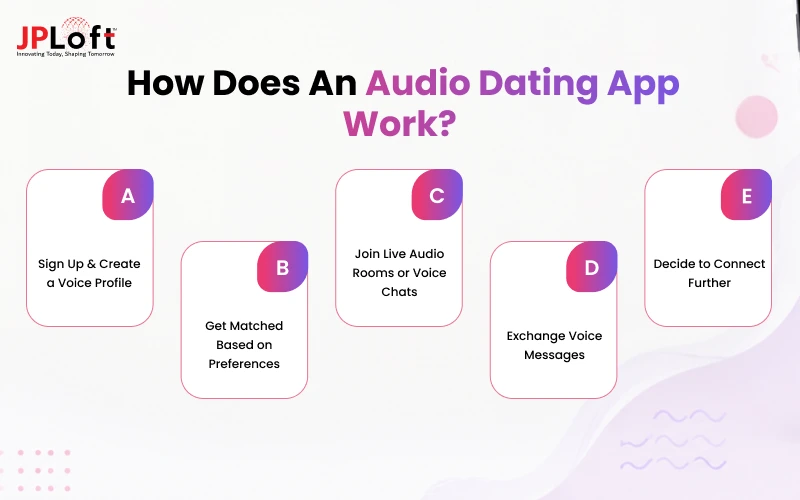
Here’s how it typically works:
► Sign Up & Create a Voice Profile
Users register and record a short voice intro instead of uploading photos, introducing themselves through tone and personality from the very first step.
► Get Matched Based on Preferences
The app suggests potential matches using preferences like interests, location, or even voice compatibility, helping users connect with people who genuinely align with them.
► Join Live Audio Rooms or Voice Chats
Users can enter live audio rooms with multiple people or start one-on-one voice chats, creating a space for organic, real-time conversation.
► Exchange Voice Messages
Instead of texting back and forth, users send quick voice notes, adding warmth and personality to every exchange before deciding to move forward.
► Decide to Connect Further
If the chemistry feels right, users can choose to continue chatting, schedule a video call, or eventually meet in person, all built on a foundation of genuine connection.
Top Features to Have in an Audio Dating App
Now, let's move on to the top features of a dating app.
Understanding these functionalities is just as important as knowing how to build an audio dating app.
So, let’s dive in:
Must-Have Features for User Panel
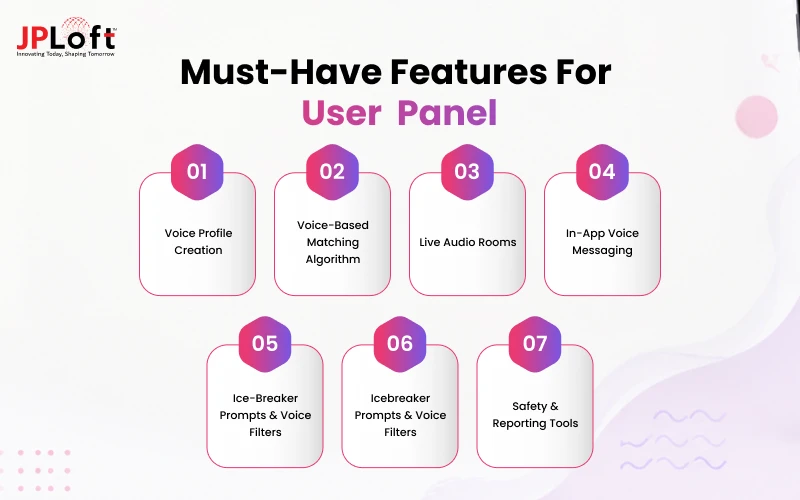
Knowing how to create an audio dating app starts with getting the user panel features right, since this is where every meaningful connection begins. Explore below user panel app features:
► Voice Profile Creation
Let users introduce themselves through voices, not just selfies.
A short voice bio reveals personality, tone, and charm instantly, helping matches connect on something more authentic than a filtered photo.
► Voice-Based Matching Algorithm
Forger swiping on looks alone.
Having one such dating app matchmaking algorithm will engage users by analyzing vocal tone, energy, and speech patterns to match people who genuinely vibe, creating connections rooted in personality rather than appearance.
► Live Audio Rooms
Bring the spontaneity of real conversations online.
Users can join live rooms, chat in real time, and experience natural chemistry- no scripted messages, just authentic back-and-forth energy.
► In-App Voice Messaging
Skip the typing and let emotions speak for themselves.
Voice notes add warmth, humor, and tone that text simply can’t capture, making every exchange feel more personal and genuine.
► Ice-Breaker Prompts & Voice Filters
Break awkward silences with fun voice prompts and playful filters.
These features spark laughter, encourage creativity, and make starting conversations feel effortless instead of forced or intimidating.
►Icebreaker Prompts & Voice Filters
Break awkward silences with fun voice prompts and playful filters.
These features spark laughter, encourage creativity, and make starting conversations feel effortless instead of forced or intimidating.
►Safety & Reporting Tools
Trust is everything in voice-first dating. Built-in reporting, moderation, and verification tools ensure users feel secure, protected, and confident while exploring genuine connections without unwanted surprises.
Must-Have Features for Admin Panel
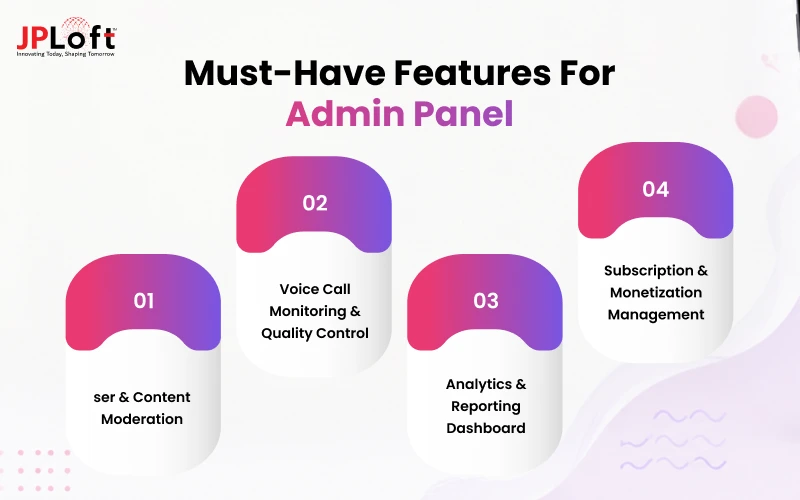
If you’re figuring out how to create an audio dating app, the admin panel is as important as the other side. Here are some features to have in your admin panel:
► User & Content Moderation
Keep the community safe and genuine.
Smart moderation detects inappropriate behavior, fake profiles, or harmful content in real time, ensuring every voice on the platform is respectful and real.
► Voice Call Monitoring & Quality Control
No one likes a glitchy call ruining the mood.
This feature ensures crystal-clear audio, flags misuse, and maintains quality standards, so conversations stay smooth, safe, and enjoyable.
► Analytics & Reporting Dashboard
Turn user behavior into business insights.
You should track engagement, match success, and drop-off points through a powerful dashboard, helping admins make smarter decisions and scale the platform effectively.
► Subscription & Monetization Management
Give your business a steady revenue stream. Manage premium features, subscriptions, and in-app purchases seamlessly, creating monetization paths without disrupting the user experience.
Advanced Features to Consider
If you’re figuring out how to make an audio dating app that truly stands out, the basics alone won’t cut it.
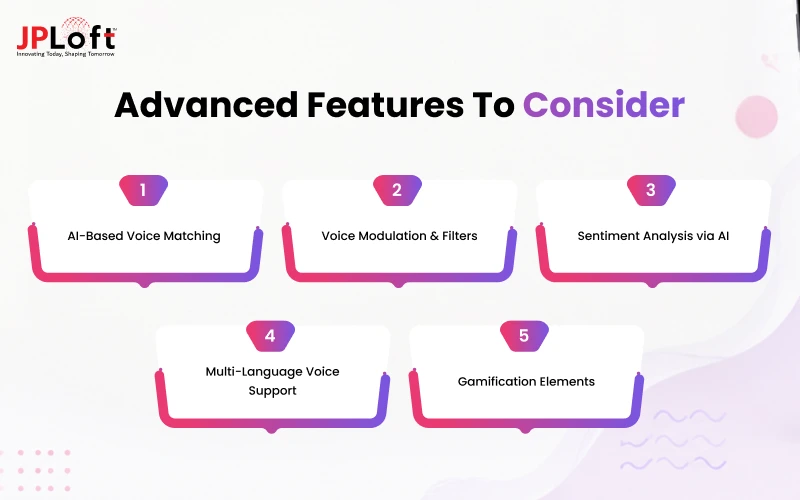
These advanced features add depth, intelligence, and a competitive edge, turning a simple voice-based platform into an experience users can’t stop talking about:
► AI-Based Voice Matching
Take compatibility beyond basic filters.
AI analyzes vocal cues, emotional tone, and speech patterns to suggest matches with real chemistry, making connections feel smarter and more human.
► Voice Modulation & Filters
You can add a playful twist to conversations.
Fun voice filters let users experiment, stay comfortable, and break the ice creatively, making interactions lighter, especially for first-time voice daters.
► Sentiment Analysis via AI
Understand what words alone can’t say.
AI detects emotional tone during conversations, helping flag discomfort or negativity early, creating a safer, more emotionally intelligent dating experience.
► Multi-Language Voice Support
Break language barriers, not connections.
Support multiple languages so users worldwide can express themselves naturally, expanding your app’s reach across diverse, global audiences effortlessly.
► Gamification Elements
Make dating fun again.
You can add streaks, voice challenges, or reward badges to boost engagement, turning everyday interactions into exciting, motivating experiences that users keep coming back to.
Tech Stack for Audio Dating App Development
Picking the right dating app tech stack can make or break your product’s performance.
If you're exploring how to build an audio dating app or looking to upgrade an existing one, the right tech stack matters.
A solid mix of frontend, backend, database, and voice-processing tools ensures smooth calls and scalable performance, even as your user base grows into thousands of daily conversations.
|
Category |
Technologies |
|
Frontend |
React Native, Flutter |
|
Backend |
Node.js, Python (Django) |
|
Database |
MongoDB, PostgreSQL |
|
Voice/Audio Processing |
WebRTC, Twilio Voice API |
|
AI & Matching |
TensorFlow, Python (ML libraries) |
|
Cloud & Hosting |
AWS, Google Cloud |
|
Push Notifications |
Firebase Cloud Messaging |
|
Payment Gateway |
Stripe, Razorpay |
Monetization Models for Audio Dating Apps
Building a great app is one half of the journey; turning it into a profitable business is where the right dating app monetization model comes in.
Let’s get to know it:
► Freemium Model
It can be a great monetization model for your audio dating app.
You can offer basic features such as matching, messaging, and others for free; advanced features like unlimited voice calls and advanced filters sit behind a paywall, giving users a reason to upgrade once they’re hooked.
► Subscription Plans
Turn casual users into loyal, paying members.
Weekly, monthly, or yearly plans offering perks like unlimited swipes, priority matching, or an ad-free experience create predictable, recurring revenue.
While giving serious daters a reason to commit beyond a one-time purchase.
► In-App Purchases
Not everyone wants a subscription, and that’s okay.
Let users pay only for what they need: voice filters, profile boosts, or extra icebreakers, creating flexible micro-revenue streams that add up fast across a large, active user base.
► Virtual Gifts & Coins
Add a fun, social layer to monetization.
Users purchase virtual coins to send gifts during voice chats or live rooms, boosting engagement while creating a playful, low-pressure way to spend–popular in audio-first and live-streaming-style platforms.
►Advertising Revenue
Free users can still generate revenue.
Display targeted, non-intrusive ads within the app to earn steady revenue; just be sure ads don’t disrupt the voice-first experience, since intrusive interruptions can quickly hurt user retention and app ratings.
Steps to Develop an Audio Dating App
Turning an idea into a fully functional platform takes more than just good intentions; it requires a clear roadmap.

This audio dating app development guide walks you through each stage, from planning to marketing, so you can build a product that’s engaging, scalable, and ready for real users:
Step 1: Market Research & Planning
Before writing a single line of code, spend time doing market research on your app. You should understand your target audience, study competitors, and identify gaps in the current market.
Explore what makes voice-based dating different from traditional swipe-based apps and why users might prefer conversations over profile pictures.
Define your ideal user demographic, set clear business objectives, and outline your app’s unique value proposition.
This groundwork becomes the foundation for every future decision, from feature selection to marketing strategy, so time here saves costly changes later.
Step 2: Define Core Features & UX Flow
Once research is done, decide exactly what your app needs to deliver value from day one.
This includes voice profile creation, matching algorithms, live audio rooms, in-app messaging, and safety tools.
Map out the complete user journey, starting from sign-up to profile setup to the first meaningful conversation, ensuring every step feels natural and effortless.
A well-planned feature list and user flow prevent scope creep during development and help your team stay focused on building what truly matters to users.
Step 3: Choose the Right Tech Stack
Selecting the right combination of frontend, backend, database, and voice-processing technologies is critical for an audio-first platform.
Tools like WebRTC or Twilio Voice API ensure reliable, low-latency voice calls, while scalable cloud infrastructure such as AWS or Google Cloud supports growth without performance issues.
Choosing technologies that are well-documented and widely supported also makes it easier to hire developers, fix issues quickly, and integrate future features as your platform evolves.
Step 4: Design an Intuitive UI/UX
Since many users may not be tech-savvy, especially everyday individuals looking for genuine connections, your design must prioritize simplicity over complexity.
Focus on clean navigation, clutter-free screens, and clear call-to-action buttons that guide users naturally through matching and conversations.
A logical, well-thought-out flow reduces confusion and hesitation, while thoughtful UI/UX design directly influences user retention, engagement, and how comfortable people feel using a voice-first platform for the first time.
Step 5: App Development
With designs finalized, development begins — building both frontend interfaces and backend systems that power real-time voice interactions.
This stage is a central part of how to build an audio dating app, as it involves integrating voice APIs, setting up databases, building matching algorithms, and ensuring secure data handling throughout.
Development typically happens in phases, allowing teams to build, review, and refine functionality step-by-step rather than everything at once, ensuring each feature works smoothly before moving to the next stage of the process.
Step 6: Testing & Quality Assurance
Before launching, rigorous testing ensures your app performs reliably across different devices, networks, and user scenarios.
You can test voice call clarity, matching accuracy, app stability, and security measures to identify bugs early.
Gathering feedback from a small group of beta users can reveal usability issues you might have missed, allowing you to fine-tune the experience before it reaches a wider, more critical audience.
Step 7: Launch & Deployment
Once testing confirms your app is stable and ready, It’s time to deploy it on app stores like Google Play and the Apple App Store.
Ensure your app listing, screenshots, and description clearly communicate your unique value proposition.
A smooth, well-planned launch, supported by proper server capacity and monitoring tools, helps handle initial user traffic without performance issues during this crucial first impression phase.
Step 8: Marketing & User Acquisition
By now, you should have a clear idea of how to develop an audio dating app, but the journey doesn't end at launch; ongoing app maintenance services are what truly drive long-term growth.
Leverage social media campaigns, influencer partnerships, content marketing, and app store optimization to attract your first wave of users.
You can offer referral programs and limited-time offers to encourage early adopters to invite friends, while consistent engagement through push notifications and email marketing keeps users active.
How Much Does It Cost to Develop an Audio Dating App?
On average, the Audio dating app development cost can range from $10,000 to $120,000+.
The cost can increase as per several factors such as app complexity, chosen tech stack, feature set, and platform (iOS, Android, or both).
A basic version with core features like voice calling, matching, and profile management will cost less, while adding advanced capabilities such as AI-based matching, real-time content moderation, and voice modulation increases the investment significantly.
Development teams based in regions like North America or Western Europe typically charge higher hourly rates compared to teams in Asia or Eastern Europe, which can significantly affect the total budget.
Additionally, ongoing costs like server infrastructure, third-party API integrations (for voice, payments, or verification), and post-launch maintenance should also be factored into your overall budget planning.
Below is a rough breakdown of the cost to develop a dating app:
|
App Complexity |
Key Features |
Estimated Cost (USD) |
Timeline |
|
Basic |
Profile creation, voice calling, basic matching |
$10,000 – $30,000 |
2–3 months |
|
Mid-Level |
+ AI matching, content moderation, in-app payments |
$30,000 – $60,000 |
4–6 months |
|
Advanced |
+ Voice modulation, real-time analytics, multi-platform |
$60,000 – $120,000+ |
6–9 months |
Challenges in Audio Dating App Development
Want to build a voice-first dating platform? Well, you are on the right path.
But building one such platform comes with its own set of problems. This is the section where we are going to discuss the top dating app development challenges and how to solve them.
Let’s explore them next in this guide to Audio dating app development:
Challenge 1: Ensuring User Safety & Privacy
Voice-based interactions make it harder to monitor for harassment, catfishing, or predatory behavior compared to text-based platforms.
Users are also afraid to share their voice, fearing it could be recorded, cloned or misused.
Solution: Implement real-time AI-based audio monitoring for abusive language or threats, offer voice-masking or modulation options during initial calls, and use verified profiles to reduce fake accounts.
Challenge 2: Voice Quality & Latency Issues
Poor audio quality, lag, or dropped calls can ruin the user experience and make conversations feel unnatural, especially under varying network conditions.
Solutions: Use adaptive bitrate streaming and low-latency protocols like WebRTC, along with edge servers or CDNs to reduce round-trip time. Building in automatic reconnection logic and network-quality indicators helps users understand and manage connectivity issues in real time.
Challenge 3: Content Moderation at Scale
Moderating live or recorded voice content is far more resource-intensive than text moderation, and harmful behavior can occur in real time before a human moderator can intervene.
Solution: Combine automated speech-to-text transcription with AI sentiment/toxicity analysis to flag risky conversations instantly, paired with a human review team for escalated cases. Allowing users to report or end calls instantly, with one-tap blocking, adds another layer of protection.
Challenge 4: Matching Algorithm Accuracy
Text- or photo-based apps rely on well-established matching methods.
But voice compatibility is different. Matching users based on tone or conversational chemistry is still a relatively unexplored area.
This makes it hard to design algorithms that can truly predict genuine connections.
Solution: A hybrid matching model works best for voice-based compatibility. It combines traditional preference data like interests, location, and age with voice-based signals such as tone, pace, and speaking style. This blend captures both basic compatibility and real conversational chemistry. Over time, machine learning refines the model further.
Challenge 5: Monetization Without Compromising Experience
Striking a balance between generating revenue (subscriptions, call credits, premium features) and keeping the app accessible enough to retain a growing user base can be tricky.
Especially since paywalls can disrupt spontaneous voice interactions.
Solution: Offer a freemium model with limited free call minutes, then introduce tiered subscriptions for extended calls, profile boosts, or advanced filters. Transparent pricing and non-intrusive upsell prompts (rather than hard paywalls mid-conversation) help maintain a smooth user experience while still driving revenue.
How Can JPLoft Help Build An Audio Dating App?
Every great connection starts with a conversation, and that’s exactly the idea behind audio dating apps.
But timing that idea into a fully functional, safe, and scalable platform takes more than just a good concept; it takes the right technical partner.
This is where choosing an experienced dating app development company becomes critical to your app’s success.
JPLoft brings 16+ years of experience building scalable and feature-rich applications tailored to modern user expectations.
Whether you’re looking to build an MVP or a full-scale audio dating platform, our end-to-end development services cover everything from ideation to post-launch support.
Ready to bring your audio dating app to life? Let's build something exceptional together.
Conclusion
Audio dating apps are reshaping how people connect online, shifting the focus from curated photos to genuine personality and tone.
As users continue to seek authenticity over appearances, this space offers a genuine opportunity for founders and businesses to build something meaningful in an otherwise crowded dating app market.
Understanding how to make an audio dating app goes beyond just picking the right features.
It's about combining voice profile creation, AI-based matching, live audio rooms, and robust safety tools. Together, these elements shape user trust and drive long-term engagement.
While challenges like content moderation, latency, and matching accuracy exist, the right approach and technical partner can turn these hurdles into strengths.
With the right strategy and execution, audio dating apps are well-positioned to lead the next wave of authentic digital connection.
FAQs
An audio dating app is a platform where users connect primarily through voice, using voice notes, live audio rooms, or voice calls instead of relying on photos or text to gauge compatibility.
The cost typically ranges from $10,000 to $120,000+, depending on app complexity, features, tech stack, and platform (iOS, Android, or both).
Development timelines usually range from 2 to 9 months, depending on whether you're building a basic MVP or an advanced platform with AI-powered features.
Core features include voice profile creation, voice-based matching, live audio rooms, in-app voice messaging, and safety and reporting tools.
With 16+ years of experience, JPLoft builds secure, scalable, and feature-rich audio dating platforms tailored to modern user needs, from MVP to full-scale development.

Savannah Bustos is a technology professional with experience across financial platforms, mobility solutions, and on-demand digital products. Her areas of expertise include FinTech, digital banking, eWallets, lending, BNPL, stock trading, fuel delivery, and taxi-booking platforms. She combines a strong understanding of business requirements with practical technology insight, helping companies evaluate challenges, define product needs, and make informed decisions about scalable digital solutions.


Share this blog