


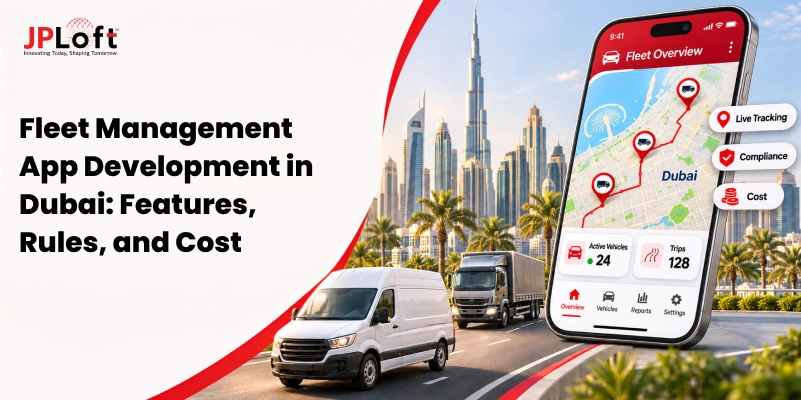
Dubai never slows down. Trucks, vans, buses, and rental cars are on the road every hour of the day.
Managing them with phone calls and spreadsheets no longer works. Fleet owners need live data. They need it for tracking, fuel, drivers, tolls, and local rules.
That is why fleet management app development in Dubai is growing fast.
The UAE fleet management market is valued at USD 520 million in 2026 and is expected to grow to USD 980 million by 2032.
This guide covers the features, the Dubai-specific rules, the build steps, and the real cost.
If you're planning to build fleet software in Dubai, understanding local requirements and development costs is essential.
Explore this guide to learn how to develop a fleet management app that fits Dubai's transport and business needs.
Let’s get started:
Why Invest in Fleet Management App Development in Dubai?
A fleet app is no longer a nice-to-have in Dubai. Here is why more businesses are putting money into it now.
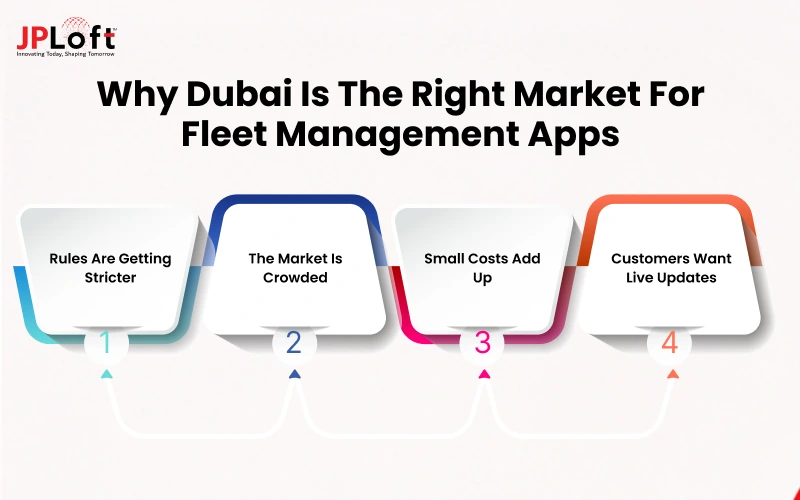
1. Rules Are Getting Stricter
The RTA keeps adding limits for heavy vehicles.
From 1 October 2026, new truck movement restrictions apply across Dubai. Emirates Road is exempt. An app helps your drivers stay within the rules.
2. The Market Is Crowded
Dubai had more than 500,000 registered commercial transport vehicles in 2025, according to Ken Research.
More vehicles mean more competition. Margins get thin. Fleets that run smarter win more jobs and keep profit.
3. Small Costs Add Up
Fuel, Salik tolls, fines, and idle time look small on their own. Across 50 or 500 vehicles, they become a big monthly bill. An app shows where money leaks and helps you fix it.
4. Customers Want Live Updates
E-commerce and last-mile delivery have made ETAs a basic demand. A late truck with no update loses trust fast.
Live tracking lets you share accurate arrival times and warn customers early about delays.
So which type of app fits your fleet? Let us look at the main options.
Types of Fleet Management Apps Used in Dubai
Not every fleet needs the same tool. The right type depends on what you move and how you earn.
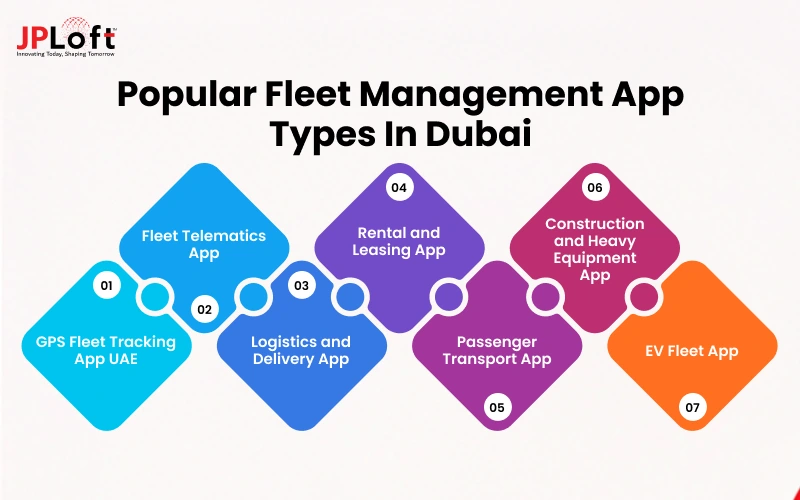
Let’s get to know the right type of fleet management apps in Dubai:
Type 1. GPS Fleet Tracking App UAE
This is the starting point for most fleets. It shows live location, speed, and stop time for every vehicle.
Trip history helps you settle disputes fast. Geofence alerts tell you when a vehicle enters or leaves a site.
It suits small and mid-size fleets that need clear visibility first.
Type 2. Fleet Telematics App
A fleet telematics app goes deeper than GPS. It reads engine data such as speed, harsh braking, fuel use, and fault codes.
Managers can spot risky driving and weak vehicles early. That means fewer breakdowns and lower repair bills.
It suits fleets with heavy trucks or high running costs.
Type 3. Logistics and Delivery App
This type handles dispatch, route plans, and proof of delivery in one place. Customers also get live ETAs.
It is the core of logistics app development in Dubai. Every late drop becomes visible and fixable.
It suits courier, e-commerce, and last-mile delivery companies.
Type 4. Rental and Leasing App
It links bookings, handover checks, and tracking in one system. Staff can see where each car is and who has it.
Rental cars in Dubai also have their own tracking registration rules. The app should support them.
It works well for car rental and leasing firms.
Type 5. Passenger Transport App
Taxi, limo, school bus, and staff transport fleets use it. Safety and route proof matter most here.
It can track pickups, seat counts, and driver hours. Clients and parents get live trip updates.
It suits operators who carry people every day.
Type 6. Construction and Heavy Equipment App
It tracks machines, site hours, and fuel use. Managers see which equipment sits idle and which one works overtime.
Theft alerts and service reminders protect costly assets. It fits Dubai's large construction sector.
It suits contractors who run many sites.
Type 7. EV Fleet App
It tracks charging status, battery health, and range. Planners can build routes around charger locations.
Dubai is moving toward green mobility, so this type is growing. It also helps you cut fuel costs and emissions.
It suits fleets that are switching to electric vehicles.
Most businesses mix two or three of these. Next, let us see which features make them work.
Key Features of a Fleet Management App
Without the right Fleet management app features, it will be hard for you to survive in the market. Here are some functionalities that can make the biggest difference:
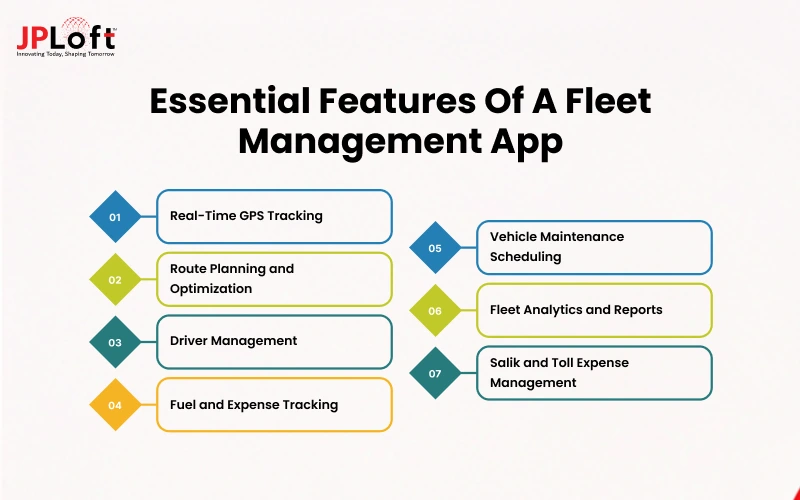
A. Real-Time GPS Tracking
Having GPS tracking in fuel delivery is the need of the hour. See every vehicle on one live map; you can check speed, direction, and stop time.
Add geofences around depots, ports, and customer sites. The app alerts you when a vehicle enters or leaves.
Keep a full trip history. It helps you settle disputes fast.
B. Route Planning and Optimization
A good app uses AI route optimization for fuel delivery to select the best route for each job. It considers distance, traffic, and delivery windows.
In Dubai, it must also account for truck restrictions and Salik gates to avoid fines and extra toll costs.
C. Driver Management
Store licences, visas, and permit dates in one place. Get a reminder before anything expires.
Score drivers on speeding, harsh braking, and idling. Share the score in a driver app. Reward the best drivers.
D. Fuel and Expense Tracking
Track fuel by vehicle and by trip. Flag sudden drops that may point to theft.
Log all other costs too. That includes parking, fines, repairs, and tolls. One dashboard shows the true cost per vehicle.
E. Vehicle Maintenance Scheduling
Set service alerts by distance or by date. Add alerts for registration and insurance.
Use engine fault codes to catch problems early. Dubai heat is hard on batteries and tyres. Early alerts save you from roadside breakdowns.
F. Fleet Analytics and Reports
Turn raw fleet data into simple charts that show fuel consumption per kilometre, on-time delivery rates, idle hours, and vehicle utilisation.
During fleet management system development, include one-click report exports and automated scheduling.
This helps managers track performance, identify inefficiencies, and share timely updates with business owners and clients.
G. Salik and Toll Expense Management
Match every Salik charge to the right vehicle and trip. Split the cost by client or by project.
Spot gates that cost you the most. Then plan routes and shift timings to cut that spend. More on this in the next section.
Dubai-Specific Requirements for Fleet Management Apps
Dubai's transport sector demands more than basic vehicle tracking and fleet monitoring. Your app must meet local requirements while keeping daily operations smooth.
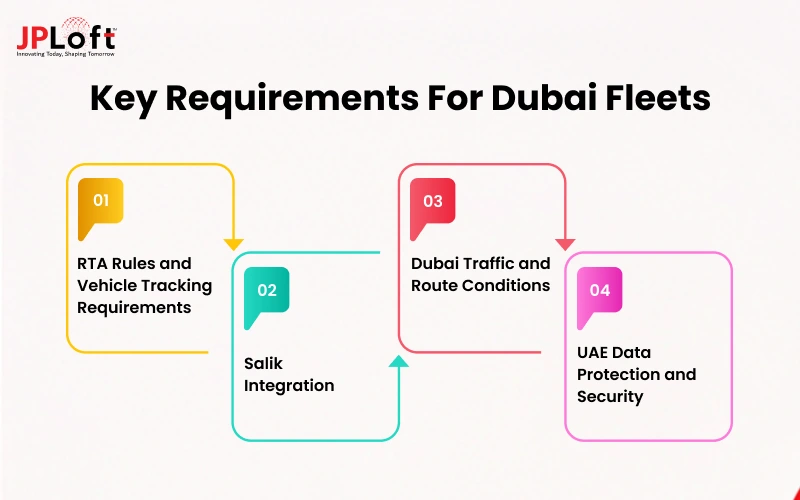
Here are some key Dubai-Specific requirements to consider:
► RTA Rules and Vehicle Tracking Requirements
The RTA runs a vehicle monitoring centre. It tracks heavy trucks and driver behaviour. Its programme has covered heavy vehicles of 2.5 tonnes and above.
The RTA has said it can refuse to register or renew a vehicle that lacks the system.
Some categories also need a SIRA-approved tracker through the Shahin SecurePath system. Rental cars are one example.
Rules differ by vehicle type. Always confirm the latest list with the RTA and SIRA before you build.
► Salik Integration
Dubai now has 10 Salik gates. Pricing is variable. Peak hours cost AED 6 per gate. Off-peak costs AED 4. Overnight is free. Timings can change, for example, during Ramadan.
This makes toll tracking harder. A single route can cost very different amounts at different hours.
First, check what data feed Salik offers your business account. If there is no direct feed, import statements and match them by plate number.
► Dubai Traffic and Route Conditions
Heavy vehicles face time and road limits. Rules differ by road and by hour. Trucks that must move in banned times can apply for an RTA mobility permit.
The RTA is also adding truck rest areas. Your app should show them. Drivers can wait there during restricted hours.
Build routing that knows all this. Also plan for summer heat. Hardware must survive it.
► UAE Data Protection and Security
Tracking drivers means handling personal data. Under the UAE Personal Data Protection Law (Federal Decree-Law No. 45 of 2021), location counts as personal data.
Keep these points in mind:
-
Tell drivers what you track and why.
-
Take clear consent where the law needs it.
-
Limit data transfers outside the UAE. Host data in a UAE region where you can.
-
Plan for breach alerts to the UAE Data Office and affected people.
-
Check separate rules if you operate in DIFC or ADGM.
Add role-based access and encryption on top. Ask a legal expert to review your setup.
Now that the rules are clear, let us see how the build itself works.
How to Develop a Fleet Management App in Dubai?
Building a fleet management app in Dubai takes more than adding just features. You need to follow proper steps and have a clear development plan.
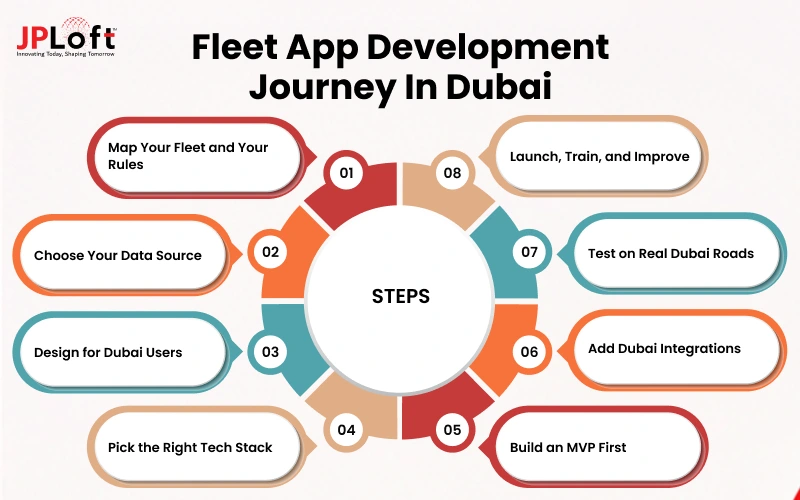
Here are the key steps to take your fleet app from idea to launch:
Step 1: Map Your Fleet and Your Rules
Start with a clear fleet audit. List every vehicle type, size, and route.
Mark which vehicles fall under RTA or SIRA tracking rules. Note which ones need truck-ban permits.
This audit decides your must-have fleet management app features. It also stops costly changes later. Ask your team three simple questions:
-
Which vehicles must be tracked by law?
-
Which jobs lose money today?
-
Who will use the app every day?
Step 2: Choose Your Data Source
Your app is only as good as its data. Decide how each vehicle will send it.
There are three common options:
-
Approved Gps Devices: Best for compliance and any GPS fleet tracking app UAE.
-
Obd Plug-In Devices: Good for cars and vans. They read fuel and engine data.
-
Oem Telematics: Built into newer trucks. You need data access from the maker.
A fleet telematics app often mixes all three. Plan for each data format early.
Step 3: Design for Dubai Users
Dispatchers and drivers use the app in very different ways, so design for both.
They need a rich dashboard. Drivers need big buttons and very few taps.
Add Arabic and English from day one. Support right-to-left layouts. Many drivers speak other languages too. So use icons and simple words.
Plan an offline mode as well. Signal can drop in tunnels and remote zones. The app should save data and sync later.
Step 4: Pick the Right Tech Stack
Choose tools that grow with your fleet. A typical setup looks like this:
-
Flutter or React Native for Android and iOS apps
-
Node.js or Python for the backend
-
PostgreSQL plus a time-series store for location data
-
MQTT or WebSockets for live updates
-
A UAE cloud region for hosting
-
A map provider with strong UAE coverage
Ask for load tests. A fleet of 500 vehicles can send millions of location points every day.
Step 5: Build an MVP First
Start small. Build only the core vehicle tracking app features:
-
Live map and trip history
-
Geofence and speed alerts
-
Driver profiles and document reminders
-
Basic reports
Launch with 10 to 20 vehicles. Watch how teams use it. Fix what confuses them. This keeps risk low and brings feedback fast.
Step 6: Add Dubai Integrations
Now layer in the local pieces:
-
Salik toll matching by plate number and time
-
Truck-ban timings and permit reminders inside routing
-
Truck rest area locations
-
Fuel card and ERP links
-
Compliance reports for audits
This step turns a general tool into true fleet management app development in Dubai.
Delivery businesses should also add dispatch and proof of delivery. This is where logistics app development in Dubai adds real value.
Step 7: Test on Real Dubai Roads
Lab tests are not enough. Test in real conditions:
-
Peak traffic on busy corridors
-
Summer heat on devices and phones
-
Tall buildings and tunnels, where GPS can drift
-
Low battery and weak network cases
Test security too. Run penetration tests and check data access by role.
Step 8: Launch, Train, and Improve
Roll out in phases. Move one branch or one vehicle group at a time.
Train dispatchers first. Then train drivers with short video guides.
After launch, track real results:
-
Fuel per kilometre
-
On-time delivery rate
-
Idle hours
-
Salik and fine costs
Use these numbers to plan version two. Good next upgrades are AI route suggestions, predictive maintenance, and EV charging support.
Who Do You Need on Your Development Team?
Building a fleet management app in Dubai takes the right people working together.
From designing easy-to-use screens to setting up GPS tracking and testing real-time features, every role matters.
So, who should be part of your development team? Here are the key experts you'll need:
-
Product Manager: Defines project goals, manages timelines, and keeps development on track.
-
UI/UX Designer: Creates simple interfaces for drivers, dispatchers, and fleet managers.
-
Mobile App Developers: Build Android and iOS applications for daily fleet operations.
-
Backend Developers: Handle databases, APIs, user accounts, and real-time tracking.
-
IoT or Telematics Engineer: Connects GPS devices, vehicle sensors, and tracking systems.
-
QA Engineer: Tests app performance, features, and reliability under real-world conditions.
-
DevOps and Security Engineer: Manages cloud hosting, deployment, data protection, and system monitoring.
For smaller fleets or businesses with limited technical resources, partnering with a fleet management software development company in Dubai can simplify the process. You get access to the required expertise without hiring every specialist in-house.
What Common Mistakes Should You Avoid When Building a Fleet Management App?
An effective fleet management application requires more than just the appropriate attributes.
Minor development errors can raise expenses, postpone launches, and cause issues in routine operations.
If you intend to construct one in Dubai, remember these typical errors:
1. Developing All Features Prior to Launch
Steer clear of incorporating too many features simultaneously.
Begin with fundamentals such as GPS tracking, route optimization, and fleet oversight. Incorporate sophisticated functionalities as your enterprise expands.
2. Disregarding Driver Input
Drivers utilize the app on a daily basis.
Engage them in testing to uncover navigation problems, unclear screens, and functionalities that require enhancement.
3. Selecting Non-Compliant GPS Devices
Verify device compatibility and regional regulations prior to acquiring GPS or telematics equipment.
Using incorrect devices may lead to tracking problems and increased costs.
4. Excluding Arabic Language Support
Interfaces available only in English might not be suitable for all drivers or fleet managers.
Add Arabic support to enhance the app's usability for Dubai's varied workforce.
5. Ignoring Salik and Truck Restrictions
Route planning must consider Salik tolls, vehicle limitations, and delivery schedules. Disregarding these specifics can raise operational expenses and lead to unnecessary delays.
6. Overlooking Data Privacy Obligations
Fleet applications gather confidential data, such as vehicle whereabouts and driver behavior. Design data access, storage, and security measures from the outset.
Steering clear of these errors can conserve time and avert unneeded development costs. What truly influences your overall investment?
Let's examine the main elements that influence the expenses of developing fleet management applications in Dubai.
Factors Affecting Fleet Management App Development Costs in Dubai
Every fleet business has different needs, and so does its development budget.
There are several factors that affect the overall cost; in this section, we are going to explore them. This is where mobile app development services in Dubai can help you make smarter technical and budget decisions.
Let’s look at what drives the development cost:
-
Feature scope: Basic tracking costs less. Route optimization, AI, and deep analytics cost more.
-
Platforms: Android, iOS, and a web dashboard each add effort.
-
Hardware and telematics: Working with GPS devices and OBD or CAN-bus data adds integration work.
-
Integrations: Salik, ERP, fuel cards, and map services all need setup.
-
Compliance work: RTA, SIRA, and data protection needs add design and testing time.
-
Language and design: Arabic and English support with right-to-left layouts takes extra effort.
-
Cloud and security: UAE-hosted servers, encryption, and audits raise costs.
-
Team and location: Rates vary by region and by team size.
With these in mind, let us put numbers on it.
How Much Does It Cost to Develop a Fleet Management App in Dubai?
The cost to develop a fleet management app in Dubai can go from AED 110,000 to AED 735,000+.
Below are typical market ranges. They are estimates built from published industry figures. Your real quote depends on scope.
|
App level |
What it usually includes |
Cost (USD) |
Cost (AED) |
Timeline |
|
Basic MVP |
Live GPS, trip history, driver profiles, alerts, simple reports |
$30,000 to $50,000 |
AED 110,000 to AED 185,000 |
3 to 4 months |
|
Mid-level |
Adds route optimization, geofencing, fuel and Salik tracking, maintenance, driver scorecards |
$50,000 to $100,000 |
AED 185,000 to AED 365,000 |
6 to 9 months |
|
Enterprise |
Adds telematics and IoT, AI, ERP links, multi-branch control, custom dashboards |
$100,000 to $200,000+ |
AED 365,000 to AED 735,000+ |
8 to 12+ months |
AED figures use the fixed rate of about AED 3.67 per USD.
Do not forget running costs. These include GPS devices, SIM and data plans, cloud hosting, map services, and yearly upkeep. Many teams budget around 15 to 20 percent of the build cost per year for upkeep.
A smart way to cut risk is to start with an MVP. Prove it with a small group. Then grow.

How to Choose the Right Fleet Management App Development Company in Dubai?
Your fleet app needs more than good coding. It needs a team that understands Dubai's transport market and real business challenges.
As an experienced software development company in Dubai, JPLoft helps businesses build fleet solutions that fit their operational needs and growth plans.
The right partner saves you months of rework. Use this checklist while you compare teams.
-
Fleet And Telematics Experience: Ask for live fleet or GPS tracking projects. Screenshots are not enough. Ask for demos.
-
Local Rule Knowledge: They should know RTA, SIRA, Salik, and UAE data law.
-
Hardware Know-How: They should work with common GPS and OBD devices.
-
Clear Process: Look for discovery, MVP planning, and clear sprint reports.
-
Security Habits: Ask how they handle encryption, access, and data hosting.
-
Fair Pricing: Compare scope, not just price. A low quote with missing items costs more later.
-
Post-Launch Support: Fleet apps need updates. Confirm maintenance terms before you sign.
Final Thoughts
Dubai fleets run under tight rules and tight margins. A well-built app turns scattered data into clear daily decisions.
Start small. Build for Dubai from day one. Cover tracking, Salik, route rules, and data safety. Then scale as your fleet grows.
Ready to plan your fleet management app development in Dubai? Talk to our team for a free scope and cost estimate.
FAQs
Most projects fall between $30,000 and $200,000+ (about AED 110,000 to 735,000+). Scope, integrations, and compliance needs set the final price.
For certain vehicle types, yes. Heavy vehicles and some other categories fall under RTA and SIRA tracking rules. Confirm the current list for your vehicles.
Yes. The app can match each toll charge to a vehicle and trip. First check what data access Salik gives your account.
An MVP takes about 3 to 4 months. A full mid-level or enterprise platform can take 6 to 12 months or more.
Ready-made tools launch faster. A custom app fits your workflow, your compliance needs, and your growth plans better.
Yes. A good Dubai app supports both languages with proper right-to-left layouts. Plan this at the design stage.

Yashwant Sharma is the CTO of JPLoft, with 18+ years of experience in software engineering, solution architecture, and digital innovation. His expertise spans scalable application development, AI-powered systems, RAG solutions, cross-platform development, software maintenance, and emerging mobility technologies such as EV and EV-charging platforms. He works across complex technical environments to help businesses build secure, maintainable, and high-performing digital products for industries including education, fitness, aviation, and healthcare.


Share this blog