


Key Takeaways:
Building a blockchain app starts with a clear use case, followed by network selection, architecture design, and thorough testing.
The cost to make a blockchain app ranges between $25,000 and $300,000+ depending on complexity, network, and security needs.
Network choice should match your use case, whether that's Ethereum, Hyperledger, or Corda.
Smart contracts aren't mandatory for every blockchain app, only for automated, rule-based functions.
Mobile blockchain apps are now standard, letting users manage wallets and transactions on the go.
Blockchain adoption is moving fast, with businesses using it for secure payments, transparent supply chains, and smart contracts that remove middlemen entirely.
Startups and enterprises alike are asking the same question: how do you actually build a blockchain app that works for real users, not just a whitepaper?
The process starts with picking the right blockchain platform.
From there, it moves through smart contract development, wallet integration, security testing, and deployment, each stage shaping how scalable and secure your final product will be.
Now, if you are a founder exploring this space, you probably want more than theory.
This guide breaks down what blockchain apps actually do, why they matter for your business, and how to build one that works in 2026.
How to Develop a Blockchain Application: Step-by-Step
Building a blockchain application follows a structured path, from defining your idea to deploying a secure, working product. Here is the complete blockchain app development process, explained step by step.
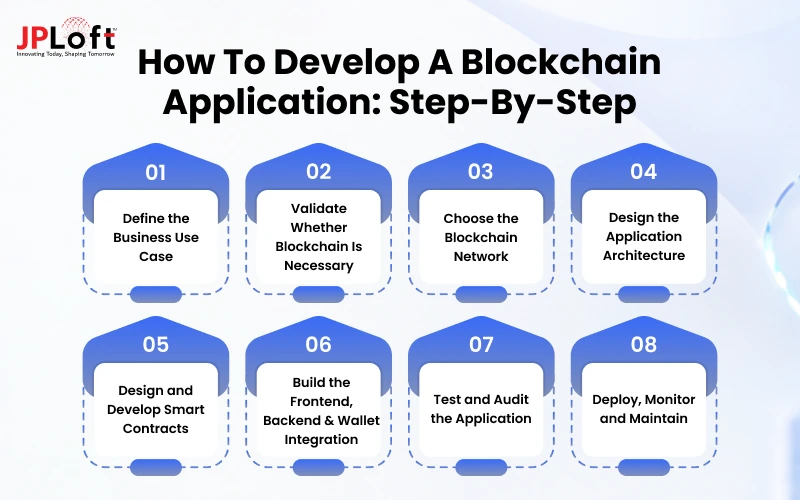
Step 1: Define the Business Use Case
Every blockchain app development journey begins with a clear business use case, not the technology itself or trends.
-
What process needs more transparency and trust?
-
Can a normal database solve this instead?
-
Who benefits most: customers, partners, or your team?
A well-defined use case guides every later decision, from platform selection to smart contract design, and keeps your entire team focused on solving the real problem instead of chasing trends.
Step 2: Validate Whether Blockchain Is Necessary
Not every idea needs blockchain, so validating this decision early saves both time and development budget down the line.
-
Do multiple parties need to trust shared data?
-
Is a central authority slowing things down?
-
Will removing middlemen cut real costs?
If most answers are yes, blockchain fits naturally into your business model; if not, a simpler and cheaper traditional application will likely serve your users just as well for now.
Step 3: Choose the Blockchain Network
Once you confirm blockchain is right for you, the next step in the blockchain app development process is choosing your network.
-
Ethereum suits public apps needing smart contracts.
-
Hyperledger fits private, permissioned enterprise systems.
-
Corda works well for finance and trade.
Your choice affects speed, cost, security, and which developers you will need to hire, so weigh scalability and community support before committing to one platform for the long run.
Step 4: Design the Application Architecture
Application architecture defines how your blockchain app development guide translates into a real, working system for end users.
-
Decide between on-chain and off-chain data storage.
-
Plan node structure and consensus mechanism early.
-
Map how backend systems connect to the chain.
Good architecture balances performance with decentralization, since storing too much data on-chain slows transactions, while poor planning here often leads to costly rework once development is already underway for most teams.
Step 5: Design and Develop Smart Contracts
Smart contracts are the backbone of most blockchain applications, automating rules and transactions without needing a middleman involved.
-
Write contract logic in Solidity or similar languages.
-
Test extensively using tools like Remix or Hardhat.
-
Audit code to catch vulnerabilities before launch.
Since smart contracts are nearly impossible to change after deployment, thorough testing and security audits at this stage protect your users and your reputation from expensive, irreversible mistakes later.
Step 6: Build the Frontend, Backend & Wallet Integration
With contracts ready, developers build the visible layers of the app so users can actually interact with the blockchain.
-
Front-end frameworks like React handle the user interface.
-
Backend servers manage off-chain data and APIs.
-
Wallet integration lets users sign and pay for transactions.
This is where blockchain mobile app development becomes tangible, connecting design, logic, and infrastructure into one smooth product that feels as simple to use as any application.
Step 7: Test and Audit the Application
Testing goes far beyond checking bugs since blockchain apps handle real money, identity, and data that cannot be undone.
-
Run functional tests across every user flow.
-
Perform third-party security audits on smart contracts.
-
Stress-test the network under high transaction load.
Skipping this stage is one of the most common and costly mistakes in developing blockchain applications, since an overlooked flaw can expose funds, leak sensitive data, or break user trust.
Step 8: Deploy, Monitor and Maintain
Launching your app is not the finish line; it marks the start of ongoing blockchain solutions development and support.
-
Deploy to mainnet only after a successful testnet run.
-
Monitor network performance, gas fees, and uptime.
-
Push updates carefully since some changes are irreversible.
Ongoing maintenance keeps your application secure against new threats, compliant with changing regulations, and aligned with user needs as your platform grows and evolves beyond its initial launch.

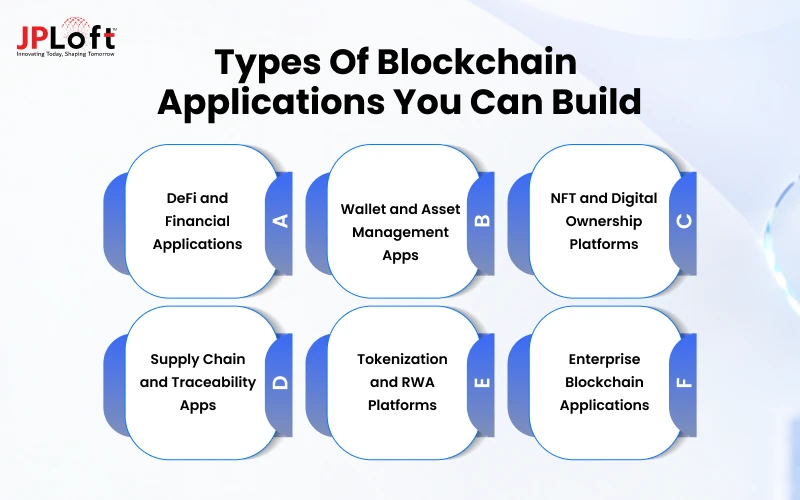
Types of Blockchain Applications You Can Build
Blockchain applications extend far beyond cryptocurrency, now powering diverse solutions across many industries. Here are the six most common types businesses choose when they develop blockchain application solutions today.
Type 1. DeFi and Financial Applications
Decentralized finance apps let users lend, borrow, and trade assets directly, removing banks and other middlemen from the process entirely.
Partner with a trusted smart contract development company to handle transactions automatically, offering transparency, lower fees, and round-the-clock access compared to traditional financial institutions and services.
Type 2. Wallet and Asset Management Apps
Wallet apps store private keys securely, letting users send, receive, and monitor digital assets from a single, simple interface.
Many wallets also connect directly to decentralized apps, making it easy to manage crypto, tokens, and NFTs in one place.
Type 3. NFT and Digital Ownership Platforms
NFT platforms let creators mint, sell, and trade unique digital assets, from art to collectibles, using verifiable blockchain records.
Businesses often create a blockchain app for this purpose to prove authenticity and ownership without relying on centralized marketplaces.
Type 4. Supply Chain and Traceability Apps
Supply chain apps track goods from origin to delivery, recording every step on an unchangeable, shared ledger for all parties.
This visibility reduces fraud, verifies authenticity, and helps businesses respond faster when issues arise anywhere across the supply network.
Type 5. Tokenization and RWA Platforms
Tokenization converts real-world assets, like real estate or bonds, into digital tokens that represent fractional, tradable ownership shares.
This approach opens investment access to smaller investors and improves liquidity for assets that were once difficult to trade.
Type 6. Enterprise Blockchain Applications
Large organizations build a blockchain application to streamline internal processes like record-keeping, compliance, and cross-department data sharing securely.
These private, permissioned networks give companies control over who accesses data, balancing blockchain benefits with existing business requirements.
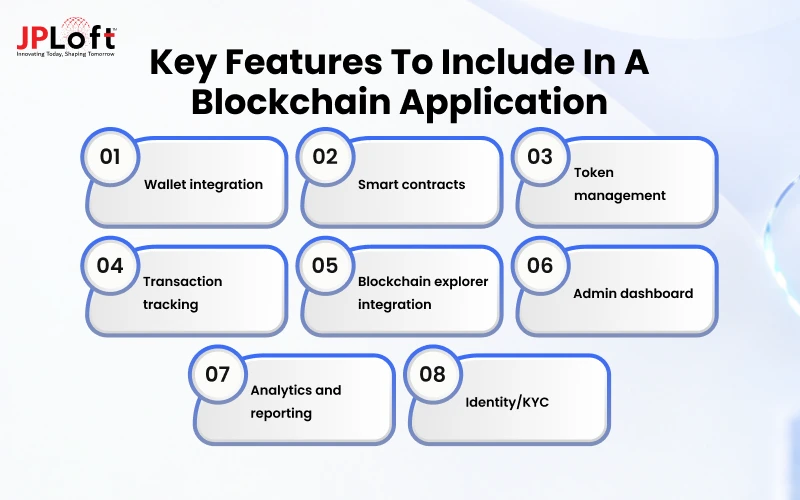
Key Features To Include in a Blockchain Application
A strong blockchain application needs certain core features working together to stay secure, functional, and easy to use for every type of end user. Let’s discuss some of them in detail.
1. Wallet integration
Wallets let users store, send, and receive digital assets securely, connecting directly to the blockchain network for real-time balance tracking.
2. Smart contracts
Smart contracts automate rules and transactions without intermediaries, executing predefined actions instantly once specific conditions on the blockchain are met.
3. Token management
Token management handles the creation, distribution, and tracking of digital tokens, ensuring accurate balances and smooth transfers across the entire network.
4. Transaction tracking
This feature records every transaction in real time, giving users a transparent, searchable history of transfers, balances, and network activity.
5. Blockchain explorer integration
Explorer integration lets users verify transactions independently, viewing block details, hashes, and confirmations directly without needing external third-party tools.
6. Admin dashboard
An admin dashboard gives operators centralized control over users, transactions, and permissions, simplifying oversight without compromising the network's decentralized structure.
7. Analytics and reporting
Analytics tools track usage patterns, transaction volumes, and performance metrics, helping teams make informed decisions and spot issues before they escalate.
8. Identity/KYC
Identity verification confirms user authenticity for regulated use cases, balancing compliance requirements with blockchain's core privacy and decentralization principles.
Recommended Tech Stack for Blockchain App Development
Choosing the right tech stack directly affects how secure, scalable, and maintainable your application becomes. Here is the recommended stack our developers use for modern blockchain projects.
|
Layer |
Recommended Tools |
|
Blockchain |
Ethereum, Solana, Polygon/L2s, Hyperledger Fabric |
|
Smart Contracts |
Solidity, Rust, and relevant frameworks |
|
Frontend |
React / Next.js |
|
Blockchain Interaction |
Current libraries such as viem/wagmi for EVM applications |
|
Wallets |
WalletConnect-compatible wallets, embedded wallets, and smart-account solutions where appropriate |
|
Storage |
IPFS / Arweave where decentralized storage is genuinely needed |
|
Backend |
Node.js / relevant server-side stack |
|
Database |
PostgreSQL / MongoDB depending on application requirements |
|
Indexing |
The Graph, Ponder, or a custom indexing approach depending on requirements |
Blockchain App Security Best Practices
Security is not optional when you build blockchain app solutions that handle real money and sensitive data. These practices protect users, funds, and your reputation from costly, avoidable breaches.
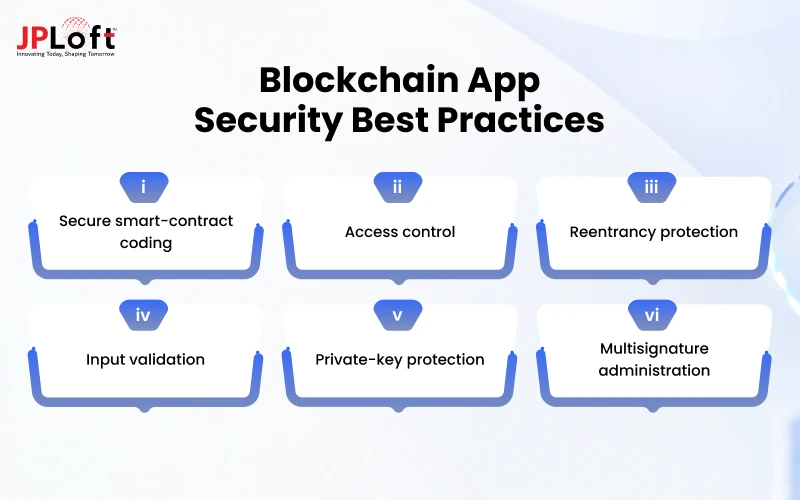
1. Secure smart-contract coding
Poorly written contracts are the most common entry point for attackers, so secure coding practices matter from day one.
-
Follow established standards like OpenZeppelin libraries
-
Avoid hardcoded values and unnecessary complexity
-
Conduct peer code reviews before deployment
2. Access control
Access control restricts who can perform sensitive actions within the application, preventing unauthorized users from altering critical functions.
-
Use role-based permissions for admin functions
-
Limit contract ownership to trusted, verified addresses
-
Log every permission change for auditing
3. Reentrancy protection
Reentrancy attacks let malicious contracts repeatedly withdraw funds before a transaction completes, making this one of blockchain's most damaging exploits.
-
Apply the checks-effects-interactions coding pattern
-
Use reentrancy guard modifiers in contracts
-
Test withdrawal functions under attack simulations
4. Input validation
Unvalidated inputs can crash functions or open doors for exploits, so every value entering a contract needs careful checking.
-
Validate data types, ranges, and formats
-
Reject unexpected or malformed transaction inputs
-
Sanitize user data before processing on-chain
5. Private-key protection
Private keys control access to funds and accounts, making their protection one of the most critical security responsibilities for any team.
-
Store keys in hardware wallets or vaults
-
Never hardcode keys within source code
-
Rotate and back up keys securely
6. Multisignature administration
Multisignature setups require multiple approvals before executing sensitive actions, reducing risk from a single compromised account or insider threat.
-
Require multiple signers for fund transfers
-
Set clear approval thresholds for admin actions
-
Distribute signing authority across trusted stakeholders
How Much Does It Cost to Build a Blockchain App?
The cost to build a blockchain app typically ranges from $25,000 to $300,000+, depending on complexity, features, and platform choices.
Simple wallet or tracking apps sit on the lower end, while multi-chain DeFi platforms with heavy smart contract logic and enterprise-grade security push costs toward the higher range.
Several factors directly influence where your project lands within this budget. Let’s discuss in detail.
-
Blockchain network: Public networks like Ethereum cost more in gas fees than private, permissioned chains.
-
Smart-contract complexity: Simple contracts cost less, while multi-functional or upgradeable contracts require significantly more development time.
-
Number of platforms: Building for web, iOS, and Android simultaneously multiplies design and development costs considerably.
-
Wallet integration: Supporting multiple wallet providers adds testing overhead and increases overall integration expenses.
-
UI/UX: Custom, polished interfaces cost more than templated designs but improve user retention and trust.
-
Backend: Complex backend logic, APIs, and off-chain data handling add meaningfully to development timelines.
-
Indexing: Real-time indexing for fast data retrieval requires additional infrastructure and specialized engineering effort.
-
Security audit: Third-party audits are essential for financial apps and can cost thousands depending on contract complexity.
Common Challenges in Blockchain App Development
Building on blockchain comes with its own set of hurdles beyond standard development. Knowing these challenges early helps you plan realistic timelines, budgets, and technical decisions from the start.
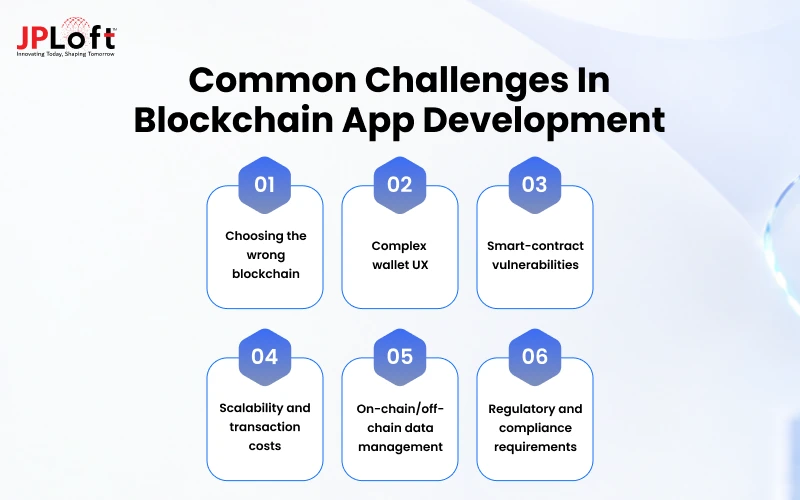
Challenge 1. Choosing the wrong blockchain
Many teams select a network based on popularity rather than fit, leading to high gas fees, slow transactions, or limited developer support later. Switching platforms mid-project wastes both time and money significantly.
Solution: Hire blockchain developers to match network choice to your specific use case, budget, and required transaction speed.
Challenge 2. Complex wallet UX
Wallet setup and seed phrase management confuse non-technical users, causing high drop-off rates during onboarding. This friction is one of the biggest barriers preventing mainstream adoption of otherwise well-built blockchain applications.
Solution: Simplify onboarding with custodial options or social login-based wallet solutions.
Challenge 3. Smart-contract vulnerabilities
Bugs in smart contracts are permanent once deployed, and attackers actively search for exploitable code. A single vulnerability can drain funds instantly, damaging both user trust and your company's reputation.
Solution: Conduct thorough audits and extensive testing before every mainnet deployment.
Challenge 4. Scalability and transaction costs
Popular networks slow down and become expensive during high traffic, frustrating users and limiting app growth. This directly affects how usable your application feels once real transaction volume increases.
Solution: Hire dedicated developers to use Layer 2 solutions or sidechains to reduce congestion and fees.
Challenge 5. On-chain/off-chain data management
Deciding what data belongs on-chain versus off-chain is tricky, since storing everything on-chain is costly while poor separation risks data integrity across systems.
Solution: Store only critical data on-chain and manage the rest off-chain securely.
Challenge 6. Regulatory and compliance requirements
Blockchain regulations vary widely by region and change frequently, especially for financial and identity-based applications. Non-compliance can result in fines, legal action, or forced shutdown of your application.
Solution: Work with legal experts early and build compliance into your architecture.

Why Choose JPLoft to Develop a Blockchain Application?
Building a secure, scalable blockchain application requires more than technical skill; it demands real industry experience.
JPLoft is a trusted blockchain development company helping startups and enterprises turn ideas into functional, production-ready products across fintech, healthcare, and supply chain sectors.
Our team works across leading platforms like Ethereum, Hyperledger, and Corda. They customize every solution to your specific business goals rather than applying a one-size-fits-all approach.
From smart contract development to wallet integration and security audits, we handle every stage with precision and transparency.
With a proven track record across global markets including the US and the Middle East, JPLoft combines technical depth with practical business understanding.
Whether you are building a DeFi platform, an NFT marketplace, or an enterprise blockchain system, our developers deliver solutions built for long-term scalability and trust.
Conclusion
Building a blockchain application in 2026 is no longer just about following trends. It is about solving real business problems with the right technology.
From defining your use case to choosing a network, developing smart contracts, and deploying securely, every step shapes how well your final product performs and scales.
Costs, security practices, and common challenges all play a role in shaping a realistic roadmap, whether you are building a DeFi platform, an NFT marketplace, or an enterprise-grade solution.
Getting blockchain app development right requires careful planning, experienced developers, and attention to detail at every stage.
If you are ready to move from idea to execution, partnering with a team that understands both the technology and your industry makes all the difference.
FAQs
Start by defining your use case, then choose a suitable blockchain network, design your architecture, develop smart contracts, build the frontend and backend, and test thoroughly before deployment.
Costs typically range from $25,000 to $300,000 or more, depending on network choice, smart contract complexity, platforms supported, and security requirements involved in the project.
Simple apps take around 3 to 4 months, while complex platforms with multiple integrations and audits can take 6 to 12 months to complete fully.
It depends on your use case: Ethereum suits public DeFi apps, Hyperledger fits enterprise systems, and Corda works well for finance and trade applications.
No, not all apps need smart contracts. Simple applications like basic data recording or wallets may function without them, depending on your specific requirements.
Yes, blockchain mobile app development is common today, letting users manage wallets, tokens, and transactions directly from iOS and Android apps.

Rahul Sukhwal is the CEO and Founder of JPLoft, a visionary technologist with 18+ years at the forefront of emerging tech innovation and software engineering. He channels deep software engineering and AI expertise into building smarter, scalable solutions that shape how forward-thinking businesses worldwide harness the true power of AI.




Share this blog