


Key Takeaways:
The Astrology mobile app development cost typically ranges from $10,000 to $150,000+, depending on several factors.
App features, technology stack, and UI/UX design are the biggest factors influencing the cost of an astrology app.
Hidden factors such as app maintenance, security, cloud hosting, and marketing can impact long-term budget planning.
Choosing the right revenue model, such as subscriptions or live consultations, improves ROI by 20-50%.
Partnering with JPLoft helps you build a scalable, cost-effective astrology app with expert guidance from planning to launch.
Astrology has become an important part of life, with millions trusting stars, horoscopes, and birth chart readings.
This growing interest is especially strong among Gen Z and millennials, who prefer mobile apps to explore personality traits, relationship compatibility, and daily horoscope updates.
As user demand continues to rise, the astrology app market is projected to reach $27.15 billion by 2035 with a CAGR of 6.0%, creating a good opportunity for businesses and startups to invest in astrology mobile applications.
However, before launching an astrology app, one question matters most: how much does it cost to make an astrology app?
Several factors affect the cost, including whether you are building an MVP or a feature-rich platform with AI-powered predictions, live astrologer consultations, and personalized reports.
Thus, this guide provides a clear breakdown of astrology app development cost, key factors, cost-saving strategies, revenue models, and more.
How Much Does it Cost to Build an Astrology Mobile App?
The cost typically ranges from $10,000 to $150,000+ for most business use cases. This range covers everything from app features to UI/UX complexity, tech stack, and team expertise.
However, the number only makes sense when you actually understand where these costs are incurred in the development process. Here is the complete and significant breakdown of how much does it cost to create an astrology app.
|
App Complexity |
Estimated Cost |
Key Features |
|
Basic App |
$10,000 – $45,000 |
Daily horoscopes, zodiac profiles, user registration, birth chart generation, and daily insight notifications. |
|
Mid-Level App |
$45,000 - $90,000 |
Personalised natal chart, customised horoscope readings, in-app text and video chat access, and astrology profile review. |
|
Advanced App |
$90,000 - $150,000+ |
AI-powered predictions, live astrologer consultations, AR/VR, multi-language support, wearable integration, and in-app payments. |
Factors Affecting the Cost to Make an Astrology App
For businesses planning to launch an astrology app, understanding how much does it cost to build an astrology app starts with evaluating a few key factors.
Therefore, before setting the final budget for the astrology app, here are a few important factors directly affecting the cost to create an astrology app.
1. App Features
The complexity and number of astrology app features highly impact the development cost. For instance, integrating a horoscope feature in the app is affordable, but upgrading to birth chart analysis and live astrologer consultation significantly increases the app's cost.
Therefore, instead of launching an app with every possible set of features, prioritise business requirements and validate the target market demand.
|
Feature Module |
What It Includes |
Estimated Cost |
|
Basic App Features |
User registration, profile management, zodiac details, daily horoscope, and push notifications |
$5,000–$15,000 |
|
Monetization Features |
Subscription plans, in-app purchases, payment gateway integration, promo codes, premium reports, and earnings history |
$8,000–$20,000 |
|
Personalised App Features |
Birth chart generation, compatibility reports, tarot readings, numerology, personalized horoscope, and saved preferences |
$10,000–$30,000 |
|
Live Reading Features |
Live chat, voice/video consultations, session history, ratings, and reviews |
$15,000–$40,000 |
|
User Engagement Features |
Daily notifications, gamification, rewards, social sharing, and personalized alerts |
$10,000–$25,000 |
|
Advanced Features |
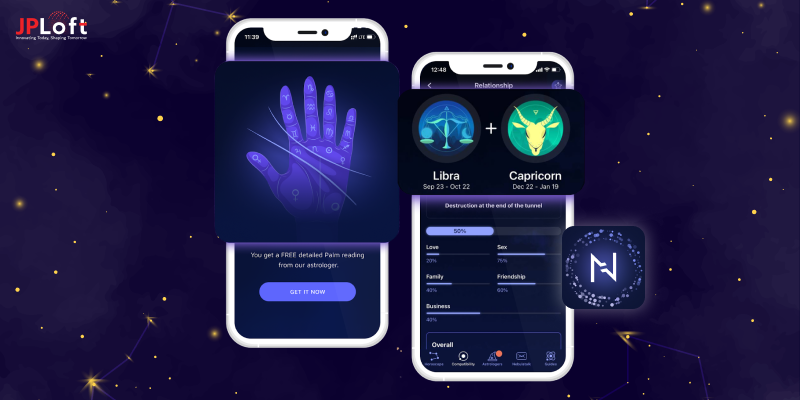
AI-powered predictions, image-based palm reading, voice recognition, AR experiences, predictive analytics, and an astrology podcast |
$20,000–$45,000 |
2. UI/UX Design Requirements
An app image can make or break the business profit. At this stage, the astrology mobile app cost depends on layout complexity, unique visual elements, custom animation, trending layout, and fast-performing app functions.
The better it sounds, the more time and budget it requires. To start an astrology business, you require skilled designers and extra time for personalising the user experience.
|
Design Element |
What It Includes |
Estimated Cost |
|
Wireframe |
User flow planning, screen layouts, feature hierarchy, navigation structure, and profile pages |
$2,000–$5,000 |
|
Visual Design |
Color palette, typography, zodiac-inspired themes, icons, illustrations, responsive layouts, and branding elements |
$4,000–$10,000 |
|
Horoscope & Astrology Dashboard Design |
User-specific horoscope, saved preferences, favorite readings, notifications, and zodiac insights |
$8,000–$18,000 |
|
Tarot & Astrology Interface Design |
Tarot card reading screens, card deck visuals, birth chart layouts, compatibility reports, and saved reading history |
$30,000 -$55,000 |
3. Technology Stack Selection
The technology stack directly affects your app's performance, scalability, and overall development cost to make an astrology app. Choosing advanced technologies such as AI, augmented reality, voice recognition, and video consultations improves user experience and supports long-term business growth.
However, integrating these technologies increases the cost to build an astrology mobile app due to higher development effort and technical complexity.
|
App Complexity |
What It Includes |
Estimated Cost |
|
Basic Backend Setup |
Server architecture, APIs, authentication, business logic, user management, and backend framework setup |
$15,000 -$45,000 |
|
Basic Front-End Setup |
Mobile app interface development, responsive screens, navigation, and user interactions |
$8,000-$15,000 |
|
Cloud Platforms |
Cloud hosting, storage, CDN, auto-scaling, backups, monitoring, and server management |
$25,000 -$50,000 |
|
AI/ML Ready |
AI App setup, AI responses, machine learning model integration, and recommendation engine |
$60,000-$95,000 |
|
Secure Database |
Database architecture, encryption, GDPR/CCPA compliance, secure backups, and data protection |
$20,000 -$40,000 |
|
Deployment Setup |
CI/CD, server setup, App Store & Play Store deployment, and testing |
$10,000 -$25,000 |
4. Third-Party Integrations
A modern astrology application drives smooth digital growth and better customer engagement by integrating or adding external tools. Selecting the right astrology API integrations helps streamline transaction and billing setup, in-app chat features for live chatting with astrologers, push real-time notifications, and CRM management.
Now, every third-party integration adds development cost, time, testing, and continuous app maintenance.
|
App Complexity |
What It Includes |
Estimated Cost |
|
Horoscrope API |
Daily, weekly, or yearly horoscope API, and zodiac calculations |
$1,000-$5,000 |
|
In-App Payment |
Subscription billing, in-app purchases, wallet recharge, card payments, and secure payment processing |
$1,500-$4,000 |
|
Video Call API |
Live video consultations with astrologers, call scheduling, and session management |
$1,000-$3,000 |
|
Tarot API |
Tarot card generation, daily card reading, card interpretation, and quality tarot testing |
$1,500-$4,500 |
|
Communication Integration |
Live chat, SMS, email notifications, push notifications, and in-app messaging |
$1,000-$3,000 |
5. Development Team Location
A scalable and high-performing astrology app requires experienced team support. The location where the team is situated affects the cost to hire astrology app developers.
Whether you hire an in-house team, freelancers, or partner with a custom mobile app development company in the USA, development costs vary based on expertise, engagement model, and project complexity.
|
Region |
Hourly Rate |
|
Asia |
$15 – $50 |
|
Eastern Europe |
$30 – $75 |
|
Western Europe |
$60 – $130 |
|
North America |
$70 – $150+ |
Hidden Factors Affecting the Astrology Mobile App Cost
Now that you are clear about the factors affecting the cost to develop an astrology app, creating an app will be an easier process. Thinking alike, right?
But no, that’s not the case here. Many business founders overlook certain key hidden factors before and after the launch.
Therefore, to avoid such cases in your situation, here are the costs to avoid unexpected financial surprises during an astrology app.
{A} App Store Fees
To publish your app on the App Store and Google Play Store, it requires certain fees for launching and distributing your application. Businesses must carefully consider these fees, review timelines and policies before launching.
Hidden cost:
-
Google Store: $25 is the one-time registration fee.
-
App Store: $99 is the annual enterprise program fee.
{B} Customer Support Infrastructure
As the user starts interacting with the app, their queries related to horoscope, subscription renewals, and premium features availability become unavoidable. Building and maintaining live chat, AI-powered chatbot adds additional cost and improves user retention.
Hidden cost: $500–$5,000/month for customer support feature integration.
{C} Promotional Effort
To increase the visibility of the astrology app, promotional strategies such as paid advertising and social media campaigns help generate higher downloads. However, several business founders often overlook the marketing expense when planning the cost to build an astrology mobile app.
Hidden cost: $2,000–$20,000+/month depending on the business's scalability and target market.
{D} Ongoing Maintenance
Regular app maintenance is necessary for bug fixes, app compatibility updates, security patches, and introducing new features, adding up to higher development costs, but ensures smooth app performance.
Hidden cost: 15-20% of the initial development cost.
{E} Security and Legal Compliance
Astrology apps collect highly sensitive information from users to generate effective daily horoscopes and future events. It includes exact birth location, dates, and time. Now, to maintain security and privacy, ensure the app complies with strict legal protocols and data regulations such as GDPR and CCPA.
Hidden cost: Increases the total development cost by $2,000–$15,000.
{F} Advanced Technology Integrations
Optimising astrology app development trends such as AR/VR, machine learning, and IoT technology integration creates a unique app identity and improves user experience. But it also includes adding a custom framework, API testing, and additional high costs.
Hidden cost: $10,000–$100,000+ added to the total development cost.
Pro tip: Before planning to build an astrology app, clarify the strategy for scalability; in the future, if redevelopment or additional changes arise, it does not impact the overall development cost.
How to Reduce Astrology Mobile App Development Cost?
Sometimes, reducing the cost of an astrology mobile app can impact the overall product quality. This should not happen.
With the right strategy, development approach, and stable planning for long-term growth, reducing the cost to create an astrology app becomes strategic and easier.
► Start With An MVP
Start with an MVP and focus on revenue-generating features such as daily horoscope updates, user profiles, consultation booking, premium horoscope reports, subscription plans, and launch the app to a smaller audience group first.
This approach helps validate market demand and identify technical issues before investing further. It also reduces the cost to develop an astrology mobile app by preventing unnecessary spending on features users may never adopt.
-
Estimated Cost Savings: This strategy can reduce the overall astrology app cost by up to 60%.
► Build a Cross-Platform App
Many successful and top astrology apps today are profitable. The reason is that business owners have strategically used cross-platform app technology. This is one of the strongest cost-effective solutions, which uses a single platform for iOS and android function capability.
Frameworks like Flutter or React Native work on multiple platforms, saving time and cost for developers, and ensuring smooth astrology app functions.
- Estimated Cost Savings: This strategy can reduce the overall astrology app cost by up to 20%.
► Design a Scalable Architecture
Planning for scalable architecture helps to save time on future changes and significantly reduces redevelopment costs in the future.
Moreover, apart from just saving the cost, a scalable architecture also helps to introduce smart future trending AI-powered recommendations, live consultation, and maintain the system flow when user retention increases.
-
Estimated Cost Savings: This strategy can reduce the overall astrology app cost by up to 10%.
► Choose an Experienced Astrology App Developer
Hiring an in-house team is very costly, time-consuming, and involves several costs, such as salaries, infrastructure, advanced technology, and tool setup. Therefore, to save on the cost to create an astrology app, businesses can focus on hiring freelancers or outsourcing to a development team.
Check profile, reviews, and client testimonials and verify whether the company has experience in the astrology industry. This reduces costs and delays and helps businesses launch the app on time.
-
Estimated Cost Savings: This strategy can reduce the overall astrology app cost by up to 25%.
What are the Revenue Models for Astrology Apps
The astrology industry is revolutionizing with increasing user trust and reliance on astrology apps. But here comes the main point: how do businesses make money from this? The answer lies in the top revenue models. Carefully look into how astrology apps make money.
1. Subscription Plans
This model provides users with ad-free access and detailed horoscope reports by charging monthly or yearly subscription fees. It helps businesses generate recurring revenue and improve long-term user retention.
2. Advertising Revenue
This model allows businesses to partner with advertisers for banner ads, rewarded videos, or product promotions within the app in exchange for advertising revenue. It is best suited for apps with a large active user base and high daily engagement.
3. Seasonal Purchase
Under this model, businesses can generate revenue through seasonal purchase horoscope readings for special festive occasions. It is ideal for horoscope startups focusing on limited-time natal chart offers.
4. Personalized Report Purchases
Selling personalised astrology reports, such as birth chart analysis, compatibility reports, career predictions, or yearly horoscope reports, helps businesses earn stable earnings. This model is best suited for businesses offering personalised astrology services.
5. Live Consultation Charges
Charge for live chat, audio, or video calls with tarot readers, astrologers, or spiritual advisors. This model is best suitable for astrology marketplace platforms and online expert-led astrology consultation businesses.
6. Merchandise Selling
Generate sales through astrology-related products, zodiac sign wallpapers for users. It is best suited for businesses looking to expand their digital services.
How Can JPLoft Help Build Cost-Effective Astrology Apps?
Launching an astrology app is not about spending more budget; it is about balancing development costs with the right features. Therefore, to build a successful app, it is important to choose a reliable partner that helps you balance cost with profitability.
JPLoft, an astrology app development company, helps startups, business owners, and enterprises build scalable and cost-effective astrology applications.
Our expert team helps reduce costs through scalable architecture, cross-platform solutions, and smart and secure third-party API integration.
We also incorporate smart and future-trending technological advances such as AR/VR, machine learning, and blockchain integration to improve app productivity.
From planning and development to deployment and post-launch support, our team works closely with every client to deliver a scalable astrology app that balances cost, performance, and long-term business growth.
Conclusion
If you are planning to build an astrology platform, then astrology app development cost is a major factor that requires careful consideration requires your assistance.
The cost for developing an astrology app ranges from $10,000 to $150,000+. Building an app requires careful consideration of important factors such as UI/UX design, app features, AI capabilities, technology stack, development approach, and long-term business goals.
Instead of focusing only on reducing expenses, businesses should invest in the right features, scalable architecture, and a reliable development partner to maximize return on investment.
Starting with an MVP, choosing effective monetization models, and planning for future growth can help control costs while creating a competitive astrology platform.
Whether you are a startup founder validating a new idea, a business expanding into the wellness industry, or an investor exploring the astrology market, careful planning is essential.
FAQs
The cost of an astrology app ranges from $10,000 to $150,000+. This is the overall estimation; it can be modified according to complex app features, UI/UX functionality, and advanced AI integration for predictions and predictive analysis.
The important factors affecting astrology app development cost include user profile creation, secured payment gateways, live chat or video consultations with astrologers, and daily horoscope updates.
To build a smart astrology app, it generally takes 2 to 10+ months. This duration depends on whether you are building an MVP or a custom application with AI-enabled features, personalisation, and a daily horoscope update.
Businesses can reduce astrology mobile app development cost by simplifying the app features, clarifying business goals, understanding the target consumer challenges, and suggest solution with MVP first app solution.
The best monetization model for astrology apps includes astrology consultation fees, an e-commerce store for selling stones and crystals, and subscription-based models.

Rahul Sukhwal is the CEO and Founder of JPLoft, with 18+ years of experience in software engineering, emerging technologies, and digital product development. His expertise spans artificial intelligence, including AI agents, generative AI, LLMs, chatbots, computer vision, and machine learning, as well as blockchain, IoT, AR/VR, mobile, web, and enterprise software. He focuses on applying these technologies to real business challenges across industries such as healthcare, education, mobility, finance, real estate, and on-demand services.


Share this blog