


Key Takeaways
The astrology app market is growing rapidly (20% CAGR), making it a high-potential, scalable business opportunity.
The development process includes market research, feature planning, UI/UX design, development, testing, and deployment.
Core success factors of an astrology app include personalization, real-time updates, and strong user engagement loops.
The cost to build an Astrology app ranges from $10,000 to $150,000+, influenced by features, AI integration, and platform choices.
Long-term success depends on scalability, performance optimization, and continuous post-launch improvements.
Astrology and horoscopes have been around for decades, and so have their believers. Recent reports indicate that more than 30% of Americans consult an astrologer at least once a year.
With the launch of modern-day astrology platforms, including apps and websites, the interest and demand are also increasing. The global demand is growing at a 20% CAGR, creating an opportunity for investors to launch a scalable and profitable astrology app.
The development process of an astrology app starts with understanding the market requirements, designing the app, selecting tech, developing the app, testing, and launching it.
In this astrology app development guide, we will discuss the development process in detail, the cost, tech stack, challenges, and best practices in building the platform.
What is an Astrology App & How Does It Work?
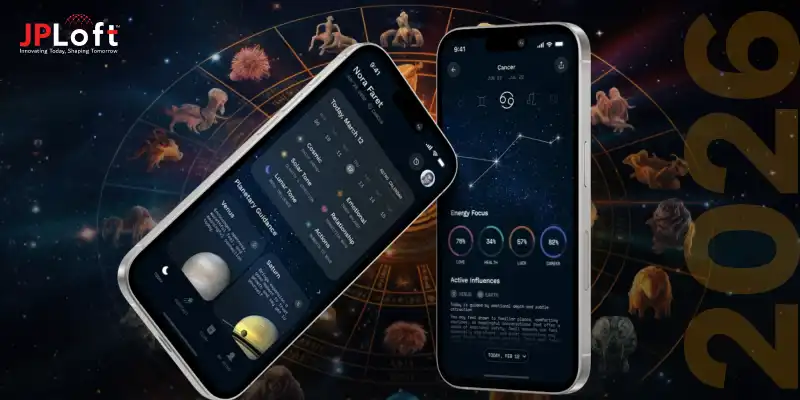
An astrology app is a digital platform that delivers personalized astrological insights by analyzing a user’s birth details alongside real-time planetary movements.
In 2026, astrology apps will go far beyond generic horoscopes. They combine astronomical data, AI-driven interpretation, and behavioral insights to provide tailored guidance on relationships, career, health, and life decisions.
Leading platforms like Co–Star and The Pattern showcase how modern apps leverage data science and automation to create highly engaging, real-time experiences.
For businesses, understanding how to build astrology apps is important to build scalable astrology platforms with strong user retention fueled by personalization and continuous engagement.
How Do Astrology Apps Work?
Astrology apps follow a set process, as mentioned below:
-
User enters birth details, including date, time, and location.
-
System processes inputs to generate an accurate natal chart.
-
Backend algorithms calculate planetary positions and house placements.
-
AI engine interprets astrological data into human-readable insights.
-
Users engage via chat, live consultations, or AI astrologer assistants.
-
Monetization layers enable subscriptions, premium reports, and paid sessions.
-
Real-time transit tracking updates predictions dynamically.
-
App delivers daily, weekly, and event-based personalized horoscopes.
Why Invest in an Astrology App?
The projected growth in demand for astrology apps is one of the reasons, but several other reasons exist that justify why entrepreneurs should plan to create an astrology app.
These reasons include:
1. High User Engagement & Retention
Astrology apps are among the apps with high user engagement and retention, as they are habit-forming by nature. Daily horoscopes, notifications, and life-event insights encourage repeat usage and long session times.
2. Strong Subscription-Based Revenue Potential
Planning for an astrology app offers a better revenue potential, from premium reports, compatibility readings, to live consultations.
These features create consistent recurring income streams beyond ad-based monetization.
3. Growing Wellness & Self-Discovery Trend
Astrology apps are no longer just positioned as a spiritual or divine institution. But they are now positioned alongside mental wellness and self-improvement tools, expanding their relevance and audience base.
4. Multiple Monetization Channels
Businesses investing to develop an astrology app can diversify their revenue opportunities through subscriptions, in-app purchases, live astrologer sessions, and personalized content upselling.
5. Low Content Decay & Evergreen Value
Unlike many app categories, astrology content remains consistently relevant, driven by ongoing planetary movements and personal life events. Such ensures sustained user curiosity, repeat engagement, and long-term retention across different user segments and lifecycle stages.
Types of Astrology Apps
Before proceeding to build an astrology app, you must know about the types of astrology apps, which vary based on user intent and business models. They can be categorized into a few core types, each serving a different purpose and engagement style.
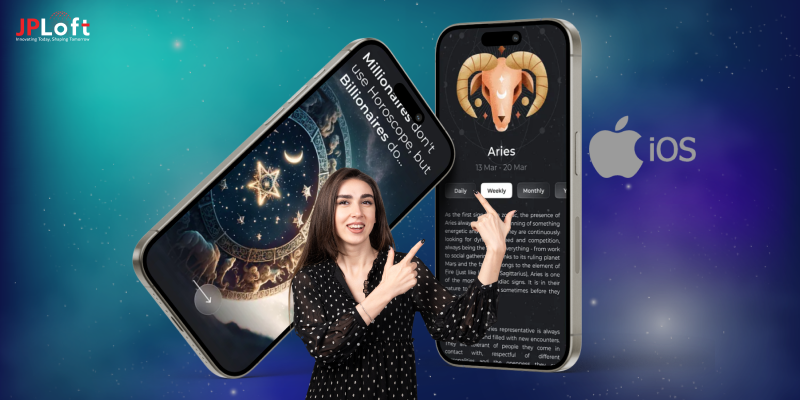
1. Daily Horoscope Apps
These apps provide regular predictions, such as daily, weekly, or monthly horoscopes. They are content-driven, easy to scale, and ideal for attracting a broad user base.
2. Birth Chart & Personalized Insight Apps
Focused on detailed natal chart analysis, these apps deliver highly personalized insights based on the user's birth data. They offer deeper engagement and higher retention.
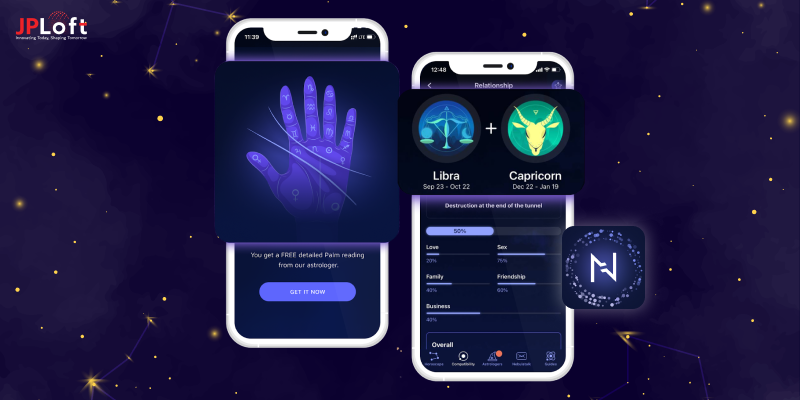
3. Compatibility & Relationship Apps
These apps analyze compatibility between users using astrological data. They are highly engaging and often used for social sharing and repeated interactions.
4. Live Consultation Apps
Platforms that connect users with professional astrologers via chat, call, or video. These apps generate strong revenue through paid sessions and consultations.
5. AI-Powered Astrology Apps
Advanced apps that use AI to deliver real-time, conversational, and behavior-based insights. These apps focus on personalization and continuous user engagement.
Must-Have Features of an Astrology App
Building a successful astrology app requires selecting the right set of features that align with the user's needs and interests.
Here are the key astrology app features that need to be considered when planning to build an app in 2026.
|
Feature |
Key Capabilities Included |
Description |
Business Impact |
|
User Profiling & Chart Engine |
Birth data input, natal chart generation, planetary calculations |
Captures user data and generates the foundational astrological chart |
Ensures accuracy and core app reliability |
|
Personalized Predictions |
Daily/weekly/monthly horoscopes, compatibility analysis, real-time transit updates |
Delivers dynamic, tailored insights based on user charts and planetary shifts |
Drives repeat usage and engagement |
|
AI & Insight Engine |
AI interpretations, NLP-based insights, and behavioral personalization |
Converts complex data into human-like, evolving guidance |
Enhances experience and differentiation |
|
User Interaction Layer |
Chat (AI/astrologers), voice readings, notifications |
Enables interactive and real-time user engagement |
Improves retention and session duration |
|
Engagement Ecosystem |
Gamification, content feeds, social sharing |
Keeps users engaged beyond core predictions |
Builds habit loops and organic growth |
|
Monetization System |
Subscriptions, in-app purchases, and live consultation booking |
Enables multiple revenue streams within the app |
Drives scalability and revenue growth |
Step-by-Step Process to Build an Astrology App
A well-defined astrology app development guide helps build a high-performing app that balances product thinking, technical execution, and long-term scalability.
Here’s a refined step-by-step process of how to develop an Astrology App:
Step 1. Market Research & Product Strategy
The steps to develop an astrology app start with clear market understanding and product direction. This step ensures your app solves real user needs while standing out in a competitive landscape.
► Competitor & Trend Analysis
Conduct app market research, analyze leading apps, their features, and personalization trends to identify gaps and differentiation opportunities.
► Audience & Product Definition
Define target users, core use cases, and decide whether your astrology app will be content-driven, AI-based, or consultation-focused.
Step 2. Feature Planning & User Journey Mapping
Once the product strategy has been defined, the next step to create astrology app is to translate it into a structured mobile app feature set. This step ensures your astrology and horoscope app is intuitive, engaging, and built for retention.
► Feature Prioritization
Before proceeding, finalize the core and advanced feature clusters for your astrology app aligned with user needs and business goals.
► User Flow Mapping
Design onboarding, insight consumption, and re-engagement journeys to create smooth, habit-forming user experiences.
Step 3. UI/UX Design & Prototyping
The design of the app plays a critical role in making a complex astrological app simple, engaging, and emotionally resonant for users. So partner with an experienced UI/UX design service provider at this step.
► Wireframing & Structure Design
At this stage, create app wireframes that can define layouts and navigation flows that organize insights clearly and reduce user friction.
► Prototype Testing & Validation
Develop interactive app prototypes to test usability, validate flows, and refine the experience before development begins.
Step 4. Development & System Integration
This stage focuses on building the core infrastructure of your astrology app, building the astrology app tech stack, and combining backend logic, frontend interfaces, and essential integrations into a cohesive system.
► Backend & Astrology Engine Development
The next step focuses on developing scalable systems to handle user data, astrological calculations, and real-time processing of planetary movements.
► Frontend Development & API Integration
Build responsive app interfaces and integrate APIs for payments, chat, notifications, and real-time data synchronization.
Step 5. Testing, QA & Performance Optimization
Before launch, the app must be tested thoroughly to ensure accuracy, stability, and a seamless user experience across devices and conditions.
► Functional & Accuracy Testing
This astrology app testing stage validates features, user flows, and the correctness of astrological calculations and outputs.
► Performance & Security Optimization
Optimize speed, scalability, and data protection measures to ensure smooth performance and secure handling of sensitive user information.
Step 6. Deployment & App Store Optimization
Once testing is complete, the app is prepared for launch with a focus on visibility, discoverability, and performance tracking from day one.
► App Store Deployment
Launch your astrology app on the App Store or publish the App on the Play Store with proper configurations and compliance checks.
► ASO & Analytics Setup
Optimize app listings with keywords, visuals, and descriptions while integrating analytics tools to track performance and user behavior.
Step 7. Maintenance, Monitoring & Continuous Optimization
After launch, the role of developer doesn’t end, but it shifts to app maintenance services, to ensure improved stability and platform optimization based on real user behavior and system demands.
► Performance Monitoring & Issue Resolution
Continuously track app performance, crash reports, latency, and system health to quickly identify and resolve issues affecting user experience.
► Regular Updates & Feature Enhancements
Release updates to fix bugs, improve features, and enhance personalization based on user feedback and usage patterns.
► Scalability & Infrastructure Optimization
Upgrade backend systems, optimize databases, and scale infrastructure to handle increasing users and real-time data processing efficiently.
How Much Does It Cost to Build an Astrology App?
The astrology app development cost can range anywhere from $10,000 to $150,000, depending on features, complexity, and technology choices.
On average, a basic astrology app costs can range anywhere between $10,000 to $40,000, while mid-level apps range from $40,000 to $80,000, and advanced AI-powered platforms can cost $80,000 to $150,000+.
|
App Type |
Key Features Included |
Estimated Cost |
Estimated Timeline |
|
Basic App |
Daily horoscopes, user profile, basic UI, notifications |
$10,000 – $25,000 |
2-3 Months |
|
Mid-Level App |
Birth charts, compatibility, chat, and payments |
$25,000 – $60,000 |
4-5 Months |
|
Advanced App |
AI insights, live consultations, and real-time data |
$60,000 – $150,000+ |
6-8+ Months |
Challenges In Building Astrology Apps (& Solutions)
The astrology app development process is not just about the coding or technical aspects, but it's also about balancing accuracy, personalization, scalability, and user trust.
Here are the key astrology app development challenges that businesses face, along with practical solutions:
Challenge 1. Ensuring Accuracy of Astrological Calculations
Even minor inaccuracies in birth chart calculations or planetary positions can break user trust and reduce credibility.
Solution: Use reliable astronomical datasets, validated calculation libraries, and implement multi-level testing to ensure precision across all astrological outputs.
Challenge 2. Translating Complex Data into User-Friendly Insights
Raw astrological data is complex and difficult for average users to understand. Poor interpretation leads to low engagement.
Solution: Hire AI developers and build AI/NLP-driven interpretation engines that convert technical data into simple, relatable, and personalized insights for users.
Challenge 3. Achieving Meaningful Personalization at Scale
Generic horoscopes no longer retain users. However, delivering deep personalization for thousands of users simultaneously is complex.
Solution: Combine birth chart data with behavioral analytics and AI models to deliver dynamic, evolving, and highly personalized content.
Challenge 4. Balancing Monetization with User Experience
Over-aggressive app monetization strategies (paywalls, constant upsells) can disrupt user experience and increase churn.
Solution: Adopt a freemium model where core features remain accessible, and premium offerings enhance value without interrupting the user journey.
Challenge 5. Handling Real-Time Data and Performance Load
Real-time planetary tracking, notifications, and high user activity can strain system performance and cause latency issues.
Solution: Partner with a cloud development company and plan for scalable architectures with optimized APIs and caching mechanisms to ensure smooth, real-time performance.
Challenge 6. Building User Trust and Data Privacy Compliance
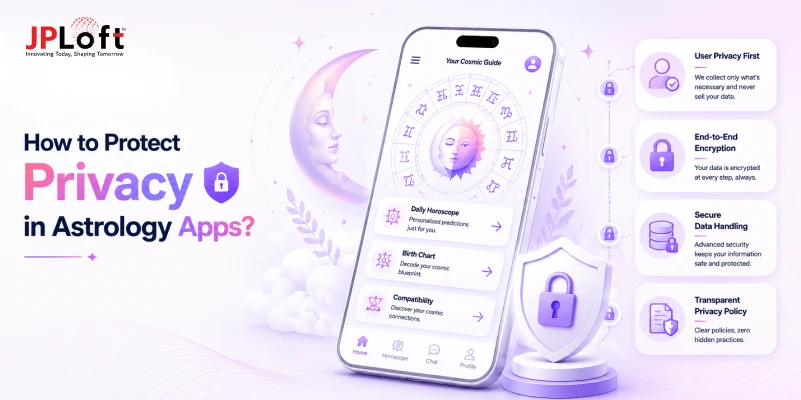
Astrology apps collect sensitive personal data (birth details), making users concerned about privacy and data misuse.
Solution: Implement strong encryption, transparent data policies, and compliance with global data protection standards to build long-term user trust.
Best Practices To Ensure Astrology Apps' Scalability
Simply planning to launch astrology apps is not enough. Scalability must be built into the system from the start to support real-time processing, growing users, and continuous performance.
[A] AI-Ready System Architecture
Design systems that can support AI models, data pipelines, and increasing personalization demands without re-architecting later.
[B] Cloud-Native & Microservices Infrastructure
Use cloud platforms and modular services to scale components like astrology engine, notifications, and user systems independently.
[C] Real-Time Data Processing Capabilities
Implement event-driven architecture and optimized APIs to handle continuous planetary updates and instant insight delivery.
[D] Efficient Caching & Data Optimization
Reduce load by caching frequently used insights and optimizing database queries for faster response times.
[E] Strong Security & Compliance Framework
Ensure encrypted data handling, secure APIs, and compliance-ready systems to protect sensitive user information at scale.
Future Trends in Building an Astrology App
Astrology apps are shifting beyond infrastructure improvements toward experience innovation and intelligence-driven platforms.
1. AI as a Digital Companion
AI in astrology apps are helping apps to evolve into conversational guides that provide contextual, emotionally aware insights rather than static predictions.
2. Predictive & Behavior-Based Astrology
Future apps will combine astrological data with user behavior to deliver proactive, situation-based recommendations.
3. Deeper Integration with Wellness Platforms
Astrology will merge with mental wellness, mindfulness, and self-improvement ecosystems to become part of daily routines.
4. Immersive & Interactive Experiences
Expect more interactive dashboards, visual storytelling, and even AR-based astrology experiences.
5. Community-Led Engagement Models
Apps will introduce social layers where users can share insights, explore compatibility, and build communities.
Why Partner with JPLoft To Build Astrology Apps?
Choosing the right development partner is critical to build products that perform, scale, and retain users.
JPLoft, as a trusted astrology app development company, combines a product-focused mindset with strong technical expertise to deliver apps that go beyond basic functionality.
With 16+ years of experience, a deep understanding of personalization, real-time data processing, and user engagement, the team ensures your app feels intuitive and valuable from the first interaction.
From integrating AI-powered insight engines to ensuring seamless performance under growing user demand, JPLoft focuses on both experience and reliability.
Their end-to-end development process, from strategy and design to deployment and optimization, helps businesses launch faster while building a future-ready, scalable platform.
Conclusion
Planning to build an astrology app in 2026 is about offering intelligent, personalized, and scalable digital experiences to the users.
As user expectations shift toward real-time insights, AI-driven interpretations, and seamless interaction, businesses need to approach development with a strong product strategy and the right technology foundation.
From defining the app model to integrating advanced features and ensuring scalability, every step plays a critical role in long-term success. The opportunity in this space is significant, but so is the competition.
Apps that focus on accuracy, personalization, and continuous optimization are the ones that stand out. With the right guide to astrology app development, you can plan for an astrology platform that evolves into a high-retention, revenue-generating platform.
30% of Americans
FAQs
The cost to build an astrology app typically ranges from $10,000 to $150,000+, depending on features, AI integration, platform choice, and overall app complexity.
Core features include birth chart generation, daily horoscopes, compatibility analysis, and notifications, while advanced apps add AI insights, live consultations, and real-time tracking.
Development timelines vary based on app complexity. A basic astrology app takes 2–3 months, a mid-level app 4–5 months, and an advanced app 6–8+ months.
The astrology and numerology app development guide includes a detailed process that start by defining your app strategy, planning features, designing UI/UX, developing the astrology engine, integrating APIs, testing thoroughly, and launching with continuous optimization.
Astrology apps generate revenue through subscriptions, in-app purchases, premium reports, and paid consultations while keeping basic features accessible to attract and retain users.

Kris Jacobs brings 20+ years of experience in digital product strategy, user-focused design, and solving complex product challenges. She has worked across on-demand services, travel, entertainment, sports, insurance, education, and service marketplaces, including handyman, dog-walking, courier, event-management, and equine platforms. Her focus is on shaping practical, scalable digital experiences that align user needs with business goals and long-term product growth.


Share this blog